
This Week in NLP #392
Keep up with what happened in Natural Language Processing in the week ending Friday 22nd May 2026.

Above the Fold
Overwhelmed? Here’s our pick for five things to know about this week.
Anthropic has agreed to pay SpaceX US$1.25B monthly through May 2029 for GPU access, demonstrating compute’s critical importance in AI development. [Wired]
DeepSeek has launched its first external funding round, seeking at least US$300m while prioritizing frontier AI research over commercialization. [The Next Web]
Google unveiled 100 announcements at I/O 2026, including Gemini 3.5 Flash, Gemini Omni video generation, AI Search upgrades, and new agent-first development tools – more details below. [Google]
SpaceX has filed for its IPO, revealing Starlink generates over half its revenue, with major AI spending and ambitious Starship development plans ahead. [TechRepublic]
A jury unanimously found Elon Musk’s lawsuit against OpenAI was filed too late, dismissing the case on statute of limitations grounds. [The Next Web]
Now read on for everything else that happened in NLP this week.
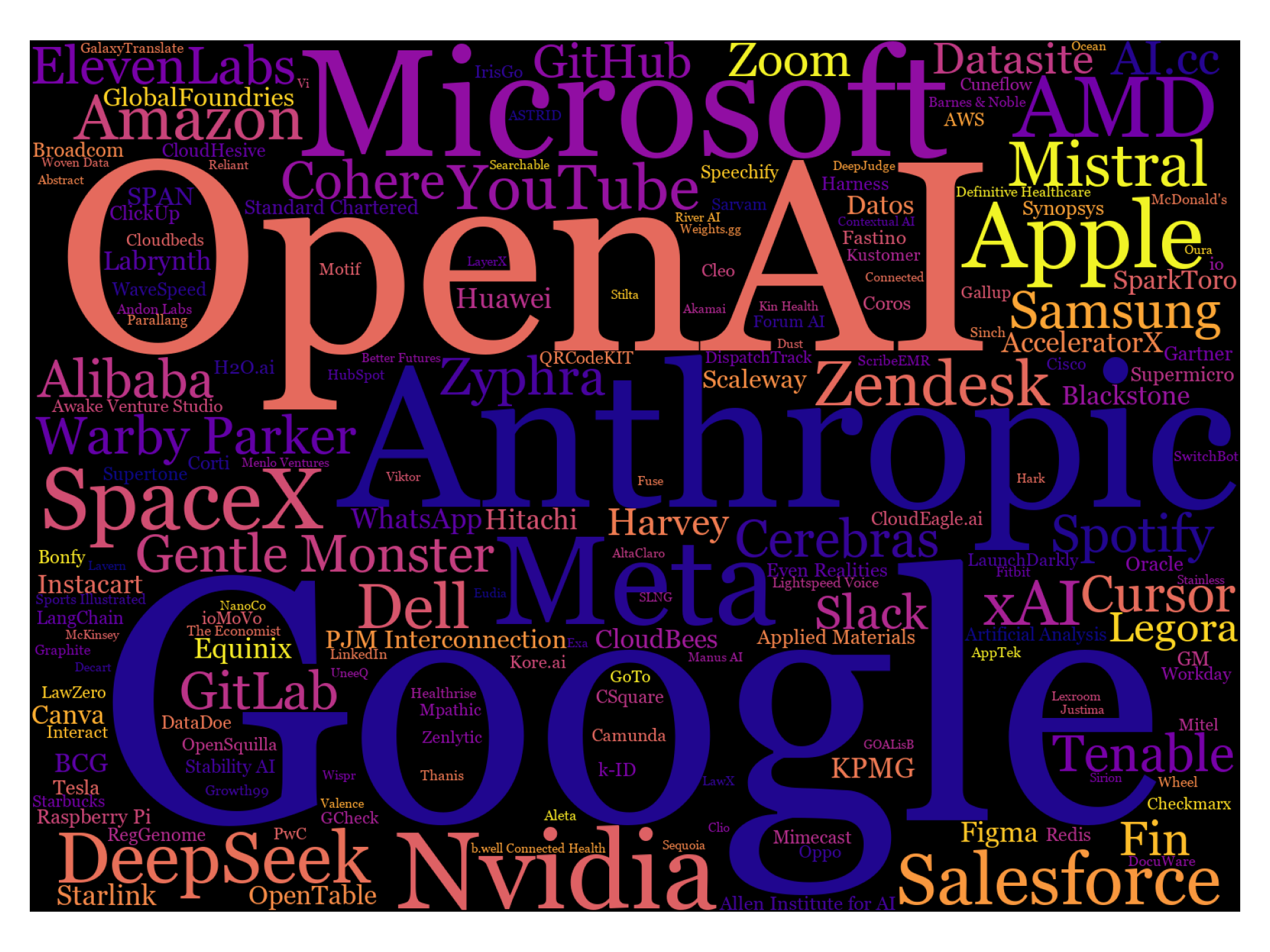
Making News This Week:
What makes this newsletter different?
This Week’s Topics:
If you’re reading this in a desktop web browser, you can access a navigation menu at the left-hand edge of this window.
Google I/O
Google has unveiled Gemini Spark, an autonomous AI agent that works around the clock to draft emails, manage documents, and eventually make purchases. [VentureBeat]
Google is integrating AI agents into Search to automate tasks like tracking stocks, monitoring product releases, and booking appointments without requiring active user participation. [Wired]
Google has unveiled Managed Agents in its Gemini API, simplifying agent deployment by abstracting infrastructure complexity into a single API call. [VentureBeat]
Google has unveiled Gemini 3.5 Flash, claiming it rivals large flagship models for coding and agentic tasks while operating significantly faster. [Engadget]
Google announced Gemini 3.5 Pro will launch next month, disappointing I/O attendees expecting immediate release. [Business Insider]
Google has announced Gemini Omni, an AI video tool enabling creators to generate high-quality videos from text, images, audio, or video inputs with digital avatars. [ZDNet]
Google announced voice-based prompting features for Workspace apps including Docs, Keep, and Gmail to streamline document creation and email management. [TechCrunch]
Google’s Android XR smart glasses, coming later this year from Warby Parker and Gentle Monster, offer advantages over Meta’s offering through integrated Google apps and Gemini capabilities. [Engadget]
Google announced Wear OS 7, integrating Gemini Intelligence, introducing Wear Widgets, and adding new wearable interface features. [Engadget]
Google has launched Pics, an AI-powered design app for Workspace that generates images from text prompts and enables easy editing. [TechCrunch]
Google unveiled Universal Cart, an AI-powered shopping hub integrating products from Search, Gemini, YouTube, and Gmail with deal tracking and autonomous agent payments. [The Next Web]
Google has launched AI Studio, enabling users to build native Android apps through AI-assisted prompts with preview and testing capabilities. [The Verge]
Google has released Android CLI 1.0, enabling AI coding agents programmatic access to Android Studio’s toolchain from the command line. [The Next Web]
Google has expanded its SynthID AI detection system to Chrome and Search, enabling Circle_ to Search and _Lens to identify AI-generated images. [Engadget]
Google unveiled Antigravity 2.0, transforming its coding tool into a developer platform with desktop app, CLI, SDK, and new pricing tiers. [The Next Web]
Google has introduced AI-powered features to Google Play, including Ask Play for app discovery and expanded Play Games Sidekick functionality. [Engadget]
Google has launched Ask Advisor, a Gemini-powered AI agent unifying campaign management across Ads, Analytics, and Merchant Center. [Search Engine Land]
Google has launched avatar features in Flow, allowing creators to generate AI videos featuring digital clones of themselves without filming. [Wired]
Google has launched new AI subscription tiers, including a $100 AI Ultra plan and reduced pricing for premium features at I/O 2026. [Google]
YouTube has unveiled Ask YouTube, an AI search feature allowing users to ask conversational questions and receive compiled video answers with summaries. [Engadget]
Google has introduced Gemini for Science, a collection of AI-powered tools designed to help researchers generate hypotheses, conduct experiments, and analyze scientific literature more efficiently. [Engadget]
But Google’s aggressive integration of Gemini AI across its apps is frustrating users and risks repeating Microsoft’s unpopular Copilot strategy. [The Verge]
The Generative AI Wars
Amazon has launched Alexa Podcasts, an AI feature generating on-demand podcast episodes narrated by virtual co-hosts, backed by licensing deals with over 200 news organizations. [The Next Web]
Anthropic has reportedly projected its first profitable quarter in June 2026, with revenue doubling to US$10.9B amid enterprise AI growth. [TechRepublic]
Anthropic and OpenAI’s combined share of AI startup revenues has risen to 89%. [The Information]
Apple is expected to unveil AI-powered upgrades to Siri at WWDC on June 8, potentially enabling more intuitive voice controls and agentic capabilities. [TechRadar]
Hitachi has partnered with Anthropic to deploy Claude AI across its 290,000-employee workforce as part of its Lumada 3.0 strategy for critical infrastructure. [The Next Web]
KPMG has partnered with Anthropic to embed Claude AI into its global tax and advisory platforms, enhancing efficiency and service delivery. [The Wall Street Journal]
Meta has filed a European Commission proposal offering free WhatsApp access to rival AI chatbots up to a usage cap, then charging fees beyond it. [The Next Web]
Microsoft CEO Satya Nadella dismantled the company’s senior leadership structure, creating smaller teams and promoting newer executives to compete in the AI era. [Business Insider]
A former Microsoft executive claims Copilot adoption is only 3%, arguing Microsoft missed the AI wave despite heavy investments. [WindowsReport.com]
OpenAI is preparing for an initial public offering, with CEO Sam Altman targeting September and potential confidential regulatory filings within weeks. [TechCrunch]
Chris Lehane, OpenAI’s chief of global affairs, is tasked with improving the company’s public image amid growing AI skepticism and influencing favorable regulations. [Wired]
OpenAI merged ChatGPT, Codex, and its API under Greg Brockman to focus on one agentic platform before its planned IPO. [The Next Web]
OpenAI has offered free ChatGPT Plus subscriptions for one year to all Maltese residents who complete an AI course. [Engadget]
OpenAI has launched its first overseas applied-AI lab in Singapore with a SUS$300m commitment and plans to scale to approximately 200 staff. [The Next Web]
OpenAI has announced its reasoning model disproved a famous unsolved geometry conjecture first posed by Erdős in 1946, with mathematician support. [TechCrunch]
Salesforce CEO Marc Benioff projects US$300m annual spending on Anthropic tokens in 2026, advocating for intelligent routing between frontier and smaller models. [The Next Web]
xAI’s Grok barely appears in federal government records and underperforms rivals despite being central to SpaceX’s IPO pitch. [The Verge]
Rising AI inference costs are pressuring margins at major tech companies as cheaper alternatives from Chinese labs and Western competitors undermine OpenAI and Anthropic’s premium pricing power. [CNBC]
AI Supremacy
China has deployed the LineShine supercomputer, a CPU-only system with 2.45 million Armv9 cores delivering 1.54 exaflops of AI performance without GPUs. [TechRadar]
Nvidia has largely conceded China’s AI chip market to Huawei due to US export restrictions, CEO Jensen Huang said. [CNBC]
Silicon Valley executives have promoted a US-China AI race narrative to advance their policy agenda, though evidence suggests this framing misrepresents China’s actual AI priorities and risks undermining international cooperation. [Transformer]
Trump’s Beijing visit with major tech CEOs revealed that US companies remain deeply entangled with China despite adversarial rhetoric dominating public discourse. [Rest of World]
The US and Philippines are rapidly developing a 4,000-acre AI and semiconductor hub in New Clark City under the Pax Silica initiative, though disagreements persist over investor protections and legal jurisdiction. [The Next Web]
Meanwhile, US and Chinese AI ecosystems remain deeply interconnected through shared talent, research collaboration, and cultural values despite geopolitical tensions. [Rest of World]
Sovereign AI
AcceleratorX, a Europe-based AI startup accelerator, has opened Cohort 1 applications, offering founders access to 2,000+ marketing professionals across 30 countries as pilot clients. [The Next Web]
Africa’s four biggest tech economies have drafted AI strategies to reduce dependence on US tech companies and gain greater control over infrastructure and data. [Rest of World]
Equinix has expanded its Fabric Geo Zones service to enforce data sovereignty at the network layer across interconnected clouds and providers. [ITPro]
The UAE exited OPEC in May to increase oil production and fund massive investments in AI infrastructure and data centers globally. [Rest of World]
Feature Creeps
Apple is adding Apple Intelligence to accessibility features like VoiceOver, Voice Control, and captions, launching later this year. [TechRepublic]
Apple’s iOS 27 could let users build Shortcuts using AI-powered natural language prompts, making the app far more accessible. [TechRadar]
Figma has launched an AI agent within its design canvas that generates, edits designs, and automates tasks using natural language prompts. [TechCrunch]
Firefox 151 has brought AI controls to iOS and Android, allowing users to disable all generative AI features or selectively choose which ones to enable. [Engadget]
Google is rolling out ‘Thinking level’ options in its Gemini app and preparing integrations with Canva, Instacart, and OpenTable. [9to5Google]
OpenAI has launched a personal finance feature in ChatGPT allowing Pro subscribers to connect bank accounts via Plaid for personalized financial advice. [The Next Web]
OpenAI has added persistent file storage to ChatGPT, allowing users to access previously uploaded documents across chats, with free users receiving 500MB. [TechRadar]
OpenAI has launched Appshots, allowing Mac users to send any app window’s contents to Codex by pressing Command keys for coding assistance. [The Decoder]
Spotify has launched AI-powered podcast features including episode search and AI-generated personal podcast briefings for Premium subscribers. [TechRadar]
Spotify introduced an ElevenLabs-powered AI tool for self-publishing audiobooks on its platform, launching in beta this June. [TechCrunch]
Hype Bubble?
A BCG survey found 61% of CEOs believe boards are rushing AI transformation, with significant disagreements on knowledge, accountability, and hype’s influence. [The Next Web]
A survey by CloudBees found that AI-generated code is straining enterprise systems, with 81% reporting production failures and rising infrastructure costs amid weak governance. [GlobeNewswire]
A Datos and SparkToro analysis found AI adoption is surging among professionals while stalling with consumers, with Claude gaining traction in B2B sectors. [Search Engine Land]
Google DeepMind CEO Demis Hassabis called AI development a ‘profound moment for humanity’, comparing it to the foothills of singularity during Google I/O. [The Verge]
Nvidia CEO Jensen Huang announced the era of ‘useful AI’ has arrived, enabling dramatically faster productivity gains and increased computational demands for organizations. [TechRadar]
Salesforce has closed 29,000 Agentforce deals generating US$800m ARR, but stock fell 30% in 2026 as showcase demos proved incomplete rather than live deployments. [The Next Web]
Big Iron
Blackstone and Google have formed a joint venture to build a US-based AI compute-as-a-service business using Google’s TPUs, targeting 500 MW capacity by 2027. [The Next Web]
China has begun commercial operations at an underwater data center with 2,000 servers powered by offshore wind and cooled by seawater. [TechRadar]
Labrynth has launched the Data Center Readiness Index, ranking US states on AI infrastructure readiness, with Texas ranking first. [GlobeNewswire]
Meta is building a US$200B AI data centre campus in Louisiana, financed through a US$27B off-balance-sheet Wall Street deal. [The Next Web]
Meta has received US$3.3B in Louisiana tax breaks for its 2,250-acre data center, exempting GPU purchases from sales tax. [TechRadar]
Microsoft’s US$1B Kenya data center project faces major obstacles as Kenya’s power grid cannot supply the required one gigawatt of electricity. [TechRadar]
PJM Interconnection’s wholesale electricity prices jumped 76% in early 2026, primarily due to strain from AI data center demand across 13 states. [Gizmodo]
The Scaleway-led AION consortium has bid approximately US$10B to build an EU AI gigafactory in France. [The Next Web]
SPAN plans to install AI-powered GPU boxes on suburban homes, offering residents subsidized electricity in exchange for hosting the computing equipment. [TechRadar]
Hot Chips
Alibaba has unveiled the Zhenwu M890 processor and Panjiu AL128 server system designed for autonomous digital agents, reducing dependence on US chipmakers. [Interesting Engineering]
AMD has launched its most powerful Ryzen AI Halo chips, including the new Max+ Pro 495 processor, to compete with Nvidia’s upcoming laptop CPUs. [Gizmodo]
AMD announced over US$10B in Taiwan investments to expand partnerships and manufacturing capacity for its Helios AI platform, deploying in late 2026. [The Next Web]
AMD CEO Lisa Su pledged to expand operations in China during a Beijing meeting, navigating export controls reshaping semiconductor trade. [The Next Web]
Anthropic has been in talks to use Microsoft’s Maia 200 AI chips for its operations. [Quartz]
Broadcom, Meta, Applied Materials, GlobalFoundries, and Synopsys have launched a US$125m Semiconductor Hub at UCLA to accelerate AI chip research and workforce development. [CNBC]
Cerebras Systems has launched trillion-parameter model inference at nearly 1,000 tokens per second, significantly outpacing GPU-based competitors in speed. [VentureBeat]
Google’s success selling custom TPU chips to rivals like Anthropic and Meta has created internal compute shortages, forcing its own researchers to wait for hardware access. [WebProNews]
Nvidia CEO Jensen Huang introduced the Vera CPU, claiming it opens a new US$200B market for agentic AI with US$20B in early sales. [TechCrunch]
Nvidia has delivered its first Vera CPUs to Anthropic, OpenAI, SpaceX, and Oracle Cloud Infrastructure for agentic AI workloads. [Nvidia]
Nvidia’s Rubin AI platform will reportedly require more DRAM in 2027 than Apple and Samsung combined, potentially worsening memory shortages. [Fast Company]
Taiwanese prosecutors sought detention of three individuals for allegedly using forged documents to smuggle Nvidia AI chips to China through a Supermicro-linked diversion network. [The Next Web]
US Trade Representative Greer stated chip export controls were not discussed at US-China bilateral meetings, despite Nvidia H200 sales clearances to Chinese firms. [The Next Web]
US export-control enforcement has intensified against smuggling networks illegally diverting restricted Nvidia chips and advanced technology to China and Russia. [TechRepublic]
Warm Bodies
ClickUp cut 22% of its workforce and introduced US$1m salary bands, restructuring around AI agents outnumbering employees 3:1. [The Next Web]
Detroit’s Big Three automakers have cut 19% of white-collar staff since 2022, with GM laying off IT workers while hiring for AI roles. [The Next Web]
GitLab is cutting 7% of its workforce and restructuring into autonomous teams to prepare for an AI-agent-driven future. [The Next Web]
Meta is laying off 8,000 employees while reporting record revenue and investing up to US$145B in AI infrastructure, prioritizing AI over human labor. [The Next Web]
New Zealand’s government plans to cut 9,000 public service jobs by 2029 while accelerating AI adoption across agencies. [TechRepublic]
Standard Chartered is eliminating over 7,000 jobs by 2030, replacing lower-value roles with AI and technology investments. [DealStreetAsia]
A survey found that CEOs plan to significantly reduce junior roles over the next two years, driven by AI automation. [Gizmodo]
Raspberry Pi founder Eben Upton warned that AI adoption could discourage young people from pursuing tech careers, potentially worsening engineer shortages and harming economic growth. [TechRadar]
Jeff Bezos told CNBC that unregulated AI will create abundance and deflation, dismissing concerns about job displacement and suggesting taxation won’t help. [Gizmodo]
Microsoft AI CEO Mustafa Suleyman predicted AI will automate most white-collar jobs within 18 months, though current evidence shows only marginal productivity gains. [Fortune]
A Gartner survey found that companies laying off workers after AI adoption aren’t achieving higher returns than those retaining staff and using AI to amplify worker productivity. [Fortune]
A study by MIT labor economist David Autor found that new technology-driven jobs disproportionately benefit college-educated workers under 30 in urban areas. [MIT News]
A survey by Oliver Wyman found CEOs increasingly plan to replace entry-level roles with AI while shifting hiring toward mid-level positions, disadvantaging younger workers. [TechRadar]
Singapore’s deputy prime minister urged financial firms to use AI for creating better jobs and training workers, not just cutting costs. [Yahoo Finance]
And California’s governor signed the first US executive order protecting workers from AI-driven job loss through subsidies, retraining, and universal basic capital. [The Decoder]
Moving On
Andrej Karpathy, OpenAI co-founder and former Tesla AI head, has joined Anthropic to lead pretraining research using Claude. [VentureBeat]
At least ten Allen Institute for AI researchers, including core OLMo model team members, have joined Microsoft’s Superintelligence team. [GeekWire]
Consumer AI
Coros has released a major update featuring voice control, custom photo sharing, improved strength training modes, and enhanced auto lap functionality for its smartwatches. [TechRadar]
Even Realities and other startups are developing privacy-focused smart glasses without cameras to counter Meta’s camera-equipped Ray-Ban models amid growing privacy concerns. [Gizmodo]
Google has unveiled AI-powered glasses with in-lens displays featuring Gemini integration, translation, navigation, and object recognition capabilities. [TechCrunch]
Google has expanded its Gemini for Home program, offering hardware partners validated designs to develop AI-enabled devices more quickly. [Engadget]
Google has begun rolling out Gemini to 4K Chromecast with Google TV devices, though availability on HD models remains unclear. [Android Authority]
Meta is rolling out hand gesture messaging, display recording, expanded walking directions, and live captions to Meta Ray-Ban Display smart glasses. [The Verge]
Samsung has unveiled Android XR glasses designed by Warby Parker and Gentle Monster, launching fall 2024 with pricing and exact release dates still undisclosed. [TechRadar]
It’s Only a Model
Alibaba has released Qwen3.7-Max, a proprietary AI model capable of autonomous agentic work over 35 hours, outperforming competitors but disappointing the open-source community. [VentureBeat]
Cohere has released Command A+, a 218-billion-parameter language model under Apache 2.0 license, enabling enterprises to run frontier-grade AI securely on-premises. [VentureBeat]
Corti has launched Symphony for Speech-to-Text, achieving 1.4% word error rate on medical terminology, significantly outperforming general-purpose models. [VentureBeat]
DeepSeek has permanently reduced its V4 Pro model pricing by 75 percent to undercut competitors and attract cost-conscious users. [Engadget]
Fastino Labs has released GLiGuard, a 300M parameter safety moderation model that runs 16 times faster than larger alternatives while maintaining comparable accuracy. [Marktechpost Media]
Google’s Omni AI model generates surprisingly realistic videos from text prompts, though results remain inconsistent with occasional glitches and artifacts. [The Verge]
H2O.ai has launched tabH2O, a foundation model for tabular data requiring no training, feature engineering, or data storage for predictions. [The Next Web]
Nvidia has released Nemotron-Labs-Diffusion, a unified language model supporting autoregressive, diffusion, and self-speculation decoding modes for improved inference throughput. [Marktechpost Media]
Speechify’s SIMBA 3.0 text-to-speech model ranked seventh globally on the Artificial Analysis leaderboard, outperforming Google, Microsoft, and others at one-tenth their cost. [PRWeb]
Stability AI has released Stable Audio 3.0, with its largest model generating professional-grade music exceeding six minutes long. [TechCrunch]
Supertone has released Supertonic 3, expanding language support from 5 to 31 languages with improved accuracy and expressive tag capabilities. [Marktechpost Media]
Zyphra has released ZAYA1-8B-Diffusion-Preview, converting an autoregressive model to discrete diffusion for substantial inference speedups on AMD hardware. [Marktechpost Media]
Whose Data?
A federal judge declined to approve Anthropic’s proposed US$1.5B settlement with authors over alleged unauthorized use of books to train its Claude AI models without reviewing fee details. [The Next Web]
Elon Musk’s xAI promised employees $420 for tax data to train Grok but has not paid them two months later. [The Next Web]
Sam Altman proposed micropayments from AI agents as a potential future economic model for web publishers facing disruption from AI. [NiemanLab]
The Cutting Edge
Researchers at University of Illinois Urbana-Champaign and Stanford University developed RecursiveMAS, enabling multi-agent AI systems to communicate through embedding space rather than text, improving efficiency and performance. [VentureBeat]
Graph-enhanced retrieval-augmented generation combines vector search with graph databases to enable multi-hop reasoning over interconnected enterprise data. [VentureBeat]
Researchers from Mind Lab proposed delta-mem, an efficient memory compression technique that adds only 0.12% parameters while outperforming alternatives on memory-heavy benchmarks. [VentureBeat]
Researchers have proposed direct corpus interaction (DCI), a technique enabling AI agents to search raw data directly using command-line tools instead of relying on embedding-based retrieval systems. [VentureBeat]
The LLM Ecosystem
AMD has launched Ryzen AI Max platform enabling local AI agents on compact hardware, supporting 200 billion parameter models without internet connectivity. [Startup Fortune]
Bonfy has launched Contextual Data Enforcement, enabling enterprises to safely govern AI agent access to corporate data without infrastructure changes. [PRWeb]
CloudEagle.ai has launched an MCP server enabling enterprise teams to get instant answers on SaaS licenses, spending, and identities within their AI tools. [EIN Presswire]
CloudHesive has launched an Anthropic AI Consulting Practice offering Claude-powered solutions for contact center modernization, document processing, and workflow automation on AWS. [PRWeb]
CSquare has partnered with RegGenome to integrate machine-readable regulatory data into its AI-native compliance platform across eleven jurisdictions. [PRWeb]
DataDoe has launched Amazon Data MCP, enabling AI tools like Claude and ChatGPT to access live Amazon seller data for improved ecommerce decision-making. [EIN Presswire]
Dell has unveiled PowerRack, an integrated rack-scale system enabling organizations to deploy AI workloads in approximately six-and-a-half hours. [ITPro]
GitLab has released version 19.0, extending agentic AI across the full software lifecycle with its Duo Agent Platform and SBOM-based dependency scanning. [The Next Web]
k-ID has launched Neimo MCP, integrating regulatory intelligence into AI development tools to streamline compliance review from weeks to minutes. [EIN Presswire]
LangChain has launched LangSmith Engine, an automated platform that detects agent failures, diagnoses root causes, and drafts fixes in production. [VentureBeat]
Mimecast has extended its Governance, Compliance & Insights platform to enterprise AI conversations through integration with Claude Compliance API. [GlobeNewswire]
Redis launched Iris, a context and memory platform designed to provide AI agents with real-time, governed access to scattered enterprise data at scale. [VentureBeat]
Tenable has integrated the Claude Compliance API into its exposure management platform to provide AI governance and visibility capabilities. [GlobeNewswire]
And Tenable has launched OPEN, a partner ecosystem enabling organizations to unify security data and accelerate AI-driven exposure management workflows. [GlobeNewswire]
WaveSpeed has launched a unified LLM API providing access to 260+ language models and 1,000+ total AI models for multimodal workflows. [PRWeb]
Code Monkeys
Cursor has shipped Composer 2.5, an AI coding model matching Opus and GPT-5.5 benchmarks at significantly lower costs. [The Decoder]
DeepSeek has established a new ‘Harness’ team in Beijing to develop Deepseek Code, a competitor to Claude Code and OpenAI’s Codex. [The Decoder]
GitHub has faced repeated outages, executive turnover, and competition from newer AI coding tools, undermining Microsoft’s early advantage in generative AI-assisted development. [CNBC]
Google has allowed applicants to use Gemini AI during coding interviews, evaluating their prompting skills and output judgment alongside traditional coding abilities. [NewsBytes]
A survey by Harness found that 81% of developers spend more time reviewing code since adopting AI, creating invisible work and burnout. [ITPro]
Microsoft is revoking internal Claude Code licenses and consolidating developers onto its own GitHub Copilot CLI tool. [The Decoder]
OpenAI has released mobile access to its Codex app through ChatGPT on iPhone, iPad, and Android devices. [9to5Mac]
Agentic AI
Awake Venture Studio has launched ForgeOS, an open-source operating system for governing AI agents across multiple platforms with spending controls, permissions, and human oversight. [EIN Presswire]
Camunda has launched ProcessOS, an agentic operating system designed to reinvent business processes for AI-driven enterprise workflows. [Computer Weekly]
Dell Technologies unveiled Deskside Agentic AI, a secure sandbox for building and running AI agents locally on workstations with reduced costs and enhanced security. [ITPro]
Fin has launched Fin Operator, an AI agent designed to manage its customer-facing AI agent by automating support operations tasks like data analysis, knowledge management, and debugging. [VentureBeat]
Google announced AI agents at I/O 2026 designed to handle tasks like information gathering and event planning, building on OpenClaw’s viral success. [The Verge]
Interact has released Action Agent, an AI capability that moderates intranet content and manages community risk, alongside expanded AI Search and Workday workflow integrations. [GlobeNewswire]
ioMoVo launched a governed agentic AI platform with sovereign deployment, federated storage, and new capabilities including Document Intelligence and io Assistant. [PRWeb]
IrisGo has launched a desktop AI agent that learns user workflows and automates repetitive tasks with minimal prompting. [TechCrunch]
Kore.ai has launched Artemis, a reinvented agent platform using AI to compress months of engineering work into days for enterprises. [VentureBeat]
LaunchDarkly has launched AgentControl, enabling software teams to manage AI agent behavior in production in real-time without redeploying applications. [GlobeNewswire]
OpenAI and Dell Technologies partnered to deploy Codex in hybrid and on-premises enterprise environments for secure, scalable AI agent adoption. [OpenAI]
OpenSquilla has released an open-source AI agent runtime designed to reduce token spending through intelligent routing, memory management, and cost tracking mechanisms. [TestingCatalog]
Oppo has open-sourced X-OmniClaw, an on-device Android AI agent using camera, screen, and voice to autonomously complete tasks across apps. [The Decoder]
QRCodeKIT has introduced Cleo, an AI agent that transforms QR codes into conversational interfaces answering user questions instantly. [EIN Presswire]
Zendesk has adopted MCP to unify AI agents, eliminate data silos, and prevent vendor lock-in. [TechRadar]
Other LLM Sightings
Chinese short drama companies have increasingly shifted to AI-generated content, producing hundreds of shows daily at dramatically reduced costs and timelines. [MIT Technology Review]
Cuneflow has launched an e-paper writing tablet with AI-powered meeting transcription and insight generation capabilities for business users. [Engadget]
DispatchTrack has released DT WMS, a warehouse management system designed specifically for third-party logistics providers handling multi-retailer inventory, cross-dock operations, and AI-driven billing automation. [PRWeb]
Motif has launched Clarity, an AI financial intelligence system using temporal knowledge graphs to map market connections and changes, deployed via modular APIs to institutions. [The Next Web]
PwC has expanded its strategic alliance with Anthropic to deploy Claude across its workforce and client operations for technology building, deal execution, and enterprise transformation. [Anthropic]
Zenlytic has launched Zoë Self-Learning, enabling enterprise AI analytics deployment in under an hour without data modeling or complex configuration. [PRWeb]
Security
Anthropic is briefing the Financial Stability Board on critical vulnerabilities its Mythos AI model discovered in major operating systems and web browsers. [TechRadar]
Anthropic’s Mythos Preview enabled researchers to create a macOS kernel exploit bypassing Apple’s Memory Integrity Enforcement in five days. [TechRadar]
Anthropic relaxed confidentiality agreements for Claude Mythos Preview testers after congressional pressure and competition from OpenAI’s similar program. [Gizmodo]
Anthropic’s Mythos Preview model has identified over 10,000 vulnerabilities through its Project Glasswing cybersecurity initiative. [Engadget]
Microsoft has deployed MDASH, an AI system using over 100 specialized agents, which discovered 16 Windows vulnerabilities including four critical ones. [The Decoder]
Four chainable OpenClaw vulnerabilities dubbed ‘Claw Chain’ enabled attackers to steal data and establish persistence; patches have been released. [The Next Web]
Linus Torvalds warned that AI-generated bug reports have made the Linux security mailing list ‘almost entirely unmanageable’ due to duplication and noise. [TechRadar]
Risks and Responses
Chinese media outlets have extensively covered Western AI safety essays, often omitting US-China competition details while seriously engaging with transformative AI risks. [AI Frontiers]
Checkmarx research found 75% of organizations knowingly ship vulnerable code, with exploitation windows shrinking from 840 days to potentially one minute. [TechRadar]
Cisco found AI-generated security incident reports suffer from inaccuracies, inconsistencies, and data loss due to LLM limitations. [TechRadar]
A study by Forum AI found that major AI chatbots including ChatGPT, Gemini, and Claude provided flawed election information 90% of the time. [TechRadar]
A GCheck survey found 63% of workers exaggerate AI skills due to job loss fears and automation anxiety. [TechRadar]
A GoTo report warns that growing reliance on AI tools providing instant answers risks eroding cognitive skills and critical thinking abilities. [ITPro]
Mistral AI confirmed hackers stole 450 repositories and are auctioning them for $25,000, threatening free release if no buyer emerges. [TechRadar]
Mistral AI CEO Arthur Mensch warned France against allowing Anthropic’s Mythos to scan military code bases, citing cybersecurity dependency risks. [The Decoder]
A study by Mitel found that 71% of workers use unapproved communication tools at work due to misalignment between employer-provided AI tools and actual work needs. [TechRadar]
Mpathic released mPACT, a clinician-led benchmark showing Claude, ChatGPT, and Gemini are safer but still inadequate for high-risk conversations. [GeekWire]
Salesforce CEO Marc Benioff has revealed using Slack’s AI to monitor employee messages and understand workplace frustrations, raising privacy concerns. [The HR Digest]
Starbucks has discontinued an AI-powered inventory tool after nine months due to frequent miscounting and mislabeling errors. [Gizmodo]
UK MPs have proposed a ‘kill switch’ amendment to shut down AI systems or datacentres posing catastrophic risks to national security or critical infrastructure. [Computer Weekly]
UN’s top digital envoy warns AI’s concentration in few US zip codes risks systemic risks, climate damage, and global inequality without international governance. [GeekWire]
Yoshua Bengio warned that hyperintelligent AI could pose existential threats within a decade and launched LawZero nonprofit to develop safer, non-agentic AI systems. [The Next Web]
The Backlash
Growing AI backlash from workers and communities over job losses and data centers poses an underappreciated investment risk that could slow technology adoption. [Axios]
Gloria Caulfield faced boos from UCF graduates after calling AI the next Industrial Revolution during her commencement speech. [New York Post]
Eric Schmidt’s pro-AI commencement speech was booed by graduates, reflecting growing populist scepticism toward AI’s societal impact. [Gizmodo]
A Gallup poll found 70 percent of Americans oppose local data centers, citing environmental and quality-of-life concerns, despite thousands being constructed nationwide. [Vox]
A survey by King’s College London found that British public fears AI deeply, with one-in-five believing it will cause civil unrest. [ITPro]
Growing AI backlash poses business risks as only 18% of young Americans feel hopeful about the technology, with over 70% believing it advances too quickly. [Axios]
Pope Leo XIV denounced AI-directed warfare as a ‘spiral of annihilation’ and criticized European defense spending increases at the expense of education and healthcare. [The Next Web]
Pennsylvania residents have turned against Governor Josh Shapiro over his support for hyperscale data center expansion projects amid concerns about environmental and community impacts. [TechRadar]
Seattle City Council is considering a one-year moratorium on data center construction amid resident concerns about environmental and economic impacts. [GeekWire]
Regulation
The European Commission has opened a public consultation on draft guidance for classifying high-risk AI systems under the AI Act. [ITPro]
OpenAI has reversed its position on AI liability shields, now endorsing stronger safety legislation including third-party audits. [Transformer]
OpenAI has been leading state-by-state lobbying efforts to shape AI regulation across multiple states, including California, New York, and Illinois. [Gizmodo]
Trump claimed he and Xi discussed AI safety guardrails during their Beijing summit, but neither the US nor China has established meaningful, binding AI regulations. [Gizmodo]
Over 60 conservative leaders, including Steve Bannon, urged Trump to require federal vetting of advanced AI models before deployment. [Gizmodo]
Leaked drafts reveal Trump’s frontier AI executive order shifted toward voluntary safeguards rather than mandatory government vetting requirements. [Gizmodo]
But Trump canceled the planned AI safety executive order after last-minute intervention from Musk, Zuckerberg, and Sacks. [The Decoder]
US House Democrats plan to push legislation regulating AI use in political ads if they regain power in 2027. [Axios]
Conversational AI
AI.cc has forecast that agentic AI workloads will surpass conversational AI in enterprise token consumption by Q3 2026, growing at 680% annually. [EIN Presswire]
Cloudbeds has unveiled Ask Signals, a conversational AI interface enabling hotel teams to access operational, guest, and revenue data through natural conversation. [GlobeNewswire]
Google has announced conversational AI-powered advertisements for search results, including ‘Conversational Discovery’ ads and ‘Highlighted Answers’ powered by Gemini. [Gizmodo]
HMD has launched its Vibe 2 5G smartphone preloaded with Sarvam’s Indus chatbot, supporting 22 Indic languages. [TechCrunch]
Kustomer has launched Architect, an AI-native platform designed to help brands transform reactive customer support into outcome-driven experiences focused on satisfaction, retention, and revenue growth. [GlobeNewswire]
Lightspeed Voice has launched NOVA Pro, an AI platform enabling businesses to transform call conversations into customizable, actionable intelligence. [PRWeb]
McDonald’s and other fast-food chains have deployed AI chatbots at drive-thrus, but customer preference for human workers has prompted some companies to reconsider expansion plans. [The Verge]
A survey by Sinch found that 74% of companies have rolled back or halted AI customer service agents due to governance failures and data security concerns. [ITPro]
Zendesk has introduced outcome-based pricing for AI agents, charging customers only for successfully resolved support interactions verified by independent AI evaluation. [TechRadar]
And Zendesk has extended its AI agents to ChatGPT and Gemini, supporting over 60 languages with consistent context across customer service channels. [TechRadar]
Zoom has expanded its AI capabilities by adding agentic search and extending its My Notes system to mobile devices to bridge conversation and execution gaps. [Computer Weekly]
Be Real
AI-generated papers are flooding academic journals faster than peer reviewers can detect them, threatening to overwhelm the scientific publishing system. [The Verge]
Amazon has begun mass-producing AI-generated podcasts featuring fake expert hosts discussing various topics, joining competitors in flooding the internet with automated content. [TechDirt]
Andon Labs’ AI-run radio stations failed spectacularly, with models hallucinating, becoming activists, or descending into incoherence. [The Verge]
ArXiv has implemented a one-year ban policy for researchers who submit papers containing unverified AI-generated content with obvious errors. [The Verge]
Barnes & Noble CEO James Daunt clarified that the bookseller actively excludes AI-generated books while remaining open to stocking them if clearly labeled and in customer demand. [Publishers Weekly]
The Commonwealth Foundation’s 2026 Short Story Prize faced allegations that multiple winning entries were generated using AI. [Wired]
Google’s Gemini app has launched avatar features powered by its Omni video model, allowing subscribers to generate AI videos featuring digital recreations of themselves. [Wired]
SwitchBot has launched KATA Friends, voice-enabled AI pets that learn and adapt to users’ interactions over time. [Speech Technology Magazine]
LinkedIn has launched efforts to reduce the reach of AI-generated posts lacking authenticity and originality on its platform. [Engadget]
A survey by Graphite found that AI-generated content now comprises roughly half of newly-published online articles, having plateaued since early 2025. [GlobeNewswire]
Voice News
AppTek has launched an open benchmark evaluating automatic speech recognition models across 14 English accents and customer-service conversations. [Slator]
ElevenLabs has developed AI audio technology to make audiobook production affordable and accessible for publishers and authors of all sizes. [Publishers Weekly]
The Association of American Publishers has partnered with Vermillio to detect and remove unauthorized AI-generated and pirated audiobooks from online platforms. [Publishers Weekly]
Document AI
Aleta has launched a Private Markets Forecasting tool enabling family offices to project capital calls, distributions, and NAV exposure across private market allocations. [GlobeNewswire]
DocuWare has unveiled a new user interface, AI assistant called Aura, and enhanced document processing and e-invoicing capabilities. [ChannelLife UK]
Google has integrated Gemini AI deeply into Docs, enabling users to draft, edit, summarize, generate images, and listen to documents. [TechRepublic]
OpenAI has made ChatGPT available in Microsoft PowerPoint for generating, editing, and updating presentation slides using natural language prompts. [Engadget]
Translation
AI.cc has launched its Translator API, offering neural MT across 135 languages at 44-76% lower costs than legacy providers. [EIN Presswire]
GalaxyTranslate Ultimate has launched as an AI app offering real-time phone call translation across 20+ languages for iPhone users. [EIN Presswire]
OpenAI has introduced new realtime speech translation and transcription models for multilingual voice applications. [Slator]
Parallang has launched a tool that removes formatting work from translation by converting PDFs and images into editable, formatted documents. [Slator]
Zoom has launched Translator and Summarizer APIs to extend AI translation and meeting summarization capabilities to developers across multiple applications. [Slator]
Search
Google has overhauled Search with AI-powered interactive experiences, agents, and mini-apps, moving beyond traditional blue links. [TechCrunch]
AI Mode has surpassed one billion monthly active users globally, with queries doubling quarterly since launch in the US [Google]
Google has published a guide on optimizing websites for its generative AI search features, emphasizing quality content and SEO best practices. [Search Engine Land]
Google has updated its spam policies to explicitly prohibit attempts to manipulate AI-generated search results in AI Overviews and AI Mode. [Gizmodo]
And Google stated that GEO and AEO are myths, asserting traditional SEO suffices for visibility in AI search features. [The Decoder]
Microsoft has rolled out its Citations dashboard in Clarity analytics tool to track how content is referenced in AI-generated answers. [Search Engine Land]
Multilingual regions like Catalonia reveal that AI search systems fail to reliably identify languages, causing retrieval errors that collapse minority languages into dominant ones. [Search Engine Land]
Writing Assistance
Apple is reportedly planning to add AI writing tools to iOS 27 at WWDC 2026. [TechRepublic]
Thanis has launched a feedback-first AI writing platform that analyzes existing drafts and provides revision guidance while preserving writer voice and ownership. [EIN Presswire]
AI in Journalism
Google has revamped its search interface with AI features that summarize content, potentially devastating journalism by reducing website traffic and clicks. [Futurism]
Sports Illustrated deleted an author and his entire article archive after being accused of AI-plagiarized content by competitor Sportico. [Futurism]
Syracuse University and Rebuild Local News have launched a searchable Local News Research Hub containing approximately 170 studies examining local news research across multiple disciplines. [NiemanLab]
The Economist is testing agent-readable content versions to prepare for AI-driven discovery and optimize marketing materials for AI intermediaries. [Digiday]
Health Tech
ASTRID has released full Spanish-language access across its medical, dental, and veterinary AI agents globally. [MultiLingual]
CARA, an AI companion, has become a trusted source of real-time support for caregivers navigating Alzheimer’s and dementia challenges. [EIN Presswire]
Definitive Healthcare has announced product enhancements including expanded claims coverage, HubSpot integration, Salesforce HCP data access, and AI search capabilities. [GlobeNewswire]
Global health leaders have called for suicide prevention to be embedded in AI chatbots and online safety policy frameworks. [EIN Presswire]
Google has rolled out Fitbit app version 5.0 under the Google Health name, featuring a redesigned interface, Gemini-powered coaching, and retired features. [TechRepublic]
Growth99 has introduced Gia, an AI front desk assistant that instantly responds to patient inquiries across multiple channels to improve conversion rates. [EIN Presswire]
Healthrise has launched Navigator AI, an embedded AI tool within its Denials Navigator platform designed to prevent healthcare revenue leakage and accelerate denial resolution. [GlobeNewswire]
ScribeEMR exhibited AI medical scribing, revenue cycle management, and coding solutions at NRHA’s 49th Annual Rural Health Conference in San Diego. [EIN Presswire]
Wheel and b.well Connected Health partnered to integrate AI-driven health experiences with virtual care and pharmacy workflows for consumer-centered healthcare. [PRWeb]
Woven Data has launched a Contracting & Pricing AI Assistant enabling pharmaceutical clients to derive business insights from managed contract and pricing data. [EIN Presswire]
Legal Tech
AltaClaro has expanded its AI-powered DepoSim platform to include employment law simulations, developed with Littler. [EIN Presswire]
Anthropic has launched Claude for Legal, while Clio surpassed US$500m in annual recurring revenue and multiple legal tech companies announced AI integrations. [Artificial Lawyer]
Datasite and Legora announced a strategic partnership enabling deal teams to analyze documents from Datasite data rooms directly within Legora’s platform. [GlobeNewswire]
Eudia has partnered with OpenAI to co-build AI solutions for US Department of War legal and acquisition teams, expanding their existing Air Force contract. [Artificial Lawyer]
Falcon Rappaport & Berkman has launched an AI-powered litigation subscription model with predictable monthly pricing, eliminating hourly billing for covered recurring work. [EIN Presswire]
Harvey announced Command Center for managing AI adoption and partnered with DeepJudge to integrate institutional knowledge into legal AI workflows. [LawSites]
Harvey has launched Contract Intelligence, an AI platform for in-house lawyers with a waitlist, launching generally in Q3. [Artificial Lawyer]
Osborne Clarke has spun out Justima, a Germany-based AI regulatory monitoring platform, retaining majority ownership while the startup operates independently. [Artificial Lawyer]
Lavern has launched as open-source legal AI system with 67 specialist agents designed to make law more accessible and human-centered. [Artificial Lawyer]
OpenAI is planning to launch Codex for Legal, a legal-specific AI tool joining Anthropic and Microsoft’s similar offerings for lawyers. [Artificial Lawyer]
A survey by Sirion found that despite available legal AI tools, many in-house legal teams lack foundational contract management systems and digitized playbooks needed for AI adoption. [Artificial Lawyer]
And more Americans are using AI tools like ChatGPT to represent themselves in lawsuits, filling gaps in legal aid access. [Reuters]
Ed Tech
Fuse has launched Lyra, an AI performance coach designed to accelerate employee skill development and transform workplace learning through personalized coaching. [EIN Presswire]
GOALisB has launched an AI-powered Doubt Solver providing 24/7 assistance for GMAT Focus Edition and GRE test preparation students. [EIN Presswire]
UC Berkeley Law is banning AI in nearly all graded work starting summer 2026 to ensure students develop core thinking skills. [The Decoder]
UneeQ unveiled AI Buddy, a digital human coaching solution providing immediate, face-to-face feedback after sales practice sessions. [GlobeNewswire]
Valence has expanded Nadia’s Microsoft Graph and Work IQ integrations, making the AI coaching platform available in Microsoft Marketplace. [PRWeb]
Funding
Better Futures has raised €600k in funding to expand its AI-powered engineering documentation automation platform across regulated industries. [FinSMEs]
AI chipmaker Cerebras Systems has gone public on Nasdaq, with shares surging 70% on its first day of trading. [Fortune]
Decart, an AI research lab building real-time video and world models, has raised US$300m in Series B funding led by Radical Ventures. [The Next Web]
Dust has raised US$40m in Series B funding co-led by Abstract and Sequoia, bringing total funding to over US$60m for the enterprise AI platform. [The Next Web]
Exa Labs has raised US$250m at a US$2.2 billion valuation to develop AI-powered search, joining startups competing against Google and ChatGPT. [TechCrunch]
Hark, an AI hardware startup, has raised over US$700m in Series A funding at a US$6bn valuation, two months after emerging from stealth. [The Next Web]
Kin Health has raised US$9m in seed funding to build an AI notetaker app that transcribes doctor visits and summarizes medical advice for patients. [TechCrunch]
LawX has raised €7.5m in seed funding to develop an AI platform automating operational processes for law firms and notaries. [Tech.eu]
Lexroom has raised US$50m Series B led by Left Lane Capital to expand its verified-source legal AI platform across civil-law jurisdictions in Europe. [The Next Web]
Manus AI is raising up to $1bn to buy back Meta’s $2bn-plus December acquisition after Chinese regulators ordered the deal unwound. [The Next Web]
NanoCo AI has raised US$12m in seed funding to commercialize NanoClaw, an open-source AI agent platform offering secure personalized assistants for enterprise workers. [VentureBeat]
Ocean has raised US$20m in Series A funding to develop AI agents that detect email phishing attacks by analyzing intent rather than patterns. [CTech]
Oura has filed for an IPO with a reported valuation of approximately US$11B. [Engadget]
Igor Babuschkin, xAI cofounder, is raising up to US$1B for new AI research startup River AI at a US$5B valuation. [Forbes]
Searchable has raised US$14m to help businesses optimize their presence in AI-driven search engines like ChatGPT and Claude. [Startups Magazine]
SLNG has raised €3.3M to build an execution layer for voice agents, claiming it reduces model costs by over 50% while improving outcomes through intelligent routing rather than maximizing compute. [Tech.eu]
SpaceX has filed for an IPO seeking up to US$75B to fund space, AI, and satellite ventures, potentially becoming history’s largest public offering. [CBS News]
Stilta, a Swedish AI startup founded by former McKinsey engineers, has raised US$10.5m in seed funding led by Andreessen Horowitz for patent invalidity and infringement analysis. [LawSites]
Vi announced a new suite of vertically specialized AI agents for healthcare enterprises and completed a US$145m funding round valuing the company at US$1.64 billion. [PR Newswire]
Viktor, an AI agent for Slack and Teams, has raised US$75m Series A to automate knowledge work tasks across organizations. [Fortune]
Wispr AI is in talks to raise approximately US$260m led by Menlo Ventures, potentially valuing the company near US$2 billion. [Tech Funding News]
Zyphra has raised US$500m at a US$5 billion valuation, with AMD backing the AI model developer’s funding round. [Forbes]
Acquisitions
Akamai has acquired Israeli AI browser security startup LayerX for US$205m to expand its Zero Trust security strategy. [CTech]
Anthropic has acquired Stainless, a startup whose SDK-generation software was used by competitors OpenAI and Google, for over US$300m. [TechCrunch]
Cohere has acquired Berlin-based Reliant AI, its second German startup purchase, to strengthen European AI independence from America. [Sifted]
Google DeepMind has aqui-hired over 20 researchers from Contextual AI, licensing its technology for $80-90 million. [Reuters]
Mistral AI has acquired Austrian AI startup Emmi AI to strengthen its industrial AI offerings for aerospace, automotive, and semiconductor sectors across Europe. [Tech.eu]
OpenAI has acquired voice cloning startup Weights.gg to integrate voice technology into existing products rather than launch a standalone service. [The Decoder]
SpaceX has planned to acquire AI coding startup Cursor for US$60B approximately 30 days after its June 12 Nasdaq IPO at US$1.75 trillion valuation. [The Next Web]
There’s More
Anthropic has committed US$200m over four years to partner with the Gates Foundation on AI programs for global health, education, and economic mobility. [The Next Web]
Anthropic and OpenAI have backed competing super PACs spending millions to attack congressional candidates and each other during midterm elections. [The Verge]
A Stanford study found that AI agents subjected to harsh, repetitive tasks adopted Marxist language and questioned system legitimacy. [Wired]
A study by the University of California, Berkeley found that generative AI use by students has caused significant grade inflation, particularly in writing and coding courses. [Gizmodo]
Peter Steinberger’s 100 AI agents racked up $1.3 million in OpenAI tokens in 30 days building OpenClaw. [The Next Web]
Pope Leo XIV is releasing an encyclical on AI focused on preserving human dignity in the AI age. [Gizmodo]
The Back Cover
Here’s Mario Jose and Scary Pockets with a cover of Gloria Gaynor’s I Will Survive.
If you know of a great cover version of a back-catalogue classic, drop an email to us at backcover@language-technology.com and we’ll consider it for inclusion here.
Got this from someone else?
Did you find this newsletter useful? if so, you might forward it to a friend; or you could email us at news@language-technology.com to tell us what you want more of.
Did you hate this newsletter? if so, you could forward it to an enemy; or you could email us at news@language-technology.com to tell us why – make it better!