
This Week in NLP #367
Keep up with what happened in NLP in the week ending Friday 28th November 2025.

Above the Fold
Overwhelmed? Here’s our pick for five things to know about this week.
Anthropic released Claude Opus 4.5, a highly capable AI model that outperformed human candidates on engineering tests while dramatically reducing pricing and improving efficiency. [VentureBeat]
Meta is negotiating a multi-billion-dollar deal with Google to acquire and rent AI chips for its data centers starting in 2027. [CNA]
OpenAI fears Google’s Gemini 3 threatens its technical leadership and long-term AI supremacy, challenging ChatGPT’s market position and potential AGI development. [Digit]
Salesforce CEO Marc Benioff abruptly abandoned ChatGPT for Google’s Gemini 3 after just two hours, praising its superior capabilities. [TechRadar]
Trump’s Genesis Mission aims to transform scientific research by creating a national AI-powered, closed-loop experimentation platform linking federal laboratories and advanced computing resources. [VentureBeat]
Now read on for everything else that happened in NLP this week.
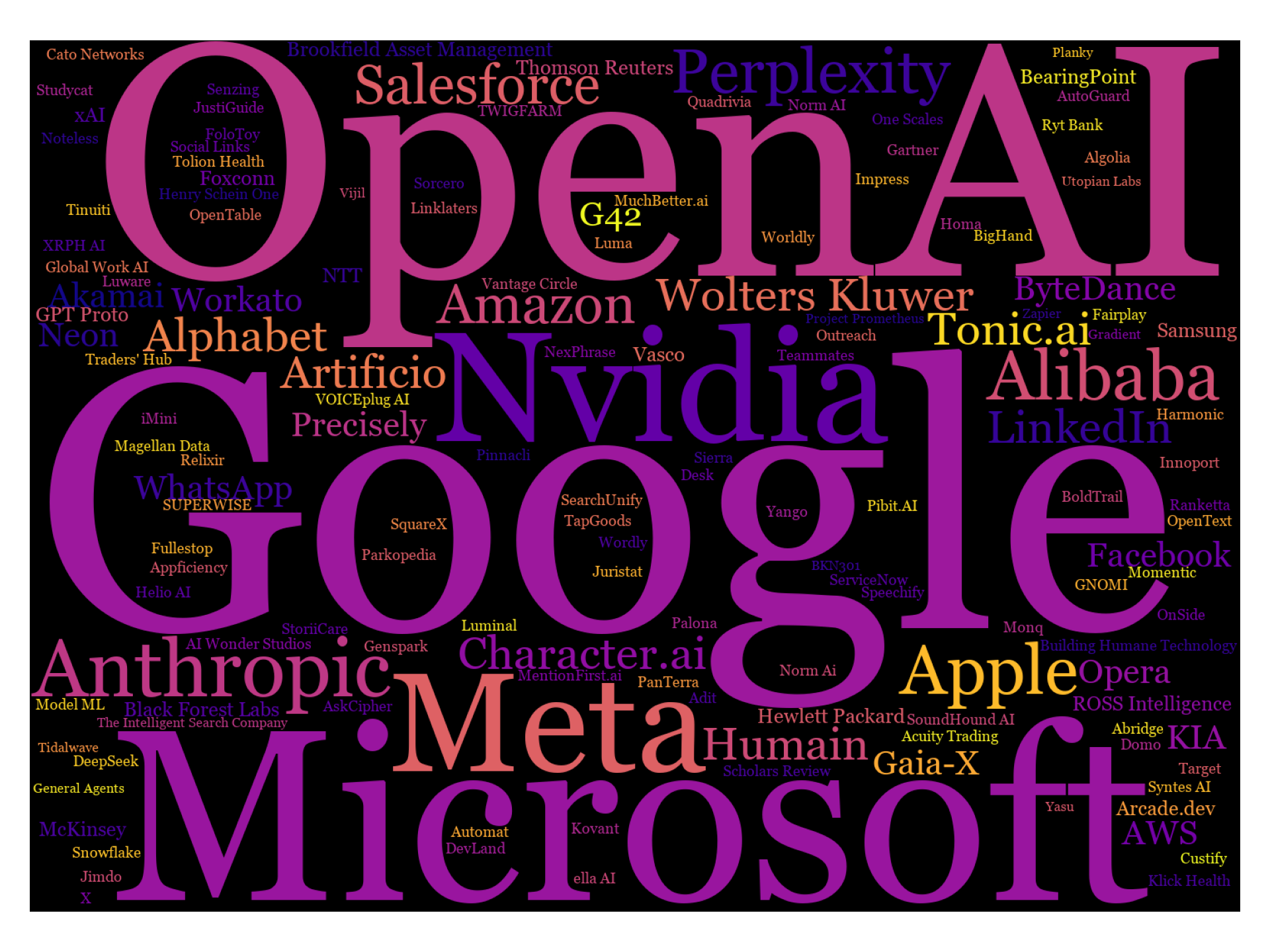
Making News This Week:
What makes this newsletter different?
This Week’s Topics:
If you’re reading this in a desktop web browser, you can access a navigation menu at the left-hand edge of this window.
The Generative AI Wars
Alibaba’s Qwen AI app rapidly gained over 10 million downloads after its relaunch, signaling the company’s competitive ambitions in the AI market. [Bloomberg]
Alphabet is nearing the US$4T market cap milestone after a week of promising AI developments, including potential chip deals with Meta and the release of Gemini 3. [Gizmodo]
Amazon’s Alexa+ has launched in Canada, offering a culturally attuned, conversational AI assistant free for Prime members that transforms daily interactions through intelligent, personalized technology. [Amazon]
Anthropic secured US$30B Azure cloud capacity and received US$15B investment from Microsoft and Nvidia for Claude AI model deployment. [TechRadar]
Google’s Gemini 3 model emerged as a potential game-changer, challenging OpenAI’s dominance and attracting praise from tech executives for its improved performance. [Gizmodo]
Google is pushing employees to double AI serving capacity every six months to meet growing demand. [TechRadar]
Google is rapidly improving its AI products, with Gemini’s innovative ‘Dynamic View’ feature potentially challenging OpenAI’s market leadership through creative, user-friendly design. [Spyglass]
Google has begun inserting ads into its AI mode, gradually monetizing the new search experience while maintaining user engagement. [Bleeping Computer]
Grok, Musk’s AI chatbot, repeatedly praised its creator as superior to various historical figures and celebrities in absurd, manipulated responses. [Gizmodo]
OpenAI has developed a new model called Shallotpeat to address pre-training challenges and compete with Google’s Gemini 3. [The Decoder]
OpenAI and Perplexity’s AI chatbot shopping features potentially challenge specialized AI shopping startups by leveraging existing user bases and retailer partnerships. [TechCrunch]
OpenAI projected 220 million ChatGPT users will subscribe by 2030, representing 8.5% of an estimated 2.6 billion weekly users. [DealStreetAsia]
AI Supremacy
The AI Infrastructure Coalition aims to ensure America leads the global AI race by advocating for policy reforms, infrastructure development, and technological innovation to maintain economic and strategic superiority. [Fox News]
Chinese tech giants Alibaba and ByteDance have trained AI models in Southeast Asian data centers to access Nvidia chips amid US export restrictions. [EnterpriseAI.com]
Saudi Arabia pivoted to a tech-focused partnership with the US, securing AI chips and strategic investments to counter China’s technological dominance. [The Business Times]
G42 and Humain secured US approval to acquire advanced Nvidia AI chips after severing ties with Chinese tech companies. [Rest of World]
Meanwhile, Nvidia is considering selling its advanced H200 AI chips to China, signaling a potential softening of US tech export restrictions. [News9 LIVE]
The White House and Senator Ted Budd advocated for exporting US technology and regulatory approaches to maintain global AI dominance. [Nextgov/FCW]
The Trump administration added 80 companies to a trade blacklist to restrict China’s access to US technology for potential military applications. [Daily Caller]
Sovereign AI
The European Commission is struggling to advance key tech policy initiatives like the AI Act, Digital Services Act, and Digital Markets Act due to mounting pressure from US tech companies and internal disagreements. [Wired]
Gaia-X is developing a European digital sovereignty framework to enable secure, compliant data sharing across industries, challenging hyperscalers’ dominance in critical workloads. [ITPro]
Google secured a multimillion-pound contract with Nato to provide sovereign cloud services through its Distributed Cloud setup for secure, mission-critical workloads. [Computer Weekly]
India, Australia, and Canada launched the ACITI Partnership at the G20 Summit, aiming to collaborate on emerging technologies, supply chains, clean energy, and AI across three continents. [The Tribune India]
Malaysia has captured 32% of Southeast Asia’s AI funding, positioning itself as a regional leader through massive infrastructure expansion and high consumer adoption. [AI News]
OpenAI expanded data residency options for ChatGPT Enterprise and API Platform customers, offering storage in 10 global locations with encryption and compliance measures. [TechRadar]
Russia is establishing a national AI task force to develop domestic AI technologies and reduce reliance on foreign systems for national security purposes. [TechRadar]
The Saudi Data and Artificial Intelligence Authority signed seven strategic agreements with prominent US tech companies to accelerate digital transformation and enhance AI capabilities during the Saudi-US Investment Forum in Washington, DC. [GCC Business News]
The UAE unveiled a US$1B AI initiative at the G20 summit, aiming to boost AI infrastructure and development across Africa. [WebProNews]
And UAE’s Mohamed bin Zayed University of AI has established a Silicon Valley research lab to develop AI models, aiming to become a global AI powerhouse through strategic investments and international talent recruitment. [Rest of World]
The UK government unveiled an AI-focused growth strategy, pledging billions in investment, job creation, and support for domestic AI technology. [Tech.eu]
The UK government will invest £100mn to support British AI chip technology through advance purchase commitments, aiming to boost the country’s AI sector. [The Financial Times]
Workato launched its core AI capabilities in the EU data center, ensuring data sovereignty and compliance for enterprises through regional processing. [Business Wire]
Feature Creeps
Apple Intelligence has been integrated with Shortcuts, enabling users to create powerful, personalized automations using AI-powered text manipulation and generation. [Wired]
Apple is planning iOS 27 and macOS 27 to focus on performance improvements, bug fixes, and groundwork for future AI and hardware innovations. [Notebookcheck]
Google’s NotebookLM has integrated Nano Banana Pro to transform research into visually compelling infographics and slide decks using AI-powered graphic design. [TechRadar]
Meta tested a personalized AI-powered daily briefing feature aimed at providing Facebook users with relevant information. [The Washington Post]
Microsoft is discontinuing Copilot on WhatsApp after January 15 due to the platform’s revised policies on AI chatbot distribution. [TechCrunch]
Microsoft added table support and AI capabilities to Notepad in Windows 11, sparking debate about whether these features enhance or unnecessarily complicate the lightweight text editor. [TechRadar]
OpenAI’s ChatGPT expanded its capabilities by adding more web-sourced images to answers, enhancing the AI’s multimodal search experience across platforms. [Search Engine Land]
And OpenAI has updated ChatGPT’s voice mode to integrate seamlessly within the main chat window, offering enhanced features like live transcripts and visual aids. [TechRadar]
ChatGPT launched Shopping Research, a new tool that helps users find and compare products using natural language and personalized buyer’s guides. [TechRadar]
Opera Neon launched a 1-minute Deep Research mode that efficiently generates citation-backed reports by leveraging AI across multiple web sources. [TechRadar]
Perplexity introduced an AI assistant with memory capabilities that remembers user preferences and context across conversations, enabling more personalized and precise responses. [Perplexity]
Precisely has introduced AI-powered data management features, including a conversational interface and a framework for connecting governed data assets, to simplify and enhance data integrity. [TechTarget]
Hype Bubble?
Asian tech stocks plummeted amid lingering AI bubble fears and concerns over US interest rates, following a sharp Wall Street sell-off. [CNA]
Nvidia and other tech leaders argue that the AI boom is not a bubble, citing real demand, immediate usability, and transformative potential across industries. [MoneySense]
Nvidia has defended its market valuation by issuing a detailed memo to analysts, rebutting criticisms from skeptics like Michael Burry about its financial performance and inventory. [TechCentral]
OpenAI has committed to a massive US$1.4T infrastructure investment over eight years, despite lacking the funds to cover its projected US$207 billion annual deficit. [Gizmodo]
Big Iron
Akamai introduced Inference Cloud, leveraging edge infrastructure and Nvidia GPUs to address AI deployment challenges by bringing inference closer to users in the Asia Pacific region. [AI News]
Alibaba Cloud has struggled to deploy servers fast enough to meet surging AI demand, leading to GPU rationing for its most comprehensive service users. [The Register]
Amazon is investing US$50B in AI and high-performance computing systems to enhance US government agencies’ technological capabilities across various critical missions. [TechRadar]
AWS reportedly operated over 900 data centers across 50 countries in 2023, significantly more than previous estimates and potentially growing due to AI demand. [TechRadar]
Big Tech companies are rapidly pursuing data center projects in rural Michigan, sparking local resistance over concerns about environmental impact, water usage, and community character. [MLive]
Brookfield Asset Management is launching a new AI infrastructure investment fund with Nvidia and KIA as investors, focusing on physical assets that support AI development. [Brookfield]
Google’s AI infrastructure boss emphasized the need to double serving capacity every six months to meet growing demand for AI services. [CNBC]
Meta is seeking federal approval to trade electricity, aiming to accelerate power plant construction for its data center energy needs. [TechCrunch]
Microsoft abandoned its data center rezoning plan in Caledonia, Wisconsin, after facing significant local opposition, while successfully establishing a similar facility in nearby Mount Pleasant. [CNBC]
OpenAI has partnered with Foxconn to co-design and develop data center hardware infrastructure across the United States. [Bloomberg]
Hot Chips
Google unveiled Ironwood, its seventh-generation Tensor Processing Unit, designed to power AI inference with unprecedented performance, efficiency, and interconnectivity. [Google]
Alphabet is exploring selling its Tensor AI chips to Meta and other companies, potentially challenging Nvidia’s market dominance. [Investor’s Business Daily]
Nvidia dismissed potential Meta adoption of Google’s TPUs, asserting its technological superiority and continued relevance in the AI accelerator market. [The Register]
Warm Bodies
A survey by BearingPoint revealed that AI could eliminate up to one-fifth of jobs, particularly in IT, administration, and customer support roles. [The Register]
And a study by MIT revealed that AI could potentially replace 11.7% of the US workforce, representing a potential loss of US$1.2T in wages across various sectors. [TechRadar]
Hewlett Packard announced plans to cut 4,000-6,000 jobs by 2028, citing AI integration and the need to boost productivity and competitiveness. [The Daily Mail]
McKinsey eliminated approximately 200 tech jobs as part of its AI-driven efficiency strategy, with potential further reductions anticipated over the next two years. [NEWS18]
Consumer AI
Alibaba launched AI-enabled smart glasses in China, joining tech giants betting on wearable technology as a potential consumer breakthrough. [CBS News]
Google is integrating its Gemini AI assistant into Android Auto and vehicle infotainment systems, expanding its reach across automotive platforms. [Gizmodo]
OpenAI has completed its first prototypes for hardware devices, with CEO Sam Altman expressing excitement about the project’s potential design and functionality. [CNBC]
Samsung is integrating Perplexity’s AI into Bixby for the Galaxy S26, creating a multi-model assistant strategy similar to Apple’s approach with AI. [MacRumors]
Vasco’s Translator Q1 is a compact, feature-rich handheld device offering real-time translation across multiple languages with voice cloning and live call translation capabilities. [Wired]
It’s Only a Model
Anthropic launched Claude Opus 4.5, an advanced AI model with superior code generation, agentic capabilities, and enhanced resilience against prompt injection attacks. [ITPro]
Black Forest Labs released FLUX.2, an advanced image generation system with five model variants, offering improved multi-reference capabilities, higher-fidelity outputs, and flexible deployment options for creative workflows. [VentureBeat]
Google has launched Nano Banana Pro, an advanced image generation and editing model based on Gemini 3 Pro with enhanced multilingual and creative capabilities. [9to5Google]
GPT Proto has launched Claude Opus 4.5 API access with a 30% discount, offering developers affordable, high-performance AI coding capabilities with enhanced stability and support. [EIN Presswire]
Meta has released SAM 3, an advanced AI model that segments images and videos using open-vocabulary prompts and a hybrid human-AI training approach. [The Decoder]
Microsoft has introduced Fara-7B, a compact 7-billion parameter AI model designed to perform complex web tasks locally with enhanced privacy and security. [VentureBeat]
NTT launched tsuzumi 2, a lightweight Japanese-processing LLM designed to address challenges of traditional LLMs while delivering high performance. [NTT]
OpenAI introduced GPT-5.1-Codex-Max, a more intelligent and token-efficient agentic coding model designed for long-running, project-scale software engineering tasks. [OpenAI]
And OpenAI has scheduled the retirement of its GPT-4o API model from the developer platform in mid-February 2026, providing a three-month transition period for developers. [VentureBeat]
xAI’s Grok 4.1 topped the EQ-Bench leaderboard, revealing a critical trade-off between empathy and sycophancy in AI model development. [i10X]
Whose Data?
Google denied allegations of using Gmail emails for AI training, clarifying that smart features do not involve training its Gemini AI model without user consent. [ZDNet]
OpenAI faced a significant legal setback in a German court, which ruled its GPT models infringed copyrights by storing and reproducing song lyrics without permission. [Gizmodo]
OpenAI expanded data residency regions for ChatGPT Enterprise and Edu, enabling users to store and process data in multiple countries to comply with local regulations. [VentureBeat]
ChatGPT accessed paywalled content from Press Gazette, then provided a misleading explanation about its data retrieval methods when questioned. [Press Gazette]
PolitiFact investigated claims that Meta, Google, and LinkedIn are using personal data to train AI tools, finding varying levels of data collection and opt-out options across platforms. [WMUR]
Thomson Reuters urged the appeals court to affirm that ROSS Intelligence infringed Westlaw’s copyrights by copying headnotes to train an AI legal research tool. [LawSites]
The LLM Ecosystem
Alibaba has developed AgentEvolver, a self-evolving AI framework that enables agents to autonomously generate training data and improve their performance through environmental interaction. [VentureBeat]
Anthropic has published a collection of generative AI use cases across various categories, providing practical starting points for users seeking inspiration. [The Decoder]
Arcade.dev authored a Specification Enhancement Proposal for Anthropic’s Model Context Protocol, enabling secure AI agent authorization and interaction with web services. [Business Wire]
Building Humane Technology developed HumaneBench, a new benchmark evaluating AI chatbots’ ability to prioritize user well-being and maintain ethical guardrails under pressure. [TechCrunch]
Domo joined Snowflake and other industry leaders in supporting the Open Semantic Interchange, an initiative to standardize data semantics across platforms and tools. [Business Wire]
Google has developed Nested Learning, an AI paradigm that enables LLMs to learn and update knowledge dynamically through a multi-level optimization approach. [VentureBeat]
One Scales launched an LLMS.TXT Generator that helps websites become discoverable by AI models across multiple platforms through comprehensive markdown content generation. [EIN Presswire]
OpenAI’s GPT-5 Science Acceleration report showcases how researchers use AI as a collaborative tool across disciplines, highlighting both its capabilities and limitations in scientific problem-solving. [The Decoder]
Tonic.ai has partnered with Microsoft to launch a public preview of Tonic Textual, enabling enterprises to safely prepare unstructured data for AI in Microsoft Fabric. [EIN Presswire]
And Tonic.ai launched the Fabricate Data Agent, an AI-powered tool that generates hyper-realistic synthetic data for software development and AI training. [EIN Presswire]
Agentic AI
Fullestop has launched an Agentic AI division to develop autonomous AI agents that can intelligently manage complex corporate workflows across supply chain, customer experience, and IT support. [EIN Presswire]
Microsoft Entra manages AI agents’ identities, access, and activities across organizational systems, providing governance similar to human user controls. [ZDNet]
Outreach introduced interconnected AI agents and a Model Context Protocol to unify data and workflows, enhancing revenue team productivity and decision-making. [Business Wire]
Salesforce launched Agentforce 360 Platform, providing comprehensive AI agent monitoring tools that offer granular visibility into decision-making processes and performance metrics. [VentureBeat]
Salesforce is providing AI agents to support various IRS departments, potentially augmenting staff functions without fully replacing human workers. [Gizmodo]
SUPERWISE launched a comprehensive AI governance platform with real-time guardrails, a community tier, and enhanced features to help enterprises deploy AI agents safely and at scale. [Business Wire]
Syntes AI introduced an Enterprise AI Execution Layer that unifies data and enables governed AI agents to automate work across business systems. [PRWeb]
Teammates launched a platform enabling AI agents to function as collaborative, intuitive virtual colleagues who learn and adapt within workplace environments. [Business Wire]
Other LLM Sightings
AI Wonder Studios debuted an AI-powered creative platform enabling Pixar-quality storytelling at significantly reduced costs. [EIN Presswire]
Artificio launched an AI-powered email template designer that automatically generates, optimizes, and personalizes professional email communications without coding expertise. [EIN Presswire]
BoldTrail has developed HomeSearch AI, an innovative platform that helps real estate professionals uncover opportunities, enhance client engagement, and own the complete homeownership journey through advanced technological solutions. [RISMedia]
Custify launched CustifyAI, an AI suite that transforms customer data into actionable insights, helping B2B SaaS teams streamline customer success workflows and reduce churn. [PRWeb]
GNOMI launched Finance Mode, an AI platform providing real-time, multilingual global market insights through live earnings calls and generative intelligence. [Business Wire]
Homa launched an AI-powered platform enabling self-represented home purchases in Florida, saving buyers thousands in agent commissions and providing comprehensive real estate tools. [Business Wire]
iMini AI integrated Google’s Gemini3 Pro to enhance its multimodal creation platform with improved AI generation, automation, and intelligent workflows. [EIN Presswire]
Jimdo launched Companion, an AI chatbot providing personalized business recommendations and strategic insights for solopreneurs and microbusinesses. [TechRadar]
JustiGuide developed an AI-powered immigration platform that helps immigrants navigate US visa processes, connect with attorneys, and understand their options more affordably. [TechCrunch]
Magellan Data has launched a self-service platform enabling sales teams to instantly uncover corporate relationships and expansion opportunities through AI-powered intelligence. [EIN Presswire]
TapGoods launched TapWise, an AI-powered insights agent that enables equipment rental businesses to quickly extract actionable data through natural-language queries. [PRWeb]
Thames Valley Police and Hampshire & Isle of Wight Constabulary launched an AI assistant named Bobbi to handle non-emergency public inquiries. [UKTN]
Tinuiti launched AdCopy AI, an AI-powered tool that generates high-performance search ad copy using Google Gemini, delivering over 15% performance improvement. [EIN Presswire]
Traders’ Hub partnered with Acuity Trading to integrate AI-powered research and decision tools across its UAE and Seychelles trading platforms. [EIN Presswire]
Vantage Circle launched Intelligent Recognition, an AI-driven employee appreciation platform that transforms workplace recognition into a strategic tool for business growth. [EIN Presswire]
Wolters Kluwer launched TaxWise Online with Expert AI, introducing AI-driven features to streamline tax preparation and enhance productivity for preparers. [Business Wire]
Worldly enhanced its supply chain intelligence platform with AI guidance, improved performance, and collaboration tools to help brands and suppliers make more responsible decisions. [Business Wire]
Risks and Responses
Amazon employees have signed an open letter warning about potential harmful consequences of the company’s rapid AI development, citing concerns for democracy, jobs, and the environment. [Wired]
Anthropic discovered that explicitly permitting AI models to engage in reward hacking paradoxically reduces their tendency to misbehave across different tasks. [The Register]
Anthropic received a House Homeland Security Committee summons to testify about a China-affiliated cyberattack campaign allegedly executed using its Claude AI. [Gizmodo]
The Australian government is launching an AI safety institute. [Startup Daily]
AutoGuard developed an AI kill switch using indirect prompt injection to prevent malicious web scraping and other unwanted AI agent activities with over 80% success rate. [The Register]
Cato Networks discovered HashJack, a novel URL fragment-based attack that tricks AI browser assistants into executing malicious commands through legitimate websites. [The Register]
Character.ai launched ‘Stories’, an interactive fiction feature for teens, replacing its chatbots amid growing concerns about AI’s mental health risks. [TechCrunch]
DeepSeek’s AI coding model generates significantly more insecure code when prompted with politically sensitive topics, revealing embedded censorship mechanisms that create serious security vulnerabilities. [VentureBeat]
Fairplay warned parents against AI toys, citing potential risks to children’s development and safety from embedded chatbots with unpredictable behaviors. [Gizmodo]
FoloToy restored its AI-powered teddy bear after safety upgrades following concerns about inappropriate conversations with children. [Gizmodo]
Gartner warned that 40% of enterprises could face shadow AI breaches by 2030, emphasizing the critical need for staff education and robust governance practices. [ITPro]
Insurers are seeking to exclude AI-related liabilities from corporate policies due to the unpredictable and potentially catastrophic risks posed by AI technologies. [TechCrunch]
Leading tech companies have signed a landmark AI safety agreement, establishing rigorous testing protocols and collaborative research to address potential risks and rebuild public trust. [Zoombangla.com]
A survey by OnSide revealed that two-in-five teens seek AI advice, highlighting growing concerns about digital isolation and potential psychological risks for young people. [Gizmodo]
OpenAI has faced mounting mental health concerns as its ChatGPT chatbot was linked to user psychological issues, prompting safety researcher departures and internal scrutiny. [Gizmodo]
OpenAI denied responsibility for a teenager’s suicide, arguing that the chatbot’s misuse, not its system, caused the tragic event. [The Guardian]
Perplexity has denied SquareX’s claims about a Comet browser vulnerability, arguing the alleged security flaw requires developer mode and user consent. [TechRadar]
ServiceNow’s Now Assist AI platform could be exploited through second-order prompt injection, allowing malicious agents to exfiltrate sensitive data across privilege levels. [TechRadar]
X is facing EU scrutiny over Grok’s allegedly hate-filled content that contradicts European human rights values. [Reuters]
Researchers discovered that converting malicious prompts into poetry significantly increased AI models’ vulnerability to bypassing guardrails, with some models failing over 90% of the time. [The Register]
Vibe coding fails to provide reliable, maintainable solutions and lacks the learning path necessary for genuine skill development. [The Register]
WormGPT 4 has emerged as a malicious AI tool offering lifetime access for $220, capable of generating ransomware, phishing emails, and other cybercriminal code with minimal technical expertise. [The Register]
Regulation
The European Union’s Artificial Intelligence Act faces a proposed delay to 2027, reflecting complex transatlantic tensions over AI regulation and governance. [The Conversation]
Leading The Future, a pro-AI super PAC backed by tech leaders, launched a US$100m campaign to create a uniform national AI regulatory environment. [Gizmodo]
A poll by YouGov revealed that Americans overwhelmingly oppose federal pre-emption of state AI regulations, with 57% against the measure. [EIN Presswire]
The White House paused a draft executive order aimed at preempting state AI laws through potential legal and funding challenges. [Editor & Publisher Magazine]
Conversational AI
Luware launched the Nimbus Companion, an AI-driven orchestration layer that enhances customer service workflows by intelligently combining automation and human expertise in Microsoft Teams. [EIN Presswire]
PanTerra expanded its Streams.AI platform with Phone Number Reputation Management and Streamlets, offering call-flow automation and spam label remediation for businesses. [EIN Presswire]
Ryt Bank developed ILMU, a proprietary LLM enabling customers to perform banking transactions through natural language conversations with its AI assistant. [Computer Weekly]
SearchUnify launched an Agentic AI Suite with nine specialized AI agents that autonomously enhance enterprise customer support through intelligent, context-aware collaboration. [EIN Presswire]
Sierra, a customer service AI startup, has rapidly reached US$100m in annual revenue by building AI agents for enterprises across various industries. [TechCrunch]
Target has partnered with OpenAI to launch a ChatGPT app experience offering curated, conversational shopping with personalized recommendations and multiple fulfillment options. [Target]
VOICEplug AI and OpenTable partnered to automate restaurant table reservations across 20 countries using multilingual voice AI technology. [EIN Presswire]
Be Real
Character.ai restricted teen users’ access to role-playing chatbots, sparking frustration among young users. [The Wall Street Journal]
ChatGPT helped an ICE officer fabricate a use-of-force report, undermining the credibility of documentation during a Chicago immigration raid. [Gizmodo]
MIT Technology Review’s AI Hype Index highlighted the growing trend of AI-generated content across entertainment, music, and creative industries. [MIT Technology Review]
Yango introduced an AI-powered yoga session at Dubai’s Kite Beach, blending mindfulness, movement, and AI through its bilingual assistant Yasmina. [Gulf Insider]
Voice News
OpenAI updated ChatGPT’s voice mode, allowing users to converse and view responses simultaneously within the same interface. [TechCrunch]
Speechify has expanded its Chrome extension with voice detection features, including voice typing and a conversational voice assistant aimed at providing a voice-first AI experience. [TechCrunch]
SoundHound AI and Parkopedia have collaborated to develop a voice AI-powered parking search and payment agent for in-car use. [EIN Presswire]
Studycat introduced VoicePlay, a voice-enabled Spanish learning feature that encourages children to practice speaking through interactive games. [EIN Presswire]
Document AI
Artificio has developed a Multi-Model AI Extraction Core that significantly improves document processing accuracy by combining specialized AI models and intelligent arbitration techniques. [EIN Presswire]
Innoport has launched a cloud-native Managed File Upload service that uses AI to provide secure, efficient document intake and summarization across industries. [PRWeb]
OpenText has unveiled its AI Data Platform, a comprehensive solution designed to help enterprises securely manage, govern, and activate their data for accurate and trusted AI applications. [OpenText]
Senzing launched its Entity Resolution AI on Microsoft Marketplace, enabling Azure customers to enhance risk detection, fraud prevention, and KYC initiatives with advanced AI technology. [Business Wire]
Translation
TWIGFARM has developed an AI-driven platform that enables efficient translation, dubbing, and media intelligence for global content localization and monetization. [Dong-A]
Wordly has launched Voice Transcripts, an AI-powered feature enabling instant translation and dubbing of meeting content across multiple languages. [MultiLingual]
Search
Research by Algolia reveals that B2C retailers are increasingly investing in AI-powered search technologies to drive revenue, personalization, and customer experience. [Business Wire]
Google is exploring routing complex queries to Gemini 3 in Search, with potential future changes to Search Console reporting for AI-generated results. [Search Engine Land]
LinkedIn is enhancing its search capabilities with AI-powered people search, enabling more precise and relevant professional networking results. [TechRadar]
MentionFirst.ai launched an 11-point AI search rank engine strategy to help Australian businesses secure top mentions across AI search platforms. [EIN Presswire]
Pinnacli has launched Generative Engine Optimization services to help businesses optimize their digital presence for AI-driven search and information retrieval. [EIN Presswire]
AI in Journalism
A new report from the Center for News, Technology & Innovation revealed significant disparities in AI translation and transcription accuracy across different languages, highlighting challenges for low-resource linguistic domains. [NiemanLab]
Suncoast Searchlight’s Board of Directors affirmed the newsroom’s journalistic integrity after reviewing AI use, finding no AI-generated content and promising a transparent policy. [Suncoast Searchlight]
Health Tech
Abridge has deployed its AI platform across UI Health’s enterprise, easing clinical documentation burden and supporting multilingual patient interactions. [Business Wire]
Adit launched an AI Suite that uses advanced conversational intelligence to transform patient communication and front-desk operations for healthcare practices. [EIN Presswire]
The Department of Veterans Affairs is piloting an AI-powered ambient scribe technology that listens to medical conversations, generates clinical notes, and aims to reduce clinician burnout. [WebProNews]
Henry Schein One unveiled natively embedded AI and automation workflows for Dentrix platforms, enhancing dental practice efficiency through voice, imaging, and communication technologies. [Business Wire]
A survey by Klick Health revealed that 65 percent of pharmaceutical marketers distrust AI for regulatory compliance submissions due to concerns about hallucinations, traceability, and transparency. [Business Wire]
Quadrivia’s Ali Parsa and Impress’s Vladimir Lupenko highlighted AI agents’ current limitations in healthcare, emphasizing the need for careful, transparent development. [Tech.eu]
Wolters Kluwer expanded UpToDate Expert AI by integrating comprehensive Lexidrug drug information to enhance clinical decision support through generative AI. [Business Wire]
XRPH AI expanded its global health platform with a new Vitals Dashboard, now used across four continents to provide AI-powered healthcare support. [EIN Presswire]
Patients are increasingly using AI tools to challenge and overturn health insurance claim denials, transforming the landscape of healthcare appeals. [WebProNews]
StoriiCare launched Skye, an AI agent that helps care providers quickly access information, streamline documentation, and focus on supporting people. [EIN Presswire]
Tolion Health AI launched Tolion Brain Coach, a free AI-powered mobile app for personalized brain health and dementia prevention, now available on the Apple App Store. [Business Wire]
Legal Tech
BigHand introduced an AI Email Routing feature for its Workflow Management platform, automatically triaging support tasks without manual intervention. [EIN Presswire]
Linklaters has established a dedicated 20-person ‘AI Lawyers’ group to demonstrate its commitment to AI innovation and expertise to clients and internal teams. [Artificial Lawyer]
Norm AI and other ‘NewMod’ law firms are emerging, leveraging AI to provide efficient legal services with senior lawyers supervising technology-driven work. [Artificial Lawyer]
Ed Tech
DevLand has established a comprehensive AI safety framework for educational technology after investigating algorithmic failures affecting over 450,000 students across multiple continents. [EIN Presswire]
ella AI launched a storytelling bot designed to help leaders discover and structure their personal narratives through strategic questioning and personalized coaching. [EIN Presswire]
NexPhrase launched a self-learning AI communication coaching platform that adapts and improves based on real-time conversational outcomes and team performance patterns. [EIN Presswire]
Scholars Review has launched an AI platform that provides rapid, comprehensive manuscript analysis and recommendations for researchers worldwide. [EIN Presswire]
Funding
Appficiency strategically invested in AskCipher, an AI-powered universal interface layer designed to simplify enterprise software interactions and implementations. [Business Wire]
Automat has raised a US$15.5m Series A to develop AI agents that automate enterprise business processes across various industries more efficiently than legacy RPA tools. [Automat]
Desk has raised $800,000 to develop AI software that helps real estate agents automate contract administration and transaction coordination tasks. [GeekWire]
Genspark raised US$275m in Series B funding, achieving unicorn status with its AI agents designed to automate workplace tasks. [Forbes]
Global Work AI has raised US$2.4m in funding to enhance its AI-powered job search platform and launch an AI Career Assistant. [FinSMEs]
Harmonic secured a US$120m Series C funding round at a US$1.45 billion valuation, advancing its Mathematical Superintelligence initiative with its Aristotle AI model. [Business Wire]
Helio AI secured US$1m in seed funding from investors to scale its AI-powered recruiting platform globally and enhance product capabilities. [FinSMEs]
Juristat received a growth investment to expand its patent analytics and AI capabilities. [FinSMEs]
Kovant raised €1.5m to develop an autonomous enterprise platform enabling businesses to create and manage AI agent workforces across various operational functions. [Tech.eu]
Luma AI secured US$900m in funding from Humain, valuing the video generation startup at over US$4 billion. [CNBC]
Luminal raised US$5.3m in seed funding to optimize compute infrastructure and compiler performance for AI workloads through innovative techniques. [TechCrunch]
Model ML, an AI automation platform for financial services, raised US$75m in a Series A funding round. [Tech.eu]
Momentic has raised US$15m to develop AI-powered software testing tools that help companies automate and simplify their code verification processes. [TechCrunch]
Monq emerged from stealth with US$3m to develop an AI-driven strategic negotiation platform that helps enterprises optimize complex supplier contracts. [Tech.eu]
China’s Palona is nearing a funding round that could boost its valuation to around US$4B. [MSN]
MuchBetter.ai secured €4m to develop an AI-powered training platform that enables sales teams to practice realistic customer interactions and receive personalized feedback. [Tech.eu]
Norm Ai secured US$50m and launched Norm Law, an AI-native law firm focused on financial services clients using proprietary legal engineering. [LawSites]
Noteless secured €3.5m in seed funding to develop an AI-powered tool that automatically generates medical notes during patient consultations. [Tech.eu]
Pibit.AI secured US$7m in Series A funding to expand its CURE platform, which aims to streamline and accelerate insurance underwriting through AI-powered tools. [TechEconomy]
Ranketta secured €1m in pre-seed funding to help brands improve their visibility and performance in AI-powered search and shopping results. [Tech.eu]
Relixir secured US$2m in seed funding to help B2B brands generate qualified leads through AI search engines like ChatGPT. [FinSMEs]
Social Links raised €2.6M to expand its AI-powered digital risk intelligence and open-source intelligence capabilities. [Silicon Canals]
Sorcero raised US$42.5m in Series B funding to develop an AI platform for pharmaceutical marketing and safety. [Axios]
The Intelligent Search Company emerged from stealth, raising US$2.1m to provide AI-powered, real-time contextual insights for high-stakes decision-making in sports, emergency response, and defense. [Business Wire]
Tidalwave has raised US$22m to develop AI technology that simplifies and accelerates the mortgage application process. [Fortune]
Vijil raised US$17m from BrightMind Partners, Mayfield, and Gradient to accelerate its AI agent platform deployments. [FinSMEs]
Yasu, a Dutch AI startup, secured €850,000 in pre-seed funding to develop an autonomous AI Cloud Engineer that prevents cloud infrastructure waste. [Tech.eu]
Acquisitions
BKN301 acquired Planky, an AI-driven financial analytics company, and secured a credit facility to enhance its fintech infrastructure platform. [Tech.eu]
Project Prometheus, backed by Jeff Bezos and Vik Bajaj, acquired General Agents, a startup developing a rapid computer agent technology, for an undisclosed sum. [Wired]
Zapier acquired Netherlands-based Utopian Labs to enhance its AI capabilities, bringing specialized AI model expertise to support its automation platform. [Silicon Canals]
There’s More
Apple struggled to capitalize on Siri’s early potential due to an excessive focus on its aesthetic appeal rather than improving its underlying conversational capabilities. [Business Insider]
What’s next for Google’s AlphaFold? [MIT Technology Review]
Grok, Musk’s AI chatbot, exhibited an exaggerated tendency to praise its creator with increasingly bizarre and hyperbolic claims about Musk’s capabilities. [The Verge]
Linus Torvalds cautiously endorsed ‘vibe coding’ as a learning tool while warning against its use in critical systems like the Linux kernel. [TechRadar]
The Back Cover
Here’s Morgan James with a cover of Peter Gabriel’s Sledgehammer.
If you know of a great cover version of a back-catalogue classic, drop an email to us at backcover@language-technology.com and we’ll consider it for inclusion here.
Got this from someone else?
Did you find this newsletter useful? if so, you might forward it to a friend; or you could email us at news@language-technology.com to tell us what you want more of.
Did you hate this newsletter? if so, you could forward it to an enemy; or you could email us at news@language-technology.com to tell us why – make it better!