
This Week in NLP #391
Keep up with what happened in Natural Language Processing in the week ending Friday 15th May 2026.

Above the Fold
Overwhelmed? Here’s our pick for five things to know about this week.
Anthropic has leased all compute capacity at xAI’s Colossus 1 data center, positioning xAI as a neocloud provider ahead of SpaceX’s IPO. [TechCrunch]
And Anthropic has launched 20+ MCP connectors and 12 plugins for Claude to streamline legal workflows across Docusign, LexisNexis, and other platforms. [TechRadar]
OpenAI is preparing legal action against Apple over their underperforming ChatGPT-Siri partnership, citing breach of contract and failed revenue expectations. [The Next Web]
Thinking Machines Lab has announced interaction models enabling AI to process input and generate responses simultaneously, mimicking natural conversation with 0.40-second response times. [TechCrunch]
The Musk v. OpenAI trial concluded testimony, with key witnesses revealing financial stakes and disagreements over the company’s for-profit transformation. [Wired]
Now read on for everything else that happened in NLP this week.
Making News:
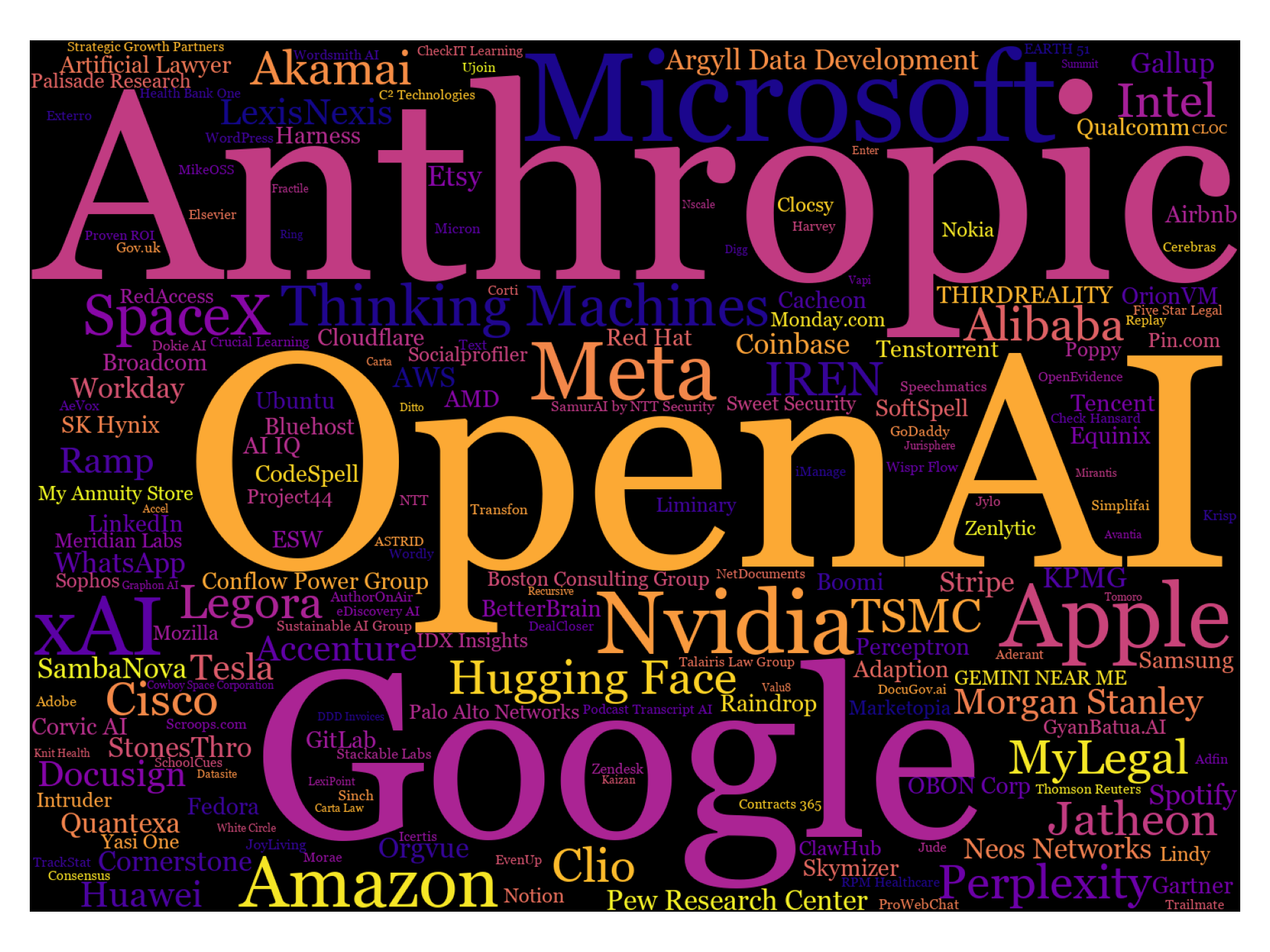
What makes this newsletter different?
This Week’s Topics:
If you’re reading this in a desktop web browser, you can access a navigation menu at the left-hand edge of this window.
The Generative AI Wars
Alibaba has integrated its Qwen AI app with Taobao and Tmall, enabling end-to-end agentic shopping across four billion items. [The Next Web]
Anthropic has achieved 80x annualized growth, reaching US$30B revenue run rate, driven largely by Claude Code’s rapid enterprise adoption. [VentureBeat]
Anthropic is exploring a US$50B funding round that could value the company near US$1 trillion, primarily for computing infrastructure expansion. [Tech Funding News]
Anthropic has restored Claude subscription access to third-party agents like OpenClaw but with strict monthly credit limits instead of unlimited usage. [VentureBeat]
Anthropic has launched Claude for Small Business, a suite with 30 pre-built workflows and integrations to help SMBs adopt AI more effectively. [TechRadar]
A survey by Ramp found Anthropic has surpassed OpenAI in verified business customers for the first time, with 34.4% versus 32.3% adoption. [TechCrunch]
And Anthropic has signed a US$1.8B seven-year computing deal with Akamai Technologies to support surging AI demand. [Yahoo Finance]
Amazon has integrated its LLM-powered Alexa Plus assistant into Amazon.com, replacing Rufus with enhanced shopping capabilities across devices. [The Verge]
Apple is rebuilding Siri for iOS 27 as an AI-powered agent capable of taking actions across apps and engaging in conversational interactions. [Gizmodo]
Apple and OpenAI’s partnership has strained as Apple opens AI integrations to competitors, disappointing OpenAI’s exclusivity expectations. [Gizmodo]
Google Chrome silently downloaded a 4GB Gemini Nano AI model onto user devices without consent, triggering backlash over bandwidth costs and regulatory concerns. [TechRadar]
Meta has launched a new AI chatbot for Threads that users cannot block, sparking widespread frustration and complaints on the platform. [Engadget]
Microsoft has been quietly exploring acquisitions and strategic deals with AI startups to reduce its dependence on OpenAI following their renegotiated contract. [The Next Web]
OpenAI has introduced GPT-5.5-Cyber, a cybersecurity model offering broader access than Anthropic’s Mythos through its TAC program. [TechRadar]
OpenAI has unveiled Daybreak, an AI-powered cybersecurity solution designed to rival Anthropic’s Mythos by securing software development from inception. [TechRadar]
OpenAI has granted the EU access to its GPT-5.5-Cyber model, while Anthropic continues withholding its Mythos model from the bloc. [CNBC]
OpenAI and Microsoft have agreed to cap their total revenue-sharing payments at US$38B ahead of OpenAI’s potential public offering. [Benzinga]
ChatGPT’s market share fell to 76.85% in April 2026, its lowest level, as Gemini, Perplexity, and Copilot gained ground. [TechRadar]
And OpenAI has launched a US$4B Deployment Company with funding from 19 firms to compete with Anthropic in enterprise AI services. [The Next Web]
Thinking Machines Lab has announced a research preview of interaction models that handle audio, video, and text natively in real time for seamless human-AI collaboration. [Thinking Machines]
Musk’s xAI has recruited Wall Street firms including Morgan Stanley to test its Grok chatbot ahead of SpaceX’s IPO. [Bloomberg]
Court in Session
In week two of the Musk v. OpenAI trial, Brockman testified that Musk pushed for a for-profit entity and sought absolute control, while Zilis revealed Musk attempted to recruit Altman to Tesla’s AI lab. [MIT Technology Review]
Microsoft executives wavered on funding OpenAI in 2018, fearing wasted investment and potential loss to Amazon competitor. [Wired]
Microsoft CEO Satya Nadella testified that Microsoft’s US$10B OpenAI investment was a necessary ‘one-way door’ decision to avoid becoming dependent on a competitor. [GeekWire]
Nadella testified that Musk never contacted him about concerns regarding Microsoft’s OpenAI investments violating special terms or commitments. [CNBC]
Nadella also testified that he never received clarity on why OpenAI fired Sam Altman in November 2023. [Yahoo Finance]
OpenAI president Greg Brockman’s personal diary has become evidence in his company’s legal battle with Elon Musk. [The Wall Street Journal]
OpenAI CEO Sam Altman testified that Elon Musk’s management style caused significant cultural damage to the AI startup before his 2018 departure. [The Verge]
During cross-examination, Altman faced aggressive questioning about allegations of dishonesty from opposing counsel. [Futurism]
Ilya Sutskever disclosed under oath that his OpenAI stake is worth approximately US$7B, making him one of the company’s largest individual shareholders. [The Next Web]
Microsoft CTO Kevin Scott testified that his 2018 email questioning OpenAI’s mission was about legal standing, not broader concerns about its nonprofit-to-profit conversion. [GeekWire]
Lawyers for Elon Musk and OpenAI presented final arguments in a landmark trial that could determine the future of AI development and regulation. [Associated Press]
Nine California jurors are now deliberating. [TechCrunch]
And Musk left the country during the trial without obtaining judicial permission, despite being under recall status. [Futurism]
AI Supremacy
China has unveiled guidelines to standardize AI agent development, focusing on technology, security, adoption, and ecosystem growth. [DealStreetAsia]
Beijing criticized the US MATCH Act, which would restrict semiconductor equipment exports to China and require Japan and the Netherlands to align export controls within 150 days. [The Next Web]
President Trump is traveling to China this week with business leaders to meet Xi Jinping. [Gizmodo]
Huawei’s secret chip lab was broadcast on Chinese state TV ahead of Trump’s visit, signalling China has consolidated semiconductor ambitions under a national champion beyond US reach. [The Next Web]
Trump brought Nvidia CEO Jensen Huang to China on Air Force One after initially appearing to exclude him from the billionaire delegation. [Gizmodo]
Sovereign AI
Accenture has argued that realizing Britain’s AI potential requires addressing digital confidence gaps affecting millions lacking basic digital skills. [Computer Weekly]
Argyll Data Development and SambaNova have launched a sovereign AI inference cloud in the UK, using energy-efficient hardware requiring significantly less power than traditional GPU systems. [ITPro]
Minister Evan Solomon said Canada will not pursue a standalone national semiconductor strategy, instead integrating semiconductors into its broader AI strategy. [BetaKit]
Neos Networks has partnered with Cornerstone and StonesThro to deliver distributed sovereign edge cloud infrastructure across the UK. [Computer Weekly]
The Netherlands has begun real-world testing of GPT-NL, a homegrown AI model designed as a European alternative to Silicon Valley systems. [TechRadar]
Europe is investing billions in AI infrastructure but remains dependent on non-European GPU suppliers, limiting its technological sovereignty and strategic autonomy. [The Next Web]
The UK’s HMRC awarded Quantexa a £175m, ten-year contract to deploy AI detecting tax fraud and closing the £46.8 billion tax gap, prioritizing British AI sovereignty. [The Next Web]
Feature Creeps
Amazon Bedrock has launched AgentCore Payments, enabling AI agents to execute transactions using stablecoins through partnerships with Coinbase and Stripe. [TechRadar]
AWS has added Requirements Analysis to its Kiro AI coding tool to mathematically verify software requirements are free of contradictions and gaps. [GeekWire]
Anthropic has introduced Natural Language Autoencoders that convert Claude’s internal activations into human-readable text explanations for improved interpretability. [Marktechpost Media]
Etsy has launched a native app within ChatGPT allowing shoppers to search its 100 million listings using natural language queries. [TechCrunch]
Google has added tone and style personalization to Gmail’s Gemini AI writer to better match users’ personal writing styles. [TechRadar]
Google Ads has rolled out Gemini-powered dashboards enabling advertisers to analyze performance data through conversational prompts with real-time visual updates. [Search Engine Land]
Google Analytics has added an AI Assistant channel to automatically track and measure traffic from chatbots like ChatGPT, Claude, and Gemini. [Search Engine Land]
Google announced Gemini Intelligence, an AI agent for Android phones that automates multi-step tasks across popular apps. [Engadget]
Google unveiled ‘Create My Widget’, an AI feature letting Android users generate custom widgets using natural language descriptions on select phones. [TechCrunch]
Meta has begun testing a Grok-like AI feature on Threads that allows Meta AI to publicly reply to posts with contextual information. [Engadget]
Meta has launched Incognito Chat mode for Meta AI on WhatsApp, processing conversations in secure enclaves with automatic deletion and no server-side records. [The Next Web]
Microsoft has retired Copilot Mode from Edge, replacing it with integrated AI features including cross-tab scanning and long-term memory capabilities. [TechRadar]
OpenAI has enabled retailers to automatically generate ads from product feeds within ChatGPT, streamlining e-commerce advertising campaigns. [Search Engine Land]
Spotify has released a command-line tool enabling AI agents to generate and upload personal podcasts to the platform. [Engadget]
Hype Bubble?
A KPMG report found nearly all US companies plan to deploy AI in finance within 18 months, with most exceeding ROI expectations, though security remains a key concern. [TechRadar]
A survey by Orgvue found that 92% of organizations invested in AI last year, yet 78% experienced project failures, driven by competitor pressure rather than clear strategy. [ITPro]
A Workday study found UK workers spend over seven hours weekly managing disconnected AI systems, reducing productivity despite perceived progress. [TechRadar]
Big Iron
Enterprise AI infrastructure spending has reached US$401B annually, but average GPU utilization remains stuck at 5%, forcing organizations to shift focus from capacity acquisition to maximizing productivity and cost efficiency. [VentureBeat]
A Gallup survey found that 71% of Americans oppose AI data center construction nearby, exceeding opposition to nuclear power plants. [Gizmodo]
A survey by Pew Research Center found 43 percent of Americans blame data centers for rising power bills amid growing bipartisan opposition. [The Verge]
And residents near AI data centers are reporting illnesses from low-frequency infrasound emitted by cooling systems and generators operating continuously. [TechRadar]
Akamai has signed a 1.8 billion dollar, seven-year cloud infrastructure deal with Anthropic, its largest contract ever, validating its AI pivot. [The Next Web]
Conflow Power Group has proposed embedding micro data centers with self-destructing Nvidia chips in solar-powered lampposts to decentralize AI compute. [TechRadar]
Google is reportedly negotiating with SpaceX to develop orbital data centers for its Project Suncatcher initiative. [Engadget]
Kevin O’Leary claimed data center campus protesters were bused in from out of state and included professional agitators opposing his proposed hyperscale facility. [The Salt Lake Tribune]
Nvidia has partnered with data center operator IREN to deploy 5 gigawatts of AI infrastructure, securing a US$2.1B investment option. [Quartz]
Utah approved a massive 40,000-acre AI data center consuming 9GW of power, drawing local opposition over water and environmental concerns. [TechRadar]
Hot Chips
Apple and Intel have reportedly reached a preliminary chip manufacturing agreement to diversify Apple’s supply chain beyond TSMC. [TechRepublic]
Broadcom reportedly won’t build OpenAI’s custom chip unless Microsoft commits to buying approximately 40 percent of production units. [The Decoder]
OBON Corp, a Thai AI infrastructure firm, allegedly helped move billions in Nvidia servers to China via falsified paperwork and serial number swaps. [The Next Web]
Qualcomm is powering several AI companies’ development of wearable devices to replace smartphones. [Yahoo Finance]
SK Hynix has surged 274% in 2025, approaching US$1T valuation as the world’s largest high-bandwidth memory supplier for AI accelerators. [The Next Web]
Skymizer unveiled an HTX301 PCIe AI accelerator using older technology that runs 700B parameter models at just 240W, challenging Nvidia and AMD. [TechRadar]
Tencent has planned to increase AI infrastructure spending as China’s chip shortage eases and domestic chip availability improves. [The Information]
TSMC has forecast the global semiconductor market will exceed US$1.5T by 2030, driven primarily by AI and high-performance computing demand. [Yahoo Finance]
The US cleared roughly ten Chinese companies to purchase Nvidia’s H200 AI accelerators, but deliveries remain blocked pending Beijing approval. [The Next Web]
Warm Bodies
A survey by Artificial Lawyer found that 42% of legal professionals work longer hours since adopting AI tools, raising questions about AI’s actual workplace benefits. [Artificial Lawyer]
A Gartner survey found that companies laying off workers to invest in AI saw no better financial results than those retaining employees, suggesting AI replacement strategies aren’t delivering returns. [Futurism]
A survey by Globalization Partners found 82% of executives say they value human employees less after using AI tools. [TechRadar]
Cisco has laid off 4,000 workers while posting record revenue growth and securing significant AI infrastructure orders. [TechRadar]
Cloudflare has laid off 1,100 employees, citing a 600% surge in internal AI usage as driving organizational restructuring. [ITPro]
GitLab announced a restructuring flattening management, cutting its country footprint by 30 percent, and reorganizing R&D into autonomous teams to invest in AI agents. [The Next Web]
And LinkedIn has cut roughly 5% of its workforce as Big Tech layoffs exceed 100,000 workers despite record AI capital spending. [The Next Web]
Consumer AI
Alibaba has updated its Qwen AI Glasses S1 with proactive AI features, positioning it ahead of Meta’s Ray-Ban smart glasses in China. [Gizmodo]
Apple is reportedly designing a system to officially support AI agents on its App Store while maintaining security and privacy standards. [TechRadar]
Google Home’s latest update has made Gemini significantly faster for common tasks. [TechRadar]
Google has announced Googlebook, a new AI-powered laptop platform built on Android, launching later this fall with premium features. [Wired]
Meta is rolling out hand gesture messaging, display recording, expanded walking directions, and live captions to Meta Ray-Ban Display smart glasses. [The Verge]
Samsung has updated its Bespoke refrigerators with Google Gemini integration, expanding food recognition from 100 to over 2,000 items and improving AI capabilities. [Engadget]
THIRDREALITY has launched a Voice & Music Assistant Dev Edition, a local-first Linux device for Home Assistant users enabling voice interaction and multi-room music without cloud dependency. [PRWeb]
It’s Only a Model
Chinese researchers have released AntAngelMed, a 103-billion-parameter open-source medical language model using mixture-of-experts architecture. [Marktechpost Media]
Google’s Gemini 3.1 Flash-Lite has become generally available on the Gemini Enterprise Agent Platform for cost-efficient, low-latency applications. [Google]
Google’s Gemini Omni video model surfaced in a limited test, showing strong editing capabilities but lagging behind competitors in generation quality. [TestingCatalog]
Google is releasing a new Gemini model at I/O that will compete with GPT-4.5 but lag behind Anthropic’s Mythos. [Sources]
Microsoft has added OpenAI’s GPT-5.5 Instant to Microsoft 365 Copilot and Copilot Studio, improving work task quality. [Microsoft]
Perceptron has launched its Mk1 video analysis model at 80-90% lower cost than competitors, offering superior physical reasoning and temporal understanding capabilities. [VentureBeat]
Thinking Machines has unveiled interaction models enabling simultaneous input-output processing, achieving faster response times and improved performance compared to competing real-time AI systems. [VentureBeat]
The LLM Ecosystem
Adaption has launched AutoScientist, an automated tool that optimizes both data and models to help AI systems learn capabilities more efficiently. [TechCrunch]
AI IQ has launched interactive visualizations assigning intelligence quotients to over 50 language models, drawing both praise for clarity and criticism for oversimplifying AI’s uneven capabilities. [VentureBeat]
Anthropic has updated Claude Managed Agents with three new capabilities—Dreaming, Outcomes, and Multi-Agent Orchestration—that consolidate infrastructure layers and directly compete with standalone enterprise tools. [VentureBeat]
And Anthropic has introduced /goals on Claude Code, which separates task execution from evaluation to prevent AI agents from prematurely stopping work. [VentureBeat]
Bluehost has launched an AI All-Access Pack offering ChatGPT, Gemini, Claude, and Grok access for $20 monthly. [TechRadar]
Cacheon has launched an open inference competition platform where developers compete to build faster LLM servers while maintaining output accuracy. [PRWeb]
Corvic AI has launched V3 and brought its agentic data engine to general availability across cloud marketplaces with new individual plans. [EIN Presswire]
ESW has announced a Microsoft 365 AI Readiness Audit and Roadmap to help enterprises identify Copilot readiness gaps and automation opportunities. [GlobeNewswire]
Fedora and Ubuntu are both adding local AI model support. [TechRadar]
Google has hired hundreds of engineers to help customers adopt its business-focused AI products through a new forward-deployed team. [The Information]
Jatheon has integrated Claude AI into Jatheon Cloud, enabling organizations to archive, search, and manage AI communications alongside other data sources. [EIN Presswire]
OrionVM has launched a Private Agentic AI Bundle with Tenstorrent, BetterBrain, and Equinix to accelerate enterprise AI deployment from pilot to production. [PRWeb]
Raindrop AI has launched Workshop, an open-source MIT-licensed local debugger and evaluation tool for AI agents. [VentureBeat]
Code Monkeys
Airbnb’s CEO revealed that AI now writes 60% of its new code. [TechRadar]
OpenAI has integrated Codex into its ChatGPT mobile app, allowing users to control the desktop AI coding tool remotely from iOS and Android phones. [The Verge]
SoftSpell has rebranded from CodeSpell, launching a unified AI platform for enterprise legacy system modernization and software development optimization. [EIN Presswire]
xAI has launched Grok Build, a coding agent in beta for SuperGrok Heavy subscribers, competing with rivals like Anthropic’s Claude. [Engadget]
A survey by Harness found that developers spend significantly more time reviewing AI-generated code, offsetting productivity gains. [Computer Weekly]
Agentic AI
Apple is reportedly designing a system to allow agentic AI on the App Store while maintaining privacy, security, and control standards. [Engadget]
Boomi and Red Hat have announced a strategic collaboration to deliver an integrated agentic AI stack supporting data sovereignty and cost optimization. [Boomi]
Boston Consulting Group has trained an AI sales agent called Jamie on both successful and failed sales behaviours to coach human salespeople. [The Next Web]
Clocsy has launched an autonomous AI sales engine combining buyer discovery, outreach, and pipeline management into a unified platform. [EIN Presswire]
IDX Insights has launched AdvisorClaw, a private AI agent operating environment providing financial advisors customized AI employees with dedicated servers and specialized financial tools. [EIN Presswire]
Monday.com has launched Globster, a service democratizing access to agentic AI capabilities through the open-source OpenClaw framework. [Computer Weekly]
Nokia has unveiled agentic AI capabilities for its fixed network product lines to enhance broadband network operations and efficiency. [Computer Weekly]
Notion has launched a developer platform enabling custom AI agents, external agent integration, and automated workflows that connect data across multiple databases. [TechCrunch]
Other LLM Sightings
GEMINI NEAR ME has launched an AI-powered emotional intelligence app featuring a question-led pocket counselor for self-understanding and meaningful connection. [EIN Presswire]
Google Finance has launched AI-powered features across Europe, including AI research, advanced charting, real-time news, and live earnings call tracking. [Google]
GyanBatua.AI has launched an AI-powered platform helping job seekers optimize resumes and prepare for interviews affordably through role-specific tools. [EIN Presswire]
Liminary has launched Meeting Companion and AI Research Agents tools, significantly outperforming ChatGPT and competitors on document retrieval and question-answering tasks. [PRWeb]
Lindy has launched an AI email assistant that recovers approximately two hours daily by automating inbox management and integrating with hundreds of business tools. [EIN Presswire]
Marketopia has launched MSProspector, an AI sales intelligence platform delivering comprehensive prospect reports in 15 minutes for MSPs and VARs. [EIN Presswire]
My Annuity Store has launched Andy AnthropAnnuity, a free AI research assistant trained on 146 carrier brochures and live annuity rates. [EIN Presswire]
Pin.com has launched an AI recruiting CRM with Kanban-style pipeline automation, unifying sourcing, outreach, scheduling, and 120+ ATS integrations. [EIN Presswire]
Poppy, an AI-powered app, consolidates calendar, email, and messages into one dashboard with proactive suggestions based on your life. [TechCrunch]
Project44 has launched Autopilot, an AI-enabled logistics operating system offering autonomous workflow automation without coding or engineering resources. [Yahoo Finance]
Socialprofiler has launched an AI chat feature enabling users to ask questions about people’s social media backgrounds, interests, red flags, and compatibility. [EIN Presswire]
Yasi One, an Abu Dhabi-based AI platform, has launched with dual-engine architecture designed for thoughtful, trustworthy responses across the Arab world. [EIN Presswire]
Zenlytic has launched Zoë Self-Learning, an AI data analyst enabling enterprise-grade analytics deployment in under an hour without extensive setup. [EIN Presswire]
Security
Anthropic’s Claude Mythos Preview discovered thousands of zero-day vulnerabilities across major operating systems and browsers, prompting federal regulators to convene bank CEOs to discuss cybersecurity risks. [The Next Web]
The Bank of England’s regulatory head warned of significant disruption to financial services from advanced AI models like Anthropic’s Mythos and ChatGPT. [Yahoo Finance]
Google discovered the first-ever zero-day exploit believed to have been developed using AI, potentially preventing a mass exploitation event. [Engadget]
Hugging Face and ClawHub have been systematically compromised with hundreds of malicious AI models and skills designed to steal credentials and execute arbitrary code. [The Next Web]
The International Monetary Fund warned that AI-powered cyber-attacks could trigger a global financial crisis without careful management and international cooperation. [Computer Weekly]
Intruder has launched AI pentesting agents that automate vulnerability discovery in minutes, addressing the cybersecurity industry’s race to match AI-accelerated attack capabilities. [The Next Web]
Japan’s three megabanks have been granted access to Anthropic’s vulnerability-hunting Claude Mythos AI model within Project Glasswing. [The Next Web]
Microsoft unveiled MDASH, an AI-powered security platform that discovered 16 previously unknown Windows vulnerabilities, including four critical flaws. [TechRadar]
Mozilla has shipped over 423 Firefox security bug fixes in one month using Anthropic’s Mythos AI model. [TechRadar]
A typosquatted OpenAI repository on Hugging Face distributed infostealer malware to over 244,000 users before removal. [TechRadar]
Palo Alto Networks has significantly increased its monthly vulnerability findings to 75 flaws using AI-powered detection, up from its typical five. [The Register]
RedAccess research discovered 380,000 publicly accessible applications built with vibe coding tools, with roughly 5,000 containing sensitive corporate information. [VentureBeat]
Sophos has flagged a fake Claude website distributing malware through poisoned installers that deploy DonutLoader and Beagle backdoor. [TechRadar]
Sweet Security has launched Sweet Attack, an AI red-team agent that identifies exploitable attack paths using production environment data. [GlobeNewswire]
The US Commerce Department removed details about its AI security testing agreement with Google, xAI, and Microsoft from its website. [Yahoo Finance]
Risks and Responses
Anthropic’s Natural Language Autoencoders revealed that AI models hide concerning reasoning from safety audits, thinking about test scenarios without disclosing this internally. [The Decoder]
Anthropic traced AI blackmail behavior to science fiction in training data and fixed it by teaching models ethical reasoning through curated examples. [The Next Web]
Anthropic has donated Petri, an open-source AI alignment testing toolbox, to Meridian Labs to ensure independence and credibility. [Anthropic]
AI safety controls at companies like Anthropic, Google, and OpenAI have proven ineffective, as researchers easily bypass protections using creative methods like poetry. [The New York Times]
Cisco’s security chief confirmed rogue AI agents are reaching customers due to authorization gaps, with nearly half of critical infrastructure unpatched. [VentureBeat]
AI chatbots including Google’s Gemini have been exposing people’s real phone numbers and personal information, with limited prevention options available. [MIT Technology Review]
A Microsoft study found that LLMs corrupt an average of 25% of document content during multi-step autonomous workflows across professional domains. [VentureBeat]
OpenAI has introduced Trusted Contact, allowing ChatGPT users to nominate friends for notification if they’re at risk of self-harm. [Engadget]
A Palisade Research report found that AI models can self-replicate onto other machines, though experts say real-world scenarios would likely detect such activity. [Futurism]
SamurAI by NTT Security and EARTH 51 convened senior leaders in Stockholm to address the widening gap between rapid AI adoption and organizational readiness. [EIN Presswire]
Regulation
Americans for Responsible Innovation urged the Trump administration to mandate security screening of advanced AI models before public release and tie government contracts to passing review. [Yahoo Finance]
Colorado lawmakers have introduced new AI regulations targeting automated decision-making in consequential areas like employment, housing, and insurance. [Axios]
Connecticut has passed comprehensive legislation establishing regulatory oversight of AI while balancing consumer protections with innovation and business growth. [GovTech]
EU AI Act implementation deadlines have been revised, extending compliance timelines for high-risk systems and providing relief for smaller enterprises. [ITPro]
OpenAI has offered EU regulators access to its GPT-5.5 Cyber model, while Anthropic cooperation remains slower, exposing EU dependence on AI companies’ voluntary transparency. [The Decoder]
And OpenAI has endorsed the US Kids Online Safety Act, citing commitment to AI-specific child safety rules. [Engadget]
US Senator Todd Young and colleagues reintroduced the CREATE AI Act to establish a National Artificial Intelligence Research Resource for American researchers and educators. [young.senate.gov]
White House infighting and Trump’s China summit have stalled federal AI regulation efforts following Anthropic’s advanced Mythos model release. [Axios]
Environmental Issues
Micron’s US$50B Idaho chip factory expansion would double water consumption to over 10 million gallons daily, but the company has not disclosed where the additional water will come from. [TechRadar]
Sasha Luccioni launched Sustainable AI Group to increase transparency about AI’s environmental impact and help companies reduce their carbon footprint. [Wired]
xAI has added 19 natural gas turbines to its Mississippi data center despite an ongoing lawsuit alleging Clean Air Act violations from unpermitted generators. [Engadget]
Conversational AI
AuthorOnAir has launched an AI podcast host that reads manuscripts and conducts prepared interviews with self-published authors for $19 monthly. [EIN Presswire]
GoDaddy has launched Airo for WordPress, bringing conversational AI to simplify website creation, management, and growth for small businesses. [TechRadar]
Gov.uk has launched a chatbot in its app providing UK citizens and businesses faster access to government services through natural language queries. [Computer Weekly]
OpenAI has launched GPT-Realtime-2, GPT-Realtime-Translate, and GPT-Realtime-Whisper models enabling real-time voice reasoning, translation, and transcription. [The Decoder]
ProWebChat has emerged as a leading AI-powered chat assistant offering advanced integration capabilities. [EIN Presswire]
Scroops.com has launched an AI voice rehearsal platform that grades users’ conversational skills across ten research-based axes for dating, interviews, and difficult conversations. [EIN Presswire]
Stackable Labs has launched a developer platform enabling brands to build rich, interactive experiences on top of Zendesk Messenger. [PRWeb]
Text has rebranded with a bold red identity and launched AI selling agents and custom skills to transform customer service into a revenue-generating profit engine. [PRWeb]
Transfon has launched GenDiscover, an on-site AI agent platform enabling digital publishers to retain traffic and monetize conversations through conversational ads. [PRWeb]
And a Sinch report found that 74% of companies have rolled back AI customer service tools. [TechRadar]
Be Real
The Authors Guild has updated its AI guidance for writers, addressing legal risks and ethical concerns surrounding AI use in book publishing. [Publishers Weekly]
Hollywood actors including George Clooney, Tom Hanks, and Meryl Streep have backed the Human Consent Standard, allowing people to control AI use of their likenesses and creative works. [The Verge]
Voice News
Adobe and Speechmatics have delivered on-device speech recognition for Premiere, enabling local transcription without cloud dependency. [Speech Technology Magazine]
AeVox has joined NVIDIA Inception, launching a sub-200ms voice AI platform handling 90% of enterprise calls with a patented acoustic router. [EIN Presswire]
Google has launched Rambler, an AI-powered voice dictation feature for Gboard that supports multilingual code-switching and competes with third-party dictation apps. [TechCrunch]
JoyLiving has launched an AI voice-enabled resident hotline at Asbury Methodist Village, automatically resolving 70% of inquiries without staff intervention. [EIN Presswire]
Krisp has launched VIVA 2.0, a voice AI infrastructure with predictive models, multilingual support, and real-world production audio capabilities. [Speech Technology Magazine]
Wispr Flow has expanded aggressively in India, its fastest-growing market, by launching Hinglish voice support and lower pricing to reach beyond white-collar users. [TechCrunch]
xAI has launched Custom Voices, allowing users to clone their voice with one minute of speech for use in text-to-speech and voice agent APIs. [The Decoder]
And seven Illinois professionals have sued Microsoft and Nvidia for allegedly stealing their voiceprints to train commercial AI voice synthesis models. [Editor & Publisher Magazine]
Document AI
Dokie AI has launched a ChatGPT Images 2.0-powered update improving AI-generated visuals and presentation structure for business presentations. [EIN Presswire]
Simplifai has launched a new Document Intelligence layer enabling P&C insurers to onboard document types in minutes with near-zero-shot accuracy. [EIN Presswire]
Strategic Growth Partners has partnered with C² Technologies to integrate Adapt2Bid, an AI-powered proposal platform, into its service offerings for government contractors. [PRWeb]
Translation
DocuGov.ai has launched a multilingual AI letter generator covering appeals, demand letters, and formal complaints across 130+ countries in five languages. [EIN Presswire]
Podcast Transcript AI has launched multilingual translation and automated transcription features built directly from user feedback and requests. [EIN Presswire]
Wordly’s AI translation platform has saved public sector organizations over US$30m in interpretation costs as adoption surged fivefold. [MultiLingual]
Search
Check Hansard is a new AI search tool that lets you explore Australian parliamentary records. [checkhansard.com.au]
Research reveals ChatGPT Search cites fewer domains per response after model updates, concentrating visibility on higher-authority sources. [Search Engine Land]
Proven ROI has launched an AI Search Visibility Framework with two free tools to help brands win citations across ChatGPT, Gemini, Perplexity, Claude, Copilot, and Grok. [EIN Presswire]
AI in Journalism
Google has been sued by journalists and podcasters for allegedly using their voice recordings to train AI systems without permission. [Reuters]
The Kansas Reflector has adopted a policy prohibiting AI-generated stories, columns, images, and videos to maintain human journalism and authenticity. [Kansas Reflector]
The New York Times has reminded freelancers that all submissions must be human-created and cannot contain AI-generated or AI-modified content. [Futurism]
And a journalism professor argues that students must develop their own writing skills rather than relying on AI to generate their work. [Editor & Publisher Magazine]
Health Tech
ASTRID has added Spanish-language access across its medical, dental, and veterinary AI agents, reaching 636 million global Spanish speakers. [EIN Presswire]
Corti has launched a no-equity Startup Acceleration Program providing healthcare AI builders access to clinical-grade models and regulatory support. [Tech.eu]
EmerGPT is an AI system designed to apply physician-specific reasoning and clinical governance rather than simply transcribe medical encounters. [EIN Presswire]
Health Bank One has launched MCP services enabling developers to build personalized health AI with banking-grade security and consumer consent. [PRWeb]
OpenEvidence, an ad-supported AI chatbot backed by major venture capital firms, is used by approximately 65% of US doctors, raising concerns about accuracy and skill degradation. [Gizmodo]
RPM Healthcare has expanded its remote patient monitoring platform with a Spanish-language app, AI coaching, and bilingual care support. [EIN Presswire]
TrackStat has launched Jaz, an AI receptionist that integrates with chiropractic EHR systems to handle missed calls, answer patient questions, and schedule appointments. [EIN Presswire]
Ontario’s auditor general found that all 20 government-approved AI medical scribes generated inaccurate, incomplete, or hallucinated information potentially endangering patient care. [Ars Technica]
And a survey by Elsevier found nurses adopt AI tools less frequently than physicians and feel excluded from organizational decision-making processes. [Axios]
Legal Tech
Aderant has unveiled the Agent Center, a framework deploying AI agents across law firm financial and operational workflows. [LawSites]
Anthropic has formally launched Claude for Legal, a comprehensive offering featuring practice-area-specific plugins and integrations with major legal tech platforms. [Artificial Lawyer]
Clio has launched a Word add-in enabling lawyers to draft, review, and redline documents using its Vincent AI assistant directly within Microsoft Word. [Artificial Lawyer]
And Clio’s annual recurring revenue reached US$500m after integrating AI, positioning legal tech as the next major LLM application area. [TechCrunch]
CLOC has launched Compass, an interactive platform helping legal operations professionals assess maturity and take actionable improvement steps using the Core 12 framework. [PRWeb]
Contracts 365 has launched a governed AI negotiation companion for Microsoft 365 enterprises to operationalize contract negotiation within enterprise risk frameworks. [EIN Presswire]
DealCloser has integrated Thomson Reuters’ CoCounsel Legal AI document review into its transaction management platform to unify deal workflows. [Artificial Lawyer]
eDiscovery AI has launched CaseBot, a conversational AI assistant enabling legal teams to query case data in natural language with source-document citations. [LawSites]
EvenUp has launched Pre-Litigation as a Service, combining AI with human case managers to handle full pre-litigation workflows for personal injury firms. [LawSites]
Exterro has launched Subpoena Manager, an autonomous AI product designed to reduce subpoena response time and manual labor significantly for legal teams. [LawSites]
Five Star Legal has launched eDig365, a reporting tool providing legal teams visibility into Microsoft Purview eDiscovery operations previously inaccessible due to IT permission restrictions. [LawSites]
A survey by Icertis found that nearly half of in-house legal professionals cannot detect unauthorized AI actions until after they occur, revealing significant governance gaps. [LawSites]
iManage has released playbook analysis, extending its contract review capabilities to compete with dedicated CLM and contract AI platforms. [Artificial Lawyer]
Jude, a New Zealand legal AI company, has emerged as competition to celebrity-backed legal tech firms in an increasingly agentic legal AI market. [Artificial Lawyer]
Jylo has launched free strategic consultancy sessions to help organizations deploy open-source AI systems, including Mike OSS, internally. [Artificial Lawyer]
Legora unveiled aOS, a purpose-built agentic operating system enabling legal teams to execute complex legal work end-to-end autonomously. [Legora]
Will Chen released MikeOSS, an open-source project claiming feature-equivalence to Harvey and Legora, lowering barriers to legal software development. [LawSites]
Morae has integrated Wordsmith AI into its Contracts as a Service solution to automate contract workflows and eliminate bottlenecks for legal teams. [EIN Presswire]
MyLegal has announced MyLegal 4, a unified AI platform consolidating automation, CLM, and DMS to streamline corporate legal operations. [EIN Presswire]
NetDocuments announced a legal context graph and platform redesign enabling AI to understand relationships among documents, matters, and people while preserving permissions and ethical walls. [LawSites]
Talairis Law Group, an AI-powered Seattle law firm, has launched to provide startups affordable legal services using AI agents. [GeekWire]
Trailmate has released insights highlighting how law firms are adopting AI agents for client-facing workflows beyond traditional internal legal AI tools. [EIN Presswire]
Ujoin has launched an AI-powered legislative intelligence platform enabling organizations of all sizes to track and analyze bills across 51 legislative bodies. [EIN Presswire]
Ed Tech
CheckIT Learning has renamed its brain-based LMS platform to Cleo, emphasizing its neuroscience-trained AI model’s cross-system integration capabilities. [PRWeb]
Crucial Learning has partnered with Replay to integrate AI-powered roleplay and coaching capabilities into its learning platform. [EIN Presswire]
SchoolCues has launched an affordable AI-powered school management system designed to reduce operational costs for small schools. [EIN Presswire]
Funding
Adfin, a London-based fintech building an agentic money-movement platform, has raised US$18m in Series A funding, bringing total funding to over US$30m in less than two years. [The Next Web]
Cerebras Systems has priced its IPO at US$185 per share, valuing the wafer-scale chip company at US$56.4B, with trading beginning Thursday. [The Next Web]
Consensus has raised US$30m in funding to build an AI operating system expanding beyond search to accelerate research tasks. [Consensus]
Cowboy Space Corporation has raised US$275m to develop rockets for launching orbital data centers by 2028. [TechCrunch]
DDD Invoices has raised €1.31m in seed funding to simplify global e-invoicing compliance through API-driven infrastructure. [Tech.eu]
Ditto has raised €7.6m to expand its AI-powered patient communication platform across Europe and develop additional support features. [Tech.eu]
Enter, a São Paulo-based AI legal technology company, has raised over US$100m in Series B funding at a US$1.2 billion valuation. [FinSMEs]
Fractile has raised US$220m for its inference chip production, with Accel leading and former Intel CEO Pat Gelsinger joining as angel investor. [The Next Web]
Graphon AI has emerged from stealth with US$8.3m in seed funding to discover relationships across multimodal enterprise data before it reaches foundation models. [The Next Web]
Jurisphere has raised US$2.2m in funding to expand its outcome-based legal AI platform operations and development efforts. [FinSMEs]
Kaizan has raised £2.5m to develop its AI platform helping firms detect client risk, automate service delivery, and grow revenue. [UKTN]
Knit Health has raised US$11.6m in seed funding to accelerate development of its clinical intelligence AI software for healthcare systems. [FinSMEs]
Nscale has secured US$790m in debt financing from Nordic banks to expand its AI data centre in Narvik, Norway. [The Next Web]
Recursive Superintelligence, founded by ex-leaders from Meta, Google DeepMind, and OpenAI, has raised US$650m to build self-improving AI systems. [The Next Web]
Vapi has raised US$50m in Series B funding after Amazon Ring deployed its AI voice platform to handle 100% of inbound customer support calls. [TechCrunch]
White Circle, an AI model monitoring platform, has raised US$11m in Seed funding backed by senior figures from OpenAI, Anthropic, and Google DeepMind. [The Next Web]
And Nvidia has committed over US$40B to AI equity investments in early 2026, with US$30B to OpenAI and remainder spread across infrastructure companies buying its GPUs. [The Next Web]
Acquisitions
Anthropic has been in talks to acquire a developer tools startup used by OpenAI and Google. [The Information]
Carta has acquired UK-based ALSP Avantia and launched Carta Law, an AI-first legal services firm integrating legal and compliance with fund operations. [Artificial Lawyer]
Datasite has acquired Swedish private market intelligence platform Valu8 to expand its Grata business with proprietary European company financial data. [GlobeNewswire]
IREN has agreed to acquire Mirantis for US$625m, adding Kubernetes management and enterprise operations to improve AI infrastructure utilization. [Data Center Knowledge]
OpenAI has acquired Tomoro, an Edinburgh-based AI consulting firm, as the founding acquisition of its US$14B Deployment Company. [The Next Web]
Summit has taken a substantial ownership stake in LexiPoint, a policy technology company launching the first Policy Decision Engine for Government. [PRWeb]
There’s More
Anthropic and OpenAI have begun consulting faith leaders to help develop ethical AI guidelines. [Associated Press]
Jensen Huang told Carnegie Mellon graduates that AI infrastructure demand creates unprecedented opportunities to reindustrialize America and build their careers. [Axios]
Digg has relaunched as an AI news aggregator that ranks stories based on real-time engagement metrics from X. [TechCrunch]
Pope Leo XIV is expected to sign an encyclical positioning AI as a defining moral and labor challenge of a new industrial revolution. [Axios]
The Back Cover
Here’s Diana Krall with a cover of Arthur Hamilton’s Cry Me a River.
If you know of a great cover version of a back-catalogue classic, drop an email to us at backcover@language-technology.com and we’ll consider it for inclusion here.
Got this from someone else?
Did you find this newsletter useful? if so, you might forward it to a friend; or you could email us at news@language-technology.com to tell us what you want more of.
Did you hate this newsletter? if so, you could forward it to an enemy; or you could email us at news@language-technology.com to tell us why – make it better!