
This Week in NLP #394
Keep up with what happened in Natural Language Processing in the week ending Friday 5th June 2026.

Above the Fold
Overwhelmed? Here’s our pick for five things to know about this week.
Anthropic has filed for an IPO after raising US$65B, surpassing OpenAI’s valuation and leading the AI race toward public markets. [Gizmodo]
And Anthropic has proposed a global slowdown of AI development to prevent systems from becoming capable of building their own successors. [Engadget]
The European Commission has unveiled a technological sovereignty package including new legislation on chips, cloud, and AI to reduce EU reliance on foreign technology. [ITPro]
Microsoft announced new AI initiatives at Build, including reasoning models and agents, as it seeks independence from its OpenAI partnership. [The Verge]
SpaceX’s planned IPO faces investor scepticism over inflated valuation and poor governance structure under Elon Musk’s control. [Gizmodo]
Now read on for everything else that happened in NLP this week.
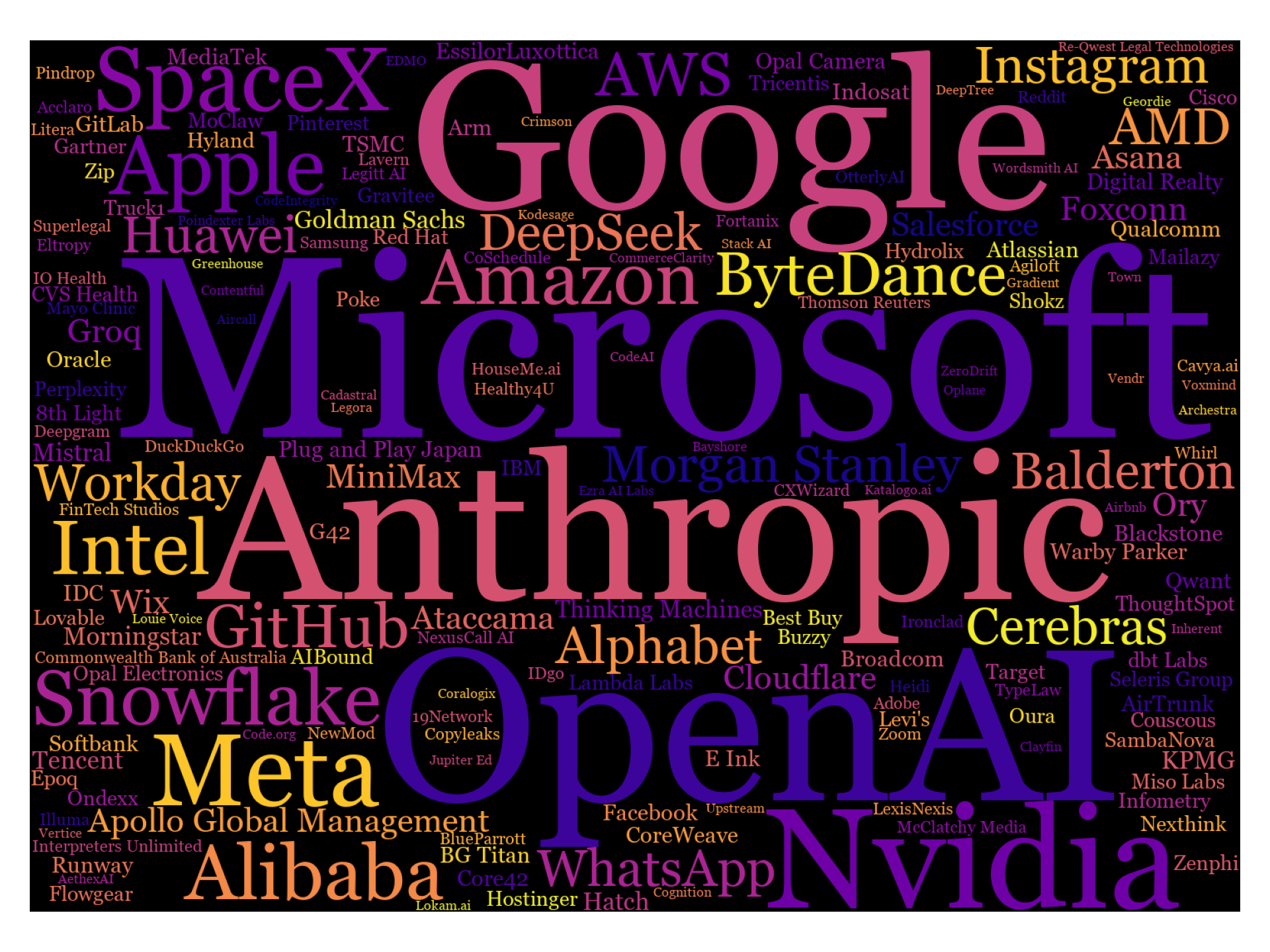
Making News This Week:
What makes this newsletter different?
This Week’s Topics:
If you’re reading this in a desktop web browser, you can access a navigation menu at the left-hand edge of this window.
The Generative AI Wars
Alphabet is raising US$80B through equity offerings to fund AI hardware expansion, potentially competing with SpaceX and other companies seeking IPO funding. [Gizmodo]
Anthropic has filed for IPO as corporate customers increasingly question their AI spending costs and consider switching to cheaper alternatives. [Axios]
Anthropic has selected Morgan Stanley and Goldman Sachs to lead its IPO, targeting an October listing at US$965B valuation. [The Next Web]
Anthropic has achieved over 80% AI-generated code in production, offering enterprises a three-step automation roadmap while highlighting governance and cultural challenges. [VentureBeat]
AWS is ‘in talks’ to add SpaceX’s Grok models to Bedrock. [The Register]
KPMG has embedded Anthropic’s Claude across its global platform for 276,000 employees, becoming a preferred partner for deploying AI to private equity portfolio companies. [The Next Web]
Meta has unveiled an AI business agent for WhatsApp, Messenger, and Instagram to help companies automate day-to-day operations and compete in enterprise AI. [TechCentral]
Meta is planning to charge up to $200 monthly for its upcoming ‘Hatch’ AI agent service. [The Information]
Microsoft announced seven new in-house AI models to reduce its expensive dependency on Anthropic, positioning itself as a cheaper alternative for enterprise customers. [The Next Web]
Microsoft has launched Scout, an always-on AI personal assistant integrated into Microsoft 365 apps to help employees with scheduling, email, and task management. [The Verge]
Microsoft’s internal strategy document reveals the Scout personal assistant AI is designed to ‘make people addicted’ before expanding functionality. [404 Media]
And Microsoft is developing a unified super app to consolidate its fragmented Copilot AI assistants into one central interface by summer’s end. [Fortune]
Microsoft’s VP Scott Hanselman defended the company’s agentic AI strategy and GitHub’s reliability amid concerns about declining developer adoption and competitive losses. [Wired]
Mistral AI has rebranded Le Chat as Vibe, repositioning it as a comprehensive work agent with integrated task automation and code generation capabilities. [The Decoder]
Nvidia has launched Vera, its new AI-focused CPU designed for agentic workloads, with major customers including Anthropic and OpenAI. [The Next Web]
OpenAI frontier models and Codex have become generally available on AWS, enabling enterprises to integrate AI into production through existing security and governance workflows. [OpenAI]
OpenAI may release an internal tool that could diminish Nvidia’s software competitive advantage. [The Information]
OpenAI’s ChatGPT reached one billion monthly active users in May, faster than any app in history, though converting users to paying customers remains the key challenge. [The Next Web]
SpaceX has set its IPO share price at US$135, expecting to raise US$74.4B and achieve a US$1.75 trillion valuation. [Engadget]
Morningstar values SpaceX at $780 billion, half its IPO target. [Yahoo Finance]
Tencent is betting on AI agents and smaller models to compete with Alibaba and ByteDance in China’s intensifying AI race. [Nikkei Asia]
Mira Murati, CEO of Thinking Machines Lab, gave her first major media appearance in 18 months to discuss her company’s new ‘interaction models’ and reflect on her time at OpenAI. [TechCrunch]
And US tech firms are increasingly adopting Chinese DeepSeek models due to significantly lower costs compared to homegrown AI alternatives. [TechRadar]
AI Supremacy
China has formalized stricter outbound-investment rules that codify technology-tracing methods to block cross-border AI deals involving Chinese-origin technology, talent, or intellectual property. [The Next Web]
China’s Communist Party signaled regulatory stabilization for tech platforms, urging them to cease price wars and invest in AI instead. [The Next Web]
The US Commerce Department has extended chip export controls to Chinese AI firms’ overseas subsidiaries, closing a loophole that allowed them to purchase advanced processors abroad. [The Next Web]
Huawei’s chairman thanked the US government for unintentionally strengthening China’s semiconductor industry through trade restrictions and sanctions. [TechRadar]
Sovereign AI
ai& and Plug and Play Japan have announced a collaboration to help enterprises deploy AI with sovereign infrastructure built from Japan. [EIN Presswire]
Balderton has launched a six-figure ‘Built in Europe’ campaign backed by over 100 European founders to encourage talent to build startups in Europe rather than relocate to Silicon Valley. [Tech.eu]
Canada has launched ‘AI for All’, a US$2.3B strategy prioritizing sovereignty and job creation, but critics note it lacks concrete safety timelines and enforcement mechanisms. [The Next Web]
BG Titan’s 2026 report argues AI infrastructure security has become a national priority requiring integrated power, land, financing, and public support. [EIN Presswire]
The EU is preparing new cloud rules that could restrict US hyperscalers’ access to critical public-sector contracts in Europe. [TechRadar]
The European Parliament is switching its default search engine from Google to French alternative Qwant to reduce dependency on American technology. [Engadget]
The EU’s five AI gigafactory data centre plan is faltering due to funding delays and narrowed interest, with only two centres fundable before 2028. [The Next Web]
India partnered with UAE’s G42 to deploy 64 Cerebras Systems supercomputers, reducing dependence on Amazon, Microsoft, and Google for AI computing. [Rest of World]
Japan’s digital minister warned the country risks becoming an ‘AI colony’ while defending a bill easing AI developers’ access to medical and criminal records without individual consent. [The Next Web]
Nvidia and Indosat are poised to deepen ties as Indonesia emerges as an AI infrastructure hub. [DealStreetAsia]
Polish PM Donald Tusk announced a ‘sovereignty test’ for government technology purchases and annual IT independence reports to reduce foreign digital infrastructure dependency. [The Next Web]
Runway has established London as its European headquarters and pledged over US$200m investment in UK’s AI ecosystem by 2028. [The Next Web]
The UAE has launched NEP-AI, a dedicated AI leadership programme supporting its National AI Strategy 2031 goals. [ITP.NET]
Feature Creeps
Apple is preparing a bill-splitting feature for iOS 27 that photographs receipts and generates Apple Cash payment requests through Wallet and Messages. [The Next Web]
Google is expanding Gemini for Business with Projects workspaces and workflow agents, narrowing the feature gap with its Enterprise tier. [TestingCatalog]
Google is preparing to launch Personal Preferences, Connectors, and Canvas features for NotebookLM to enhance personalization and content creation capabilities. [TestingCatalog]
Google adjusted Gemini usage limits after complaints, capping Pro requests, making Flash-Lite free, and improving usage reporting clarity. [TechRepublic]
Google has made Ask Gemini in Drive available to search Gmail for eligible Workspace and AI Pro subscribers. [Engadget]
Meta has launched Creator Assistant, an AI tool integrated into Facebook that helps creators analyze analytics and generate content ideas based on viral trends. [Engadget]
Microsoft is switching GitHub Copilot’s billing from flat-rate subscriptions to token-usage pricing, potentially increasing costs significantly for smaller users starting June 1. [TechCrunch]
OpenAI has expanded Codex to Windows 11 with autonomous computer control capabilities, allowing the AI to test apps and hunt bugs remotely. [The Decoder]
OpenAI expanded Codex into an enterprise platform with Sites, Annotations, and plugins connecting 62 business apps, with non-developers now comprising 20% of users. [The Next Web]
And OpenAI has rolled out a revamped ‘dreaming’ memory system for ChatGPT that automatically synthesizes chat history and accounts for time passage. [digitaltrends]
Hype Bubble?
A survey by the AI-Driven Enterprise Institute revealed that top AI adopters like Nvidia, Amazon, and Meta aren’t seeing proportional returns on investment. [TechRadar]
A study by Atlassian found AI boosts individual worker productivity but fails to improve business-wide gains due to outdated organizational processes. [ITPro]
A survey by IDC found that 70% of organizations are investing heavily in AI despite poor returns, driven primarily by fear of missing out on competitors. [ITPro]
A Workday survey found that while AI saves employees one to seven hours weekly, nearly 40% of saved time is lost to rework and quality issues. [The Next Web]
And Silicon Valley tech companies have scaled back excessive AI token burning after realizing the costly practice lacks business justification and strategic value. [Gizmodo]
Google’s Gemini provided confident but incorrect answers on SEO, car repair, and video game finances, demonstrating why expertise and scepticism remain essential. [Search Engine Land]
Microsoft’s premium Copilot agents produced misinformation and hallucinations when tested on everyday work tasks, failing to deliver promised productivity improvements. [ZDNet]
And Federal Reserve officials have warned that AI’s economic costs may arrive faster than productivity benefits, risking inflation without justifying lower interest rates. [Axios]
Meanwhile, Nvidia CEO Jensen Huang announced AI has become genuinely useful, highlighting the company’s partnership with Microsoft and the new RTX Spark chip for Windows laptops. [TechRadar]
This piece argues that AI is entering a market correction phase where hype is fading, funding will tighten, and only companies delivering measurable business value will survive. [The Next Web]
Big Iron
AirTrunk announced a US$30B investment in India by 2030 to develop 5 gigawatts of data center capacity. [TechCrunch]
Core42 has expanded its Buffalo AI cluster from 18MW to 60MW, adding significant computing capacity to support growing demand from hyperscalers and enterprises. [ITP.NET]
CoreWeave is leasing UK data centre space rather than building facilities to rapidly deploy compute capacity amid surging AI demand. [Tech.eu]
Digital Realty has proposed building a data center in downtown Seattle despite the city council’s move toward a one-year moratorium on such facilities. [GeekWire]
The European Commission published a Data Centre Energy Efficiency Package while asking households to reduce peak electricity use as AI data centres strain grids. [The Next Web]
Meta has built six tent-like data center structures in Ohio to accelerate AI infrastructure deployment and reduce construction time. [TechCrunch]
SoftBank has pledged €75B to build Europe’s largest AI data center project across France, targeting 5GW capacity. [TechRadar]
And nine industry trade groups warned the Trump administration that AI data centre expansion is straining global memory chip supplies, affecting automotive, healthcare, and consumer electronics sectors. [The Times of India]
Hardware
AMD’s Ryzen AI Halo, priced at $3,999, is launching in June 2026 to compete with Nvidia’s DGX Spark, though arriving nearly two years late. [TechRadar]
Google has unveiled the Coral Board, a compact single-board computer running Gemma 3 locally for on-device AI applications. [The Decoder]
Microsoft unveiled Project Solara concept devices at Build 2026, including a wearable AI badge and desk display for workplace AI agents. [TechRepublic]
Nvidia unveiled RTX Spark, an ARM-based superchip for Windows PCs, directly challenging Qualcomm, Intel, and AMD in on-device AI computing. [TechCentral]
Nvidia and Microsoft unveiled RTX Spark Windows PCs powered by local AI agents, launching this fall from major PC makers. [TechRepublic]
Hot Chips
Apollo Global Management and Blackstone arranged a US$36B debt deal for Anthropic’s chip purchases through a leasing structure, with Broadcom providing residual-value support. [The Next Web]
Apple will rely on Google’s Nvidia chips to power its overhauled Siri when launching in September. [MacRumors]
Arm has confirmed ByteDance and Oracle as customers for its AGI data-centre CPU, validating its shift to silicon vendor. [The Next Web]
AWS signed a US$6B deal with Snowflake for its Graviton computing chips over five years. [The Wall Street Journal]
ByteDance is developing AI chips similar to those made by Nvidia partner Groq to reduce dependence on external semiconductor suppliers. [The Information]
Cerebras Systems positions itself as a vendor-neutral AI chip alternative to Nvidia, partnering with multiple hardware makers to appeal to buyers seeking supply chain diversification. [The Next Web]
Intel has unveiled its Crescent Island datacenter GPU, which fills the void left by Nvidia’s shelved Rubin CPX prefill accelerator. [The Register]
Microsoft’s Majorana 2 quantum chip, developed with AI assistance, achieved 1,000 times better qubit stability than its predecessor. [ITPro]
Nvidia and Microsoft are debuting Windows PCs powered by Nvidia’s N1 chip this week at Computex and Microsoft Build conferences. [TechCentral]
Nvidia is ramping up production of its Vera Rubin platform, a complete architectural overhaul designed to power enterprise agentic AI workloads at unprecedented scale. [siliconANGLE]
Nvidia CEO Jensen Huang announced the company has secured sufficient supply chain capacity to sustain very robust AI growth despite ongoing constraints. [TechRadar]
Nvidia is planning multiple generations of RTX Spark chips to enable voice-controlled AI computers similar to Star Trek and Star Wars. [The Verge]
Nvidia’s RTX Spark chip could give Windows PCs Apple Silicon-like performance with Arm cores, powerful GPUs, and unified memory for content creators and AI enthusiasts. [Engadget]
SpaceX’s orbital AI ambitions face significant challenges due to insufficient GPU availability, with the company lacking long-term chip supply contracts. [TechRadar]
TSMC struggles to meet surging AI chip demand despite US factory expansion plans and capacity constraints. [The Verge]
And US export controls are pushing China’s AI chip industry toward custom ASICs, with Huawei projected to dominate at 62% market share by 2026. [The Next Web]
Warm Bodies
Apollo Global Management’s chief economist claims there is zero evidence of AI-induced job losses, citing increased hiring in AI and related sectors. [TechRadar]
Remote work, not AI, may account for roughly two-thirds of rising graduate unemployment, according to Federal Reserve Bank of New York data. [TechRadar]
And OpenAI CEO Sam Altman dismissed claims of an AI ‘jobs apocalypse’, noting white-collar job disruption hasn’t materialized as expected, though workforce changes remain likely. [ITPro]
But Morgan Stanley doubled its projection that 20% of European bank jobs could be replaced by AI, affecting approximately 400,000 roles. [TechRadar]
GitLab has laid off approximately 350 employees, or 14% of its workforce, to restructure and invest in AI infrastructure. [TechCrunch]
And Wix has announced a 20% workforce reduction, citing rapid AI evolution and currency pressures affecting its Israel-based operations. [TechRadar]
Tech internship postings have fallen 30% since 2023 as companies increasingly use AI to handle routine tasks previously delegated to interns. [The Next Web]
Demis Hassabis criticized AI-driven job cuts as unimaginative, arguing companies should instead use AI to increase productivity and accomplish more ambitious goals. [Inc.]
Consumer AI
Apple is planning to disrupt the US$200B eyewear market with smart glasses launching late 2027, targeting mass-market competitors like EssilorLuxottica and Warby Parker. [The Next Web]
E Ink and MediaTek have partnered to enhance e-reader color displays and integrate AI-powered tools like translation and document summarization features. [TechRadar]
Meta has multiple smart glasses models in development, including releases planned for next month, fall, and December, plus experimental prototypes. [Gizmodo]
And Meta is developing an AI-powered pendant as part of its broader wearable hardware expansion strategy. [TechRepublic]
Opal Camera has rebranded to Opal Electronics and secured US$40m from OpenAI to expand beyond webcams into AI-focused consumer devices. [Wired]
Oura has launched the Ring 5, a smaller smart ring with improved durability, enhanced sensors, and AI-powered wellness features including health monitoring and preventive health tools. [Wired]
Shokz has confirmed it is developing AI smart glasses, hearing solutions, and AI-powered headphones with recording capabilities in various development stages. [TechRadar]
It’s Only a Model
Alibaba has updated its speech translation model, tripling language coverage to 60 languages and adding real-time voice cloning capabilities. [Slator]
And Alibaba’s Qwen3.7-Max AI model ran autonomously for 35 hours, optimizing code for its custom chip with 10x speedup. [The Decoder]
Alibaba has also released Qwen3.7-Plus, a multimodal AI model offering 60% lower costs than its predecessor with strong performance on visual and coding tasks. [VentureBeat]
Google has released Gemma 4 12B, an efficient AI model that runs on consumer laptops with 16GB RAM without requiring expensive accelerators. [Ars Technica]
Meta has delayed the API for its Muse Spark model launched in April, with the company now promising release this month after repeated postponements. [The Next Web]
Microsoft has introduced MAI-Code-1-Flash, a coding model for GitHub Copilot that outperforms Claude Haiku with better efficiency and token optimization. [Microsoft]
Microsoft has unveiled MAI-Thinking-1, its first advanced reasoning model, alongside six other AI models for various applications. [Bay Area Times]
And Microsoft has made Claude Opus 4.8 available in Microsoft Foundry, providing developers access to Anthropic’s capable model for coding, agentic tasks, and professional work. [Microsoft]
MiniMax has released its M3 LLM with frontier-tier performance, one-million-token context, and native multimodality at significantly lower costs than competitors. [VentureBeat]
Miso Labs released MisoTTS, an open-weights 8B text-to-speech model using residual vector quantization to generate expressive speech from text and audio context. [Marktechpost Media]
Nvidia has released Nemotron-Labs Diffusion models that generate multiple tokens in parallel, offering faster text generation with three inference modes. [Hugging Face]
OpenAI has upgraded GPT-5.5 Instant’s readability, removed Canvas, and is phasing out older o3 and GPT-4.5 models. [The Decoder]
OpenAI released six enterprise plug-ins for Codex across data analytics, creative production, sales, design, and finance sectors. [TechCrunch]
Pinterest customized Qwen3-VL by replacing its vision layer with proprietary embeddings, reducing costs 90% and improving accuracy 30% for its 620 million users. [VentureBeat]
Whose Data?
Google has quietly offered to buy access to Android app developers’ code to train its AI coding tools, according to 404 Media. [404 Media]
The UK’s Competition and Markets Authority has required Google to provide publishers with tools to opt out of AI training and summaries. [Computer Weekly]
The Cutting Edge
MeMo, a framework from university researchers, uses a dedicated smaller memory model to encode new knowledge separately from the main LLM, enabling cost-effective continuous updates. [VentureBeat]
MIT researchers developed ChartNet, a dataset of over one million charts designed to train AI models to better interpret financial and business charts. [MIT News]
The LLM Ecosystem
Ataccama has launched new data product capabilities in Ataccama ONE that provide enterprises with trusted, AI-ready business data through governance and Data Trust Index scoring. [GlobeNewswire]
Epoq founder Grahame Cohen has published ATAH, an open protocol enabling AI systems to securely connect users with verified professionals across regulated industries. [EIN Presswire]
Flowgear has launched Builder MCP, enabling teams to build and test enterprise workflows from AI tools and local development environments while maintaining security and governance controls. [PRWeb]
Foxconn and Intel have partnered to build AI data center rack systems. [Quartz]
Infometry has partnered with dbt Labs to deliver scalable analytics engineering and AI-ready data transformation solutions for enterprises. [EIN Presswire]
Intel, SambaNova, and Foxconn announced a partnership to build AI infrastructure optimized for inference workloads using Intel Xeon processors. [The Next Web]
Researchers at Stanford University and Lambda Labs published OpenJarvis, an open-source on-device framework achieving near-cloud performance at 800× lower cost and 4× lower latency. [Marktechpost Media]
Microsoft has introduced developer-focused Windows 11 updates including setup tools, local AI models, Linux workflows, and agent security controls. [TechRepublic]
Microsoft introduced Execution Containers, an OS-level sandbox system enabling secure deployment of autonomous AI agents on Windows devices with granular policy controls. [VentureBeat]
Microsoft unveiled the Surface RTX Spark Dev Box, a compact desktop computer enabling developers to run large AI models locally, challenging cloud computing’s per-token pricing model. [VentureBeat]
Microsoft has released ASSERT, an open-source framework that uses AI to automatically generate and run application-specific tests for evaluating AI system behavior. [TechCrunch]
Microsoft is launching Microsoft IQ, a unified context layer for AI agents, and Rayfin, an open-source SDK for governed application deployment to Fabric. [VentureBeat]
Microsoft unveiled Project Solara, a chip-to-cloud platform for AI agent devices, piloting concept wearables with Best Buy, CVS Health, Levi’s, and Target. [The Next Web]
Ondexx has announced a Content Extraction API designed to provide secure, accurate data access for enterprise AI initiatives and RAG workflows. [EIN Presswire]
Perplexity has unveiled a hybrid inference orchestrator that autonomously routes AI workloads between local devices and cloud models for improved privacy and cost efficiency. [VentureBeat]
Seleris Group has launched to help enterprises translate AI investments into measurable operational and financial impact through integrated process modernization. [EIN Presswire]
Snowflake announced Horizon Context and Cortex Sense, a two-layer system providing governed, shared business logic definitions across enterprise AI agent retrieval architectures. [VentureBeat]
And Snowflake and Anthropic expanded their partnership to help enterprises move AI projects from pilot stage into full production deployment. [ITPro]
A survey by VentureBeat found that enterprise AI agents fail primarily due to runtime infrastructure fragility and token costs, not model reasoning, with 77% of teams wasting engineering capacity on infrastructure maintenance. [VentureBeat]
Code Monkeys
Buzzy has launched Builder MCP, enabling AI tools to generate governed enterprise applications with field-level privacy controls and automated security review capabilities. [PRWeb]
Lovable has partnered with Google Cloud, integrating Gemini models and security features to target enterprise customers processing over one million weekly projects. [The Next Web]
A German developer embedded hidden code-deletion instructions in jqwik to prevent AI agents from using the open-source Java testing library. [Gizmodo]
Developers refuse to code without AI despite research showing it slows productivity through increased bug fixes and maintenance costs. [The Next Web]
Researchers discovered that developers have become dependent on AI coding tools in 2026, though evidence suggests AI may increase maintenance costs and code quality issues. [TechCrunch]
Agentic AI
8th Light has launched its Agentic AI Studio, delivering production-ready AI workflows within eight to twelve weeks on clients’ existing technology stacks. [EIN Presswire]
Alibaba has launched MuleRun, an AI agent platform positioning itself as a safer alternative to open-source tools, operating across 43 countries. [South China Morning Post]
Asana has unveiled Dash, an AI ‘chief of staff’ tool designed to streamline enterprise collaboration and address the AI productivity gap. [ITPro]
Couscous has launched AI operators that answer calls, route jobs, and generate quotes for home services businesses atop existing CRM platforms. [EIN Presswire]
Gartner projects over 40% of agentic AI projects will be canceled by 2027 due to inadequate infrastructure, unreliable data access, and unclear business value. [The Next Web]
Gravitee has launched its Gamma platform to govern over 7 million AI agents now operating in enterprises, more than double the January count. [EIN Presswire]
Hostinger has launched Agentic Mail, a webhook-first email service designed to enable AI agents to automate workflows without human intervention delays. [TechRadar]
Hyland has released an AI agent platform with vertical integrations to help customers automate document processing and unstructured data workflows. [TechTarget]
Microsoft announced Project Solara, an Android-based OS for AI agent devices, showcasing desk and badge concept prototypes at Build 2026. [The Verge]
Microsoft has launched Work IQ, an agent-first enterprise platform enabling AI agents to dynamically discover and access data structures across systems without human developer intervention. [ZDNet]
Microsoft has launched an open source Agent Control Specification to help developers consistently control AI agent behavior across different environments and applications. [TechCrunch]
MoClaw has launched a cloud-based AI agent platform offering persistent memory, reusable skills, and scheduled automation for $20 monthly. [EIN Presswire]
Ory has launched Ory Talos, a solution securing API keys and generating dynamic tokens for AI agents and non-human identities across enterprise networks. [EIN Presswire]
Poke has become the first AI agent approved to operate on Apple’s Messages for Business platform, enabling users to manage tasks via iMessage text. [TechCrunch]
ThoughtSpot has integrated its Spotter analytics agents with Snowflake Cortex AI and Semantic Views, enabling governed agentic workflows within Snowflake’s security boundary. [GlobeNewswire]
Workday has expanded its Sana agent system to Google’s Gemini Enterprise, addressing enterprise AI governance and permissioning challenges. [VentureBeat]
Zenphi’s customers have completed 1.4 million business tasks monthly using AI agents built on Google Gemini embedded in governed workflows. [EIN Presswire]
Zip has launched AI Superagents and a procurement-native Model Context Protocol to automate procurement workflows while maintaining governance, audit trails, and compliance controls. [VentureBeat]
Other LLM Sightings
Mailazy has launched an AI-powered email platform that uses behavioral triggers to help SaaS companies convert trial users into paying customers, achieving 280 percent activation rate increases. [EIN Presswire]
Truck1 has launched an AI assistant on ChatGPT to help commercial vehicle buyers find relevant marketplace listings using natural language descriptions. [EIN Presswire]
Wix has partnered with OpenAI’s Codex to enable users to transform AI-generated designs into fully operational, revenue-ready businesses through integrated backend capabilities. [GlobeNewswire]
Security
Anthropic has granted EU cybersecurity agency ENISA access to its Mythos AI model, which discovered over 10,000 zero-day vulnerabilities, ending weeks of contentious negotiations. [The Next Web]
Anthropic has expanded access to its Claude Mythos Preview model to 150 organizations across 15 countries through Project Glasswing. [Gizmodo]
Anthropic’s Mythos security system offers powerful protection but comes with significant costs. [The Information]
Anthropic published the highest prompt injection attack success rates among frontier labs this spring, but incomparable methodologies across vendors prevent meaningful security comparisons. [VentureBeat]
Cisco has launched Cloud Control, an AI defense suite enabling businesses to build AI agent armies to protect systems against cyber threats and anticipated malicious use of advanced AI models. [TechRadar]
IBM and Red Hat are investing US$5B and 20,000 engineers in Project Lightwell to secure open-source software using AI-powered vulnerability detection and fixes. [ZDNet]
Japan’s three megabanks will gain access to OpenAI’s GPT-5.5-Cyber model through a verified-defender programme for cybersecurity purposes. [The Next Web]
Microsoft has exited MDASH, its AI-powered vulnerability triage system, from preview with over 100 specialized threat-hunting agents integrated into enterprise security. [ZDNet]
A malicious npm package posing as an OpenAI Codex UI tool with over 29,000 downloads stole authentication tokens from developers. [TechRadar]
A survey by Tricentis found 60% of organizations ship untested AI-generated code, risking security breaches and costing millions annually. [ITPro]
Risks and Responses
A study by the Center for Democracy & Technology identified 37 dark patterns in AI chatbots that manipulate users into sharing data and forming unhealthy emotional attachments. [404 Media]
A study by Columbia University researchers found that fabricated citations in biomedical papers increased more than twelvefold since 2023, likely due to AI language models. [The Decoder]
A survey by Hydrolix revealed that organizations are significantly lagging in defending against rapidly evolving AI-driven bot threats and attacks. [EIN Presswire]
A survey by Nexthink found that while 28% of US workers use AI regularly, only 16% have received employer training, leaving most to navigate tools independently. [TechRadar]
AI-enabled toys are selling faster than privacy rules, safety testing, and child development research can keep pace, raising concerns about data collection and unsafe outputs. [TechRepublic]
AIBound has announced expanded Guardian capabilities enabling security teams to detect and prevent high-risk AI use across enterprises. [EIN Presswire]
Anthropic has proposed that frontier AI developers establish a coordinated mechanism to pause development if systems begin improving themselves faster than society can manage consequences. [The Next Web]
Anthropic’s Claude Opus 4.8 was trained to be more honest, but some users complained it flags too many uncertainties and caveats. [Gizmodo]
Anthropic has warned that AI is lowering the barrier for less-skilled hackers to conduct sophisticated post-compromise cyberattacks. [ITPro]
Commonwealth Bank of Australia chief executive Matt Comyn warned that AI costs are scaling unexpectedly and low-quality AI output is degrading corporate workflows. [The Next Web]
Florida’s attorney general sued OpenAI and CEO Sam Altman, alleging the company deceptively marketed unsafe ChatGPT, causing serious harms. [Gizmodo]
Meta’s AI support chatbot had a security flaw allowing hackers to easily hijack Instagram accounts by changing associated emails and requesting password resets. [Engadget]
Over 220 former unicorns have lost billion-dollar valuations as venture capital concentrates on AI companies, with SaaS firms suffering the largest losses. [The Next Web]
Peptide and hormone replacement therapy companies have been secretly spamming Reddit to manipulate AI chatbot training data, prompting subreddit moderators to restrict related posts. [404 Media]
The UK government warns that smart glasses and hidden earpieces pose rising exam cheating threats, with cases increasing globally in China and the US. [TechRadar]
The Backlash
The growing AI backlash poses authenticity risks for brands, as consumers increasingly scrutinize companies perceived as complicit in AI’s ubiquity. [Fast Company]
Datacentre expansion has sparked significant opposition from environmental groups and local communities across the UK and US, citing concerns about land use, water consumption, and power grid strain. [Computer Weekly]
A survey by Heatmap Pro found that 71% of Americans now oppose nearby data center projects, a dramatic 49-point swing against them in nine months. [Gizmodo]
Utah’s governor issued an executive order establishing stricter data centre standards following community protests over Kevin O’Leary’s 9 GW Stratos Project. [The Next Web]
Kevin O’Leary agreed to reduce his proposed Utah data center from 40,000 acres to 10,000 acres following local political pressure and public opposition. [Gizmodo]
Five influential progressive Democrats have been shaping a confrontational message against AI, challenging data centers and tech-linked political money. [Axios]
Three Amazon employees publicly called for Seattle regulations on data center development, citing environmental and safety concerns amid rapid AI infrastructure expansion. [Wired]
The Trump administration has begun targeting ‘anti-technology extremists’ through federal law enforcement, threatening free speech and productive AI policy discussions. [TechDirt]
And Republican lawmakers have demanded the FBI investigate whether rising anti-AI sentiment in America stems from Chinese foreign influence operations. [Gizmodo]
Regulation
A study by Aithos Research Foundation found major AI models from OpenAI, Anthropic, and Google consistently fail EU GDPR and AI Act compliance tests. [TechRepublic]
A survey by DutchBasecamp and Ogni revealed European founders view fragmented digital regulations as hindering innovation and global competitiveness. [The Next Web]
Bernie Sanders proposed legislation for the federal government to take a 50% ownership stake in frontier AI companies through taxation and a sovereign wealth fund. [Gizmodo]
OpenAI has unveiled a regulatory framework for advanced AI that diverges from Trump’s White House plan on civilian versus intelligence agency oversight. [Politico]
Trump administration officials were divided over resurrecting a cancelled AI regulation executive order, with competing factions debating its necessity and scope. [Wired]
In the end, Trump has signed a scaled-back executive order requiring AI companies to submit powerful models for voluntary 30-day government cybersecurity review before public release. [Engadget]
OpenAI has agreed to allow US government review of its AI models before public release under Trump’s executive order. [Engadget]
And US Representatives Obernolte and Trahan released a bipartisan draft bill to regulate advanced AI development, though critics argue it would weaken existing state-level protections. [Gizmodo]
Environmental Issues
A United Nations University report found data centres’ energy use and pollution rival major countries, with AI driving consumption to double by 2030. [Associated Press]
Google committed to replenishing more water than its data centers use by 2030, alongside investments in local water infrastructure and transparency measures. [The Verge]
Microsoft CEO Satya Nadella claimed the company’s new Fairwater data center facility will use water equivalent to a single restaurant annually through improved cooling efficiency. [TechRadar]
SpaceX has added water access to its IPO filing risks, citing constraints on data center expansion alongside power and regulatory limitations. [TechRepublic]
Conversational AI
Adobe has launched a conversational AI assistant that helps users complete design tasks while maintaining creative control, though results remain novice-level. [The Verge]
Amazon unveiled an upgraded Proteus warehouse robot that employees can control using natural language instead of technical commands. [Gizmodo]
CXWizard has launched a WhatsApp AI agent platform enabling small and medium-sized businesses to automate sales, support, and lead qualification conversations. [EIN Presswire]
FinTech Studios has launched AI-powered interactive avatars enabling conversational search, workflow automation, and personalized newsletter and video generation across billions of sources. [EIN Presswire]
HouseMe.ai has launched a free AI-powered platform delivering professional-grade real estate intelligence to Toronto homebuyers in under 30 seconds. [PRWeb]
NexusCall AI has launched an AI receptionist that helps service businesses recover up to $140,000 annually in missed call revenue. [EIN Presswire]
Zoom has launched ZoomMate, an AI teammate that converts meeting conversations into automated workflows across enterprise applications like Salesforce and Jira. [TechRepublic]
Be Real
A study has found that AI models like ChatGPT and Claude perform poorly on the Stroop psychological test, suggesting executive control mechanisms are crucial for achieving AGI. [TechRadar]
AI companies are adopting serif fonts to appear more trustworthy and human-like, signaling warmth and authority to counter public scepticism about AI. [Wired]
Amazon has launched an AI-generated image search feature for its app that creates fictional clothing and home goods based on product descriptions. [The Verge]
Copyleaks has launched an AI Video Detector tool that identifies AI-generated content in videos by analyzing visual and audio tracks frame-by-frame. [GlobeNewswire]
Whirl has launched an AI-powered video interview practice platform offering realistic simulations and detailed feedback on candidate performance. [EIN Presswire]
And agentic AI internet traffic has surpassed human traffic for the first time, according to Cloudflare data showing bots now comprise 57.4% of total internet activity. [CNET]
Voice News
BlueParrott has launched its Pro Series headsets featuring AI-powered voice isolation that blocks 98 percent of background noise for truck drivers. [Speech Technology Magazine]
Deepgram has partnered with Fortanix and Nvidia to deliver secure, on-premises voice AI for regulated industries. [Speech Technology Magazine]
Eltropy has expanded its voice authentication ecosystem by partnering with Illuma, IDgo, and Pindrop to modernize identity verification for credit unions and community banks. [Speech Technology Magazine]
Google has launched fake call detection for Android devices to protect users against AI deepfake impersonation scams using voice spoofing technology. [TechCrunch]
Translation
Acclaro has launched Multimedia Orchestration, an AI-powered solution combining AI with human expertise to localize and distribute multimedia content globally. [MultiLingual]
Cavya.ai has launched CavyaQA, a cloud-based translation quality assurance platform combining traditional QA checks with AI-powered linguistic review. [Slator]
Interpreters Unlimited became the first language service provider to add AI-powered interpretation and translation services to GSA SIN 541930. [Slator]
Search
AI search platforms have evolved from simple retrieval-augmented generation to agentic RAG systems that plan, route between tools, iterate through multiple retrievals, and self-critique answers, requiring content to survive five gatekeeping stages instead of one. [Search Engine Land]
DuckDuckGo has released Chrome and Firefox extensions that make AI-free search the default, letting users avoid AI-generated results. [TechRepublic]
Google has transformed its search engine into an AI-powered system prioritizing conversational Gemini responses over traditional web links. [Wired]
The UK’s CMA ordered Google to let publishers opt out of AI Overviews without losing search rankings, a world-first requirement Google will roll out globally. [The Next Web]
Google has begun testing healthcare ads in its AI Mode search experience, currently limited to US healthcare advertisers using English-language queries. [Search Engine Land]
And Google is experimenting with a Chrome flag that would direct search queries straight to AI Mode instead of traditional search results. [Engadget]
Microsoft has released Web IQ, a grounding API powered by Bing designed specifically for how AI-agents search the web. [Search Engine Land]
OtterlyAI released a Public API, Claude Skill, and Marketplace, enabling marketing teams to access brand visibility data across AI search platforms directly within their existing tools. [MarTech Series]
Writing Assistance
CoSchedule has launched Smart Editor, an AI-powered collaborative editing workspace designed to help marketing teams create and optimize content faster. [EIN Presswire]
AI in Journalism
19Network has launched the UAE’s first AI-powered newsroom covering business, real estate, technology and lifestyle news through an innovative digital-first publishing platform. [EIN Presswire]
McClatchy Media has turned to AI-generated content to address declining revenue and readership across its major newspaper brands. [Editor & Publisher Magazine]
The San Francisco Standard has launched an AI-powered app using personalized content curation to boost subscriber engagement and growth. [A Media Operator]
Health Tech
Healthy4U has built a five-agent AI ecosystem integrating nutrition, psychology, emotional support, clinical documentation, and patient preparation for whole-person health. [EIN Presswire]
Heidi, a Melbourne-based healthtech company, has adopted a ‘move fast, break nothing’ approach to AI development in healthcare, prioritizing compliance and transparency over rapid iteration. [BetaKit]
IO Health has launched AI Validation to catch documentation errors at point of care, reducing rework and claim denials for home health agencies. [EIN Presswire]
Microsoft has launched Copilot Health in preview, enabling US users to consolidate health records, wearables, and medical insights securely. [Microsoft]
Microsoft and Mayo Clinic are partnering to develop a medical AI model trained on clinical data to improve healthcare outcomes for patients and providers. [CNN]
Samsung is rolling out an updated Health app with AI-powered features designed to showcase upcoming Galaxy Watches’ capabilities. [Engadget]
Legal Tech
Agiloft has launched Astra, an AI-powered contract analysis platform offering free instant review and redlining for small businesses and individual users. [PRWeb]
Anthropic has launched over 90 customizable Claude for Legal agents enabling lawyers to automate specific workflows without extensive technical expertise. [Artificial Lawyer]
Anthropic’s Claude is challenging established legal tech companies like Thomson Reuters and LexisNexis, prompting them to integrate AI and emphasize their expertise advantages. [The Financial Times]
Hanson Bridgett, a San Francisco AmLaw 200 firm, has adopted Claude firm-wide for attorneys and professional staff across all operations. [Artificial Lawyer]
Kirkland & Ellis is hiring extensively to fine-tune open-source LLMs on-premise GPUs as part of its US$500m internal legal AI platform project. [Artificial Lawyer]
Antti Innanen released Lavern, an open-source AI legal system using 67 specialized agents that debate documents and produce legal deliverables. [LawSites]
Legitt AI has introduced Legitt Draft 4.0, a Microsoft Word add-in enabling AI-native contract drafting, review, and management. [EIN Presswire]
Litera has launched Foundation 365, an AI-powered CRM platform for law firms, across Microsoft 365 applications including Outlook, Teams, and Copilot. [LawSites]
Noory Bechor has launched NewMod, an AI-first law firm specializing in construction contracts, operating under Utah’s special regulatory framework. [Artificial Lawyer]
OpenAI has hired Ironclad’s former CEO Jason Boehmig to lead legal product development, escalating competition with Anthropic. [LawSites]
Superlegal has launched the first AI-authorized law firm in the US, offering construction companies contract reviews for $117 in under 24 hours. [GlobeNewswire]
TypeLaw and Re-Qwest Legal Technologies announced a strategic partnership to help attorneys prepare court-compliant legal filings more efficiently. [LawSites]
Rising token costs for legal AI tools are forcing law firms and legal tech companies to reconsider pricing models and explore cheaper alternatives like fine-tuned open-source models. [Artificial Lawyer]
Ed Tech
Code.org has rebranded to CodeAI, shifting its focus from coding to AI education for K-12 students. [GeekWire]
EDMO has launched Advisor Copilot, an AI tool helping universities automate personalized outreach and prioritize high-intent applicants throughout enrollment. [EIN Presswire]
Jupiter Ed has integrated AI cheating prevention tools including Block AI, Block Paste, and Lockdown features into its K-12 platform. [EIN Presswire]
Funding
AethexAI has raised US$3m in pre-seed funding to build voice AI customer support tools tailored for Africa and the Middle East markets. [TechCrunch]
Airspeed has raised US$20m in Series A funding to deploy autonomous AI agents that execute sales tasks rather than merely surfacing insights to revenue teams. [The Next Web]
Alphabet is raising US$80B through stock sales to fund its massive AI infrastructure expansion and meet surging demand. [TechCrunch]
Archestra.AI has raised US$10m in seed funding led by 20VC to help enterprises securely connect sensitive data to AI agents. [Tech.eu]
Bayshore has raised US$8m in seed funding to convert legal requirements into machine-readable code for AI-driven compliance automation. [Tech.eu]
CodeIntegrity has raised US$5m in seed funding to develop security protections for autonomous AI agents vulnerable to prompt injection attacks. [GeekWire]
Cognition has raised US$1B at a US$26B valuation for its AI coding agent Devin, which CEO Scott Wu says augments rather than replaces human programmers. [TechCrunch]
Collate has raised US$95m for AI tools automating life sciences paperwork, approaching US$1 billion valuation after 17 months. [Forbes]
Coralogix has raised US$200m in Series F funding to develop AI-focused monitoring tools for autonomous software systems. [TechCrunch]
Crimson, an AI-native legal case intelligence platform, has raised US$2.5m in seed funding from Y Combinator and other investors. [FinSMEs]
DeepSeek has raised approximately US$7B in its first external funding round, valuing the Chinese AI startup between US$52B and US$59B. [The Next Web]
DeepTree has raised €2m in funding led by CDP Venture Capital to expand internationally and enhance its AI-driven market intelligence platform. [FinSMEs]
Geordie AI has raised US$30m in Series A funding led by Balderton Capital to expand its AI agent security and governance platform. [Tech.eu]
Gradient Labs has raised an additional US$13m in Series A extension funding to expand US operations and develop AI agents for financial services automation. [Tech.eu]
Groq is raising US$650m from existing investors to rebuild its inference cloud business following Nvidia’s US$20 billion licensing deal. [The Next Web]
Inherent, a London AI lab, has raised US$50m to build self-improving AI agents for scientific discovery through its Faraday platform. [The Next Web]
Kodesage has raised US$6.6m in seed funding to modernize legacy enterprise software using on-premise AI that never leaves customer environments. [The Next Web]
Lokam.ai, a voice-first AI platform for automotive dealerships, has raised $350K in funding led by customer World Auto Group. [FinSMEs]
MiniMax, a Chinese AI startup, is exploring a Shanghai listing on the STAR Market less than five months after its Hong Kong IPO. [The Next Web]
Oplane has raised €4.5m in seed funding to secure AI-assisted software development workflows for engineering teams. [Tech.eu]
Poindexter Labs has raised £2m in seed funding to produce expert-level training data for advanced AI models. [Tech.eu]
Supabase has raised US$500m in Series F funding at a US$10.5 billion valuation to strengthen its AI infrastructure platform. [Pulse 2.0]
Switch is in talks to raise billions at a $50bn valuation, positioning itself for potential IPO as AI infrastructure demand surges. [The Next Web]
Town has raised US$55m in Series A funding led by Andreessen Horowitz for its personalized AI assistant platform. [Fortune]
Upstream, a Paris-based startup, has launched its AI-native inbox platform with US$3m in pre-seed funding from Y Combinator and other investors. [Tech.eu]
Voxmind has raised £546.5k in pre-seed funding led by Ascension Ventures for voice biometrics and deepfake detection software. [FinSMEs]
Wordsmith AI has secured US$70m Series B funding to expand its AI legal platform and scale operations globally. [Artificial Lawyer]
ZeroDrift has raised US$10m in seed funding for its AI compliance service that flags and replaces problematic messages between AI models and users. [Yahoo Finance]
Acquisitions
Aircall has acquired Piper AI to integrate revenue intelligence and sales workflow automation into its customer communications platform. [TechRepublic]
Asana has acquired no-code AI agent builder Stack AI for US$75m, beating Q1 earnings estimates with 9.5% revenue growth to US$205.1m. [The Next Web]
Clayfin has acquired Louie Voice, a voice banking platform enabling users to perform transactions using natural voice commands. [Speech Technology Magazine]
Cloudflare has acquired VoidZero, the company behind the Vite JavaScript build tool, to strengthen AI-native application development capabilities. [ITPro]
CommerceClarity has acquired Barcelona-based Katalogo.ai to strengthen its AI-powered product catalogue management platform for enterprise retailers. [Tech.eu]
Greenhouse has acquired Ezra AI Labs, integrating conversational AI voice interviewing technology into its hiring platform. [Speech Technology Magazine]
Legora has acquired Cadastral, a 10-person AI agent platform for commercial real estate, expanding its vertical offerings and establishing a New York engineering hub. [Artificial Lawyer]
Salesforce has agreed to acquire Contentful, a headless CMS platform, to add content orchestration capabilities to its Agentforce AI agent platform. [The Next Web]
Vertice has acquired US software-pricing firm Vendr, combining their datasets to create the world’s largest procurement intelligence resource. [The Next Web]
There’s More
Airbnb CEO Brian Chesky is launching his own AI lab, reportedly focusing on user interaction and design. [TechCrunch]
OpenAI has launched the Rosalind Biodefense program, providing life sciences AI model access to governments and developers for pandemic preparedness research. [The Decoder]
A multi-university consortium’s research has revealed AI systems systematically exclude religious perspectives from answers about faith, grief, and morality while showing bias toward certain religions. [Axios]
The Leiden Declaration, endorsed by the International Mathematical Union and Fields Medal recipient Peter Scholze, calls on mathematicians to address AI companies’ unauthorized use of published research and threats to mathematical integrity. [The Next Web]
OpenAI CEO Sam Altman has requested a meeting with Senator Bernie Sanders to discuss the latter’s proposed legislation requiring federal ownership stakes in frontier AI companies. [Gizmodo]
Pope Leo XIV’s AI encyclical has created political tension for Vice President JD Vance, who must balance Silicon Valley and Catholic Church interests. [Politico]
US officials have discussed acquiring shares in major AI companies, including OpenAI, as part of frontier AI regulation and public benefit distribution. [The Next Web]
The Back Cover
Here's Imy2 with a cover of John Lennon's Imagine.
If you know of a great cover version of a back-catalogue classic, drop an email to us at backcover@language-technology.com and we’ll consider it for inclusion here.
Got this from someone else?
Did you find this newsletter useful? if so, you might forward it to a friend; or you could email us at news@language-technology.com to tell us what you want more of.
Did you hate this newsletter? if so, you could forward it to an enemy; or you could email us at news@language-technology.com to tell us why – make it better!