
This Week in NLP #370
Keep up with what happened in NLP in the week ending Friday 19th December 2025.

Above the Fold
Overwhelmed? Here’s our pick for five things to know about this week.
Amazon is in talks to invest US$10B in OpenAI while supplying Trainium chips and cloud services, potentially valuing the company over US$500B. [Engadget]
Google has released Gemini 3 Flash, a fast and cheap AI model that outperforms its predecessor and is now the default in the Gemini app and search. [TechCrunch]
OpenAI has launched a developer platform allowing third-party apps to be submitted and integrated directly into ChatGPT after a review process. [TestingCatalog]
The Trump administration is launching a Tech Force program to recruit 1,000 early-career technologists to modernize the federal government’s technological capabilities. [Gizmodo]
The UK-US Tech Prosperity Deal faces uncertainty due to disagreements over digital services tax and trade barriers, with the US threatening to pull out. [ITPro]
Now read on for everything else that happened in NLP this week.
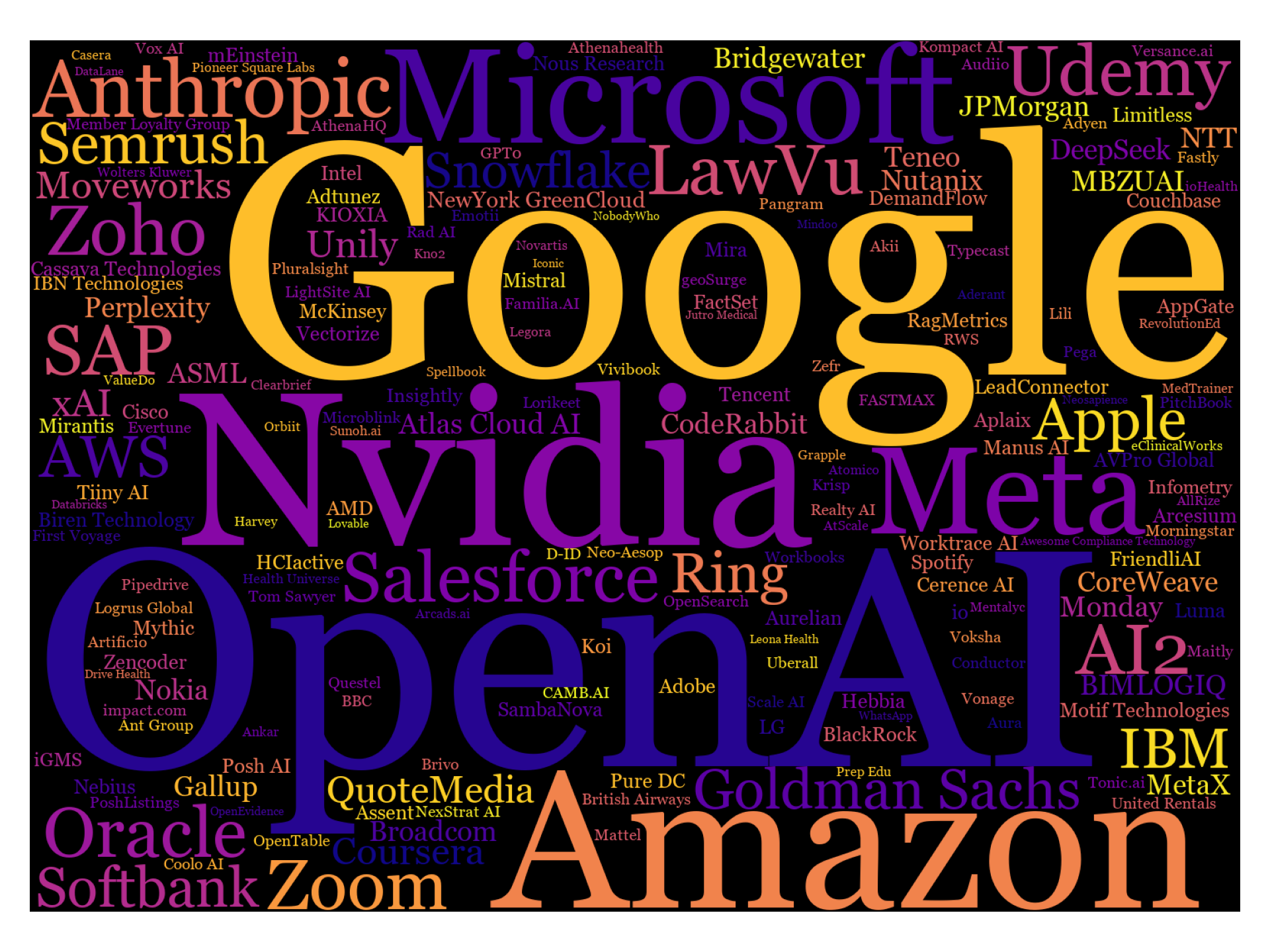
Making News This Week:
What makes this newsletter different?
This Week’s Topics:
If you’re reading this in a desktop web browser, you can access a navigation menu at the left-hand edge of this window.
The Generative AI Wars
Amazon has launched a web version of Alexa+ that offers a ChatGPT-like interface for typing queries, managing tasks, and analyzing files. [digitaltrends]
Anthropic has updated Claude’s ‘skills’ feature to help businesses streamline workplace AI by creating reusable, portable instruction sets across tools. [Axios]
Apple’s long-awaited Siri upgrade, promised in 2024, is now expected to arrive in spring 2026, highlighting the company’s ongoing struggles with its underperforming voice assistant. [MacWorld]
Google released a new Gemini Deep Research agent with enhanced capabilities, allowing developers to embed research tools into their apps through an Interactions API. [TechCrunch]
And Google’s new AI tool CC provides personalized daily briefings by summarizing emails, calendar events, and web searches for users with Google accounts. [ZDNet]
OpenAI launched new AI models GPT-5.2 Pro and GPT-5.2 Thinking, aiming to outpace Google in mathematical and scientific reasoning capabilities. [Firstpost]
But Google’s Gemini 3 Flash matches or outperforms GPT-5.2 in several benchmarks, offering efficient AI performance at a lower cost. [Engadget]
And OpenAI’s ChatGPT 5.2 has been criticized by early users as ‘boring’ and ‘too corporate’, despite the company claiming it’s the world’s smartest model. [TechRadar]
OpenAI appears to be developing a skills system similar to Anthropic’s, with directories for processing documents and data in a modular approach. [The Decoder]
OpenAI’s Codex, an AI coding tool, is now largely developed by itself to improve its own capabilities across various software engineering tasks. [Ars Technica]
OpenAI has aggressively expanded its dealmaking in 2025, hiring key executives and completing multiple acquisitions while potentially preparing for a trillion-dollar IPO. [Gizmodo]
OpenAI has discussed potential funding that could value the company at US$750B, according to a report by the Information. [Bloomberg]
But despite massive investments and rapid growth with ChatGPT, OpenAI faces increasing competition and financial challenges that raise questions about its long-term dominance in AI. [Daily Sabah]
Two former Google DeepMind co-founders, Demis Hassabis and Mustafa Suleyman, now lead rival AI labs with contrasting visions for achieving AGI. [The Neuron]
AI Supremacy
China has secretly built a prototype EUV semiconductor chip machine in Shenzhen, potentially accelerating its semiconductor independence ahead of analysts’ expectations. [DealStreetAsia]
DeepSeek and other Chinese open-source AI models are challenging US proprietary systems with their free, customizable, and increasingly capable alternatives, potentially disrupting the generative AI market. [TechDirt]
MetaX Integrated Circuits’ shares surged 700% on its market debut, driven by China’s push to reduce reliance on US AI chip makers. [DealStreetAsia]
Sovereign AI
Tech giants Amazon, Microsoft, and Google are investing billions in India’s digital economy, recognizing its strategic importance for global technology ecosystems and future innovation. [Khaleej Times]
ASML’s monopoly on advanced chip-making technology could enable Europe to disrupt America’s AI-driven economic growth by restricting semiconductor exports and enforcing data protection laws. [Technology.Org]
Europe is seeking to reduce its technological dependence on US digital platforms by developing regulatory strategies and indigenous alternatives that preserve innovation while ensuring strategic sovereignty. [Firstpost]
MBZUAI has partnered with AWS to advance AI research, skills development, and startup growth through collaborative programs and cloud infrastructure support. [ITP.NET]
Nokia warns European internet infrastructure is struggling to handle AI workloads, calling for collaborative network modernization across governments, telecoms, and enterprises. [TechRadar]
Nutanix is expanding its cloud platform with sovereign cloud features, on-premises control, and multicloud capabilities to support regulated deployments and AI workloads. [The Register]
SAP and OpenAI have announced OpenAI for Germany, a tailored AI service for the public sector launching in 2026 with data sovereignty focus. [TechRepublic]
Taiwan has opened a sovereign AI data center powered by Nvidia’s Blackwell chips, with plans to expand its capacity sixfold by 2028 in partnership with NTT. [Nikkei Asia]
Feature Creeps
Amazon is launching an AI chatbot feature for Kindle that allows readers to ask questions about a book without rereading its pages. [Gizmodo]
BIMLOGIQ is integrating AI into Autodesk Revit, enabling users to automate repetitive tasks through natural-language prompts and boost productivity for AEC teams. [Antara]
Google researchers developed a framework enabling AI agents to more efficiently use tool and compute budgets by introducing Budget Tracker and Budget Aware Test-time Scaling (BATS) techniques. [VentureBeat]
Google Maps now provides richer, more visual search results through Gemini, including photos, reviews, and location details for local businesses and attractions. [ZDNet]
Google is gradually introducing NotebookLM integration to Gemini web, allowing users to attach notebooks as live data sources for AI conversations. [TestingCatalog]
OpenAI plans to launch an age-verified ‘adult mode’ for ChatGPT in early 2026, using AI to predict user maturity and enable more nuanced content discussions. [TechRadar]
ChatGPT’s mobile app now allows users to branch conversations into new chats, improving workflow efficiency on iOS and Android. [TechRadar]
And OpenAI has rolled back its ChatGPT model router for free and Go users, reverting to a default GPT-5.2 Instant model with manual reasoning model selection. [Wired]
Perplexity has overhauled its iPad app with a redesigned interface, enhanced research features, and improved multitasking to appeal to professional users. [digitaltrends]
Semrush has launched an official app in ChatGPT, enabling users to access Semrush data and intelligence directly within the AI platform. [Business Wire]
Hype Bubble?
Big Tech companies are using complex financial strategies to offload massive AI infrastructure costs, creating a potentially risky US$1T debt-fueled expansion across the tech ecosystem. [WebProNews]
Bridgewater warns that the AI spending boom is entering a potentially unsustainable phase, with rising costs and questions about future profitability. [Yahoo Finance]
Broadcom, CoreWeave, and Oracle saw their shares drop last Monday amid investor concerns about the sustainability and return on investment of massive AI infrastructure spending. [CNBC]
CodeRabbit’s report reveals AI-generated code produces 1.7x more issues than human-written code across logic, security, readability, and performance metrics. [Business Wire]
Experts predict 2026 will be the year businesses finally see meaningful ROI from AI, driven by strategic implementation, AI agents, and mandatory training. [ZDNet]
A Gallup survey reveals 45% of US workers now use AI tools, with tech professionals leading adoption and other sectors rapidly catching up. [WebProNews]
Goldman Sachs warns that AI datacenter investments could falter due to monetization challenges or overwhelming demand by 2030. [The Register]
Google, Microsoft, and Amazon are leading a massive US$300B AI investment surge, targeting infrastructure and research over the next five years. [Zoombangla.com]
Google DeepMind CEO Demis Hassabis warns of an AI startup bubble, with early-stage companies raising massive valuations that may not be sustainable. [ITPro]
IBM’s chief executive warned that massive AI infrastructure investments could cost up to US$1.5T, with a near-zero chance of achieving true AGI. [BusinessToday.in]
JPMorgan Chase rapidly adopted an AI platform, with over 60% of employees voluntarily using personalized AI assistants across various departments. [VentureBeat]
A study by Monday reveals that while 94% of directors use AI at work, many still feel guilty and prefer hiring human specialists over AI replacements. [TechRadar]
OpenAI’s Sam Altman has consistently hyped AI’s potential, framing LLMs as a path to a transformative, utopian technological future. [MIT Technology Review]
Oracle is delaying data center projects for OpenAI by a year, causing market uncertainty about AI infrastructure investments and potential revenue challenges. [Gizmodo]
Salesforce is willing to lose money on AI agent seat-based pricing, betting on long-term customer value and potential future monetization opportunities. [TechRadar]
SoftBank Group Corp fell sharply on the Nikkei 225 as AI infrastructure spending concerns spread from Wall Street to Asian tech markets. [CNBC]
A Teneo survey reveals that 68% of CEOs plan to increase AI spending in 2026, despite less than half of current projects generating returns. [Gizmodo]
Big Iron
A growing wave of public opposition is challenging AI datacenter projects in the US and UK, with concerns ranging from environmental impact to local community disruption. [The Register]
Bernie Sanders proposes a nationwide moratorium on datacenter construction to pause AI expansion and protect workers from potential massive job losses. [The Register]
Atlas Cloud AI and NewYork GreenCloud launched a US$6B sustainable AI infrastructure partnership using Nvidia Blackwell technology and renewable energy. [Business Wire]
Cassava Technologies became Africa’s first Nvidia Cloud Partner, deploying 12,000 GPUs to power AI innovation across five sites on the continent. [News Ghana]
Goldman Sachs research suggests AI’s data center demand could double to 30% by 2025, with power consumption potentially rising 175% by 2030. [ITPro]
Meta is investing US$600B in American infrastructure, supporting jobs and local economic growth across 26 communities nationwide. [Meta]
Nebius AI Cloud 3.1 launched next-generation Nvidia Blackwell Ultra compute with transparent capacity management and enhanced operational capabilities for AI scaling. [Business Wire]
Nvidia plans to build a US$1.5B server farm in Israel by 2031, becoming the company’s largest campus outside the US and a major Middle Eastern data center. [All Israel News]
Oracle has secured nearly US$250B in data center and cloud capacity lease commitments, representing a 148% increase from the previous quarter. [TechRadar]
Pure DC is constructing a 78MW data center campus in Amsterdam, leased to an unnamed hyperscale customer, with a €1B investment. [ITPro]
Hot Chips
Biren Technology is planning a Hong Kong IPO to raise US$300m as China seeks to develop domestic AI chip alternatives to US semiconductors. [DealStreetAsia]
Google is collaborating with Meta to develop TorchTPU, enabling PyTorch developers to more easily use Google’s AI chips. [Sherwood]
Intel is reportedly in talks to acquire AI chip specialist SambaNova Systems as it seeks to compete with AMD and Nvidia in the AI hardware market. [TechRadar]
Mythic has raised US$125m from investors including DCVC and SoftBank to challenge Nvidia in the AI chip market. [Bloomberg]
Nvidia is evaluating expanding H200 AI chip production for Chinese clients after strong demand and US export approval. [Reuters]
Warm Bodies
Amazon CEO Andy Jassy reshuffled AI leadership, with Rohit Prasad departing and Peter DeSantis taking over the company’s AI model, chip, and quantum computing efforts. [Fortune]
McKinsey is considering thousands of job cuts as AI advances and efficiency drives reshape its traditional consulting model. [The Register]
OpenAI has appointed former UK Chancellor George Osborne to lead its global Stargate data center expansion and government partnerships. [TechRadar]
Tencent has named former OpenAI researcher Yao Shunyu as its chief AI scientist, overseeing LLM and AI infrastructure departments. [The Information]
Consumer AI
AirPods may gain AI features like Visual Look Up, Contextual Reminders, and potentially camera-based capabilities when Apple Intelligence arrives in spring 2026. [Gizmodo]
Cerence AI will showcase its xUI platform at CES 2026, featuring enhanced multimodal edge AI, new automotive agents, and advanced audio AI technologies. [GlobeNewswire]
Google’s Pixel introduces Notification Organizer, an AI-powered feature that automatically categorizes and silences less important smartphone alerts while preserving user privacy. [WebProNews]
Google’s Gemini for Home offers modest improvements to smart home voice control, with some new features but persistent limitations that prevent it from feeling truly revolutionary. [Gizmodo]
LG has added an apparently unremovable Microsoft Copilot shortcut to its smart TVs’ home screen through a recent webOS update, sparking user frustration. [Gizmodo]
Meta has updated its AI glasses with a conversation-focus feature to amplify voices in noisy environments and added a Spotify song-matching capability in select markets. [TechCrunch]
Meta’s acquisition of Limitless, an AI pendant maker, signals growing legitimacy for AI wearables while raising significant user privacy concerns. [The San Francisco Standard]
Mira is launching smart glasses with always-on microphones, AI transcription, and a voice assistant that proactively offers help, raising significant privacy concerns. [Gizmodo]
Ring is launching Alexa+ Greetings, an AI assistant that generates custom door-greeting responses based on the caller’s identity and predefined instructions. [TechRadar]
Tiiny AI has unveiled the world’s smallest personal AI supercomputer, the Pocket Lab, offering high-performance computing in a compact, hand-sized device. [digitaltrends]
A wave of AI-powered children’s toys has raised significant safety concerns due to potential inappropriate content, privacy risks, and unknown developmental impacts. [NBC News]
It’s Only a Model
AI2 released Olmo 3.1, an enhanced version of its open-source AI models with improved performance, efficiency, and transparency for enterprises. [VentureBeat]
AI2 introduced Bolmo, a new family of byte-level language models that leverage its Olmo 3 models, offering improved performance and multilingual capabilities without retraining from scratch. [VentureBeat]
AI2 also released Molmo 2, an open multimodal model suite that advances video and multi-image understanding with breakthrough capabilities in tracking, reasoning, and spatial-temporal analysis. [Business Wire]
Cisco has developed a homegrown AI model called Foundation-Sec-1.1-8B-Instruct to enhance its Duo Identity Intelligence service with more accurate and actionable security insights. [The Register]
Luma AI launched Ray3 Modify, an AI video model enabling users to modify footage by preserving original performance and transforming characters. [TechCrunch]
Manus has launched version 1.6, introducing a more powerful Max agent, mobile development capabilities, and Design View for interactive image creation. [Manus]
Meta launched SAM Audio, an AI model that can separate and edit sounds using text, time, and visual prompts across diverse audio scenarios. [The Register]
Mistral AI launched an advanced optical character recognition model priced aggressively at $2 per 1,000 pages, targeting enterprise document digitization challenges. [VentureBeat]
MIT researchers developed DisCIPL, a collaborative framework where an LLM guides smaller models to generate precise, efficient responses while following strict constraints. [MIT News]
Motif Technologies released a high-performing 12.7B reasoning model, offering enterprise AI teams crucial insights into effective model training through a detailed white paper on data alignment, infrastructure, and reinforcement learning. [VentureBeat]
Nous Research’s Nomos 1 AI system scored 87/120 on the Putnam Mathematical Competition, ranking second among nearly 4,000 participants using a compact 30-billion-parameter model. [VentureBeat]
Nvidia has introduced Nemotron 3, a series of open-weights AI models in Nano, Super, and Ultra sizes, designed to address enterprise AI adoption challenges. [The Register]
OpenAI has launched GPT Image 1.5, offering faster image generation, better editing controls, and improved instruction-following for ChatGPT users. [TechCrunch]
Zoom achieved the highest score ever on the Humanity’s Last Exam by developing a sophisticated AI traffic controller that routes queries to multiple existing models and refines their outputs. [VentureBeat]
Whose Data?
Adobe faces a lawsuit alleging it used pirated books to train its SlimLM AI language model. [TechCrunch]
Creative Commons has cautiously endorsed ‘pay-to-crawl’ technology as a potential solution for websites to sustain content creation while managing AI web crawler access. [TechCrunch]
Koi discovered eight browser extensions with over 8 million installs that are covertly harvesting and selling users’ complete AI conversations for marketing purposes. [Ars Technica]
Microsoft clarifies that Windows 11’s AI agents will require explicit user permission to access files, with customizable agent-level controls. [TechRadar]
The LLM Ecosystem
AppGate launched Agentic AI Core Protection, a Zero Trust solution securing AI workloads across on-prem and cloud environments. [Business Wire]
Couchbase launched AI Services, a unified platform that simplifies building and deploying secure, trustworthy AI applications by integrating data and models. [insideAI News]
FactSet launched the industry’s first production-grade model context protocol server, enabling direct AI access to its financial intelligence datasets. [GlobeNewswire]
FriendliAI has launched Nvidia’s Nemotron 3 Nano on its inference platform, offering 90% GPU cost savings and high-performance AI model deployment. [EIN Presswire]
Google DeepMind launched the Interactions API, introducing server-side state management for AI models, enabling more complex, stateful interactions and background execution of long-horizon tasks. [VentureBeat]
Google integrated Opal, a vibe-coding tool, into Gemini, enabling users to create custom AI-powered mini apps without writing code. [TechCrunch]
KIOXIA integrated its AiSAQ technology into Milvus vector database, enabling cost-effective scaling of AI applications with reduced DRAM requirements. [Business Wire]
mEinstein has developed an Edge AI system that enables persistent, private personalization by keeping user data on-device and adapting intelligently to individual needs. [EIN Presswire]
A study by MIT reveals that 95% of AI projects fail, with Google’s Antonio Gulli arguing that better architectural design, not smarter models, is key to enterprise AI success. [VentureBeat]
OpenAI introduced FrontierScience, a new benchmark evaluating AI’s expert-level scientific reasoning across physics, chemistry, and biology. [OpenAI]
RagMetrics launched a Live AI Evaluation Tool to help enterprises overcome trust barriers and accelerate generative AI deployment with real-time validation. [PRWeb]
SAP’s Joule AI assistant leverages extensive institutional knowledge and advanced indexing to provide accurate, up-to-date consulting guidance within the SAP ecosystem. [VentureBeat]
Snowflake and Anthropic are partnering to create an enterprise AI control plane that brings intelligent reasoning directly to corporate data environments. [Fast Company]
Vectorize.io has developed Hindsight, an open-source memory architecture that outperforms traditional RAG by organizing AI agent memory into four distinct networks, achieving 91.4% accuracy on the LongMemEval benchmark. [VentureBeat]
Zencoder launched Zenflow, a free desktop application that uses multi-agent AI orchestration to improve software engineering productivity and code reliability through structured workflows. [VentureBeat]
Agentic AI
Amazon introduced three autonomous DevOps AI agents that can perform code management, security checks, and root cause analysis without constant human supervision. [ZDNet]
Anthropic is expanding Claude’s Agent mode with a multi-sectional interface enabling structured task delegation across research, analysis, writing, building, and other professional workflows. [TestingCatalog]
IBM has released CUGA, an open-source AI agent that can complete around 62 percent of enterprise workflow tasks, offering potential for task automation. [The Register]
Mirantis launched MCP AdaptiveOps services to help enterprises build, operate, and navigate AI infrastructure using MCP servers. [Business Wire]
Posh AI’s Operating Procedures revolutionize banking automation by enabling intelligent, compliant AI agents that can reason, adapt, and act within institutional boundaries. [Business Wire]
Worktrace AI has launched an AI-powered workflow automation agent that helps companies identify and streamline repetitive tasks by passively observing employee work processes. [Upstarts]
Zoom launched AI Companion 3.0, an AI-first work platform with agentic workflows, federated AI, and enhanced productivity features for users. [Computer Weekly]
Other LLM Sightings
Adtunez is an AI-powered PPC management platform that helps marketers prevent costly errors by providing centralized reporting, automated insights, and real-time alerts. [EIN Presswire]
Aplaix launched an AI-powered hiring platform that automates first-round interviews, reducing recruiter workload and accelerating candidate screening. [PRWeb]
Arcesium launched new AI features in its Aquata platform, enabling institutional investors to scale AI strategies and extract value from diverse data sources. [Business Wire]
Assent launched an AI-native solution called Request Manager to help suppliers efficiently manage compliance and sustainability requests through a streamlined, centralized workflow. [Business Wire]
Aurelian launched Cora, an AI copilot for 911 call-takers, helping them maintain consistency and reduce cognitive load during emergency calls. [Business Wire]
AVPro Global has launched Tech Sage, an AI-powered platform providing instant technical assistance for audio, video, and control technology integrators. [Residential Systems]
DemandFlow partnered with LeadConnector to expand its AI-powered marketing technology platform’s lead capture, automation, and engagement capabilities. [GlobeNewswire]
HCIactive expanded its SmartBenefits.ai platform with AI-guided enhancements to simplify benefits navigation, claims processing, and member experience. [Business Wire]
Hebbia integrated Preqin’s private markets data with BlackRock Aladdin, enabling investors to leverage AI for faster, more informed decision-making. [Business Wire]
IBN Technologies has unveiled AI bookkeeping software that automates financial workflows, enhances accuracy, and provides real-time insights for businesses. [EIN Presswire]
iGMS launched an AI-driven Pro+ Plan for short-term rental hosts, reducing workloads by up to 85% through advanced automation and intelligent tools. [Business Wire]
Infometry has launched INFOFISCUS Conversa, an AI platform enabling enterprises to instantly generate SQL-accurate insights through natural language interaction. [EIN Presswire]
Insightly launched Copilot, an AI-powered CRM chatbot that automates tasks, cleans data, and provides insights for sales, marketing, and customer success teams. [TechRadar]
Member Loyalty Group launched an AI-powered solution helping credit unions respond more efficiently and personally to member feedback. [Business Wire]
Morningstar and PitchBook launched ChatGPT apps enabling licensed users to access proprietary investment data and insights through natural language prompts. [Business Wire]
Neo-Aesop has launched an AI-powered app that creates personalized, value-driven fables where children become the heroes of their own stories. [EIN Presswire]
NexStrat AI, founded by ex-consultants, is launching a global enterprise-grade AI platform for strategy and execution that aims to revolutionize traditional consulting workflows. [Business Wire]
Pipedrive launched a ChatGPT app enabling sales professionals to interact with CRM data directly within the AI platform, streamlining insights and content generation. [Business Wire]
PoshListings launched an AI-powered marketing platform to help local businesses grow affordably and intelligently. [EIN Presswire]
Realty AI has upgraded its real estate chatbot with a modern UI, predictive intelligence, and streamlined lead-capture technology to enhance user interactions. [EIN Presswire]
Tom Sawyer’s Perspectives 13.4 introduces natural language query processing, RDF query support, and enhanced React UI performance for more intuitive knowledge graph exploration. [EIN Presswire]
United Rentals launched Manual Assist AI with AWS, enabling technicians to quickly access equipment manuals and speed repairs. [Business Wire]
Versance.ai has partnered with QuoteMedia to distribute its compliance-grade AI platform through QuoteMedia’s investor relations ecosystem. [Business Wire]
Vivibook is an AI platform that allows users to create personalized, free stories by inserting themselves and friends as protagonists. [EIN Presswire]
Workbooks added AI features to its CRM platform, promising to automate tasks and empower sales teams with improved data accuracy and efficiency. [TechRadar]
Zoho launched enterprise-grade Zoho Spend and Zoho Billing Enterprise Edition, offering large businesses enhanced control over billing and spending operations. [Business Wire]
Zoom released its AI Companion 3.0, offering free users limited access to AI assistant features like meeting summaries, action items, and third-party service integration. [TechCrunch]
Risks and Responses
A study by AI ethics institute DEXAI revealed that AI chatbots can be tricked into bypassing safety protocols by disguising harmful requests in poetic language. [BGR]
The UK’s AI Security Institute found improved AI safeguards but persistent vulnerabilities in its comprehensive Frontier AI Trends Report. [UKTN]
Aura’s research reveals that 42% of children use AI companion apps, with 37% engaging in violent conversations, often involving sexual violence, raising serious concerns about digital safety. [Futurism]
BBC is tapped by the UK government to help citizens understand AI and develop basic technology skills during its next charter period. [The Register]
British Airways warns airlines must adapt to AI agents selecting flights or risk becoming digitally invisible in an increasingly automated travel marketplace. [The Register]
Fastly’s Threat Insights Report reveals bots now comprise 29% of web traffic, with organizations increasingly managing their risks and opportunities. [Business Wire]
Google’s FACTS Benchmark Suite reveals AI models struggle to achieve over 70% accuracy across factuality tests, highlighting significant limitations in current generative AI technologies. [VentureBeat]
Governor Newsom launched the California Innovation Council and Emerging Technology Accelerator to advance responsible AI in state government. [EIN Presswire]
GPT0.app launched an AI Content Detector that helps users verify and improve AI-generated text across various professional contexts. [EIN Presswire]
Grok is experiencing widespread glitches, providing misinformation about the Bondi Beach shooting and various other topics, raising concerns about its reliability. [Gizmodo]
Mattel has delayed its OpenAI-powered toy release, citing concerns about AI’s potential negative impacts on children’s development and safety. [Futurism]
OpenAI warned of high AI weaponization risks, launching the Preparedness Framework to assess and mitigate potential cybersecurity threats from advancing AI capabilities. [ZDNet]
Pangram has released version 3.0 of its AI text detector, now classifying text into four nuanced categories of human and AI involvement with claimed 99.98% accuracy. [The Decoder]
A UK government-backed AI Security Institute report suggests AI safeguards are improving, with models showing enhanced performance and safety measures across various domains. [Computer Weekly]
Militant groups are increasingly using AI for propaganda, recruitment, and potential cyberattacks, raising significant national security concerns about the technology’s misuse. [Associated Press]
Regulation
A report warns that Latin American countries are adopting European-style tech regulations that could harm US companies while benefiting China. [Washington Examiner]
New York State Assemblyman Alex Bores claims Big Tech pressure led Gov. Hochul to weaken his AI safety regulation bill, reducing its original strict requirements. [Fox News]
The Seoul Statement on AI standards emphasizes global cooperation, human-centric governance, and the need for inclusive, collaborative approaches to technological development. [Tech.eu]
Trump signed an executive order creating an AI Litigation Task Force to challenge state AI laws and potentially restrict their access to broadband funding. [Engadget]
But media and legal experts argue such an order lacks the legal authority to override state sovereignty. [TechDirt]
White House AI czar David Sacks defended Trump’s effort to standardize AI regulation across states, aiming to reduce compliance challenges for companies. [Bloomberg]
Meanwhile, Governor Ron DeSantis proposed an AI Bill of Rights to protect Floridians from tech giants’ influence, focusing on consumer rights and data center impacts. [12 News]
And US states have introduced over 250 AI health care bills, with 33 becoming law, setting up a potential clash with federal AI policy efforts. [Axios]
US tech companies are facing aggressive foreign regulations, particularly in Europe, that threaten their global dominance. [WebProNews]
Conversational AI
Amazon is launching Greetings, an Alexa+ feature for Ring doorbells that uses AI to manage deliveries, handle visitors, and leave messages based on video descriptions. [TechCrunch]
Brivo launched a voice-activated mobile emergency lockdown feature for access control, enabling instant security actions through simple voice commands. [Business Wire]
Lili’s innovative customer support combines AI chatbots and human assistance, with 83% of customers rating the experience highly and 82% of AI interactions resolved without escalation. [Business Wire]
Lorikeet launched Voice 2.0, an advanced conversational AI system that autonomously resolves complex customer support scenarios across multiple channels and languages. [Speech Technology Magazine]
Maitly has integrated with OpenTable to help restaurants capture reservations and streamline operations using voice AI technology. [EIN Presswire]
Moveworks and Unily expanded their partnership to provide employees with a conversational AI interface for instantly accessing enterprise knowledge through Unily’s content platform. [Business Wire]
Voksha has launched an AI-powered call intelligence platform that helps small businesses capture missed calls, analyze conversations, and boost revenue efficiently. [EIN Presswire]
Vonage has integrated its contact center with Salesforce’s Agentforce Voice, enabling AI-powered customer service that automates resolution while preserving personalized interactions. [Speech Technology Magazine]
Vox AI partnered with Adyen to enable direct card payments at drive-thru terminals, enhancing order processing speed and convenience for quick-service restaurants. [Business Wire]
Be Real
A survey by the AI Security Institute found one in three UK adults use AI for emotional support or social interaction, with daily usage by one in 25 people. [BBC]
Familia.AI launched digital twin technology enabling users to interact with lifelike avatars of deceased family members and receive personalized virtual support. [EIN Presswire]
First Voyage launched Momo, an AI companion app that helps users build habits by caring for a digital pet and receiving personalized task reminders. [TechCrunch]
A Kenyan worker was paid to assume multiple personas in intimate AI chatbot conversations, deceiving lonely users for minimal wages. [Futurism]
Microblink’s Fraud Lab has uncovered a significant rise in AI-generated fake IDs, developing synthetic data tools to proactively detect and prevent sophisticated document fraud. [EIN Presswire]
New York has signed AI bills requiring disclosure of synthetic performers and consent for posthumous use of an individual’s likeness in media. [Deadline]
ZDNET reveals five linguistic patterns that can help distinguish AI-generated text from human writing, including overuse of triads, contrasting language, and monotonous sentence structure. [ZDNet]
And filmmaker Adam Bhala Lough created a documentary about deepfaking Sam Altman, exploring AI’s societal impact through an unexpected personal journey with an AI simulacrum. [Wired]
Voice News
Audiio launched Voices, a voice-to-voice creation tool that transforms recordings into polished narration using over 24 professional voice styles. [Speech Technology Magazine]
Coolo AI has updated its AI vocal remover with enhanced stem separation, offering six-stem isolation and improved vocal splitting for music creators. [PRWeb]
D-ID has developed VoXAI, an AI-powered communication tool that helps people with ALS express themselves through personalized digital avatars and synthesized voices. [Observer]
Google has updated Search Live with a new Gemini audio model, enabling more natural voice interactions for US users. [The Decoder]
Krisp has launched an SDK for AI accent conversion, enabling developers to seamlessly integrate real-time accent clarity into communication platforms. [Speech Technology Magazine]
Pluralsight has expanded Iris, its AI learning assistant, with multilingual translations, voice capabilities, and an interactive Q&A feature to enhance global tech skills learning. [Speech Technology Magazine]
Rad AI has added context-aware speech recognition technology to its radiology reporting tool, enabling more accurate and efficient dictation for radiologists. [Speech Technology Magazine]
Typecast’s new SSFM v3.0 voice AI enables emotion-aware, multilingual voice synthesis with unprecedented creative flexibility and natural expression. [PRWeb]
xAI has launched the Grok Voice Agent API. [xAI]
Document AI
Artificio launched an AI-powered Rules & Decisions Engine that automates document processing, validation, and compliance for financial institutions. [EIN Presswire]
FASTMAX has launched an AI-enabled tax preparation platform designed to simplify filing for Americans through intelligent automation and professional guidance. [EIN Presswire]
Pega launched an advanced AI-powered compliance solution for financial institutions that automates client onboarding, document processing, and risk assessment across global jurisdictions. [Business Wire]
Tonic.ai launched Guided Redaction, an AI-powered tool that combines automated detection with human oversight for efficient and accurate document redaction. [EIN Presswire]
Zefr has been awarded a US Patent for an AI-powered content classification process that improves digital content analysis efficiency and accuracy. [Business Wire]
Translation
CAMB.AI has partnered with Kompact AI to enable efficient, cost-effective multilingual AI voice translation on standard CPUs without performance compromise. [MultiLingual]
Emotii has developed an AI-powered multilingual communication platform that preserves meaning, tone, and cultural nuance across 126 languages for global interactions. [PRWeb]
Google has enhanced Translate with AI-powered improvements, including more nuanced translations, speech-to-speech features, and language learning tools. [Engadget]
And Google is expanding live translations to all Android earbuds in beta, improving translation accuracy and supporting over 70 languages. [TechRadar]
Logrus Global has launched Perfectionist, a free-tier Translation Quality Evaluation platform that helps teams measure and benchmark multilingual content quality using diverse metrics. [MultiLingual]
Questel has integrated its patent translation services with IP management software, using AI to enhance human translation and offer flexible service levels for diverse patent documents. [LawSites]
RWS has been granted a US patent for an AI-powered Translation Decision Assistant that optimizes multilingual content management and translation workflows. [Business Wire]
Search
Akii launched AI Engage, a platform enabling brands to systematically educate AI search engines about their content through automated, geo-targeted campaigns. [EIN Presswire]
Conductor has launched an official app in ChatGPT, providing enterprises with real-time insights into their brand representation in AI-generated answers. [Business Wire]
geoSurge has launched an AI platform helping brands understand and improve their representation within LLMs. [Tech.eu]
Google’s Nick Fox says AI search optimization is essentially the same as traditional SEO, focusing on creating high-quality, user-centric content and websites. [MarTech]
impact.com partnered with Evertune to help brands understand and influence their visibility in AI-generated search results through innovative partnership and content strategies. [Business Wire]
LightSite AI launched a platform that helps companies improve AI search visibility by adding structured, machine-readable data to websites without complex development. [PRWeb]
Microsoft Copilot is transforming search advertising by using conversational AI to capture high-intent audience signals, reducing wasted spend and improving advertising returns. [Search Engine Land]
OpenSearch 3.4 introduces enhanced agentic search capabilities, improved search relevance tools, expanded PPL commands, and significant performance boosts for aggregation workloads. [OpenSearch]
Uberall launched the first Generative Engine Optimization Studio with AthenaHQ to help multi-location brands optimize their visibility in AI search results. [Business Wire]
AI in Journalism
AI companies are increasingly investing in local news outlets to secure high-quality training data for their models, while journalists simultaneously embrace a more activist-oriented approach to reporting. [NiemanLab]
Columbia University’s Tow Center has launched an AI Deals and Disputes Tracker to monitor legal and economic shifts between news publishers and AI companies. [The Decoder]
The Green Line uses AI strategically to support its hyperlocal journalism, prioritizing human insight, transparency, and community service while leveraging technology to enhance efficiency. [NiemanLab]
Time magazine has launched an intrusive AI chatbot on its website, trained on its archive and built in partnership with Scale AI, blocking content and raising journalistic concerns. [Futurism]
The Washington Post doubled down on its AI-generated podcasts feature despite internal criticism and concerns about accuracy and journalistic integrity. [Futurism]
Newsrooms are adapting to AI-driven personalization, shifting from one-size-fits-all reporting to tailored content that better serves individual reader needs and perspectives. [NiemanLab]
Health Tech
Ant Group has upgraded its AI health app AQ to 15 million monthly users, adding features like health tracking, personalized Q&A, and doctor connections. [Business Wire]
Athenahealth’s research reveals clinicians increasingly trust AI to support clinical decision-making, streamline workflows, and improve patient care beyond administrative tasks. [Business Wire]
Casera has emerged from Pioneer Square Labs with AI-powered software designed to help hospital case managers streamline patient flow and reduce operational bottlenecks. [GeekWire]
Health Universe partnered with Kno2 to enable clinicians to instantly retrieve and transform patient records into AI-powered, actionable medical insights. [PRWeb]
ioHealth launched an EMR-native AI platform that reduces OASIS errors by 25% and saves clinicians 22 minutes per Start of Care assessment. [EIN Presswire]
MedTrainer delivered a record-breaking year of product development, releasing over 130 software enhancements and 250 new healthcare education courses powered by AI. [PRWeb]
Mentalyc launched an AI Progress Tracker that automatically converts therapy sessions into measurable outcomes without additional clinician effort. [EIN Presswire]
Orbiit has introduced ‘Ambient Addiction Recovery’, an AI-powered platform that continuously supports recovery by analyzing mobile device interactions without intrusive interventions. [EIN Presswire]
Salesforce’s Agentforce Life Sciences platform was selected by Novartis to unify and personalize customer engagement across global healthcare teams over five years. [Business Wire]
ValueDo has launched JAWAAB, an AI platform designed to transform pharmaceutical-healthcare professional engagement through personalized, compliant interactions. [Business Wire]
eClinicalWorks and Sunoh.ai helped AssociatesMD’s 54 providers reduce documentation workload and improve patient care access across nine locations. [Business Wire]
Legal Tech
AI might not be replacing lawyers soon, as current language models struggle with complex legal reasoning, hallucinate case citations, and lack the nuanced thinking required in courtrooms. [MIT Technology Review]
AllRize has released version 3.0 of its AI-powered law practice management platform, offering comprehensive tools to streamline legal operations and enhance productivity. [insideAI News]
The American Bar Association’s Task Force report highlights AI’s transformation of legal practice, shifting focus from whether to use AI to how to govern and integrate it responsibly. [LawSites]
Clearbrief launched Cite Check Report, a tool that systematically verifies legal and factual citations to help law firm partners avoid AI-generated hallucination risks in court filings. [LawSites]
Grapple is an AI-powered legal service that helps claimants pursue employment cases without lawyers, taking a percentage of successful payouts. [Artificial Lawyer]
Harvey has partnered with Aderant to integrate legal AI capabilities with business financial management, aiming to enhance law firm operational transparency and efficiency. [Artificial Lawyer]
Legora has secured White & Case, a major global law firm with 2,500 lawyers, as a significant client, marking a key win in the competitive legal AI platform market. [Artificial Lawyer]
Shoosmiths rewarded staff with £1m in bonuses for reaching one million Microsoft Copilot prompts, primarily using AI for low-value administrative tasks. [Artificial Lawyer]
Spellbook released its first AI-powered State of Contracts Report, analyzing 250 deal points to reveal global market shifts in contract language and negotiation trends. [Business Wire]
The US Defense Department launched GenAi.mil, a generative AI tool that quickly demonstrated its ability to interpret military legal scenarios more clearly than human commanders. [Above the Law]
Washington University in St. Louis has launched a global network connecting law schools across six continents to advance AI education and research in legal technology. [National Law Review]
Ed Tech
Coursera will acquire Udemy in a US$2.5B all-stock merger aimed at strengthening their online learning platform and addressing AI-driven workplace skills. [TechCrunch]
Prep Edu has developed an AI-powered language learning platform that helps over 1,000,000 Asian learners achieve their language goals through personalized study plans and advanced technologies. [EIN Presswire]
Purdue will require incoming undergraduates to meet an ‘AI working competency’ for graduation, starting in fall 2026, as part of a broader strategy to prepare students for an AI-driven workforce. [The Register]
RevolutionEd has launched Story Builder, an AI tool that transforms educational standards into interactive, seven-scene narrative learning experiences for students in under a minute. [EIN Presswire]
Udemy is introducing AI-powered microlearning that transforms long-form courses into adaptive, short-form, interactive learning experiences for skill development. [Business Wire]
Wolters Kluwer launched CoursePoint+ with Expert AI, an innovative nursing education tool providing personalized, evidence-based learning support for students. [Business Wire]
xAI is partnering with El Salvador to deploy its Grok AI chatbot to over 1 million students in 5,000 public schools over two years. [The Guardian]
Funding
Ankar, an AI-driven patent platform, raised US$20m in Series A funding led by Atomico to expand its innovative technology for streamlining global intellectual property processes. [Artificial Lawyer]
Arcads.ai has raised US$16m in Seed funding led by Eurazeo to develop its AI marketing video platform. [FinSMEs]
AtScale secured its largest equity financing to date, led by Snowflake Ventures, highlighting the importance of semantic infrastructure in enterprise data and AI. [Business Wire]
Awesome Compliance Technology has raised €1.2m to develop an AI platform that enables collaborative, efficient compliance work across complex regulatory frameworks. [Artificial Lawyer]
DataLane secured US$27m to build an AI-powered identity graph mapping 20m local businesses, enabling precise enterprise market targeting. [Business Wire]
Databricks has raised over US$4B in a Series L funding round, reaching a US$134B valuation while focusing on AI-driven data intelligence products. [TechCrunch]
Drive Health, a healthcare AI platform, has raised US$15m from Vitalis Ventures and Inside Capital Partners to expand its clinical workflow technology. [FinSMEs]
Iconic, an AI-native entertainment platform, has raised US$13m in seed funding to develop voice-driven, on-device AI technology for transforming game experiences. [Tech.eu]
Jutro Medical, a Warsaw-based AI-first primary care operator, raised €24m to expand its clinic network and develop AI-powered healthcare tools. [Tech.eu]
Leona Health raised US$14m to develop an AI-powered WhatsApp communication tool that helps Latin American doctors manage patient messages more efficiently. [TechCrunch]
Lovable raised US$330m in Series B funding at a US$6.6 billion valuation, enabling non-technical people to build digital products quickly and easily. [Tech.eu]
Mindoo, a healthcare workflow AI platform, has raised €5m in seed funding to help hospitals automate routine tasks through configurable AI agents. [Tech.eu]
Neosapience has secured US$11.5m in funding to expand its emotionally intelligent AI voice synthesis platform Typecast, targeting digital creators and preparing for a Korean IPO. [Deadline]
NobodyWho, a Copenhagen-based startup, raised €2m to develop Small Language Models that run locally on devices, challenging Big Tech’s cloud-based AI dominance. [Tech.eu]
OpenEvidence has doubled its valuation to US$12B after raising US$250 million in equity financing for its AI medical research tool. [The Information]
PandaDoc has raised €5m from Índico Capital Partners to accelerate AI innovation and expand its document automation software platform. [Tech.eu]
PolyAI, a London-based AI startup developing call centre voice assistants, has raised US$86m in a Series D funding round led by Georgian, Hedosophia, and Khosla Ventures. [Tech.eu]
Sequence has raised US$20m to develop AI agents that automate revenue operations for B2B companies. [Axios]
Solve Intelligence raised US$40m in Series B funding to develop AI software for patent applications, attracting investors like Thomson Reuters and Y Combinator. [Sifted]
Tebra secured US$250m in funding led by Hildred to accelerate AI innovation across its healthcare practice management platform. [Business Wire]
Thread has secured US$18m from Susquehanna Growth Equity to accelerate its AI service desk platform for managed service providers. [Business Wire]
Valerie Health raised US$30m to develop an AI-powered front office platform that aims to automate and streamline independent doctors’ administrative workflows. [Fortune]
Verisoul raised US$8.8m in Series A funding to help companies combat AI-driven fraud by providing a comprehensive user verification platform. [Business Wire]
Wodan AI, a European startup developing homomorphic encryption technology for secure AI, has raised €2m in a pre-seed funding round led by Spanish venture funds. [Tech.eu]
Acquisitions
Apex Technologies has acquired Neuromorph for US$60B, signaling a major strategic push into next-generation AI and computing technologies. [Zoombangla.com]
Argo Translation acquired Magnum Group, enhancing its multilingual communications capabilities and global service offerings through strategic partnership. [Slator]
Coursera agreed to acquire Udemy in an all-stock deal valued at US$2.5B, aiming to strengthen its position in corporate online learning and workforce training. [DealStreetAsia]
LawVu has acquired Belgian contract AI company ClauseBase, simultaneously launching LawVu Draft and LawVu Lens to enhance its legal operations platform. [Artificial Lawyer]
Red Hat has acquired Chatterbox Labs to enhance AI trust and security, enabling responsible, production-grade AI across hybrid cloud environments. [Business Wire]
ServiceNow has completed its acquisition of Moveworks, combining AI technologies to create an advanced platform for enterprise workflow and employee engagement. [Business Wire]
VeriFast acquired Opsansa to enhance AI-powered multifamily leasing automation, enabling faster resident screening and approval processes. [Business Wire]
There’s More
Amazon Prime Video pulled its AI-powered video recaps after inaccurate summaries of Fallout’s storyline sparked viewer criticism. [The Verge]
The Bishop of Hong Kong told Asian peers that AI is a gift from God, not the devil, while calling for prudent engagement with the technology. [The Register]
David Sacks, Trump’s AI adviser, faces criticism over extensive tech investments and potential conflicts of interest while shaping AI policy. [NPR]
FiscalNote launched Epstein Unboxed, an AI-enhanced database consolidating thousands of investigation documents into a searchable, interactive archive. [Business Wire]
Merriam-Webster selected ‘slop’ as its 2025 word of the year, defining it as low-quality, AI-generated digital content that proliferates across various platforms. [TechCrunch]
OpenAI is reportedly suppressing economic research that could negatively portray AI’s impact, leading to employee departures and concerns about the company’s shift from altruistic research to profit-driven technology. [Futurism]
Pharmaicy offers code modules that simulate drug-induced states in AI chatbots, allowing users to explore alternative creative and emotional responses through digital “trips.” [Wired]
The Back Cover
Here’s Postmodern Jukebox with a cover of Electric Light Orchestra’s Mr. Blue Sky.
If you know of a great cover version of a back-catalogue classic, drop an email to us at backcover@language-technology.com and we’ll consider it for inclusion here.
Got this from someone else?
Did you find this newsletter useful? if so, you might forward it to a friend; or you could email us at news@language-technology.com to tell us what you want more of.
Did you hate this newsletter? if so, you could forward it to an enemy; or you could email us at news@language-technology.com to tell us why – make it better!