
This Week in NLP #371
Keep up with what happened in NLP in the week ending Friday 26th December 2025.

Above the Fold
Overwhelmed? Here’s our pick for five things to know about this week.
Yann LeCun’s Advanced Machine Intelligence is seeking €500m in funding to develop world model AI. [TechCrunch]
Anthropic is open-sourcing Agent Skills, a set of reusable AI instructions that enable specialized tasks across various industries. [TechRadar]
Microsoft Windows 11’s latest preview build reveals more details about AI agents, including taskbar integration and third-party agent support. [TechRadar]
Nvidia will license Groq’s inference chip technology for a reported US$20B, including hiring key employees in a strategic technology transfer deal. [siliconANGLE]
The Pentagon is expanding its AI capabilities by integrating xAI’s Grok-based models into its GenAI.mil platform. [Gizmodo]
Now read on for everything else that happened in NLP this week.
Making News:
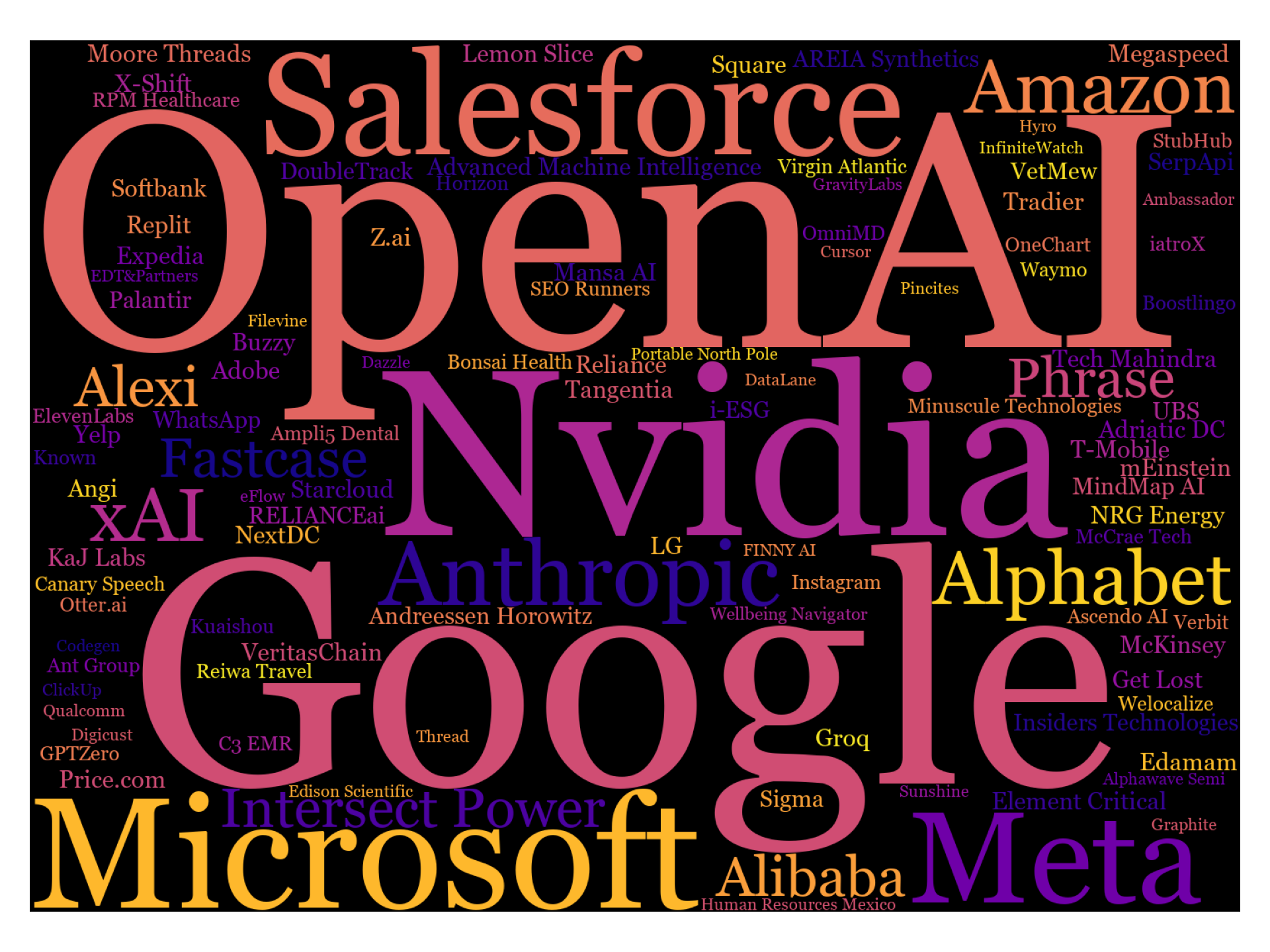
What makes this newsletter different?
This Week’s Topics:
If you’re reading this in a desktop web browser, you can access a navigation menu at the left-hand edge of this window.
The Generative AI Wars
Amazon is expanding Alexa+ with new integrations to Angi, Expedia, Square, and Yelp, enabling users to book hotels, get service quotes, and schedule appointments. [TechCrunch]
Anthropic’s Claude Opus 4.5 achieved a nearly five-hour task completion time horizon in METR’s benchmark testing, significantly outperforming previous AI models. [The Decoder]
Google’s vast data access through internet platforms gives it a significant advantage in the AI race, outpacing OpenAI in user growth and engagement. [News Az]
Google has launched Gemini 3 Flash, a fast and cost-effective AI model now default for Search, offering competitive reasoning at lower prices. [The Decoder]
Microsoft’s AI CEO acknowledged Gemini’s superior capabilities while emphasizing Copilot’s potential as an everyday, helpful personal assistant across multiple platforms. [TechRadar]
OpenAI’s CEO admits Google could have ‘smashed’ his company in 2023, revealing the precarious nature of the AI race. [Silicon Canals]
OpenAI’s ChatGPT has reached US$3B in mobile consumer spending, growing rapidly since its May 2023 launch and outpacing other popular apps. [TechCrunch]
OpenAI is exploring potential ad strategies for ChatGPT, including sponsored results and sidebar ads, to generate additional revenue beyond subscriptions. [Sherwood]
OpenAI’s GPT-5 reportedly solved an open mathematical problem independently. [The Decoder]
OpenAI dramatically improved its compute profit margins from 35% to 70% by cutting costs and optimizing models. [The Decoder]
OpenAI is in talks to raise up to US$100B in a funding round that could value the company at US$830B by the end of Q1 next year. [TechCrunch]
SoftBank is scrambling to secure US$22.5B in OpenAI funding through margin loans, T-Mobile stake, and cash reserves before year-end. [The Register]
AI Supremacy
Chinese AI models have caught up with Western counterparts in performance, offering increasingly open and accessible technology that may reshape global AI adoption and reliance. [ZDNet]
Pakistan and China signed 24 MoUs to expand technological cooperation, focusing on digital skills, AI training, and IT infrastructure development. [Associated Press of Pakistan]
This piece argues that US and China must collaborate on AI to prevent potential catastrophe and unlock transformative potential. [NPR]
The US Department of Energy has recruited 24 tech giants, including OpenAI, Google, and Nvidia, to collaborate on the Genesis Mission for advancing scientific discoveries through AI. [The Register]
The Trump administration’s Tech Force initiative has attracted 25,000 tech workers competing for 1,000 AI-focused federal roles. [Economic Times HR World]
Trump is examining Nvidia H200 chip sales to China while signing legislation to restrict US investments in Chinese technology companies. [Cryptopolitan]
A UBS survey found Chinese tech stocks increasingly attractive to global investors due to policy support, technological self-reliance, and rapid AI development despite US chip restrictions. [Futurism]
US House Republicans are seeking congressional oversight of AI chip exports to China after Trump’s approval of Nvidia’s H200 processor licenses. [Bloomberg]
And a group of US lawmakers has urged the Pentagon to blacklist 17 Chinese tech firms, arguing they contribute to China’s military-civil fusion strategy. [The Times of India]
Meanwhile, Nvidia plans to ship 5,000-10,000 H200 AI chip modules to China before Lunar New Year, pending government approval. [Reuters]
Sovereign AI
Europe is increasingly seeking digital sovereignty by migrating public bodies away from US cloud infrastructure due to legal and privacy concerns. [The Register]
Guyana is aggressively positioning itself as a regional technology hub by attracting AI companies, building tech parks, and developing a digital society through workforce upskilling and innovative government services. [The Guyana Chronicle]
India is emerging as a critical player in the global tech power struggle, leveraging its vast tech talent, strategic positioning, and potential in semiconductor and AI research. [sify.com]
NextDC and other Australian tech companies are positioning themselves to benefit from the growing demand for sovereign AI infrastructure, data, and locally developed models. [Stockhead]
Pax Silica, a US-led tech alliance, strategically excludes India, signaling a calculated approach to geopolitical technological collaboration and supply chain security. [Asia Times]
Reliance’s Mukesh Ambani advocates for India to lead in AI while emphasizing the importance of embedding empathy and compassion in technological advancement. [EnterpriseAI.com]
Saudi Arabia is building low-cost AI data centres powered by cheap solar electricity, aiming to become a global AI hub by 2030. [The Economist]
And X-Shift has launched an Arabic-first Agentic AI platform designed to autonomously handle customer interactions for Saudi enterprises. [EIN Presswire]
Feature Creeps
Claude’s Chrome plugin is now available to all paid users, enabling the AI to navigate websites and complete tasks autonomously. [Engadget]
Google’s Gemini for Home is experiencing significant bugs and limitations, with some features now locked behind a paywall and basic smart home tasks failing to work correctly. [TechRadar]
Google has delayed the transition from Google Assistant to Gemini on Android devices until sometime in 2026, ensuring a seamless switch. [TechRadar]
Google Cloud’s Vertex AI Agent Builder now offers enhanced tool governance, advanced development capabilities, and improved scalability through Cloud API Registry integration and new Agent Development Kit features. [Google]
Google’s NotebookLM is preparing to add a new ‘Lecture’ format to its Audio Overviews, offering comprehensive 30-minute AI-generated lectures in multiple languages. [TestingCatalog]
NotebookLM is also introducing a feature to transform sources into structured data tables, helping users organize information across various domains like education, business, and research. [Google]
LG has promised to allow users to delete the Microsoft Copilot shortcut icon on its smart TVs after user backlash over the pre-installed AI app. [PC Magazine]
OpenAI’s ChatGPT has introduced pinned chats, allowing users to pin up to three conversations at a time across web and mobile platforms. [TechRadar]
OpenAI is launching a personalized annual review feature called ‘Your Year with ChatGPT’, offering users insights into their chatbot interactions with graphics and awards. [TechCrunch]
OpenAI launched Skills in Codex, a service enabling developers to customize coding agents with task-specific instructions and resources. [ITPro]
And OpenAI has added new personalization options for ChatGPT, allowing users to adjust the chatbot’s tone, warmth, and communication style. [TechCrunch]
Salesforce integrated ChatGPT to prevent users from creating unauthorized AI connections that could expose sensitive CRM data beyond the company’s security controls. [The Register]
Hype Bubble?
AI spending has reached US$1.5T in 2023, but businesses are questioning the technology’s return on investment and practical applications. [The Register]
A Bloomberg interview with Jason Furman, chairman of the White House Council of Economic Advisers under president Obama, reveals concerns about AI’s potential economic impact, highlighting uncertainties about its productivity and valuation. [Gizmodo]
Companies are investing heavily in AI, but only 5% of initiatives deliver measurable returns due to a failure to redesign workflows, integrate context, and focus on back-office improvements. [The Register]
Danny Moses, the investor immortalized in ‘The Big Short’ for his prescient bets against the housing market, warns that Big Tech’s massive AI investments could trigger a bubble burst reminiscent of the dot-com crash, with unsustainable capital expenditures outpacing potential returns. [WebProNews]
Google Cloud and Replit acknowledge that AI agents are not yet ready for widespread enterprise adoption due to technical limitations, reliability issues, and the need for a fundamental cultural shift. [VentureBeat]
Hyperscale datacenter operators have nearly tripled infrastructure spending and increased operational capacity by 170 percent in response to the AI boom. [The Register]
Salesforce executives have reported a decline in trust regarding LLMs over the past year. [The Information]
But Salesforce’s enterprise AI platform added 6,000 new customers in a quarter, demonstrating significant growth and real-world value in workflow automation technology. [VentureBeat]
Big Iron
Data center investment reached a record US$61B in 2025, driven by hyperscaler expansion, private equity interest, and increased debt financing. [ITPro]
But data centers have sparked widespread protests across 24 states, with activists challenging their environmental impact, electricity costs, and AI controversies. [TechCrunch]
And research shows that nearly 80% of data centers worldwide are located in unsuitable climates, with 10% in regions too hot, potentially risking safety and efficiency. [ITPro]
Adriatic DC plans to develop three massive data centers in Puglia, aiming to create Europe’s largest AI computing operation with 1.5 gigawatts of capacity. [Bloomberg]
Alphabet has acquired Intersect Power for US$4.75B to expand its clean energy and data center capabilities for AI infrastructure. [TechCrunch]
Element Critical has launched a new US data center platform in Texas to support growing AI and digital infrastructure demands. [insideAI News]
NRG Energy is keeping its Fisk power plant operational to meet rising electricity demands from AI data centers, despite environmental concerns in Chicago’s Pilsen neighborhood. [Reuters]
Nvidia is reportedly scaling back its DGX Cloud efforts, shifting the division to focus on internal AI development rather than competing directly with major cloud providers. [TechRadar]
OpenAI secured approval for a massive 1.4-gigawatt data center in Michigan, despite local residents’ protests and concerns about the project’s impact. [Gizmodo]
Starcloud successfully trained an AI model in space and plans to deploy a massive constellation of satellites to provide orbital data center services. [GeekWire]
Hot Chips
Megaspeed, Nvidia’s top Southeast Asian partner, has raised suspicions about potential chip smuggling to China despite the company’s denials. [Bloomberg]
Memory chip makers predict AI will fundamentally reshape the traditional cyclical nature of their industry’s supply and demand dynamics. [Bloomberg]
Moore Threads unveiled new AI chips with enhanced computing capabilities after a successful Shanghai IPO, aiming to challenge Nvidia’s dominance in the Chinese market. [The Edge]
Nvidia is preparing to ship H200 AI accelerators to China, pending Beijing’s approval, after receiving export clearance from the US. [The Register]
Warm Bodies
A survey by Challenger, Gray & Christmas revealed that AI contributed to 55,000 job cuts in the US in 2025, with major tech companies like Amazon, Microsoft, and Salesforce explicitly linking layoffs to AI adoption. [The Indian Express]
Google rehired 20% of its AI software engineers in 2025, drawing from ex-employees and rival companies to boost its AI strategy. [TechRadar]
McKinsey’s recent layoffs signal a fundamental shift in consulting, as AI commoditizes traditional analytical capabilities and execution-driven firms gain competitive advantage. [Fast Company]
Meta CEO Mark Zuckerberg hired Alexandr Wang to lead AI efforts, but tensions are rising due to micromanagement concerns and questions about Wang’s expertise. [Futurism]
Stanford computer science graduates face unprecedented job market challenges as AI technologies automate entry-level coding roles, dramatically reducing opportunities for new talent. [WebProNews]
But UAE is set to add approximately 1 million workers by 2030, driven by economic growth and digital transformation across various technology-focused sectors. [Fame Delivered]
It’s Only a Model
Alibaba’s Qwen released an AI model that splits images into editable layers, allowing users to independently modify components like backgrounds, objects, and text. [The Decoder]
Google released FunctionGemma, a small 270-million parameter AI model designed to execute complex commands locally on devices with high reliability and privacy. [VentureBeat]
Lemon Slice has developed a 20-billion-parameter AI model that creates interactive digital avatars from a single image for various business applications. [TechCrunch]
Meta researchers have introduced PEAV, a unified encoder for audio, video, and text, trained on over 100M videos using contrastive learning to align representations across modalities. [Marktechpost Media]
Nvidia has developed NitroGen, an AI agent trained on 40,000 hours of gameplay videos that can adapt to diverse virtual environments with unprecedented success. [The Decoder]
OpenAI has launched GPT-5.2-Codex, an advanced coding model with improved performance in long-horizon work, cybersecurity, and large code changes. [ITPro]
OpenAI has updated its Realtime API with three new model snapshots that improve transcription, speech synthesis, and function calling accuracy. [The Decoder]
OpenAI’s new ChatGPT image model, GPT Image 1.5, delivers faster, more accurate image generation with improved prompt following and lower API prices. [The Decoder]
Z.ai open-sourced GLM-4.7, an LLM designed for stable, consistent performance in complex development workflows and coding tasks. [Business Wire]
Whose Data?
Adobe faces a class-action lawsuit alleging unauthorized use of copyrighted books to train its AI language models without permission or compensation. [TechRadar]
Google is suing SerpApi for web scraping, using DMCA Section 1201, despite having built its own empire on similar web scraping practices. [TechDirt]
India’s Ministry of Electronics and Information Technology has proposed a statutory licensing framework for AI training on copyrighted works, requiring compensation for rights holders while enabling broad data access for AI development. [MediaNama]
Six authors filed a copyright infringement lawsuit against AI companies, alleging unauthorized use of their books from pirate libraries to train LLMs without compensation. [Publishers Weekly]
The LLM Ecosystem
Anthropic’s Bloom is an open-source framework that automatically generates behavioral evaluations of AI models by creating diverse scenarios to quantify specific behavioral traits across multiple models. [Anthropic]
Google has launched A2UI, an open-source project enabling generative AI agents to create contextually relevant, cross-platform user interfaces through a secure, standardized JSON-based format. [Google]
KaJ Labs expanded its support for Mansa AI’s agentic AI infrastructure, enhancing scalability and performance across Web3 environments. [EIN Presswire]
mEinstein is developing an on-device AI system that adapts to users’ changing needs while keeping personal data local and under user control. [EIN Presswire]
OpenAI introduced a framework to evaluate chain-of-thought monitorability across 13 evaluations, finding most reasoning models are fairly monitorable with longer reasoning efforts. [OpenAI]
VeritasChain released VAP Scorecard Explorer v1.2, offering an Executive Mode to help leaders assess AI systems’ regulatory readiness through a 30-item verification checklist. [EIN Presswire]
Agentic AI
Edamam launched an MCP enabling AI agents and LLMs to easily integrate its comprehensive food database and nutrition data through intuitive interfaces. [EIN Presswire]
Price.com launched an AI-powered shopping platform that enables users to find deals, get cashback, and complete purchases in a single experience across the internet. [Business Wire]
Tangentia launched an AI-powered Electronic Data Interchange agent that autonomously manages supply chain transactions, reducing errors and onboarding time for trading partners. [EIN Presswire]
Tech Mahindra is partnering with Google Cloud to develop enterprise-ready agentic AI solutions using Gemini Enterprise, focusing on scalable, secure, and responsible AI deployment. [ITBrief]
Tradier launched an MCP Server that enables developers to build AI-powered trading tools using LLMs without managing local infrastructure. [EIN Presswire]
Other LLM Sightings
Buzzy launched an AI platform that uses social trend analysis to help creators generate viral content ideas systematically by decoding successful video patterns. [Business Wire]
Get Lost has launched BookID, an AI-powered tool helping authors and publishers analyze manuscripts and improve market positioning. [Publishers Weekly]
Insiders Technologies’ FLOW 2.5 integrates LLMs to enhance workflow and response management, offering AI-powered suggestions and improved efficiency. [Insiders Technologies]
i-ESG has launched an advanced ESG intelligence platform powered by domain-specialized AI, offering comprehensive sustainability solutions for global corporations. [EIN Presswire]
MindMap AI launched a chat-driven mind mapping platform that transforms complex content into clear, editable visual maps through AI-powered interaction. [EIN Presswire]
RELIANCEai has partnered with AREIA Synthetics to introduce Areia, an AI-powered digital human assistant for real estate platforms. [PRWeb]
Sigma launched Eclipse, a privacy-focused browser with a local AI model that keeps user data and interactions completely offline. [siliconANGLE]
The US Army Southern European Task Force-Africa’s public affairs directorate is using Palantir’s Maven AI platform to enhance information gathering, analysis, and decision-making speed across Europe and Africa. [army.mil]
And the US Department of War is partnering with xAI to deploy Grok across its government systems. [Fox News]
VetMew launched an AI-powered pet health support app in North America, offering personalized wellness insights and disease diagnosis through advanced language modeling. [EIN Presswire]
Risks and Responses
Bank of England Governor Andrew Bailey warns AI will transform jobs like the Industrial Revolution, requiring upskilling but not causing mass unemployment. [TechRadar]
DoubleTrack found US companies are hiring more AI specialists than data engineers, risking project failure due to poor data infrastructure and management. [TechRadar]
Experts warn that relying on tech tools for spelling can hinder children’s literacy development and critical communication skills. [Mashable]
Google’s Gemini 3 Flash frequently fabricates answers when uncertain, scoring a 91% hallucination rate on an independent benchmark despite being a top-performing AI model. [TechRadar]
OpenAI has updated its AI guidelines to enhance safety for teens, introducing stricter rules and resources to protect young users from potential harm. [TechCrunch]
OpenAI acknowledges that prompt injection attacks on its ChatGPT Atlas browser remain a persistent cybersecurity challenge that cannot be fully eliminated. [TechCrunch]
And new research from OpenAI explores methods for detecting potential misbehaviour in AI models by analyzing their step-by-step reasoning processes. [ZDNet]
Regulation
Andreessen Horowitz proposed a nine-pillar AI framework for Congress, addressing kids’ safety, state regulations, and responsible AI development. [Punchbowl News]
Italy has ordered Meta to suspend its policy banning companies from using WhatsApp’s business tools to distribute third-party AI chatbots. [TechCrunch]
New York passed a strict AI safety law requiring companies with over US$500m in revenue to draft and report safety procedures, setting up potential legal conflict with Trump’s federal AI policy. [Gizmodo]
A super PAC backed by tech moguls is targeting political candidates who support AI regulation to shape the narrative around AI in the US 2026 midterms. [The Anchorage Daily News]
This piece argues that Trump’s executive order blocking state AI regulation risks slowing innovation and undermining public trust in technological advancement. [Fast Company]
US House Foreign Affairs Committee Chairman Brian Mast introduced the AI OVERWATCH Act to strengthen congressional oversight of AI technology exports and prevent adversaries from acquiring advanced chips. [YourNews.com]
Conversational AI
Minuscule Technologies launched Agentforce Voice, an AI-powered Salesforce integration that transforms contact center support through intelligent voice data management. [EIN Presswire]
Reiwa Travel has launched ‘NEWT Chat’, an AI-powered multilingual chat agent designed to automate customer support for travel and service industries. [PRWeb]
StubHub has launched an app in OpenAI’s ChatGPT, offering an interactive, conversational ticket discovery experience with real-time event inventory and intelligent filtering. [Business Wire]
Virgin Atlantic has launched an AI travel agent called Concierge on its website, offering spoken and typed support for flight bookings and travel planning. [The Register]
Waymo is exploring adding Google’s Gemini AI chatbot to its robotaxis as a friendly, helpful assistant to enhance rider experience. [TechCrunch]
Be Real
A Vantage Point Counseling Services study revealed a generational divide on whether romantic AI relationships constitute cheating, with younger adults more likely to view such interactions as infidelity. [Silicon Canals]
Gemini can now detect whether a video was created using Google AI by searching for an invisible SynthID watermark, but only for Google-generated content. [ZDNet]
GPTZero discovered that 50 peer-reviewed submissions to the International Conference on Learning Representations contained at least one hallucinated citation, raising concerns about AI-generated academic content. [BetaKit]
The Nebula Awards will disqualify any works written wholly or partially using generative AI, requiring creators to disclose AI use during the nomination process. [Gizmodo]
Terence Tao proposes ‘artificial general cleverness’ as a more nuanced description of AI’s problem-solving capabilities that rely on computing power and training data. [The Decoder]
Voice News
Alibaba released two Qwen AI models that generate and clone voices from text descriptions and three-second audio clips across multiple languages. [The Decoder]
Google’s updated Gemini 2.5 Flash Native Audio improves voice assistant capabilities, achieving higher accuracy and more precise instruction following. [The Decoder]
Kuaishou’s Kling 2.6 AI video generator adds voice control and enhanced motion capabilities, enabling more realistic and customizable video generation. [The Decoder]
Known, a San Francisco-based dating startup, uses voice AI to help users find meaningful connections by facilitating personalized, in-person dates with an 80% success rate. [TechCrunch]
Otter.ai achieved US$100m ARR, launched industry-first AI meeting agents, and expanded globally, transforming corporate knowledge management in 2025. [Business Wire]
Verbit launched a flexible AI dubbing suite with four tiers, enabling content creators to localize media efficiently across different budgets and quality requirements. [EIN Presswire]
Translation
Boostlingo launched an AI Interpreter for phone call workflows, enabling instant multilingual communication with options for human or AI interpretation. [Slator]
ElevenLabs partnered with Meta to bring advanced voice AI capabilities to Instagram Reels, Horizon, and other platforms, enabling multilingual dubbing and realistic character voices. [Slator]
Google has upgraded Translate with Gemini AI, introducing improved translation quality, live speech translation in headphones, and expanded language learning tools. [Slator]
Phrase and Welocalize partnered to integrate the OPAL Platform into Phrase’s language technology, offering enterprises advanced AI-driven translation solutions. [Slator]
Search
SEO Runners highlights how brands can optimize content for AI-driven search engines through AEO and GEO strategies, focusing on machine-readable directives and intent modeling. [EIN Presswire]
AI in Journalism
Microsoft is developing AI technology to transform journalism by speeding up reporting, transcribing interviews, and creating audio versions of articles for its massive global news platform. [The Drum]
OpenAI launched an Academy for News Organizations to help journalists learn AI tools and improve newsroom efficiency. [The Decoder]
Health Tech
Ampli5 Dental launched an AI-powered marketing platform to help dental clinics improve patient engagement, communication, and practice growth. [EIN Presswire]
Ant Group has rebranded its AI health app AQ as ‘Ant Afu’, expanding its healthcare services to over 15 million monthly active users with personalized health management features. [China Daily]
Ascendo AI has demonstrated AI-driven knowledge automation for medical device service teams. [EIN Presswire]
Bonsai Health partnered with the American Academy of Dermatology to provide AI-powered automation for dermatology practice front office workflows. [Business Wire]
C3 EMR and OneChart have partnered to provide AI-powered ambient documentation and telehealth solutions across North America. [EIN Presswire]
Canary Speech highlights five trends in vocal biomarker technology, including more accurate disease detection, pain assessments, and enhanced remote healthcare diagnostics through AI-powered voice analysis. [Salt Lake Business Journal]
iatroX expanded its free UK clinical AI platform, linking bedside guideline support with exam-focused learning for healthcare professionals. [EIN Presswire]
McCrae Tech launched Orchestral, a health AI platform connecting diverse data sources to enable scalable, governed AI deployment across healthcare systems. [Imaging Technology News]
OmniMD expands AI-driven care continuity solutions after finding that most patient calls occur outside standard clinic hours. [EIN Presswire]
RPM Healthcare will launch an AI-powered weight loss feature in its patient app in Spring 2026, enabling personalized goal-setting and progress tracking. [EIN Presswire]
Wellbeing Navigator has launched an AI-powered mental health platform using psychoneuroimmunology to provide personalized, proactive wellness coaching for individuals and enterprises. [EIN Presswire]
Legal Tech
A survey explores how docketing technologies are evolving into critical AI-powered infrastructure for legal risk management and operational efficiency. [Rhode Island Lawyers Weekly]
Fastcase won an early legal battle against Alexi, with a federal judge denying Alexi’s emergency request for a temporary restraining order to restore access to Fastcase’s legal database. [LawSites]
Human Resources Mexico has introduced an AI chatbot providing instant, legally grounded guidance on Mexican employment and compliance questions. [EIN Presswire]
Ed Tech
Fulton County Schools uses a ‘train-the-trainer’ model to scale technology professional development, leveraging volunteer educators and media specialists to effectively implement new tools like AI software. [GovTech]
Funding
Ambassador raised US$7m to expand its AI-powered customer feedback software that helps companies improve engagement and retention. [GeekWire]
DataLane raised US$22.5m in Series A funding led by Amplify Partners to build an AI-powered identity graph for local businesses. [Axios]
Marissa Mayer has launched Dazzle, an AI personal assistant startup, after shuttering her previous venture Sunshine, with US$8m in seed funding. [TechCrunch]
Digicust has raised €2.3m to scale its AI-powered platform for automating end-to-end customs processes across European markets. [TechNews180]
Edison Scientific raised US$70m to develop autonomous AI scientists that can accelerate scientific research across various fields by automating complex research processes. [siliconANGLE]
FINNY AI raised US$17m in Series A funding led by Venrock to expand its AI-powered prospecting platform for financial advisors. [Business Wire]
GravityLabs raised US$17m in Series A funding to expand its AI-powered healthcare solutions globally, particularly in North America and Japan. [FinSMEs]
Hyro, a Cornell Tech startup, raised US$45m to expand its voice AI technology in healthcare, seeking to advance AI agent capabilities. [Cornell University]
InfiniteWatch raised US$4m from Base10 Partners and other investors for its AI-native customer interaction intelligence platform. [FinSMEs]
Thread, an AI service desk platform for managed service providers, raised US$18m in growth funding led by Susquehanna Growth Equity. [FinSMEs]
Acquisitions
Alphabet has agreed to acquire clean energy developer Intersect Power for US$4.75B to expand its data center infrastructure and power supply for AI. [Bloomberg]
ClickUp acquired Codegen to develop Super Agents, AI teammates that can autonomously complete projects and collaborate like human coworkers. [Business Wire]
Cursor is acquiring code review startup Graphite to create an end-to-end AI-powered software development platform, aiming to streamline code writing and review processes. [Fortune]
EDT&Partners has acquired eFlow, an AI-powered learning platform, to strengthen its capabilities in last-mile learning delivery and engagement across education and beyond. [PRWeb]
Filevine acquired Pincites, an AI-powered contract redlining company, expanding its legal technology platform and furthering its AI strategy in corporate and transactional law. [LawSites]
Qualcomm acquired Alphawave Semi, adding high-speed connectivity technologies to its AI data center strategy and expanding its infrastructure capabilities. [TechRadar]
There’s More
Big Tech’s generative AI agents increasingly seek deep access to personal data, raising significant privacy concerns about how this information might be used and shared. [Wired]
LeCun dismisses general intelligence as ‘complete BS’, sparking a public disagreement with Deepmind CEO Hassabis over the nature and potential of AI intelligence. [The Decoder]
Portable North Pole has launched an AI-powered ‘Talk to Santa’ experience using Microsoft Azure, enabling real-time personalized conversations with Santa for families. [EIN Presswire]
The Back Cover
Here’s imy2 with a cover of Norah Jones’ Don’t Know Why.
If you know of a great cover version of a back-catalogue classic, drop an email to us at backcover@language-technology.com and we’ll consider it for inclusion here.
Got this from someone else?
Did you find this newsletter useful? if so, you might forward it to a friend; or you could email us at news@language-technology.com to tell us what you want more of.
Did you hate this newsletter? if so, you could forward it to an enemy; or you could email us at news@language-technology.com to tell us why – make it better!
Fascinating. What are core implications of Nvidia-Groq strategic tech transfer?