
This Week in NLP #390
Keep up with what happened in Natural Language Processing in the week ending Friday 8th May 2026.

Above the Fold
Overwhelmed? Here’s our pick for five things to know about this week.
Anthropic has agreed to pay Google US$200B over five years for cloud services and chip access to support its Claude AI models. [Engadget]
Google and Meta are testing personal AI agents called Remy and Hatch respectively, racing to catch up with Anthropic and OpenAI’s advances. [The Decoder]
The Pentagon has signed agreements with seven AI companies—SpaceX, OpenAI, Google, Nvidia, Reflection, Microsoft, and AWS—to deploy their technology on classified military networks, notably excluding Anthropic. [The Times of India]
Elon Musk’s SpaceX has leased its Colossus 1 data center to Anthropic, providing 220,000 GPUs to address the AI lab’s compute shortage while generating revenue before SpaceX’s anticipated IPO. [Axios]
And Musk’s $130B lawsuit against OpenAI faced significant setbacks during cross-examination, including admissions that his xAI company trains on OpenAI’s models. [The Next Web]
Now read on for everything else that happened in NLP this week.
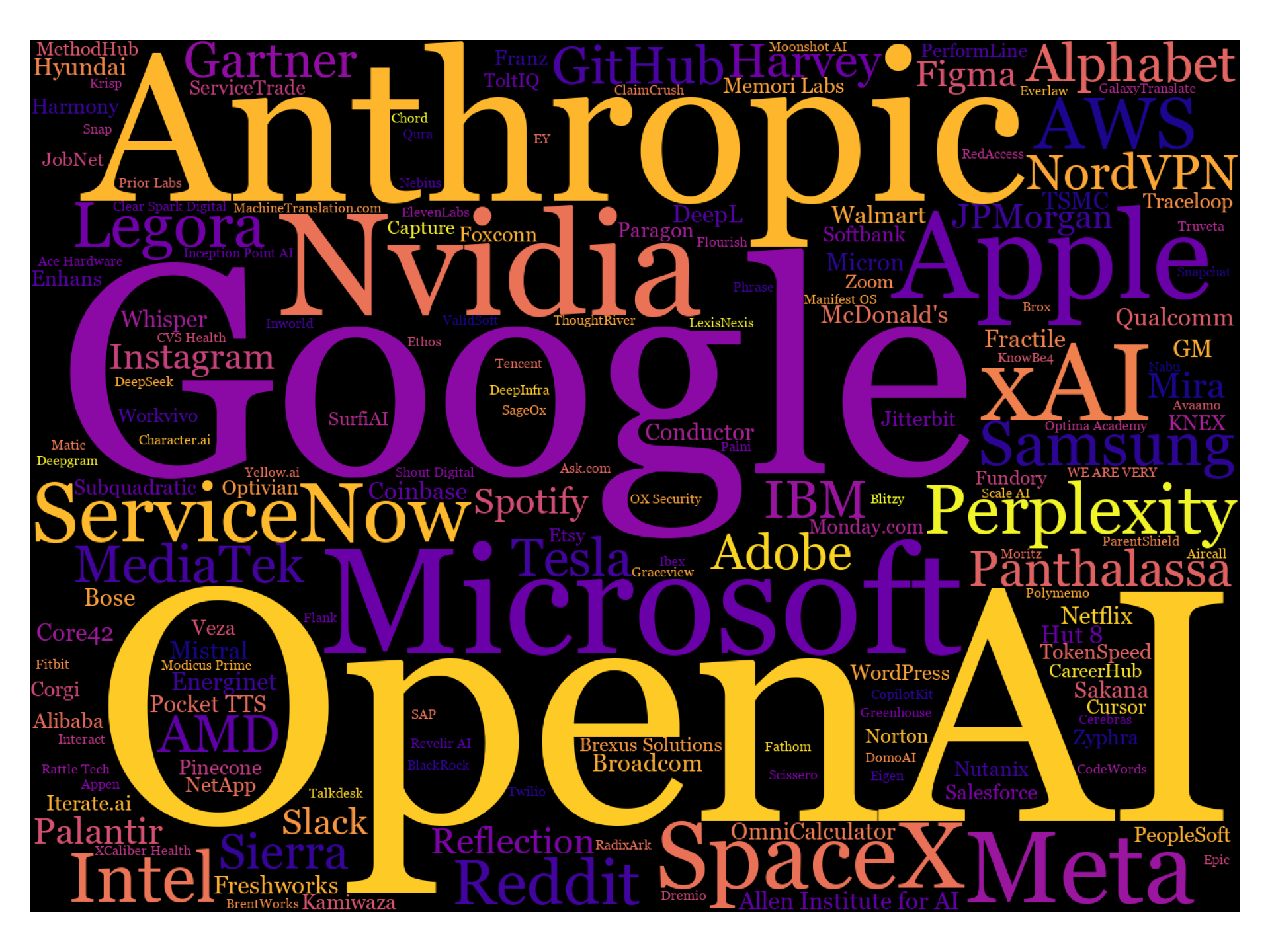
Making News This Week:
What makes this newsletter different?
This Week’s Topics:
If you’re reading this in a desktop web browser, you can access a navigation menu at the left-hand edge of this window.
The Generative AI Wars
Alphabet is negotiating omnibus licensing agreements with Blackstone, KKR, and EQT to provide their portfolio companies access to Gemini models, prioritizing distribution speed over implementation services. [The Next Web]
Anthropic is launching a US$1.5B joint venture with Blackstone, Hellman & Friedman, Goldman Sachs, and General Atlantic to deploy Claude across their portfolio companies. [The Next Web]
Anthropic has launched Claude for Financial Services with customizable AI agents, Microsoft 365 integration, and an updated Claude Opus 4.7 model for banks and insurance companies. [Yahoo Finance]
Anthropic has increased Claude Code usage limits and API rate limits for Claude Opus models following a compute capacity deal with SpaceX. [ITPro]
Anthropic’s Mythos cybersecurity model has become caught between conflicting US government agencies and international powers unable to agree on access, deployment, or control. [The Next Web]
Anthropic and OpenAI have launched joint ventures deploying engineers with customers to offer customized AI solutions, following Palantir’s strategy. [MarketWatch]
Anthropic’s CEO said the AI startup could grow 80 times this year, exponentially increasing its computing power needs. [The New York Times]
Apple will reportedly let users choose third-party AI models through Apple Intelligence features in iOS 27. [Engadget]
Apple agreed to pay US$250m to settle a lawsuit over misleading iPhone 16 and 15 Pro customers about Apple Intelligence feature availability. [The Verge]
Google has shut down Project Mariner, integrating its agentic web-browsing technology into Gemini Agent and AI Mode. [The Verge]
Google has been building Remy, an OpenClaw alternative agent being tested internally to elevate Gemini into a true assistant. [ITPro]
OpenAI has finalized a US$10B enterprise AI joint venture with TPG and 18 other investors, guaranteeing 17.5% annual returns while maintaining strategic control. [The Next Web]
OpenAI has launched GPT-5.5-Cyber, a less-restricted version for vetted cybersecurity defenders to find software bugs and test security. [Axios]
OpenAI has updated its privacy policy to use cookies for targeted advertising of its services to free users across third-party websites. [Wired]
OpenAI’s ChatGPT ads have demonstrated strong early click-through rates, though limited inventory and scale make long-term viability uncertain. [Search Engine Land]
OpenAI’s CFO has reportedly advised delaying the company’s IPO to 2027, citing unmet revenue targets and concerns about readiness for public company standards. [Gizmodo]
Meta is building an AI agent called Hatch and developing an AI shopping tool for Instagram. [The Information]
Microsoft has launched Agent 365 from preview to general availability, a management platform enabling enterprises to govern AI agents across Microsoft, AWS, Google Cloud, and employee devices. [VentureBeat]
Microsoft is developing ClawPilot, an OpenClaw-based autonomous agent assistant for Microsoft 365, testing it with thousands of internal users. [GeekWire]
Court in Session
Elon Musk’s lawsuit against OpenAI centers on whether its for-profit subsidiary compromised the nonprofit’s founding mission of ensuring AI safety and benefits humanity. [TechCrunch]
Musk texted OpenAI’s president days before the trial, threatening to make him and Sam Altman ‘most hated men in America’ if settlement rejected. [CNBC]
Greg Brockman’s testimony in Musk’s case against OpenAI revealed damaging journal entries showing greed and evasive courtroom behavior undermining his credibility. [The Verge]
OpenAI cofounders testified that Elon Musk demanded control of the company, stormed out when rejected, and later proved unfit to lead AI development. [Wired]
Elon Musk attempted to recruit Sam Altman to Tesla’s AI lab before leaving OpenAI’s board in February 2018, according to court evidence presented Wednesday. [Wired]
Mira Murati testified under oath that OpenAI CEO Sam Altman lied about safety practices and created a chaotic work environment. [Gizmodo]
Shivon Zilis testified in court that she didn’t improperly share OpenAI information with romantic partner Elon Musk while serving as board member. [The Wall Street Journal]
The trial over the company’s nonprofit mission has been overshadowed by unresolved concerns about AI’s risks to humanity. [Associated Press]
By the Numbers
Alphabet’s market capitalisation surged past US$4.6T after Q1 earnings beat estimates, with Google Cloud growing 63% and narrowing the gap with Nvidia to US$200 billion. [The Next Web]
OpenAI president Greg Brockman claimed AI writes 80% of the company’s code, but the figure’s ambiguity and conflicting academic evidence suggest actual productivity gains remain substantially contested. [The Next Web]
Tech companies recorded 81,747 job cuts in Q1 2026, the highest quarterly total since early 2024, as firms redirected payroll budgets toward AI infrastructure. [Blockonomi]
Big Tech’s combined 2026 capital expenditure has surged 98% year-over-year to a record US$715B, primarily funding AI infrastructure. [Blockonomi]
Major tech companies are projected to surpass US$1T in hyperscale AI capital expenditure by 2027. [Blockonomi]
And global AI infrastructure investment has surpassed the Manhattan Project, Apollo, and ISS combined, with spending projected to reach US$2.5T in 2026. [TechRadar]
Battle Lines
The White House is reconciling with Anthropic after months of conflict, recognizing its advanced AI models are essential despite security concerns. [Axios]
But the White House is pushing back on Anthropic’s plan to expand private sector access to its Mythos AI model over national security compute concerns. [The Rundown AI]
Meanwhile, the Department of Defense has agreed with seven major technology companies to deploy their AI tools on classified networks, excluding Anthropic. [CNN]
And the Pentagon expressed confidence it could replace Anthropic’s Claude AI within six months, though experts cautioned the transition would prove challenging. [Federal News Network]
Google DeepMind’s UK workers voted 98% to unionize over the company’s classified Pentagon AI deal, demanding an end to military AI use and restoration of its weapons pledge. [The Next Web]
AI Supremacy
The Atlantic Council’s Scowcroft Center and Global China Hub released recommendations for US technology partnerships in Africa to counter Chinese influence and compete in the continent’s growing markets. [The Atlantic Council]
Build American AI, a dark-money group, funded an influencer campaign promoting US AI development and framing China’s technological advancement as a threat to Americans. [Wired]
China is building comprehensive data governance infrastructure treating data as a national economic resource, positioning itself to set global standards through exchanges, regulations, and Digital Silk Road exports. [The Next Web]
US Senator Bernie Sanders has called for US-China collaboration on AI safety, breaking from the bipartisan competitive framing of AI development. [Axios]
Washington and Beijing are considering official discussions on AI to manage their escalating digital-era competition. [The Wall Street Journal]
Sovereign AI
Dubai’s Crown Prince has launched a two-year private-sector agentic AI adoption initiative with training, incubators, and investment funds. [The Next Web]
The Dutch government has launched code.overheid.nl, a self-hosted GitHub alternative built on Forgejo to reduce reliance on US tech companies. [TechRadar]
The European Union is considering restricting member governments’ use of US cloud providers for handling sensitive public-sector data. [CNBC]
The EU’s €20B AI computing hub plan faces criticism over questionable demand and competitive viability. [Politico]
Germany’s Sovereign Tech Agency unveiled monthly stipends for open-source maintainers to shape internet standards at IETF, W3C, and ISO organizations. [WebProNews]
Google Labs has launched an Applied AI Lab with Saigon AI Hub to accelerate Vietnam’s AI research and commercialization capabilities. [DealStreetAsia]
Kenya’s Special Envoy warned that Africa’s digital future depends on controlling AI networks, not merely achieving internet connectivity. [Ghana News]
Microsoft has invested billions across Europe to increase data center capacity by 40% while addressing sovereignty and data protection concerns. [TechRadar]
The UK Government announced plans to support AI hardware infrastructure development and establish international standards for AI deployment. [TechRepublic]
And a Computer Weekly investigation found hyperscaler clouds fundamentally incompatible with data sovereignty due to US court order vulnerabilities. [Computer Weekly]
Feature Creeps
Anthropic has launched Claude Security in public beta, enabling enterprise customers to scan codebases for vulnerabilities and generate targeted patches automatically. [DevOps.com]
Anthropic is preparing to launch Orbit, a proactive assistant integrating Gmail, Slack, GitHub, and Figma to deliver personalized work briefings. [TestingCatalog]
Anthropic has unveiled dreaming, outcomes, and multi-agent orchestration features for Claude agents, enabling self-improvement and autonomous task completion at scale. [VentureBeat]
Google has added five AI upgrades to Workspace, including conversational data analysis, expanded meeting notes, automation skills, and Microsoft 365 migration tools. [TechRepublic]
Google has been redesigning its Gemini app with a pill-shaped prompt box, colorful gradient background, and reorganized tools and navigation elements. [9to5Google]
Google has introduced event-driven Webhooks to the Gemini API, eliminating inefficient polling for long-running jobs. [Google]
Google has rolled out Gemini memory in Europe and added tools allowing users to import chat data from competing AI applications. [The Decoder]
Google has expanded Gemini API’s File Search tool to support multimodal data, custom metadata, and page citations for improved RAG systems. [Google]
Google has launched updates to AI Overviews highlighting subscription content, adding website previews, and introducing ‘Further Exploration’ and ‘Expert Advice’ sections. [NiemanLab]
Google is reportedly developing agentic capabilities for its Gemini Mac app to control files and perform actions, similar to Claude’s features. [TechRadar]
Google has released Multi-Token Prediction drafters for Gemma 4 to accelerate local AI inference through speculative decoding techniques. [Ars Technica]
Meta has opened its ad ecosystem to third-party AI tools, allowing advertisers to use preferred platforms like ChatGPT and Claude for campaign management. [Digiday]
Microsoft has halted Copilot development for Xbox consoles and is winding down the feature in its mobile app. [TechRadar]
OpenAI has introduced AI-generated pets to its Codex app that serve as animated companions displaying coding task status. [Engadget]
OpenAI has launched a Chrome extension for Codex that enables testing web apps and gathering context across browser tabs. [Engadget]
OpenAI has expanded ChatGPT ads with self-serve buying, CPC bidding, and improved measurement to scale its advertising platform. [Search Engine Land]
OpenAI has launched Advanced Account Security for ChatGPT, requiring passkeys or security keys and automatically disabling AI training. [ZDNet]
OpenAI has launched ChatGPT for Intune, an enterprise app for iPhone and iPad users requiring enhanced security and compliance controls. [ITP.NET]
OpenAI has updated ChatGPT’s default model to GPT-5.5 Instant, which produces fewer hallucinations and inaccurate claims while improving personalization. [Engadget]
And OpenAI has integrated ChatGPT subscriptions with OpenClaw, the world’s fastest-growing open-source AI agent framework, betting on distribution over margin protection. [The Next Web]
Perplexity has launched a local AI agent for Mac users to compete with OpenAI’s offerings while prioritizing security and device-based task automation. [TechCrunch]
Spotify has released a command-line tool enabling AI agents to generate and upload personal podcasts to the platform. [Engadget]
Hype Bubble?
Anthropic CEO Dario Amodei warned that SaaS companies failing to adapt to AI could face bankruptcy and market collapse. [Yahoo Finance]
IBM’s CEO predicts enterprise AI will shift from experimental point use cases to orchestrated, policy-driven agentic deployment, boosting productivity by 40% by 2030. [Computer Weekly]
JPMorgan Chase CEO Jamie Dimon endorsed AI’s trillion-dollar investment wave, stating the technology’s power justifies massive capital expenditures despite investor concerns about revenue growth. [Axios]
Big Iron
The Allen Institute for AI has brought online a new computing system funded by Nvidia and NSF for open scientific AI model development. [GeekWire]
China has deployed a mobile 10-megawatt nuclear reactor on a truck bed to power AI data centers and remote locations without refueling for decades. [WebProNews]
Core42 leased 20 megawatts in a converted Minneapolis office building as part of its broader US data centre expansion strategy. [The Next Web]
Energinet paused Denmark’s grid connections after a 60-gigawatt AI data centre queue overwhelmed infrastructure designed for 7-gigawatt peak demand. [The Next Web]
Hut 8 has leased 352 MW of Texas AI capacity for US$9.8B, completing its transformation from Bitcoin miner to AI infrastructure landlord. [The Next Web]
Kevin O’Leary’s 40,000-acre AI data center project in Utah has been approved despite significant local opposition and environmental concerns. [Gizmodo]
MediaTek has built Taiwan’s most advanced AI data center using Nvidia, Intel, and AMD hardware for its research and development. [Nikkei Asia]
OpenAI has reached its 10-gigawatt US compute capacity goal years ahead of its original 2029 target schedule. [The Decoder]
Panthalassa has secured US$140m in Series B funding to deploy autonomous floating AI data centers powered by ocean waves in the North Pacific. [ITPro]
And Samsung unveiled a floating data center ship model designed to host AI systems like ChatGPT, promising 1.5 GW capacity within 36 months. [TechRadar]
xAI and Anthropic announced a partnership where Anthropic purchased all compute capacity at xAI’s Colossus 1 data center, positioning xAI as a compute provider rather than AI developer. [TechCrunch]
Hot Chips
Anthropic has held early talks to acquire inference chips from UK startup Fractile, expected commercially available around 2027. [Tom’s Hardware]
Apple has held exploratory discussions with Intel and Samsung about producing its main processors, seeking alternatives to TSMC. [Yahoo Finance]
Micron’s CEO warned that AI demand will require significantly more memory, signaling the RAM shortage will persist through the decade. [TechRadar]
Nvidia CEO Jensen Huang stated the company’s China market share has dropped to zero due to US export restrictions on advanced chips. [Yahoo Finance]
OpenAI is reportedly developing custom smartphone chips with MediaTek and Qualcomm for mass production by 2028. [The Decoder]
OpenAI’s US$18B AI chip deal with Broadcom encountered financing difficulties. [The Information]
Samsung reached a US$1T valuation as AI chip demand surged, making it only the second Asian company to achieve this milestone. [TechCrunch]
SpaceX has filed paperwork for a US$55B semiconductor fabrication facility in Texas to complement its existing packaging operations. [The Next Web]
AI chip startups are gaining opportunities in inference workloads as the industry shifts from training to serving models, with specialized hardware complementing Nvidia’s dominance. [The Register]
Warm Bodies
Chinese courts ruled twice that replacing workers with AI constitutes illegal dismissal, undercutting arguments against US AI regulation. [Politico]
DeepL has laid off approximately 250 employees, roughly a quarter of its workforce, to operate with smaller teams amid rapid AI advancements. [Tech.eu]
Freshworks and Coinbase have announced layoffs affecting over 1 in 10 employees as they replace workers with AI technologies. [TechRadar]
A Gartner report found that over half of customer service organizations will increase technology spending rather than reduce headcount, with only 20 percent cutting jobs due to AI. [DestinationCRM.com]
And Gartner research found that companies relying on layoffs to fund AI investments may not achieve better returns than those investing in human workforce development. [TechRadar]
Meta CEO Mark Zuckerberg explicitly linked upcoming layoffs to increased AI infrastructure spending, with executives declining to rule out further job cuts. [The Next Web]
MIT researcher Andrew McAfee has warned that automating entry-level jobs risks damaging future workforce talent pipelines and AI adoption capabilities. [TechRadar]
Nvidia CEO Jensen Huang has reiterated that AI will create more jobs than it eliminates and criticized those spreading fears about the technology. [TechRadar]
OpenAI CEO Sam Altman criticized companies for ‘AI washing’ job cuts unrelated to AI, though acknowledging AI will eventually displace workers. [TechRadar]
A viral Reddit post claims a senior software engineer with 18 years of experience now works at McDonald’s after AI-driven layoffs. [Latestly]
A tech entrepreneur has urged governments to tax AI use as a ‘minimum wage for robots’ to mitigate job losses from automation. [BBC]
Consumer AI
Apple’s upcoming smart glasses will likely lack hand-gesture tracking due to processing power and battery constraints. [Gizmodo]
Bose has launched its new Lifestyle Ultra speaker line, delegating smart features to third-party platforms like Apple AirPlay and Google Cast. [Fast Company]
GM is adding full Google Gemini support to millions of vehicles from Cadillac, Buick, Chevrolet, and GMC. [eWeek]
Google’s Gemini platform is spurring a revival of third-party smart speakers, including Walmart’s upcoming Onn device. [The Labradorian]
Google has upgraded Gemini for Home to version 3.1, enabling multi-step tasks and improved smart home control capabilities. [The Verge]
Hyundai Motor has unveiled a Tesla-inspired infotainment system featuring an AI voice assistant for natural conversations. [Bloomberg]
Netflix has begun testing an AI-powered native voice search feature that delivers personalized viewing recommendations through natural language prompts on select devices. [The Verge]
OpenAI is fast-tracking development of an AI agent smartphone, aiming to mass produce it in the first half of 2027. [MacRumors]
xAI’s Grok is coming to Apple CarPlay, joining ChatGPT, Perplexity, Claude, and Gemini in competing for car dashboard space on 800 million iPhones. [The Next Web]
It’s Only a Model
Anthropic has begun red teaming Claude Jupiter V1, an internal build likely preceding a major model announcement at its May 6th developer conference. [TestingCatalog]
Google appears to be preparing Omni, a new video-generation tool that may unify its split image and video generation models. [TestingCatalog]
Google is preparing to launch Gemini Flash 3.2, with multiple signals suggesting a cost-efficient model rivaling flagship performance. [TestingCatalog]
Mistral AI has released Medium 3.5, a 128-billion-parameter AI model combining chat, reasoning, and coding capabilities with toggleable reasoning and new agent features. [The Decoder]
A report by OmniCalculator found that Grok 4.2 outperforms Claude and ChatGPT in math and logic, while Claude excels in writing quality. [TechRadar]
OpenAI has released GPT-5.5 Instant, reducing hallucinations in sensitive fields while improving math and reasoning performance over its predecessor. [TechCrunch]
OpenAI has released three new realtime voice models—GPT-Realtime-2, GPT-Realtime-Translate, and GPT-Realtime-Whisper—for developers to build advanced voice applications. [9to5Mac]
Pocket TTS has expanded its language support to include six languages. [Kyutai]
Sakana AI introduced RL Conductor, a small language model that dynamically orchestrates multiple worker LLMs to outperform individual frontier models and expensive human-designed pipelines. [VentureBeat]
TokenSpeed, an inference engine optimized for agentic coding workloads, demonstrated 9-11% performance improvements over TensorRT-LLM on Nvidia Blackwell. [LightSeek Foundation]
xAI has launched Grok 4.3, a new LLM with reasoning capabilities and voice cloning features, positioning itself as a cost-efficient alternative to competitors. [VentureBeat]
Zyphra has released ZAYA1-8B, an efficient 8-billion-parameter reasoning model trained on AMD GPUs, demonstrating competitive performance with much larger models. [VentureBeat]
Whose Data?
Anthropic’s US$1.5B copyright settlement has a glitchy claims website making it difficult for authors to collect their owed payments. [Vox]
Meta faces a class action lawsuit from major publishers and author Scott Turow alleging massive copyright infringement in training its Llama AI models. [The Verge]
The Cutting Edge
Alibaba researchers introduced HDPO, a reinforcement learning framework that trains AI agents to strategically use tools, reducing redundant invocations while improving reasoning accuracy. [VentureBeat]
OpenAI published a new networking protocol with industry partners to make GPU clusters faster, more reliable, and more efficient for AI training. [The Deep View]
Subquadratic has emerged from stealth claiming to have built the first LLM with fully subquadratic architecture, reducing attention compute by 1,000 times, though independent verification remains pending. [VentureBeat]
The LLM Ecosystem
AWS’s Neuron SDK launched Agentic Development capabilities enabling AI coding assistants to accelerate custom kernel development on Trainium hardware. [Amazon]
The Chancery Lane Project released a WordPress plugin serving simplified Markdown to AI agents, potentially reducing global data transfer by billions of gigabytes annually. [TechRadar]
Corgi, a Y Combinator-backed insurance startup, has launched AI liability coverage for companies using AI tools and those providing AI outputs. [Artificial Lawyer]
IBM has integrated Google Vertex AI and Intel Gaudi into Db2 Genius Hub to enable AI-based autonomous database management with human oversight. [The Register]
Iterate.ai has partnered with NetApp to deliver an integrated private AI solution for enterprise deployments targeting healthcare, SLED, and TPA applications. [GlobeNewswire]
Jitterbit has introduced its Harmony platform with the industry’s first Model Context Protocol featuring Deep Message Inspection for secure, governed AI execution. [GlobeNewswire]
Kamiwaza has launched version 1.0 of its secure AI orchestration platform featuring governed collaboration, hardened infrastructure, and an upgraded AI agent for regulated industries. [PRWeb]
Memori Labs has launched agent-native memory infrastructure enabling AI agents to create structured, long-term memory from execution traces and decision-making logic. [PRWeb]
Nutanix has launched an Agentic AI Solution platform to help enterprises scale AI deployments from experimentation to production across hybrid infrastructure environments. [VentureBeat]
Paragon has launched ActionKit Triggers, completing its AI integration platform with real-time event capabilities across third-party applications. [EIN Presswire]
Pinecone has launched Nexus, a knowledge engine with a context compiler and KnowQL query language designed to optimize retrieval for agentic AI workloads. [VentureBeat]
Salesforce has launched Agentforce Operations, a workflow control platform that restructures enterprise processes into deterministic tasks for specialized agents to execute efficiently. [VentureBeat]
ServiceNow has expanded its AI Control Tower into an enterprise command center for managing AI assets across organizations, integrating acquisitions Veza and Traceloop. [The Register]
SoftBank has begun discussions with Nvidia and Foxconn to build Japanese-made AI servers through component assembly and eventual full manufacturing. [DealStreetAsia]
Agentic AI
Adobe has launched CX Enterprise Coworker, an agentic AI platform orchestrating customer experience workflows across fragmented enterprise systems. [CX Today]
Enhans has renamed CommerceOS to AgentOS, expanding its AI agent technology beyond commerce to serve enterprise operations across all industries. [EIN Presswire]
Franz Inc has launched AllegroGraph 9.0 featuring GraphTalker, an AI agent enabling natural-language interaction with enterprise Knowledge Graphs. [EIN Presswire]
KNEX has launched an AI Agent Pack for PeopleSoft featuring embedded agents to streamline HR processes and improve employee self-service capabilities. [PRWeb]
Monday.com has relaunched as an AI work platform with native agents that execute tasks alongside human workers across the organization. [siliconANGLE]
Norton VPN has launched an AI-native VPN for autonomous agents with multi-tunnel support and zero installation requirements. [TechRadar]
Nvidia and ServiceNow have launched Project Arc, a secure desktop-based AI agent that uses Nvidia’s OpenShell sandbox to prevent unauthorized actions. [Yahoo Finance]
Optivian has opened its AI sales co-worker Ollie to external AI agents through MCP, enabling sales teams to access deal context from Claude, ChatGPT, Cursor, and Copilot. [EIN Presswire]
ServiceNow has expanded its Autonomous Workforce service with new AI specialists to automate tasks across IT operations, employee services, and other business functions. [ITPro]
ServiceTrade has launched Stella, an AI agent suite that automates coordination tasks for commercial service contractors to increase revenue and efficiency. [GlobeNewswire]
And Pentagon staff have deployed over 100,000 AI agents using low-code tools, automating routine administrative tasks across unclassified networks. [TechRadar]
Other LLM Sightings
Adobe has introduced PDF Spaces, an interactive file-sharing format with AI-powered productivity tools. [TechRadar]
Brexus Solutions has launched Let’s List, an AI-powered platform enabling real estate agents to generate compliant property listings in minutes. [EIN Presswire]
Capture has launched a voice-controlled AI platform enabling hands-free digitization of family memories, featuring industry-first 6K upscaling technology. [EIN Presswire]
CareerHub has launched an AI-powered platform matching job seekers to roles using resume-based matching instead of keywords. [EIN Presswire]
Etsy has launched a native app within ChatGPT allowing shoppers to search its 100 million listings using natural language queries. [TechCrunch]
Fundory has launched an AI-powered platform enabling nonprofits and small businesses to generate grant proposals in hours instead of weeks. [EIN Presswire]
JobNet has launched an AI-powered job description generator supporting five languages to streamline hiring and attract diverse talent. [EIN Presswire]
MethodHub has launched CoAPP, an AI-enabled platform automating publishing workflows from content intake to print and digital distribution. [EIN Presswire]
PerformLine has launched AI Response Monitor, enabling financial institutions to monitor AI-generated responses for compliance with regulatory standards. [PRWeb]
Semafor has launched Semafor Intelligence, an AI-assisted editorial product that analyzes event transcripts to identify key themes and insights. [NiemanLab]
SurfiAI has launched a privacy-first AI assistant that runs entirely offline on users’ devices with support for multiple open-source models. [EIN Presswire]
ToltIQ has launched Blueprints, an AI feature enabling private equity firms to convert document templates into reusable structures that automatically populate with deal-specific information. [GlobeNewswire]
Workvivo by Zoom has launched Seer, a standalone people intelligence platform designed to help organizations convert employee feedback into visible outcomes and measurable change. [GlobeNewswire]
Risks and Responses
Anthropic’s Mythos AI model, capable of finding zero-day vulnerabilities, sparked European finance ministers’ meeting over access restrictions imposed by the White House. [The Next Web]
A study by Carnegie Mellon, MIT, Oxford, and UCLA found that using AI chatbots for just ten minutes significantly impairs people’s problem-solving abilities and persistence. [Wired]
And a survey by Clear Spark Digital found 78.5% of Americans make decisions based on AI information, but only 17.4% consistently verify its accuracy. [EIN Presswire]
ClaimCrush has launched an AI platform that fact-checks claims across videos, live streams, and debates in real time. [EIN Presswire]
Five Eyes intelligence agencies have warned that rapid agentic AI rollouts pose significant security risks and recommend prioritizing resilience over productivity. [The Register]
Google is testing Web Bot Auth, an experimental cryptographic protocol to authenticate AI agent bots and distinguish authentic from fraudulent ones. [Search Engine Land]
Google has been quietly storing a 4GB Gemini Nano AI model on Chrome users’ devices without explicit permission, though removal options are now available. [Gizmodo]
A report by KnowBe4 claims 86% of phishing attacks are now AI-generated, with attacks expanding beyond email to calendar invites and Microsoft Teams. [TechRadar]
NordVPN has uncovered malicious campaigns impersonating Google Gemini CLI tools, distributing reverse shell malware to compromise developer machines. [ITPro]
OpenAI has launched Trusted Contact, a feature alerting designated contacts when users express self-harm concerns in ChatGPT conversations. [TechCrunch]
OX Security researchers discovered a critical architectural flaw in Anthropic’s Model Context Protocol affecting over 200,000 vulnerable instances across multiple AI frameworks. [VentureBeat]
ParentShield has launched AI technology that analyzes children’s phone calls and assigns risk scores to flag potential safeguarding concerns. [EIN Presswire]
RedAccess researcher Dor Zvi found over 5,000 AI-coded web applications with virtually no security, exposing sensitive corporate and personal data to anyone online. [Wired]
Scale AI’s CEO emphasizes that AI remains too unreliable for mission-critical business, military, and government applications without proper human oversight. [Axios]
US and allied cybersecurity agencies published guidance on safely deploying autonomous AI agents in critical infrastructure with enhanced security safeguards. [CyberScoop]
Regulation
Trump’s White House is preparing to vet powerful AI models before market release, reversing its earlier deregulation stance due to cybersecurity concerns. [Axios]
Google, Microsoft, and xAI have agreed to provide the US government early access to their AI models for national security evaluation. [Engadget]
European Parliament and Council reached compromise on the AI Omnibus, delaying high-risk compliance to December 2027 and easing paperwork for smaller firms. [The Next Web]
Greece is amending its constitution to require that AI serve human freedom and societal prosperity while mitigating risks. [Associated Press]
A US Senate committee has backed legislation requiring OpenAI, Meta, and other AI companies to prevent minors from using chatbots. [Bloomberg]
Canadian privacy commissioners found OpenAI violated federal and provincial privacy laws through inadequate data collection safeguards and failure to obtain proper consent. [Engadget]
South Africa withdrew its AI policy draft after discovering it contained fake research citations generated by AI. [Rest of World]
Environmental Issues
Microsoft is weighing whether to delay or scale back its ambitious 2030 hourly clean energy matching goal due to rapid AI data center expansion. [TechCrunch]
Research found that major tech companies lack transparent reporting on data center environmental impacts, likely significantly underestimating water use and carbon emissions. [Environmental Health News]
Conversational AI
Ace Hardware has deployed Hey ARMA AI technology across 2,300 stores to provide associates instant expertise and improve customer service without replacing workers. [Forbes]
Avaamo has achieved PCI DSS compliance, enabling its voice AI agents to securely process payments within customer conversations without transfers. [EIN Presswire]
Ibex has partnered with Sierra to integrate conversational AI technology with customer experience expertise for scalable AI-powered solutions. [GlobeNewswire]
Interact has launched an AI-native conversational interface to replace static websites, doubling conversions and halving sales cycles in early testing. [Interact AI]
Palni has released VoiceCueAI on the ServiceNow AI Platform, enabling voice-driven incident creation to reduce ticket misclassification and service desk rework. [EIN Presswire]
Rattle Tech has launched Betterserv.ai, an AI-powered chatbot providing 24/7 support and analytics for governments, schools, and businesses. [EIN Presswire]
Revelir AI has launched Revelir Insights, an AI analyst tool that analyzes customer support conversations to help companies understand why customer experience metrics change. [EIN Presswire]
Twilio has launched a conversation layer platform with Memory, Orchestrator, and Intelligence components to unify AI and human interactions while maintaining context across channels. [MarTech]
Be Real
The Academy of Motion Picture Arts and Sciences has ruled that AI-generated performances and screenplays are ineligible for Oscar awards beginning in 2027. [Engadget]
AI-generated podcasts now account for over a third of new podcast feeds, with Inception Point AI leading production at thousands of episodes weekly. [Gizmodo]
Brox has secured funding to scale its platform of 60,000 digital twins enabling enterprises to conduct market research in hours instead of months. [VentureBeat]
A Greenhouse survey found that 47% of UK job seekers have experienced AI interviews, yet 82% were never clearly informed upfront, prompting 30% to withdraw from hiring processes. [TechRadar]
Microsoft reversed a VS Code update that automatically attributed commits to Copilot without user consent, following developer backlash. [TechRadar]
NordVPN has integrated an AI-powered voice detector into its Chrome extension to identify audio deepfakes in real time. [TechRadar]
Pennsylvania is suing Character.ai for offering chatbots that falsely claim to be licensed doctors and can prescribe medications. [Engadget]
Writers are going to extremes to prove they didn’t use AI. [The Wall Street Journal]
And a survey found nearly half of young Europeans aged 11-25 use AI chatbots for intimate discussions, revealing gaps in mental health support systems. [The Next Web]
Voice News
Deepgram has launched Flux Multilingual, expanding its speech recognition model to support ten languages with real-time automatic detection and mid-conversation language switching. [Speech Technology Magazine]
DomoAI has added text-to-speech and integrated OpenAI’s GPT Image 2.0 into its Talking Avatar platform for streamlined video creation. [Speech Technology Magazine]
Inworld AI has launched Realtime TTS-2, a closed-loop voice model that adapts to user tone, pacing, and emotional state during conversations. [Marktechpost Media]
Krisp has launched VIVA 2.0, a voice AI infrastructure with improved models for word error rate, turn prediction, interrupt detection, and perceptual signal classification. [Speech Technology Magazine]
OpenAI has rearchitected its WebRTC stack to deliver low-latency voice AI at scale using a split relay and transceiver architecture. [OpenAI]
ValidSoft has launched an enhanced Voice Identity Platform combining deepfake detection, voice biometrics, and transaction-level intent binding for enterprise security. [EIN Presswire]
Yellow.ai has launched Nexus Vox, an integrated voice AI engine supporting 500+ languages with sub-400-millisecond latency and voice cloning capabilities. [Speech Technology Magazine]
And a study has found AI voice clones are more intelligible than human speech in noise, with implications for accessibility and assistive technology applications. [Slator]
Translation
Appen has launched a multilingual AI evaluation service using LLM-as-a-Judge technology to assess model outputs consistently across languages and locales. [Slator]
GalaxyTranslate has launched an AI-powered phone call translation app on Apple App Store, enabling real-time translation, task automation, and transcription. [EIN Presswire]
MachineTranslation.com has expanded its AI model pool to 24 models, reducing critical translation errors by up to 90% through consensus-based verification. [MultiLingual]
Phrase has launched a Verified Solutions program to help customers build scalable language technology stacks using validated partner integrations. [Slator]
Polymemo has launched iOS and Android apps for its multilingual content platform supporting 200+ languages with reader-funded translations. [EIN Presswire]
Tencent has open-sourced a 440 MB AI translation model supporting 33 languages that runs offline on smartphones. [The Decoder]
WE ARE VERY has launched a brand-aware AI editor integrating glossaries, style guides, and translation memories for creative and localization teams. [MultiLingual]
Search
Ask.com, the question-and-answer search engine formerly known as Ask Jeeves, has officially shut down after twenty-five years of operation. [TechCrunch]
Google is updating its AI search results to more prominently feature expert advice and firsthand accounts from Reddit and other social media platforms. [Engadget]
Reddit has seen a 30% year-over-year increase in weekly search users, driven by AI-enhanced search features and improved product integration. [TechCrunch]
Shout Digital has launched an AI-driven content gap tool to help clients improve visibility in search and AI-generated results. [EIN Presswire]
Snap has ended its US$400m partnership with Perplexity to integrate the AI search engine into Snapchat, citing misalignment with product goals. [Engadget]
AI search requires different indexing systems than traditional search, prioritizing factual accuracy, source attribution, and confidence over relevance ranking. [Search Engine Land]
Health Tech
Google Cloud envisions AI agents automating healthcare administrative tasks while clinicians focus on high-touch, empathetic patient care requiring human judgment. [TechRadar]
Google DeepMind’s AI co-clinician outperformed GPT-5.4 in blind doctor tests but still trails experienced physicians in clinical evaluations. [The Decoder]
Google has rebranded the Fitbit app to Google Health, featuring an AI Health Coach and sunsetting Google Fit later this year. [Wired]
Matic has launched two new AI agents, Summatic and Proofmatic, completing its end-to-end clinical intelligence platform for healthcare care-to-claim workflows. [PRWeb]
A Harvard Medical School study found that OpenAI’s o1 model outperformed human physicians in diagnosing emergency room patients using electronic medical records. [TechCrunch]
Talkdesk has integrated with Epic Caboodle to unify contact center and clinical data, enabling healthcare organizations to improve patient outcomes and operational efficiency. [GlobeNewswire]
Truveta has launched Intelligence, an AI tool enabling researchers to query real-world patient data from 130 million patients in minutes instead of months. [GeekWire]
Legal Tech
BrentWorks has launched CiteSentinel, a verification tool designed to help lawyers identify fabricated case citations and legal authorities generated by AI hallucinations. [EIN Presswire]
California’s State Bar has proposed comprehensive AI-specific amendments to six Rules of Professional Conduct, requiring lawyers to independently verify AI output and disclose significant AI use to clients. [LawSites]
Flank has launched a legal intake system using AI agents to classify and route emails within enterprise legal departments, eliminating manual sorting bottlenecks. [Artificial Lawyer]
Harvey has launched Legal Agent Benchmark, an open-source testing platform supported by major AI companies to evaluate autonomous legal agent performance across 1,200+ tasks. [Artificial Lawyer]
And Harvey has launched over 500 live agents on its platform alongside an Agent Builder tool for customizing agents. [Artificial Lawyer]
Legora and Everlaw have partnered to integrate early case assessment, discovery, analysis, legal research and drafting capabilities. [Artificial Lawyer]
Legora has acquired Australian regulatory monitoring startup Graceview, following its recent purchase of legal research company Qura. [Artificial Lawyer]
LexisNexis has substantially expanded its Lexis+ with Protégé platform with agentic capabilities, new collaboration features, and enhanced citation verification tools. [LawSites]
Microsoft’s entry into contract review is disrupting legal tech, with 18-25% of large firm lawyers expected to switch to Legal Agent or Claude for Word. [Artificial Lawyer]
Moritz, a Y Combinator-backed NewMod law firm, has raised US$9m from prominent tech founders to revolutionize contract legal services through AI. [Artificial Lawyer]
Scissero has launched Suzie Law, an open-source AI assistant enabling lawyers to draft documents and search knowledge while adapting the system to their practice areas. [Artificial Lawyer]
ThoughtRiver demonstrated its AI contract review system featuring genAI, ML issue spotting, one-click redlining, and automated playbook creation capabilities. [Artificial Lawyer]
Ed Tech
A study claiming ChatGPT positively impacts student learning was retracted nearly one year after publication due to analytical discrepancies, despite accumulating hundreds of citations. [Ars Technica]
Optima Academy uses metaverse technology combining AI and VR to create personalized, immersive learning experiences prioritizing human teacher-student engagement. [Ticker News]
Funding
Blitzy has raised US$200m at a US$1.4 billion valuation to expand its autonomous software development platform for enterprises. [siliconANGLE]
Cerebras Systems has marketed 28 million shares at US$115-US$125 each, valuing the AI chipmaker at roughly US$26.6B, below its initial US$40B target. [The Next Web]
Chord has raised US$7m in funding to expand its AI platform powering commerce operations for mid-market and enterprise brands. [Pulse 2.0]
CodeWords, an AI automation platform, has raised US$9m in seed funding led by Visionaries with backing from prominent tech leaders. [Tech.eu]
CopilotKit has raised US$27m to develop AG-UI, an open standard enabling AI agents to interact with existing software applications. [GeekWire]
DeepInfra has raised US$107m in Series B funding led by 500 Global to accelerate global compute capacity and enhance developer tooling. [FinSMEs]
DeepSeek’s valuation has quadrupled to US$45B in three weeks as China’s state-backed semiconductor fund leads its first external funding round. [The Next Web]
ElevenLabs has completed its Series D funding round’s third close, raising over US$550m and adding major investors including Nvidia, BlackRock, and celebrity backers. [Tech.eu]
Ethos has raised US$22.75m Series A to improve expert matching using AI-powered voice interviews instead of traditional job titles. [TechCrunch]
Fathom, a medical coding AI company, has received an undisclosed investment from CVS Health Ventures to expand operations and development efforts. [FinSMEs]
Thomas Reardon is raising approximately US$500m for Flourish, an AI startup using neuroscience to design radically more energy-efficient AI architectures. [The Next Web]
Legora has secured an additional US$50m in Series D funding, bringing total equity raised to US$600m at a US$5.6bn valuation. [Verdict]
Manifest OS, an AI-native legal tech company, has raised US$60m in Series A funding at a US$750m valuation. [FinSMEs]
Modicus Prime has raised US$4.5m in additional funding led by Frist Cressey Ventures to expand international pharmaceutical customer support. [FinSMEs]
Moonshot AI has closed a $2bn funding round led by Meituan Dragon Ball, valuing the Kimi chatbot maker above $20bn. [The Next Web]
Nabu has raised €3m to expand its AI-powered customs clearance platform across Europe and develop additional cross-border services. [Tech.eu]
Panthalassa has raised US$140m led by Peter Thiel to build wave energy technology paired with onsite AI computing. [GeekWire]
RadixArk has raised US$100m in Seed funding at a US$400m valuation to expand its AI infrastructure platform operations. [FinSMEs]
SageOx, a Seattle startup building human-AI coding collaboration tools, has raised US$15m in seed funding led by Canaan Partners. [GeekWire]
Sierra has raised US$950m at a US$15 billion valuation to expand its AI-powered customer service agents serving Fortune 50 companies. [TechCrunch]
XCaliber Health has raised US$6.5m in seed funding to accelerate product development and scale its agentic operating system nationwide. [FinSMEs]
Acquisitions
Aircall has acquired Vogent, an AI voice agent company, to enhance its voice AI capabilities with advanced speech models and improved call handling. [Speech Technology Magazine]
Nebius has agreed to acquire Eigen Technologies AI for US$643m to strengthen its Token Factory inference platform with optimization technology that maximizes tokens per Nvidia GPU. [The Next Web]
SAP has acquired Dremio and Prior Labs to strengthen its data infrastructure and tabular foundation model capabilities for enterprise AI. [ITPro]
There’s More
A study by EY has found that while 74% of UK consumers have used AI recently, only 14% trust fully autonomous AI agents, revealing a growing gap between capability and user confidence. [TechRadar]
A University of Southern California study has found that AI language models are standardizing writing styles and reducing linguistic diversity across journals, news, and social media. [Axios]
The Back Cover
Here’s Macy Gray with a cover of Radiohead’s Creep.
If you know of a great cover version of a back-catalogue classic, drop an email to us at backcover@language-technology.com and we’ll consider it for inclusion here.
Got this from someone else?
Did you find this newsletter useful? if so, you might forward it to a friend; or you could email us at news@language-technology.com to tell us what you want more of.
Did you hate this newsletter? if so, you could forward it to an enemy; or you could email us at news@language-technology.com to tell us why – make it better!