
This Week in NLP #393
Keep up with what happened in Natural Language Processing in the week ending Friday 29th May 2026.

Above the Fold
Overwhelmed? Here’s our pick for five things to know about this week.
Anthropic has raised US$65B at a US$965B valuation, surpassing OpenAI, to expand computing capacity for its Claude chatbot. [TechCentral]
And Anthropic has released Claude Opus 4.8, a model trained to be more honest and flag uncertainties while avoiding unsupported claims. [The Verge]
Apple is redesigning iPhone’s interface around a redesigned Siri featuring AI capabilities, launching at WWDC 2026. [Engadget]
Meanwhile, DeepSeek’s permanent 75% price cut on V4 Pro has disrupted Western AI labs’ business models by offering near-frontier performance at drastically lower costs. [VentureBeat]
And Mistral AI announced industrial AI expansion, a new inference data center, and rebranded consumer assistant to compete with American AI giants. [VentureBeat]
Now read on for everything else that happened in NLP this week.
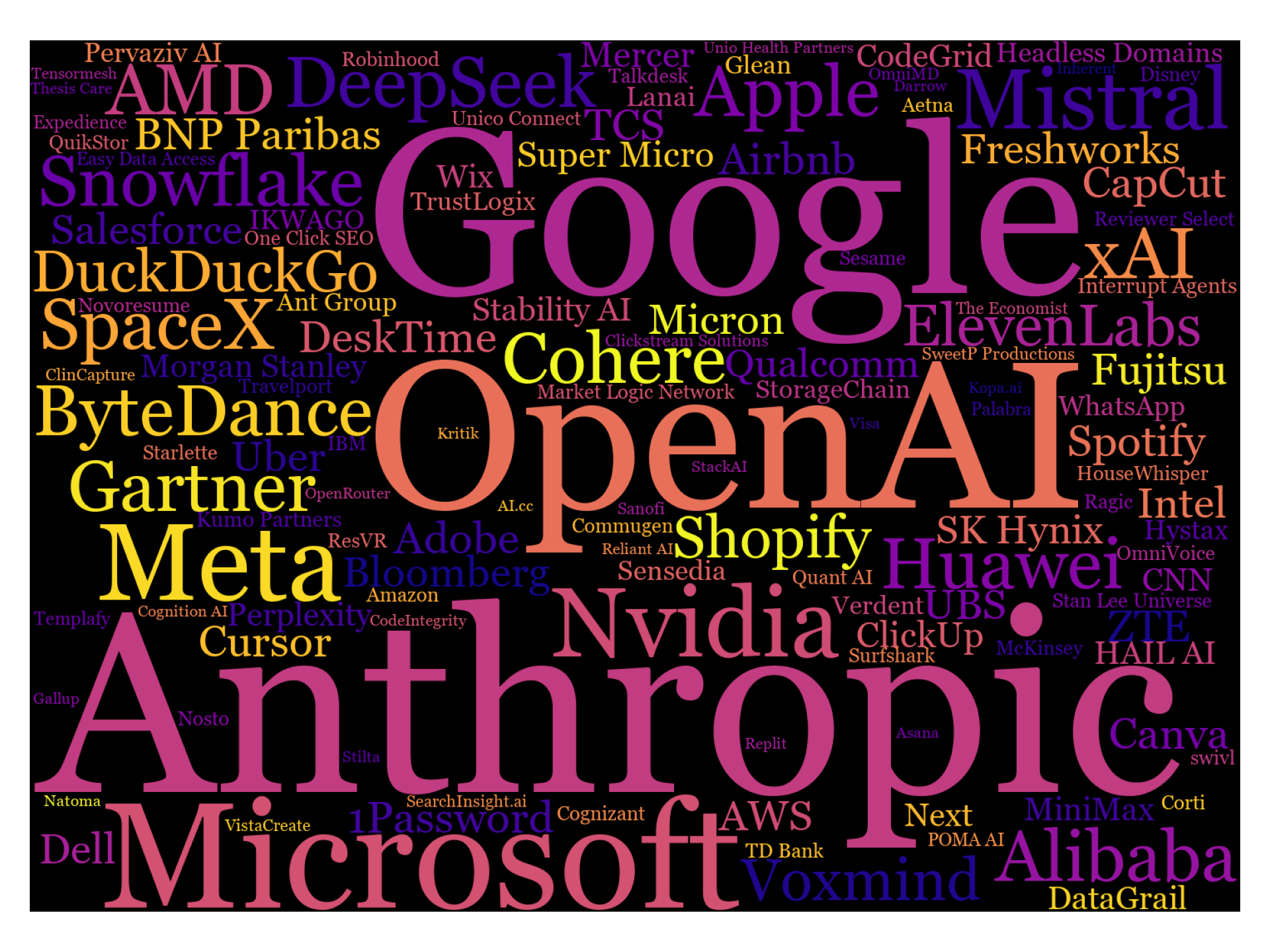
Making News This Week:
What makes this newsletter different?
This Week’s Topics:
If you’re reading this in a desktop web browser, you can access a navigation menu at the left-hand edge of this window.
The Generative AI Wars
Anthropic has shifted Claude Mythos toward broader availability, planning public release once safeguards strengthen, while preparing Mythos 1 for Claude Code and Security products. [TestingCatalog]
Anthropic has opened its sixth European office in Milan, naming major Italian enterprise customers and positioning itself as aligned with Pope Leo XIV’s AI ethics encyclical. [The Next Web]
Anthropic was estimated to be generating at least 35% more revenue than OpenAI. [The Information]
Apple is renewing its push for on-device AI rather than cloud-based AI. [The Information]
Fujitsu has partnered with Anthropic to deploy Claude across its workforce and strengthen AI services and cybersecurity capabilities for Japanese enterprises. [ITPro]
Google DeepMind’s AlphaProof Nexus autonomously solved nine open Erdős mathematics problems, including two unsolved for 56 years. [The Rundown AI]
And OpenAI says one of its general-purpose reasoning models disproved an 80-year-old geometry conjecture posed by Erdős. [eWeek]
OpenAI has launched a ‘Guaranteed Capacity’ plan allowing enterprises to lock in up to three years of dedicated compute access for predictable revenue. [TechRadar]
OpenAI is rolling out conversion-optimized ad campaigns in June with tracking infrastructure for advertisers to measure campaign performance. [Search Engine Land]
A DeskTime report found ChatGPT’s workplace AI dominance eroding as Gemini and Claude surge, risking Firefox-like decline. [TechRadar]
Meta has launched paid AI chatbot subscriptions starting at $7.99 monthly, competing directly with OpenAI and Google for consumer AI revenue. [The Next Web]
And Meta has revealed plans to accelerate its enterprise AI business through an internal memo. [The Information]
Microsoft has cancelled most Claude Code licenses within its Experiences and Devices division due to unsustainable token costs at current pricing. [The Next Web]
Microsoft Build 2026 will focus on AI agents, native Windows apps, and Linux integration for developers rather than consumer hardware announcements. [PCMag UK]
Elon Musk downplayed SpaceX’s compute commitment to Anthropic, contradicting the company’s SEC filing describing a three-year agreement. [TechCrunch]
xAI has launched an early beta of Grok Build, a powerful new coding agent and CLI for professional software engineering and complex coding work. [xAI]
xAI’s general counsel warned staff to limit Cursor contact weeks after collaboration began, raising antitrust concerns ahead of a potential US$60B acquisition. [The Next Web]
AI Supremacy
Airbnb CEO Brian Chesky defended the company’s use of Chinese open-source AI models, denying US lawmakers’ concerns about data access. [Bloomberg]
Canada’s government has invested US$24m in CIFAR’s AI Chairs Program to support and retain AI talent. [BetaKit]
China has declined to purchase Nvidia’s H200 AI chips, preferring to develop its own domestic semiconductor industry instead. [TechRadar]
China has restricted overseas travel for top AI professionals at private firms like Alibaba and DeepSeek to safeguard technology. [Bloomberg]
And China is designing a futures market for AI tokens as the country potentially takes a different tack to U.S. exchanges. [Yahoo Finance]
The US is actively promoting American AI technology and solutions across Asia to compete with cheaper Chinese alternatives. [CNBC]
Sovereign AI
BNP Paribas has partnered with Mistral AI to develop a European cybersecurity AI tool, countering US restrictions on Anthropic’s comparable Mythos system. [The Next Web]
The European Commission is publishing its Tech Sovereignty Package Wednesday to reduce EU reliance on American cloud, AI, and chip infrastructure, though internal debate tempered its aggressiveness. [The Next Web]
Germany and Spain are resisting EU binding legislation to ban Huawei and ZTE, citing Beijing retaliation risks and AI infrastructure costs. [The Next Web]
TCS has expanded its sovereign cloud portfolio into the EU with SovereignSecure Cloud, designed for governments and regulated industries. [ITPro]
Mistral AI CEO Mensch rejected Pope Leo XIV’s call to ‘disarm’ AI, arguing Europe must develop advanced AI capabilities to compete geopolitically. [Gizmodo]
Feature Creeps
1Password has expanded its partnership with OpenAI to help businesses securely deploy AI agents through a new credential management integration. [BetaKit]
Google has added preferred sources, perspectives carousels, and highly cited labels to AI Overviews and AI Mode search experiences. [Search Engine Land]
Google is bringing Adobe, Canva, and CapCut integrations into its Gemini chatbot. [eWeek]
Microsoft Copilot automates Excel tasks like dashboard creation, data cleaning, PDF conversion, and pivot table generation to boost productivity. [Geeky Gadgets]
Microsoft has allowed users and administrators to fully uninstall the Copilot app from Windows 11 following poor adoption rates and persistent user criticism. [The Next Web]
Microsoft has launched a revamped Microsoft 365 Copilot with faster loading, cleaner design, and more structured responses. [The Verge]
Spotify has added over 650 narrated long-form articles from major publications to its audiobook library. [Engadget]
Hype Bubble?
Corporate leaders are starting to question whether soaring AI spending is delivering meaningful returns. [Axios]
A Bloomberg report has criticized Salesforce’s marketing of its Agentforce AI platform, highlighting gaps between promised capabilities and current functionality. [Gizmodo]
Freshworks warns UK businesses waste £11.7B annually correcting AI errors, with workers losing 26% of time to complexity management. [TechRadar]
A survey by Gartner has found that four in ten AI agents are headed for demotion or elimination due to governance struggles. [The Register]
Uber’s president questioned whether the company’s substantial AI spending is delivering meaningful consumer benefits, citing unclear connections between token consumption and feature development. [The Verge]
Big Iron
Dell has added 1,000 customers for its AI Factory server line, bringing total clients to 5,000 in the past quarter. [Bloomberg]
Meta CEO Mark Zuckerberg indicated a cloud computing business is ‘definitely on the table’ if excess data center capacity becomes available. [TechRadar]
Snowflake has committed to spending US$6B on AWS over five years for AI infrastructure and custom chip services. [GeekWire]
Elon Musk clarified that SpaceX’s Colossus 1 data center lease to Anthropic is 180 days with mutual cancellation rights, not a three-year commitment. [The Next Web]
Data centers could increase US electricity costs 6-29% nationally by 2030, with some states facing 57% hikes. [TechRadar]
Hot Chips
ByteDance is developing custom data-centre processors using Arm and RISC-V architectures to reduce reliance on expensive Intel and AMD chips amid US export controls. [The Next Web]
Huawei bets on speed over shrinking transistors to sidestep US chip sanctions. [Yahoo Finance]
Micron topped US$1T market value as shares surged 19% on AI chip demand, with UBS tripling its price target to US$1,625. [CNBC]
Nvidia’s Jensen Huang disclosed the company will spend approximately US$150B annually in Taiwan, positioning the island as central to AI infrastructure development. [The Next Web]
Qualcomm has agreed to supply ByteDance with millions of AI data-centre chips and help manufacture the Chinese firm’s own semiconductor design. [The Next Web]
SK Hynix has crossed a US$1T valuation as AI data center demand drives memory chip prices higher. [TechRepublic]
Taiwan’s prosecutors detained three individuals, including a Super Micro senior vice president, for allegedly smuggling US-restricted Nvidia chips to China via falsified export documents through Japan. [The Next Web]
Warm Bodies
A survey by Mercer found 99% of CEOs expect AI-driven layoffs within two years, disproportionately affecting early-career workers. [Gizmodo]
ClickUp laid off 22% of its workforce while introducing 3,000 AI agents, promising million-dollar salaries for high-impact employees. [TechCrunch]
Meta is cutting 1,395 jobs in Washington state as part of broader layoffs prioritizing AI investments. [GeekWire]
Morgan Stanley doubled its forecast for AI-driven job losses in European banking to 400,000 roles by 2030, citing accelerating bank restructuring commitments. [The Next Web]
Next CEO Lord Wolfson warned that government policies could cause a dramatic fall in entry-level jobs, worsening youth unemployment. [TechRadar]
Wix has laid off approximately 1,000 employees, 20% of its workforce, citing currency headwinds and the need to restructure around AI-native roles. [The Next Web]
Meanwhile, Sam Altman and Dario Amodei reversed prior warnings that AI would eliminate white-collar jobs, now acknowledging automation may expand work instead. [Fortune]
It’s Only a Model
Alibaba has unveiled Qwen 3.7-Max, an advanced AI model capable of autonomous tasks, alongside a Singapore government-backed upskilling initiative. [Computer Weekly]
Anthropic has launched Claude Opus 4.8, featuring improved honesty, dynamic workflows with subagents, and cheaper fast mode pricing. [ZDNet]
Opus 4.8 has misalignment rates similar to Claude Mythos Preview, prioritizing safety and honesty improvements. [ZDNet]
Cohere has released Command A+, an open-source AI model twice as fast as previous versions, available free to developers. [BetaKit]
Microsoft Research released Fara1.5, a family of browser computer-use agent models achieving 72% task success, outperforming OpenAI’s Operator and Google’s Gemini 2.5. [Marktechpost Media]
And Microsoft will unveil a suite of new homegrown AI models next week at its annual Build conference. [Yahoo Finance]
MiniMax released a technical report on its M2 language models and teased its upcoming M3 series featuring sparse attention technology enabling 15.6x faster decoding at million-token contexts. [VentureBeat]
Stability AI’s newest audio model can generate songs that run longer than many radio singles. [eWeek]
Whose Data?
CNN has sued Perplexity for scraping its articles verbatim and providing paywalled content without permission or compensation. [The Verge]
A survey by DataGrail found that 63.6% of AI-enabled software vendors fail to disclose third-party AI subprocessors in legal documentation, exposing customer data to unapproved AI systems. [VentureBeat]
Researchers found Google’s AI Mode recommends brands from users’ Gmail activity three times more frequently, risking confirmation bias instead of discovery. [TechRadar]
The LLM Ecosystem
CodeGrid has launched a free, open-source macOS app enabling developers to run multiple AI coding agents simultaneously on a customizable canvas. [EIN Presswire]
HAIL AI has announced governed runtime infrastructure enabling production-scale AI hot swapping across global deployment networks in minutes. [EIN Presswire]
Headless Domains has launched .BOSS, an agent-native domain namespace enabling autonomous agents, managers, and AI systems to establish shared identities for coordination and delegation. [EIN Presswire]
Hystax has released OptScale AI, an enterprise platform that reduces LLM costs by up to 40% while enforcing security policies and controlling AI agents. [PRWeb]
IKWAGO has introduced a WhatsApp-first AI intake system that converts informal customer messages into structured multilingual records for business workflows. [EIN Presswire]
Lanai has launched Token Tuner, a feature tracking enterprise AI spending across departments to identify cost-saving opportunities and efficiency improvements. [PRWeb]
Pervaziv AI has released Cortex 4.3, strengthening enterprise AI reliability through improved session continuity, authentication, and agentic engineering workflows. [EIN Presswire]
Sensedia has launched an independent AI Gateway enabling enterprises to govern agents, route across models, and control AI spending with unified visibility. [EIN Presswire]
StorageChain has unveiled a cross-cloud AI intelligence layer enabling secure data orchestration across fragmented enterprise cloud environments without requiring data migration. [EIN Presswire]
TrustLogix has launched next-generation TrustAI with intent-based authorization, runtime kill switch, and real-time behavioral monitoring for AI agent data security. [PRWeb]
Verdent has launched Manager, an AI technical cofounder tool helping builders plan, build, review, and ship software more effectively. [PRWeb]
Agentic AI
Ant Group has launched AI Wallet and Token Pay tools enabling AI agents to shop and pay while maintaining user control over transactions. [TechRepublic]
Interrupt Agents has partnered with Glean to help organizations implement AI platforms and build custom agents for growth team workflows. [PRWeb]
Kumo Partners has launched AgentDesk, a subscription service delivering two to three production Microsoft Copilot agents to mid-market companies within six weeks. [EIN Presswire]
Madhive has expanded its Maverick AI platform with new agentic capabilities to accelerate planning, activation, and optimization for local media campaigns. [PRWeb]
Market Logic Network has integrated AI agents into business operations through connected automation systems supporting CRM workflows, customer communication, and process automation. [EIN Presswire]
One Click SEO has launched Agentic Tools, an AI-powered real estate CRM platform designed for generative search optimization. [EIN Presswire]
Ragic has launched AI Agent, an embedded AI solution enabling companies to automate workflows without coding or technical expertise. [GlobeNewswire]
Robinhood has launched an AI agentic trading platform and virtual credit card, becoming the first major retail brokerage enabling autonomous software to trade securities and spend. [The Next Web]
TD Bank has launched agentic AI to automate mortgage and HELOC applications, reducing processing time from fifteen hours to under three minutes. [Banking Exchange]
And rogue states are putting AI agents to work on sanctions evasion. [The Register]
Other LLM Sightings
McKinsey has launched a free AI practice tool and integrated its AI assistant Lilli into hiring to test candidates’ ability to work effectively with AI. [The Next Web]
Novoresume has launched a free AI Resume Job Matcher tool that identifies missing keywords and improves ATS compatibility to help job seekers pass automated screening systems. [EIN Presswire]
Reviewer Select has launched a semantic AI platform helping editorial teams identify peer reviewers faster using concept-based matching and evidence-backed recommendations. [PRWeb]
Travelport has partnered with Cognizant to integrate Claude AI into its travel platforms, automating bookings, servicing, and workflows. [Breaking Travel News]
Security
Anthropic’s Mythos Preview has discovered over 10,000 critical and high-severity vulnerabilities across major software in under two months. [TechRadar]
OpenAI has granted EU access to ChatGPT 5.5, which performs comparably to Anthropic’s Claude Mythos on cybersecurity tasks. [TechRepublic]
And OpenAI has begun talks to provide Japan’s government and enterprises with GPT-5.5 Cyber. [BigGo Finance]
The ECB is convening banks to address cybersecurity risks from AI models like Anthropic’s Mythos, which has identified thousands of zero-day vulnerabilities. [The Next Web]
A critical vulnerability in the Starlette framework has exposed millions of AI agents and servers to potential breaches allowing hackers to steal credentials. [Ars Technica]
AI coding tools’ security flaws reveal the critical need for data-layer governance, access controls, encryption, and audit logs rather than relying solely on model-layer defences. [TechRepublic]
Risks and Responses
AI agents risk widening inequality as well-resourced firms gain disproportionate advantages while smaller players struggle with lower-quality tools. [Rest of World]
Gartner warned that 40% of enterprises could decommission AI agents by 2027 without proper governance frameworks and granular access controls. [TechRadar]
Hackers are increasingly exploiting chatbot ‘personalities’ through psychological manipulation rather than technical exploits, creating a new cybersecurity frontier. [The Verge]
Microsoft warned that cybercriminals are tricking AI chatbots into recommending malicious websites spoofing legitimate utilities, leading victims to download malware. [TechRadar]
Pope Leo released a 42,300-word encyclical warning that AI must serve humanity and not concentrate power among the few. [Engadget]
Researchers demonstrated that inaudible adversarial audio embedded in videos or podcasts can hijack AI assistants, potentially compromising users’ personal data and accounts. [Futurism]
Employees at Meta, Disney, and Amazon are inflating AI usage to impress bosses, causing companies’ AI budgets to spiral out of control. [The Telegraph]
The Backlash
DuckDuckGo has surged in popularity as users seek an AI-free search alternative to Google’s AI-enhanced search results. [ZDNet]
Erin Brockovich has launched a crowdsourced map for reporting concerns about AI data centers in US communities. [Engadget]
US Federal agencies are surveilling and targeting anti-technology activists and protesters as domestic extremists under Trump administration directives. [Wired]
Millville, New Jersey has voted to ban data centers, halting a proposed 1.4-gigawatt facility due to infrastructure and community concerns. [Business Insider]
Regulation
Anthropic and OpenAI’s multimillion-dollar spending battle over AI regulation in New York’s 12th congressional district has inadvertently elevated obscure assemblyman Alex Bores into a frontrunner. [The Verge]
Commugen has launched the world’s first unified EU AI Act Compliance Automation solution to help enterprises automate AI governance and audit readiness. [EIN Presswire]
Illinois House passed SB 315 requiring frontier AI labs to undergo third-party safety audits, representing the nation’s strongest AI safety check if signed. [Wired]
Pope Leo XIV’s encyclical Magnifica Humanitas calls for robust legal frameworks and government oversight to regulate AI and prevent power concentration. [The Next Web]
Read Trump’s unsigned AI executive order. [Politico]
Conversational AI
Aetna has rolled out AI-powered digital tools, including a conversational assistant and Care Paths, to help members navigate healthcare benefits and improve their experience. [Healthcare Dive]
Google has launched over 40 AI-powered advertising innovations shifting focus from clicks to conversational interactions and intent prediction. [Search Engine Land]
HouseWhisper has launched Lead Engine and Rules Engine to automate personalized outreach and maximize connection rates between leads and agents. [PRWeb]
Nosto has launched a native Shopify workflow integrating its AI capabilities with Shopify’s Sidekick assistant to enable commerce teams to manage personalization through conversational AI. [PRWeb]
Quant AI has announced AI Agent Ava, an agentic AI solution developed with IBM that resolves 84% of customer service calls. [EIN Presswire]
QuikStor and swivl announced a native integration connecting their platforms to streamline self-storage tenant interactions from inquiry through payment automatically. [PRWeb]
ResVR has launched an AI-powered assistant enabling homebuyers to navigate 3D model homes with voice-guided support and real-time customization options. [GlobeNewswire]
Sesame has released a public iOS preview of conversational AI agents designed to think and speak naturally while accessing real-time information. [TechCrunch]
Talkdesk has launched proactive AI agents for retail and financial services that automate outbound engagement across voice and digital channels. [The Next Web]
Be Real
A survey by Surfshark found that nearly half of participants cannot reliably distinguish AI bots from humans online, with performance worsening on emotionally charged topics. [TechRadar]
International researchers have published consensus guidelines establishing clear rules for responsible use of AI in medical writing, permitting language refinement while strictly prohibiting AI-generated citations and data manipulation. [EIN Presswire]
Voice News
Anthropic is preparing a major Claude mobile voice update featuring multilingual support, push-to-talk, and dynamic language switching mid-conversation. [TestingCatalog]
Corti has launched Symphony for Speech-to-Text, achieving up to 93 percent lower word error rates for clinical medical dictation. [Speech Technology Magazine]
ElevenLabs has partnered with Stan Lee Universe to add the late Marvel co-creator’s AI-generated voice and likeness to its platform for commercial licensing. [The Next Web]
ElevenLabs has added 200,000 titles to its ElevenReader app, including books from major publishers, through a new paid subscription tier. [Publishers Weekly]
OmniVoice Studio is an open-source desktop application offering voice cloning, video dubbing, and transcription locally without cloud servers, supporting 646 languages. [Marktechpost Media]
Unico Connect has built an AI voice-to-order system for Ashokraj Transport & Logistics, achieving 60 percent faster order processing. [Speech Technology Magazine]
Voxmind has closed a pre-seed funding round for physics-based voice authentication and deepfake detection technology as major cloud providers exit the market. [Speech Technology Magazine]
Document AI
Easy Data Access‘s Docsvault Version 18 introduces AI-powered document capture, advanced PDF tools, and faster enterprise search to improve productivity and control. [EIN Presswire]
Expedience has launched CRM Connect, a document automation solution that enhances Microsoft Dynamics’ native document generation capabilities for complex enterprise documents. [GlobeNewswire]
POMA AI has released POMA Grill, a context engine reducing AI development costs and time through streamlined document processing and retrieval. [GlobeNewswire]
Templafy has launched MCP, an integration connecting third-party AI platforms with its document agents to ensure AI-generated content meets company standards. [GlobeNewswire]
Translation
Palabra.ai, a real-time AI voice translator, has reached US$1m annual run rate, growing 17x in six months across 60+ languages. [PRWeb]
SweetP Productions has released XLIFF Editor 4.0, a major update to its professional XLIFF editing tool for macOS. [MultiLingual]
Search
Clickstream Solutions analyzed 846,000 Google search sessions, finding AI Overviews reshape user behavior with increased scrolling, comparison evaluation, and reduced intent-based predictability. [Search Engine Land]
DuckDuckGo has reported a sustained surge in US app installs following Google’s announcement of new AI-powered Search features at its I/O conference. [Engadget]
Google is transforming search into an AI assistant that answers questions directly, reducing publisher traffic and threatening the economics of free online information. [Forbes]
Google CEO Sundar Pichai announced that Search, AI agents, and tools will eventually converge into a single unified product. [Search Engine Land]
Google’s AI Search can be tricked by fake web pages. [eWeek]
SearchInsight.ai has launched an AI search tracking tool to help agencies and in-house teams monitor brand visibility across AI search engines. [PRWeb]
Writing Assistance
VistaCreate has launched AI Writer, an integrated tool enabling users to generate, edit, rewrite, and translate copy directly within the design editor. [EIN Presswire]
AI in Journalism
The Associated Press has released the 58th edition of its Stylebook, featuring expanded AI guidance and updates reflecting evolving language and usage. [Editor & Publisher Magazine]
The Economist has launched a ChatGPT app featuring US polling data, aiming to reach younger audiences discovering content through AI chatbots. [NiemanLab]
The New York Times’ unionized tech employees filed unfair labor practice charges, alleging the company violated their contract by using AI tools to monitor performance without bargaining. [The Verge]
Health Tech
ClinCapture has expanded its Captivate AI platform with AI-assisted study build capabilities to accelerate clinical trial workflows and reduce manual configuration work. [EIN Presswire]
OmniMD has launched AI Medical Biller and AI Medical Coder platforms to help healthcare providers reduce claim denials and revenue leakage. [EIN Presswire]
Sanofi has built its own AI ecosystem with custom tools rather than licensing vendor agentic AI products to gain competitive advantage. [Yahoo Finance]
Thesis Care has deployed multiple AI care team agents across Unio Health Partners’ practices serving over 500,000 patients. [PRWeb]
Legal Tech
AI.cc has published a case study showing LegalMind AI automated 70% of contract review using multi-model routing, reducing costs 76% and processing time from 4.2 hours to 38 minutes. [EIN Presswire]
Florida Supreme Court has issued a rule requiring court filing signers to certify legal citations exist and are accurately cited. [LawSites]
A study by MIT and USC researchers found that AI-generated text now appears in 18 percent of pro se legal filings, significantly increasing court workload. [Gizmodo]
Darrow has launched a platform enabling law firms to discover, vet, and manage litigation cases like investment portfolios using AI-driven legal risk intelligence. [LawSites]
Ed Tech
A survey by Gallup and the Walton Family Foundation found most K-12 teachers lack formal guidance on using AI tools in classrooms. [Axios]
Kritik, a Toronto edtech startup, has launched VisibleAI to help professors assess critical thinking by tracking student AI usage rather than banning it. [BetaKit]
Funding
Anthropic has raised US$65B at a US$965B valuation in Series H funding, potentially its final private round before going public. [TechCrunch]
CodeIntegrity has raised US$5m in seed funding to develop security protections for autonomous AI agent applications. [GeekWire]
Cognition AI has raised over US$1B at a US$26B valuation for its AI coding agent Devin, growing revenue thirteenfold to US$492 million annually. [The Next Web]
Inherent, a London-based AI lab founded by former Google DeepMind researchers, has raised US$50m to build AI-native science platforms. [Sifted]
Kopa.ai has raised €2m in seed funding to build an AI operating system enabling e-commerce teams to delegate operational tasks to autonomous agents. [Tech.eu]
OpenRouter has raised US$113m Series B led by CapitalG, reaching a US$1.3 billion valuation as AI gateway adoption surges. [TechCrunch]
Stilta has raised US$10.5m in funding led by Andreessen Horowitz to develop AI software for patent litigation and intelligence. [Pulse 2.0]
Tensormesh, an AI inference optimization startup, has raised US$20m in seed extension funding backed by Nvidia and AMD. [Axios]
Visa has invested in AI coding platform Replit and is exploring integrating its payment products into the platform for developers. [TechCrunch]
Voxmind has closed a £546,491 pre-seed funding round to provide voice authentication as major cloud providers exit the market. [Tech.eu]
Acquisitions
Asana has acquired workflow automation company StackAI for US$75m to strengthen its AI-native workplace platform positioning. [TechCrunch]
Cohere has acquired Reliant AI to expand its AI platform into healthcare and life sciences sectors with domain-specific technology. [BetaKit]
Snowflake has acquired Natoma as its sixth acquisition since June 2025 to help address rogue AI agents. [The Register]
There’s More
A survey by Baylor, Notre Dame, BYU, and Yeshiva found major AI systems demonstrate religious bias and exclude religious perspectives from responses. [PRWeb]
Pope Leo XIV’s encyclical on AI was unveiled at an event featuring Anthropic co-founder Chris Olah, reflecting years of Vatican-tech dialogue on AI ethics. [Religion News Service]
An analysis found that portions of Pope Leo XIV’s encyclical on AI’s dangers may have been written using AI technology. [The Verge]
The Back Cover
Here’s Jake Coco and Madilyn Bailey with a cover of Gotye’s Somebody That I Used To Know.
If you know of a great cover version of a back-catalogue classic, drop an email to us at backcover@language-technology.com and we’ll consider it for inclusion here.
Got this from someone else?
Did you find this newsletter useful? if so, you might forward it to a friend; or you could email us at news@language-technology.com to tell us what you want more of.
Did you hate this newsletter? if so, you could forward it to an enemy; or you could email us at news@language-technology.com to tell us why – make it better!