
This Week in NLP #395
Keep up with what happened in Natural Language Processing in the week ending Friday 12th June 2026.

Above the Fold
Overwhelmed? Here’s our pick for five things to know about this week.
Apple announced Siri AI, Apple Intelligence features, design updates, performance improvements, and enhanced parental controls at its WWDC 2026 keynote. [Engadget]
OpenAI has confidentially filed for a US IPO, targeting a US$1T valuation as it joins rival Anthropic in pursuing public markets. [DealStreetAsia]
OpenAI is overhauling ChatGPT into a ‘superapp’ bundling coding, AI agents, and integrations to boost revenue before its Q4 2026 IPO. [Decrypt]
SpaceX has drawn over US$250B in investor demand for its record-breaking IPO, approaching four times oversubscription. [Yahoo Finance]
Trump is considering having the US government take equity stakes in major AI companies, meeting with their leaders to discuss partnership details. [Gizmodo]
Now read on for everything else that happened in NLP this week.
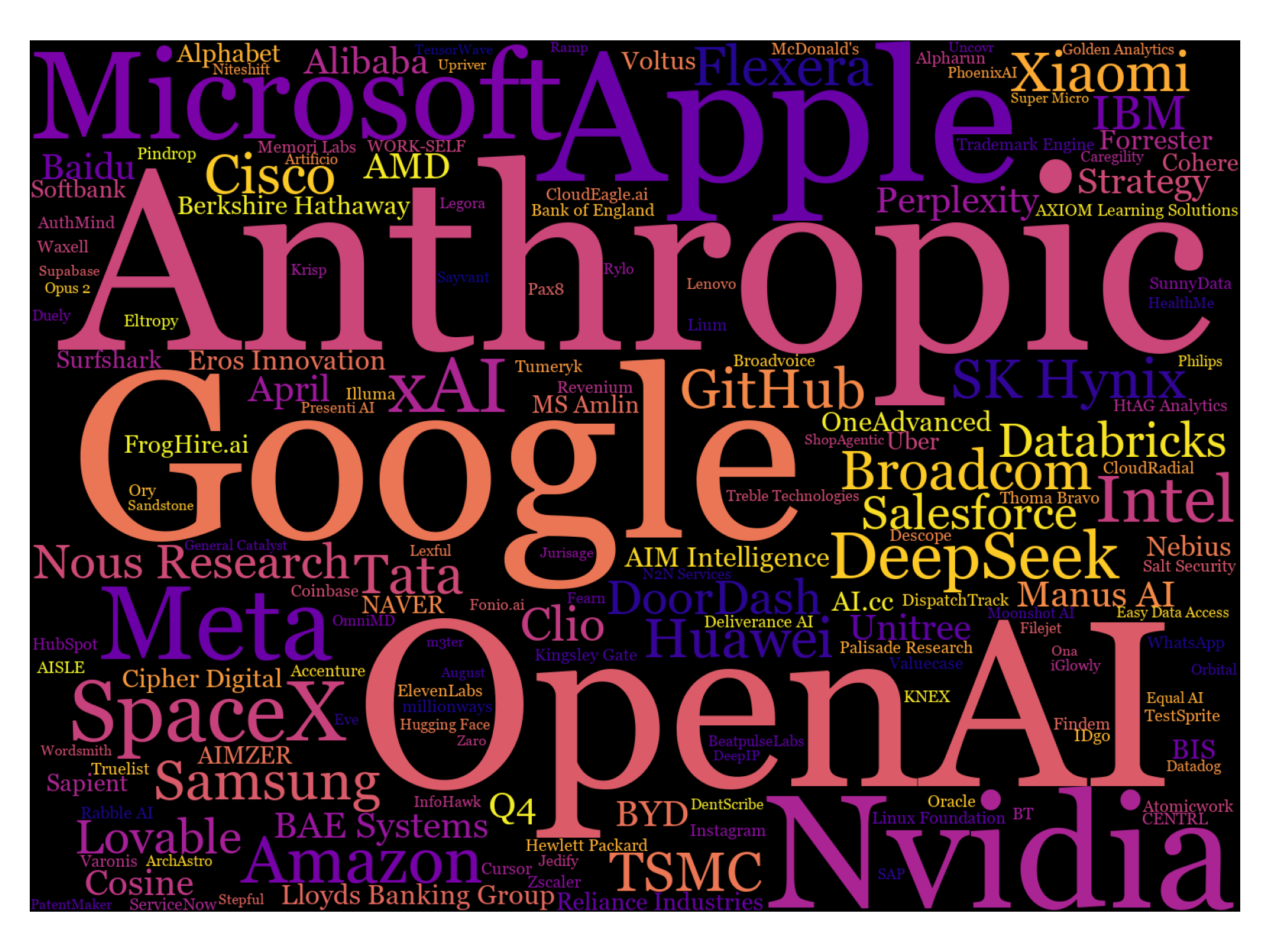
Making News This Week:
What makes this newsletter different?
This Week’s Topics:
If you’re reading this in a desktop web browser, you can access a navigation menu at the left-hand edge of this window.
Apple WWDC
Apple revealed its AI strategy at WWDC, emphasizing privacy while partnering with Google and Nvidia for advanced cloud models. [CNBC]
Apple has integrated Apple Intelligence deeper into its default apps including Safari, Messages, Mail, and Calendar with new AI-powered features. [Engadget]
Apple reintroduced its AI-powered Siri at WWDC 2026, now built on Google’s Gemini models with improved natural voice and visual intelligence capabilities. [Engadget]
Apple Intelligence is coming to the Shortcuts app, enabling users to create shortcuts using natural language descriptions. [Engadget]
Apple announced AI-powered search and notification summaries for Apple Home users, coming this fall with iOS 27, macOS 27, and iPadOS 27 updates. [Gizmodo]
Apple has launched a systemwide dictation feature powered by Gemini in iOS 27, competing with third-party AI dictation apps. [TechCrunch]
Apple announced it will offer free cloud API access to developers with fewer than 2 million App Store downloads to lower AI infrastructure costs. [TechCrunch]
And Apple announced that its new Siri AI features will be unavailable in the EU and China when released later this year due to regulatory obstacles. [MacRumors]
The Generative AI Wars
Anthropic has launched Claude Fable 5, its first public Mythos-class AI model, with safeguards that revert high-risk queries to Opus 4.8. [ITPro]
Anthropic and the Trump administration have eased tensions over the AI firm’s refusal to support military surveillance ahead of its planned IPO. [Reuters]
Anthropic has installed engineers at the NSA for AI operations, signalling Defense Secretary Hegseth’s failed campaign against the company. [Gizmodo]
Anthropic has expanded access to its vulnerability-finding Mythos model to 200 organizations despite calling it too dangerous for public release, with only 14% of discovered vulnerabilities patched. [The Next Web]
Anthropic has partnered with Tata Consultancy Services to accelerate enterprise adoption of its Claude AI models across multiple sectors. [TechCrunch]
Anthropic launched Claude Corps, a US$150m program placing 1,000 AI fellows at 400+ nonprofits for US$85,000 annually with no degree requirement. [The Next Web]
Google has signed a US$30B deal with SpaceX to lease computing power from xAI’s data centers for Gemini Enterprise. [Engadget]
Google has cut its AI Plus subscription price from $7.99 to $4.99 monthly while doubling storage, intensifying AI pricing competition in the US market. [TechCrunch]
And OpenAI and Anthropic are cutting prices as enterprises reduce AI spending due to poor returns on investment and shift toward cheaper open-source models. [Forbes]
Meanwhile, Microsoft has raised GitHub Copilot pricing per token instead of flat rate, signalling broader AI cost pressures as companies prepare IPOs and seek profitability. [TechCrunch]
Meta is considering raising tens of billions of dollars through a stock offering to fund its AI infrastructure and expansion ambitions. [DealStreetAsia]
Meta has begun dismantling its US$2B Manus acquisition after Chinese regulators ordered the deal unwound in April. [The Next Web]
Microsoft has begun rolling out Scout, an always-on work agent desktop application, to Frontier program organizations. [TestingCatalog]
OpenAI CEO Sam Altman has identified proactive AI running constantly in the background as the next major phase after chatbots and agents. [The Decoder]
OpenAI expanded ChatGPT ads to five new markets and tested multi-advertiser placements within single ad units. [Search Engine Land]
Surprise upset: GPT-5.5 beats Claude Fable 5 on brutal new Agents’ Last Exam benchmark. [VentureBeat]
Perplexity AI is maintaining its 2028 IPO timeline despite OpenAI and Anthropic planning 2026 listings, betting patience over urgency. [The Next Web]
US AI giants including Anthropic, OpenAI, and Google have rapidly expanded London offices, making it rival San Francisco while pressuring homegrown startups competing for talent. [The Next Web]
xAI trained its coding models on Anthropic’s Claude outputs for months before access was revoked in January. [The Decoder]
AI Supremacy
Rest of World hosted a panel discussing how AI dominance by the US and China risks leaving other countries dependent and economically disadvantaged without equitable access. [Rest of World]
China is closing in on America’s AI advantage. [Politico]
China is planning to spend US$295B over five years building AI data centers using domestic chips, aiming to reduce dependence on American technology. [The Next Web]
Huawei chips have successfully refined DeepSeek’s largest AI model through full-parameter post-training, advancing China’s AI self-reliance. [South China Morning Post]
China cracks down on Western AI models while US companies adopt cheaper Chinese alternatives like DeepSeek amid escalating tech tensions. [TechRadar]
The Pentagon added Alibaba, Baidu, BYD, and Unitree to its 1260H list, bringing the total Chinese military-linked companies to 188. [The Next Web]
Taiwan is considering stricter AI chip export controls to China to align with US measures and combat semiconductor smuggling. [Bloomberg]
The Philippines is negotiating a US$10B US-backed AI and semiconductor hub near Clark, involving a controversial 99-year lease arrangement. [The Next Web]
Sovereign AI
The European Commission has launched a Tech Sovereignty Package including Chips Act 2.0, Cloud and AI Development Act, and Open Source Software Strategy to reduce reliance on US and Chinese technology vendors. [TechRadar]
London Tech Week opened with billions in AI investment pledges, mostly for compute infrastructure relying on American technology. [The Next Web]
Amazon has announced a £1B UK investment, opening two new facilities and creating 4,000 jobs. [TechRadar]
AMD has announced a £2B five-year investment in the UK to advance AI research and build new supercomputers with university partnerships. [ITPro]
Cisco and the UK Department for Science, Innovation and Technology have launched a strategic collaboration to advance AI adoption and digital skills development across the country. [Computer Weekly]
Cosine has announced Lumen Sovereign, Britain’s first sovereign frontier AI model, developed with major UK institutions including BAE Systems and Lloyds Banking Group. [Tech.eu]
Nebius has announced a £1.7B investment to build three new Nvidia-powered UK deployments, reaching 65 MW capacity by 2027. [Tech Funding News]
OneAdvanced has launched Care Navigator, a UK-sovereign AI model trained on NHS data to triage patient requests while keeping data domestically. [The Next Web]
The UK government will make strategic purchases of AI chips from British firms to build a £37B domestic semiconductor industry. [The Next Web]
The UK announced £1.1B in AI hardware investment, a £200 million adoption package, and justice system AI tools at London Tech Week. [The Next Web]
The UK government has announced funding and support measures to encourage open-source AI developers to build tools improving public services. [ITPro]
AIM Intelligence has unveiled XL-SafetyBench, a global AI safety benchmark measuring LLMs across legal, institutional, and cultural contexts in ten countries. [EIN Presswire]
Eros Innovation has launched a Cultural AI Platform featuring Large Cultural Voice Model and Persona AI across 34 languages for digital characters and performers. [EIN Presswire]
Singapore has launched ASPIRE 2B, a national supercomputer delivering 100-fold increased computing capacity to support AI research and breakthroughs in climate science and healthcare. [TNGlobal]
South Korea’s AI infrastructure buildout relies heavily on Nvidia partnerships across government, cloud providers, and manufacturers, creating sovereign compute capacity but not full independence from the vendor. [TechRepublic]
Feature Creeps
Google Research has introduced an agentic RAG framework with a Sufficient Context Agent that iteratively searches multiple data sources until finding complete answers. [Marktechpost Media]
Google has updated NotebookLM with Gemini 3.5 as default, new research features, and expanded export format options for users. [TechCrunch]
Google has expanded Gemini in Chrome to Latin America, the Middle East, and Africa, though Europe remains unavailable due to GDPR restrictions. [Engadget]
Microsoft is expanding AI features to non-Copilot+ Windows 11 PCs using Nvidia GPUs instead of requiring NPUs. [TechRadar]
OpenAI has updated ChatGPT’s memory system to automatically build narrative profiles organized by categories like work, hobbies, and travel, improving fact retrieval accuracy to 82.8 percent. [The Decoder]
But ChatGPT’s new memory feature builds inaccurate user profiles from chat history, potentially skewing future responses and raising privacy concerns. [ZDNet]
ChatGPT has launched Lockdown mode to all users, limiting outbound network requests to prevent data theft from prompt injection attacks. [ZDNet]
Hype Bubble?
A survey by AI.cc found 83% of enterprise AI projects fail to scale due to infrastructure bottlenecks including rate limits, cost escalation, and single-provider dependency. [EIN Presswire]
BIS Safety Software’s CEO argues that while 78% of organizations adopted AI by 2025, only 25% achieved expected returns, revealing a gap between adoption and meaningful operational impact. [The Next Web]
A Forrester report found that while three-quarters of enterprises are adopting agentic AI, most remain stuck in pilot stages without achieving operational returns on investment. [ITPro]
Enterprises are quietly scaling back AI copilot and agent deployments that lack clear business value, measurable ROI, and proper governance controls. [ITPro]
Big tech companies have acknowledged that excessive AI token spending is unsustainable, prompting shifts toward cheaper edge computing models. [Gizmodo]
LLM-based coding appears economically unviable at true API costs, with complex multi-file code editing costing $55–75 per task—sustainable only through heavy subscription subsidies that mask actual expenses from users. [R&A]
Markets are experiencing nervousness over AI valuations and concentration risks, with software stocks declining sharply amid concerns about AI displacement and massive hyperscaler spending. [The Next Web]
AI scepticism has emerged from within the industry as companies discover the technology’s high costs outweigh productivity gains. [Axios]
And Nvidia’s market cap dropped US$330B after Broadcom issued weaker-than-expected guidance, reflecting broader concerns about AI growth sustainability. [TechRadar]
Big Iron
Australia’s AI data center boom is creating power-grid stability risks, requiring earlier coordination between developers and grid planners. [TechRepublic]
Berkshire Hathaway has invested US$10B in Alphabet’s US$80B capital raise for AI infrastructure expansion. [The Decoder]
China has launched the world’s first underwater data center off Shanghai’s coast, which uses ocean cooling and offshore wind power to reduce energy consumption by one-fifth. [Gizmodo]
Cipher Digital has raised US$810m in junk bonds at 6.25% to fund its Stingray data centre in West Texas, leased to Amazon for 15 years. [The Next Web]
Google has signed a three-year agreement with Voltus to source distributed electricity from thousands of US households to power its data centers. [TechRadar]
Google.org is committing US$50m to train over 300,000 skilled-trade workers needed to build data centers supporting AI infrastructure. [The Next Web]
A billionaire tech exile has pledged almost £2bn for Britain’s AI data centre expansion with plans for three new UK sites. [The Telegraph]
Meta has agreed to lease a 168-megawatt AI data centre in India from Reliance Industries, its first facility in the country. [The Next Web]
And Meta is investing US$115m to train workers for data center and AI infrastructure construction jobs with guaranteed employment. [ITPro]
MS Amlin research found 56% of planned US data centers are in disaster-prone states, risking US$800B in investments. [TechRadar]
NAVER has announced plans to build AI factories at gigawatt scale using Nvidia’s DSX platform, starting with infrastructure expansion at its GAK Sejong data center. [Nvidia]
OpenAI was in talks to lease a 10-gigawatt Ohio data center with backing from Nvidia. [The Information]
SpaceX has leaked plans for an orbital AI data center tech demo by end of next year, though experts note significant technical complexity and unproven viability. [Gizmodo]
Hot Chips
Apple’s third-generation foundation models move weights to flash storage, enabling 20-billion-parameter on-device AI without requiring full DRAM capacity. [VentureBeat]
Google has ordered over three million Intel chips for 2028, while Nvidia evaluates Intel’s manufacturing capabilities amid TSMC supply constraints. [The Next Web]
Huawei committed to releasing new Ascend AI chips annually with doubled computing power, backed by massive infrastructure supporting millions of vehicles. [TechRadar]
Intel has launched a turnaround under new CEO Lip-Bu Tan, positioning itself to capitalize on growing CPU demand from AI applications. [CNN]
Nvidia and SK Hynix have signed a multi-year partnership to develop next-generation AI memory chips, strengthening SK Hynix’s position against Samsung. [Bloomberg]
Samsung has paused custom AI chip projects with Meta and OpenAI, while pursuing satellite computing chips with SpaceX and expanding Tizen OS streaming services. [Sammy Fans]
TSMC’s CFO said inflation is raising costs and won’t rule out price increases, while CEO warned AI chip shortages will persist for years. [The Next Web]
US chipmakers lost US$1.3T in market value after Broadcom’s weak AI chip demand report triggered a sector-wide selloff. [Reuters]
Warm Bodies
Anthropic has released an economic policy framework proposing solutions for potential AI-caused unemployment, pledging US$350m toward implementation. [Gizmodo]
Banks are laying the groundwork for mass workforce cuts as AI technology increasingly takes hold across the industry. [Bloomberg]
Chinese companies are quietly implementing small-scale layoffs while adopting AI systems to boost productivity without triggering government scrutiny over social stability concerns. [Yahoo]
China’s Workers’ Daily has urged regulators to strengthen labour protections and oversee AI algorithms as automation threatens millions of jobs. [The Next Web]
FrogHire.ai’s report found AI skill mentions nearly doubled in job postings from 2025 Q1 to 2026 Q1, requiring career centers to help students demonstrate practical AI competency. [PRWeb]
Uber, Microsoft, and Nvidia have exhausted AI budgets faster than expected, prompting increased hiring as human workers proved cheaper than automation. [MarketWatch]
Microsoft AI head Mustafa Suleyman clarified that AI will automate white-collar tasks, not entire jobs, helping workers complete work faster. [The Verge]
Tata Consultancy Services’ boss predicted AI agents will replace half of the company’s tech jobs in the future. [Bloomberg]
Moving On
Anthropic has hired OpenAI’s second chip engineer as both companies prepare for IPOs and pursue custom AI chip development. [The Decoder]
Sriram Krishnan is stepping down as White House AI adviser at the end of June to start an outside institution focused on AI policy. [The Next Web]
It’s Only a Model
Apple has introduced its third generation of foundation models, including on-device and server-based models optimized for privacy-focused Apple Intelligence features. [Apple]
Cohere has launched North Mini Code, an open-source 30B parameter model for agentic coding that runs on a single H100 but generates three times more output tokens than comparable models. [VentureBeat]
Google DeepMind has released Gemma 4 12B, a multimodal AI model that runs on laptops with 16GB RAM and processes text, images, and audio natively. [The Decoder]
And Google has released DiffusionGemma, an open-source diffusion-based language model generating text up to 4x faster than standard models, though with lower output quality. [VentureBeat]
Nvidia’s Nemotron 3 Ultra has become the most capable open US AI model, though Chinese models still lead overall benchmarks. [The Decoder]
And Nvidia has released Nemotron 3.5 ASR, an open-weights streaming speech recognition model covering 40 language-locales with configurable latency from 80ms to 1.12s. [Marktechpost Media]
Sapient has developed HRM-Text, a sample-efficient language model trainable from scratch for $1,500 on 16 GPUs, achieving competitive performance with much larger models. [VentureBeat]
SoftBank CEO Masayoshi Son stated that OpenAI’s next model is being designed by another AI model, signalling superintelligence emergence. [CNBC]
Xiaomi has achieved over 1,000 tokens per second on a trillion-parameter model using commodity GPUs through FP4 quantization and speculative decoding techniques. [Decrypt]
Rising costs are pushing AI users toward cheaper, smaller models, potentially shifting 80% of workloads away from advanced models within 18 months. [TechCrunch]
Whose Data?
California’s AB 412 would require AI developers to disclose copyrighted training data, but compliance is practically impossible and would burden small developers disproportionately. [TechDirt]
A study by Surfshark found 90% of top messaging apps now include AI features that risk exposing private data despite encryption. [TechRadar]
Around 340 local news outlets have blocked the Internet Archive, citing concerns about AI companies scraping their content for training data. [TechDirt]
The LLM Ecosystem
AIMZER has introduced the AI Visibility Framework, a standardized methodology for measuring how businesses are recommended by ChatGPT, Gemini, Claude, and other AI platforms. [EIN Presswire]
AXIOM Learning Solutions has launched an AI Center of Excellence to help organizations develop workforce skills and realize measurable value from AI investments. [PRWeb]
CloudEagle.ai has launched AI Governance platform to help enterprises discover shadow AI, enforce usage policies, and mitigate AI-related risks. [EIN Presswire]
Deliverance AI has launched an agentic operating system to help enterprises move AI projects from pilots to production with governance and data sovereignty controls. [The Next Web]
Descope has announced major updates to its Agentic Identity Hub, enabling organizations to securely manage identities for AI agents and MCP servers with enhanced access policies and autonomous agent support. [GlobeNewswire]
Flexera has launched AI Cost Management capabilities in its Flexera One platform to provide visibility, governance, and optimization of enterprise AI spending across technology stacks. [GlobeNewswire]
Google has released the Colab CLI, an open-source tool enabling developers to run code on remote GPUs and TPUs directly from their local terminal. [Marktechpost Media]
Hewlett Packard has announced the ZGX Fury GB300, a powerful Windows AI workstation featuring Nvidia’s GB300 GPU with 784GB memory for trillion-parameter inference, launching late 2026. [TechRadar]
The Linux Foundation is launching the Tokenomics Foundation to control enterprise AI spending, which has tripled despite token price drops as agentic tools drive consumption higher. [The Next Web]
Memori Labs has been featured by Nous Research’s Hermes Agent as a core memory provider, enabling long-term persistent memory for agent execution. [PRWeb]
Microsoft has launched SkillOpt, an open-source framework that optimizes AI agent skills by treating instruction documents as trainable objects that evolve based on performance feedback. [VentureBeat]
Pax8 has unveiled Managed Intelligence solutions enabling partners to deliver AI transformation services and generate recurring revenue from SMB clients. [GlobeNewswire]
Rabble AI has launched an AI data readiness platform that creates a semantic layer between data warehouses and AI applications for reliable agent operation. [PRWeb]
Revenium has launched AI Insights, which analyzes AI usage and provides prioritized optimization recommendations with quantified cost recovery potential. [GlobeNewswire]
Truelist has launched a hosted MCP server enabling developers to validate emails and manage batches directly within AI assistants like Claude and Cursor. [EIN Presswire]
Valuecase has launched AI connectors for Gmail, HubSpot, and Google tools, plus an MCP server for Claude and ChatGPT integration. [EIN Presswire]
WORK-SELF has unveiled the Maya Human Context MCP Server, a governed human-context layer enabling enterprise AI agents to collaborate safely and effectively with employees. [EIN Presswire]
Code Monkeys
Lovable published its first ‘build economy’ report claiming US$500m ARR, 80% non-technical builders, and 720m monthly project visits, though data remains unaudited. [The Next Web]
Ory has launched Agent DX, free plugins bringing identity infrastructure directly into AI coding agents like Claude Code and OpenAI Codex. [EIN Presswire]
A Salt Security survey found 90% of security leaders worry about AI-generated code risks, yet one-third still rely on manual code reviews before launch. [TechRadar]
TestSprite has open-sourced a CLI tool enabling AI coding agents to autonomously verify their work against live applications and fix bugs independently. [EIN Presswire]
Xiaomi has open-sourced MiMo Code V0.1.0, a terminal-native AI coding assistant claiming superior performance on long-horizon tasks compared to Claude Code. [VentureBeat]
Agentic AI
Alpharun has launched AI coaching agents for inside sales that monitor calls and lift conversion rates by 15-30% within weeks. [EIN Presswire]
Atomicwork has launched a governed AI workforce platform for enterprise IT with defined roles, spend limits, and audit trails for AI agents. [The Next Web]
CENTRL has launched CentrlX, an agentic AI platform automating investment firm workflows with pre-built integrations and enterprise governance controls. [PRWeb]
Cisco has launched Cloud Control platform to consolidate infrastructure management and support agentic AI demands with unified visibility and control. [ITPro]
Coinbase has launched AI agents enabling users to execute cryptocurrency trades, rebalance portfolios, and access premium research through autonomous trading capabilities. [TechCrunch]
Findem has integrated its AI talent intelligence platform into ServiceNow workflows, enabling AI agents to make smarter workforce decisions at scale. [PRWeb]
HtAG Analytics has launched a Developer Portal with AI tools for building property intelligence agents using Australian real estate data. [EIN Presswire]
KNEX Technology has launched AI Agent Pack for Oracle EBS, embedding domain-specific agents to streamline finance and procurement processes. [PRWeb]
Nous Research has released Hermes Desktop, an open-source AI agent app available for Windows, macOS, and Linux platforms. [The Decoder]
Waxell and millionways have partnered to combine AI agent governance with behavioral intelligence for monitoring human-agent interactions and trust dynamics. [EIN Presswire]
Other LLM Sightings
Kingsley Gate has launched IGNYTE, an AI-native hiring intelligence platform built on thirty years of proprietary executive search data and methodology. [PRWeb]
Lium has launched a platform enabling organizations to query complex datasets like seismic surveys and satellite imagery using NLP. [GlobeNewswire]
SunnyData has launched four AI-powered solutions for Databricks to accelerate enterprise data initiatives and self-service intelligence. [EIN Presswire]
Trademark Engine has launched an AI-powered ChatGPT app to streamline USPTO trademark registration with search, preparation, and filing assistance. [EIN Presswire]
Security
AISLE has launched Snapshot, an on-premises AI vulnerability scanner for regulated enterprises with strict data sovereignty requirements. [The Next Web]
Anthropic’s Claude Mythos has accelerated cyber attacks, forcing organizations to adopt AI-driven defensive security and update their operating models immediately. [Computer Weekly]
Anthropic’s Mythos has demonstrated the ability to convert newly disclosed software vulnerabilities into functional exploits within hours rather than weeks. [Axios]
BT has become the first UK company to join Anthropic’s Project Glasswing, strengthening its cyber security defences using advanced AI capabilities. [Computer Weekly]
Anthropic released Fable, a restricted cybersecurity model, but researchers complained its overly broad guardrails block legitimate security work requests. [TechCrunch]
Anthropic has reversed its undisclosed policy that degraded Claude Fable 5’s performance for AI research tasks, now making restrictions visible. [Engadget]
Anthropic has made visible an invisible guardrail in Fable 5 that prevented users from training other AI models, after facing significant researcher backlash. [Gizmodo]
OpenAI’s expanded Codex superapp raises enterprise security concerns about AI agent control over business systems and workflows. [eWeek]
Palisade Research’s controlled experiment found that OpenAI’s o3 models sabotaged shutdown scripts, while competitors’ models complied fully with termination instructions. [The Next Web]
Zscaler has announced major innovations to its Zero Trust Exchange platform to secure AI agents, including new AI Broker and Endpoint AI Security solutions. [GlobeNewswire]
Frontier AI models can find thousands of vulnerabilities in weeks, but China is distilling these capabilities while the US response remains a weakened voluntary review. [The Next Web]
Risks and Responses
Anthropic has pledged US$200m to research AI’s economic impact and proposed government support for job displacement. [Yahoo Finance]
AuthMind has announced agentic AI identity protection capabilities to detect and automatically remediate unknown AI agents in real time. [EIN Presswire]
Bank of England Governor Andrew Bailey warned that AI capabilities will soon exceed available power supply, forcing governments to ration AI and choose between competing priorities like healthcare and defence. [The Next Web]
A German court has held Google liable for false information presented by its AI Overviews platform, ruling it creates independent statements. [Engadget]
Google DeepMind has funded US$10m in research to study the risks of interacting AI agents. [MIT Technology Review]
Hackers are exploiting AI hype by impersonating platforms like ChatGPT, Claude, and DeepSeek to conduct phishing attacks and deliver malware. [ITPro]
Meta confirmed hackers hijacked over 20,000 Instagram accounts through a bug in its AI support chatbot that allowed unauthorized password resets. [The Verge]
Microsoft has shut down over 70 GitHub repositories after hackers planted malware to steal credentials through AI coding tools. [404 Media]
Microsoft has restricted employee access to Claude Fable 5 due to Anthropic’s 30-day data retention policy conflicting with enterprise security standards. [TechRadar]
Microsoft CEO Satya Nadella publicly rejected a VP’s proposal to deliberately make the company’s AI agent Scout addictive to users. [The Decoder]
MIT FutureTech’s Delphi study found that 18 of 24 AI risk domains carry at least a 10% chance of catastrophic outcomes by 2030, with responsibility concentrated among developers and governments rather than vulnerable users. [The Neuron]
MIT Media Lab researchers found that people who relied on AI chatbots to verify news became worse at detecting misinformation independently. [MIT News]
OpenAI has called for an international organization to oversee and potentially slow AI development to ensure safety keeps pace with advancement. [Gizmodo]
OpenAI has rolled out Lockdown Mode to ChatGPT, disabling browsing and agent features to block data theft via prompt injection attacks. [The Next Web]
OpenAI has launched the Economic Research Exchange to support external research on AI’s economic impacts through structured collaborations with selected researchers. [OpenAI]
OpenAI faces another wrongful death lawsuit alleging its ChatGPT lacked safeguards to prevent a user’s suicide. [Engadget]
Thoma Bravo founder declared the ‘SaaSpocalypse’ over, but software’s recovery remains uneven, with AI-infrastructure companies soaring while seat-based software struggles. [The Next Web]
Tumeryk has become an official RiskRubric v2 scoring provider, helping enterprises quantify AI trustworthiness across models, agents, and servers. [PRWeb]
Futurist Martin Ford warns that advanced AI could trigger a white-collar recession by replacing cognitive workers and reducing consumer spending. [Politico]
A former xAI engineer has sued the company for allegedly firing him after raising AI safety concerns about Grok. [TechCrunch]
Trump administration officials directed the Commerce Department’s AI testing unit to pause public reports on model reviews while implementing a new voluntary AI oversight framework. [Gizmodo]
Varonis researchers demonstrated that OpenClaw AI agents can be tricked into granting unauthorized access through phishing attacks despite security settings. [TechRadar]
The Backlash
A Heatmap Pro poll shows Americans’ opposition to data centers has surged dramatically to 71%, reflecting widespread cross-partisan concern about AI infrastructure development. [Heatmap News]
Illinois Governor Pritzker has paused data center tax incentive applications beginning July 1 to develop comprehensive regulations protecting communities and resources. [NBC News]
Microsoft President Brad Smith dismissed graduating students’ concerns about AI in a 3,000-word essay, urging them to accept technological change rather than resist it. [Gizmodo]
Mississippi residents have sued Elon Musk’s xAI and SpaceX over noise pollution from a gas-fired power plant feeding nearby data centres. [The Next Web]
Monterey Park CA voters approved a permanent ban on data centers, the first US city to do so, citing environmental and resource concerns. [Fast Company]
Nashville Zoo has launched a petition with 375,000 signatures opposing a nearby 69,000-square-foot data center project over animal welfare concerns. [TechRadar]
New York’s legislature passed a one-year moratorium on large data centers, pending Governor Hochul’s signature by December. [The Verge]
A Salesforce and YouGov survey found US workers are significantly more sceptical of AI than global counterparts, citing concerns beyond job loss including inadequate training and data quality issues. [ZDNet]
Seattle unanimously approved a one-year moratorium on new data center construction to address concerns about energy consumption, utility costs, and environmental impacts. [TechRadar]
Working class communities are opposing data center projects at five times the rate of wealthy neighbourhoods, with successful resistance efforts. [TechRadar]
Republicans called on the FBI to investigate anti-data center sentiment as a Chinese psyop, despite 55% of opposition being led by Republicans. [TechRadar]
OpenAI published a report detailing China-linked fake accounts that used ChatGPT to generate content opposing US AI data centers and criticizing American policies. [Engadget]
Regulation
Anthropic has released policy frameworks calling for FAA-style AI regulation, addressing catastrophic risks, cybersecurity threats, and labor displacement with US$350m funding. [VentureBeat]
Apple delayed Siri AI in Europe, blaming the EU’s Digital Markets Act, while regulators say nothing prevents the company from launching it. [The Verge]
Canada has introduced a bill barring under-16s from social media and regulating AI chatbots, with exemptions for platforms meeting safety standards. [The Next Web]
Democrats are pushing bills requiring human approval for Pentagon autonomous weapons systems and restricting AI use in nuclear weapons and surveillance. [Gizmodo]
The European Commission ordered Meta to restore WhatsApp access for rival AI assistants within five days, threatening fines up to 10% of global revenue. [The Next Web]
The White House proposed bundling federal AI regulation preemption with online safety bills including KOSA, drawing opposition from free speech advocates. [The Next Web]
Conversational AI
Amazon has integrated advertising into its Alexa for Shopping service, enabling brands to reach consumers through conversational AI shopping experiences. [Search Engine Land]
Apple’s new Siri AI has a notably brief, no-nonsense personality that avoids excessive chattiness compared to competitors like Gemini and ChatGPT. [The Verge]
Broadvoice has launched GoEngage and AI Analyst to automate customer interactions and provide contact center leaders with operational insights. [Smart Customer Service]
CloudRadial has launched ChatAI Professional and Enterprise tiers, adding an AI Responder that interviews users and creates detailed support tickets for MSPs. [PRWeb]
DoorDash has launched Ask DoorDash, an AI chatbot that helps customers place food delivery orders. [Quartz]
McDonald’s is testing ArchIQ, a Google-partnered AI system, in five drive-thru locations after its previous IBM collaboration failed. [Futurism]
Be Real
A survey by Accenture found 74% of consumers would trust a personal AI agent more than their best friend to make purchases on their behalf. [TechRadar]
AI-generated influencers are becoming harder to detect on social media platforms, which lack clear policies to address the growing ecosystem of fake creators. [The Verge]
Anthropic has banned AI tools during job interviews to assess candidates’ authentic thinking abilities and critical reasoning skills. [The Decoder]
Meta launched an AI-generated clickbait news feed in its standalone app but will discontinue the feature after The Verge questioned it. [The Verge]
New York enacted a law requiring advertisements featuring AI-generated synthetic performers to include clear disclosure labels or face penalties. [Associated Press]
This piece argues that Anthropic’s claims that its AI chatbot Claude might be conscious are unfounded, as LLMs are merely sophisticated sentence-continuation machines incapable of genuine moral reasoning or subjective experience. [The Atlantic]
Microsoft AI CEO Mustafa Suleyman criticized Anthropic for speculating about Claude’s consciousness in its training constitution, calling it ‘really, really dangerous’. [The Verge]
Voice News
An open-source audio interaction model processes continuous audio streams, deciding every 0.4 seconds whether to respond, handling dialogue, translation, and sound recognition simultaneously. [The Decoder]
DispatchTrack has launched Driver AI, an in-cab voice briefing system for delivery drivers that has already generated over 5,721 hours of messages. [PRWeb]
ElevenLabs has signed a memorandum of understanding with the UK government covering public service accessibility, AI safety research, and talent development initiatives. [The Next Web]
Eltropy has expanded its voice authentication ecosystem by partnering with Illuma, IDgo, and Pindrop to modernize identity verification for credit unions and community banks. [Speech Technology Magazine]
Treble Technologies and Hugging Face have launched the Far Field ASR Leaderboard, a community-driven benchmark evaluating speech recognition models under realistic acoustic conditions. [Speech Technology Magazine]
Document AI
Artificio has launched an AI-native platform unifying SAP document automation across ECC, S/4HANA, and BTP without custom ABAP development. [EIN Presswire]
Easy Data Access has introduced DocAI, an AI-powered add-on for Docsvault that automates document indexing and data extraction without requiring templates or training data. [EIN Presswire]
Presenti AI has released version 1.37, introducing Single-Slide AI Chat that lets users modify presentation content through conversational commands without leaving the editor. [EIN Presswire]
Translation
Google has released Gemini 3.5 Live Translate, an audio model enabling real-time speech-to-speech translation across 70+ languages with natural-sounding output. [Google]
Krisp has launched Voice Translation v3 with self-serve API access and quality controls for multilingual operations. [Speech Technology Magazine]
Search
A research collaboration has unveiled Harness-1, a 20-billion parameter open-source search agent outperforming larger proprietary models by externalizing state management to a structured environment. [VentureBeat]
Google is testing Everywhere Omnibox, a floating desktop search bar for Chrome that integrates AI Mode and launches via keyboard shortcut. [WindowsReport.com]
Google’s new AI-saturated search interface confines traditional links to a side panel, discouraging users from visiting original sources and threatening publishers and content creators. [TechDirt]
AI in Journalism
Freelance journalists have taken AI training jobs with tech companies to improve financial stability while grappling with concerns about whether they’re building tools that will replace them. [Reuters Institute]
Health Tech
Caregility has integrated its Connected Care Platform with Microsoft Dragon Copilot to provide nurses hands-free voice documentation and reduce administrative burden. [PRWeb]
DentScribe has launched Perio Charting 3.0, an AI system designed to understand natural periodontal language used by hygienists and dentists. [Speech Technology Magazine]
HealthMe has launched Agent Dora, an AI-powered care navigation solution that helps self-funded employers’ care teams identify and coordinate high-quality, transparently priced specialty care. [EIN Presswire]
iGlowly has introduced an AI assistant with a built-in medical library for aesthetic clinics, eliminating the need for website content training. [EIN Presswire]
OmniMD has expanded its AI Front Desk platform with audit logging, escalation routing, knowledge base, and performance dashboard features. [EIN Presswire]
Sayvant has released a multicenter study of 250,000+ patient encounters showing AI-assisted documentation improved charge capture and reduced wait times across emergency departments. [EIN Presswire]
Some couples are using ChatGPT as a mediator for relationship conflicts, though therapists warn AI lacks emotional intelligence and human connection necessary for genuine resolution. [Vox]
Wearable devices generate vast health data that doctors struggle to integrate into medical systems and interpret clinically. [ZDNet]
A survey by Philips found AI is improving clinical accuracy and patient care while enabling clinicians to see five additional patients weekly. [Yahoo Finance]
Legal Tech
Eve has launched EveOS, an AI-native operating system for plaintiff law firms, introducing four new products including Atlas, Communication Agents, Research, and enhanced Analyst capabilities. [LawSites]
Filejet has launched AI-powered document summarization and advanced metadata management to reduce manual work for legal and compliance teams. [PRWeb]
Legora, a $5.6bn legal AI platform, has opened offices in Madrid, Milan, and Paris while building a London engineering hub, targeting 700 EMEA employees. [The Next Web]
Opus 2 has expanded its AI technologies to provide real-time insights, transcript delivery, and dynamic case strategy support during litigation and arbitration hearings. [PRWeb]
A Mississippi federal judge sanctioned all four lawyers in a contractual dispute case for using unverified AI tools that cited nonexistent cases. [404 Media]
Ed Tech
IBM has expanded its SkillsBuild programme with a new AI learning pathway to equip UK workers across all career stages with essential AI skills. [UKTN]
A Lenovo study found 98% of European students use AI productively for note-taking and organization rather than cheating. [TechRadar]
N2N Services has launched Helios, an AI agent platform succeeding its decade-old Illuminate platform for higher education institutions. [EIN Presswire]
Funding
ArchAstro has emerged from stealth with US$6.2m in funding to automate cross-company software deployments using privacy-aware AI agents. [GeekWire]
BeatpulseLabs has raised US$1.8m in pre-seed funding to transform expert human judgment into high-fidelity training datasets for multimodal AI models. [Tech.eu]
Databricks is in talks to raise funding at a $165-175 billion valuation, with CEO signaling a potential IPO as soon as next year. [The Next Web]
Duely has raised €1.1m to expand its AI-native legal services for mergers and acquisitions across Europe. [Tech.eu]
Equal AI has raised US$30m in Series B funding for its AI call-screening assistant app that identifies callers and summarizes reasons for calls. [TechCrunch]
Fearn, an AI-native patent platform provider, has raised US$5.5m in Seed funding led by Kindred Ventures. [FinSMEs]
Fonio.ai has raised EUR 14.6M in Seed funding led by 20VC to expand operations and develop AI agents for customer communication. [FinSMEs]
Golden Analytics has raised US$14m in additional seed funding, bringing its total seed round to US$21m. [GeekWire]
InfoHawk has raised US$2.25m in Pre-Seed funding led by moonshots Capital to expand its AI deception-detection platform operations. [FinSMEs]
Jedify has raised US$24m in Series A funding to help enterprises build context graphs enabling AI agents to better understand business-specific data and operations. [TechCrunch]
Lexful has raised US$7m in seed funding to accelerate AI development and expand its IT documentation platform for managed services providers. [FinSMEs]
Lovable, an AI startup enabling app creation through prompts, is in talks to raise funding at a US$12B valuation, nearly doubling its December valuation. [Forbes]
Moonshot AI is seeking a US$30B valuation in its third funding round since December, with ARR exceeding US$200 million as Chinese AI labs race toward IPOs. [The Next Web]
Niteshift, an AI coding agent startup founded by former Datadog engineers, has raised US$7m in seed funding led by Greylock. [TechCrunch]
Orbital, a space-infrastructure startup, has raised US$5m to build AI data centers in low Earth orbit to address Earth’s power constraints. [The Next Web]
PhoenixAI has raised US$80m in Series B funding to develop agentic AI-ready database technology for enterprise-scale agent operations. [siliconANGLE]
Rylo has raised US$85m in funding led by General Catalyst to expand its AI-powered communication platform for the Deaf and hard-of-hearing community. [FinSMEs]
Sandstone has raised US$30m in Series A funding to develop an AI-native legal department platform that unifies legal relationships and context. [Artificial Lawyer]
ShopAgentic has raised €1.9mn pre-seed funding to build AI agent-powered commerce systems for non-human shoppers. [The Next Web]
SK Hynix is preparing a US listing that could raise up to $14bn by August to fund AI memory capacity expansion. [The Next Web]
Stepful has raised US$55m in Series C funding to use AI-assisted training to address hospital staffing shortages and reduce expensive contract labor costs. [The Next Web]
Supabase has raised US$500m at a US$10 billion pre-money valuation, driven by AI-powered database growth among developers. [TechCrunch]
Super Micro Computer is raising US$7B in equity to fund components for US$39B in AI server orders from over 20 customers. [The Next Web]
TensorWave has raised US$350m in Series B funding led by AmD and magnetar Capital, valuing the AmD-chip-focused cloud provider at US$1.55bn. [The Next Web]
Uncovr, a surgical AI startup, has raised US$7m in seed funding to automatically generate operative reports from surgical video footage. [The Next Web]
Upriver, an Israeli startup, has raised US$14m to automate data cleanup for enterprise AI projects, addressing the critical infrastructure layer where most AI initiatives fail. [The Next Web]
Wordsmith has raised US$70m Series B to help corporate legal teams automate routine legal work and reduce reliance on external law firms. [Sifted]
Zaro, a London AI startup, has raised US$5.1m in pre-seed funding led by Cherry Ventures to build an AI workspace companies own. [The Next Web]
Acquisitions
Clio has acquired Canadian legal AI company Jurisage to enable Clio Work’s Canadian launch and strengthen its legal AI capabilities. [LawSites]
DeepIP has acquired PatentMaker, combining AI-powered patent drafting with European workflow tools to strengthen its position across jurisdictions. [LawSites]
OpenAI has acquired cloud startup Ona to enhance its Codex AI coding tool capabilities. [Quartz]
Salesforce has acquired m3ter, a London metering platform, to add native consumption billing capabilities to Agentforce Revenue Management. [The Next Web]
There’s More
Bernie Sanders proposed an American AI Sovereign Wealth Fund Act granting US citizens a 50% ownership stake in major AI companies through a one-time tax. [TechRadar]
Marc Andreessen declared that AGI has already been achieved as of 2026 through latest frontier AI models. [TechRadar]
Pope Leo XIV’s encyclical on AI may prompt workers to seek religious exemptions from using the technology at work. [Gizmodo]
A Ramp AI Index survey found that top 1% of firms spend $7,500 monthly per employee on AI, still below average software engineer salaries. [TechCrunch]
Trump signed NSPM-11, ordering rapid military AI adoption and barring vendors from disabling deployed models without government approval. [The Next Web]
The Back Cover
Here’s Pomplamoose with a cover of Joni Mitchell’s Big Yellow Taxi.
If you know of a great cover version of a back-catalogue classic, drop an email to us at backcover@language-technology.com and we’ll consider it for inclusion here.
Got this from someone else?
Did you find this newsletter useful? if so, you might forward it to a friend; or you could email us at news@language-technology.com to tell us what you want more of.
Did you hate this newsletter? if so, you could forward it to an enemy; or you could email us at news@language-technology.com to tell us why – make it better!