
This Week in NLP #396
Keep up with what happened in Natural Language Processing in the week ending Friday 19th June 2026.

Above the Fold
Overwhelmed? Here’s our pick for five things to know about this week.
Anthropic disabled its two most capable AI models worldwide after US government ordered it to bar foreign nationals from accessing them. [The Next Web]
Google’s first smart speaker in six years begins shipping June 25th, featuring Gemini for Home and improved conversational AI capabilities. [The Verge]
OpenAI’s leaked 2025 financials revealed US$13.07B revenue but US$34B expenses and US$20.92B operational losses. [Fortune]
SpaceX briefly became the world’s fifth-most valuable company after its IPO, acquiring AI firm Cursor and reaching a US$2.9T valuation before settling lower. [TechCrunch]
Yann LeCun criticized xAI as a failure, citing founder departures and Elon Musk’s difficult management style affecting recruitment. [Gizmodo]
Now read on for everything else that happened in NLP this week.
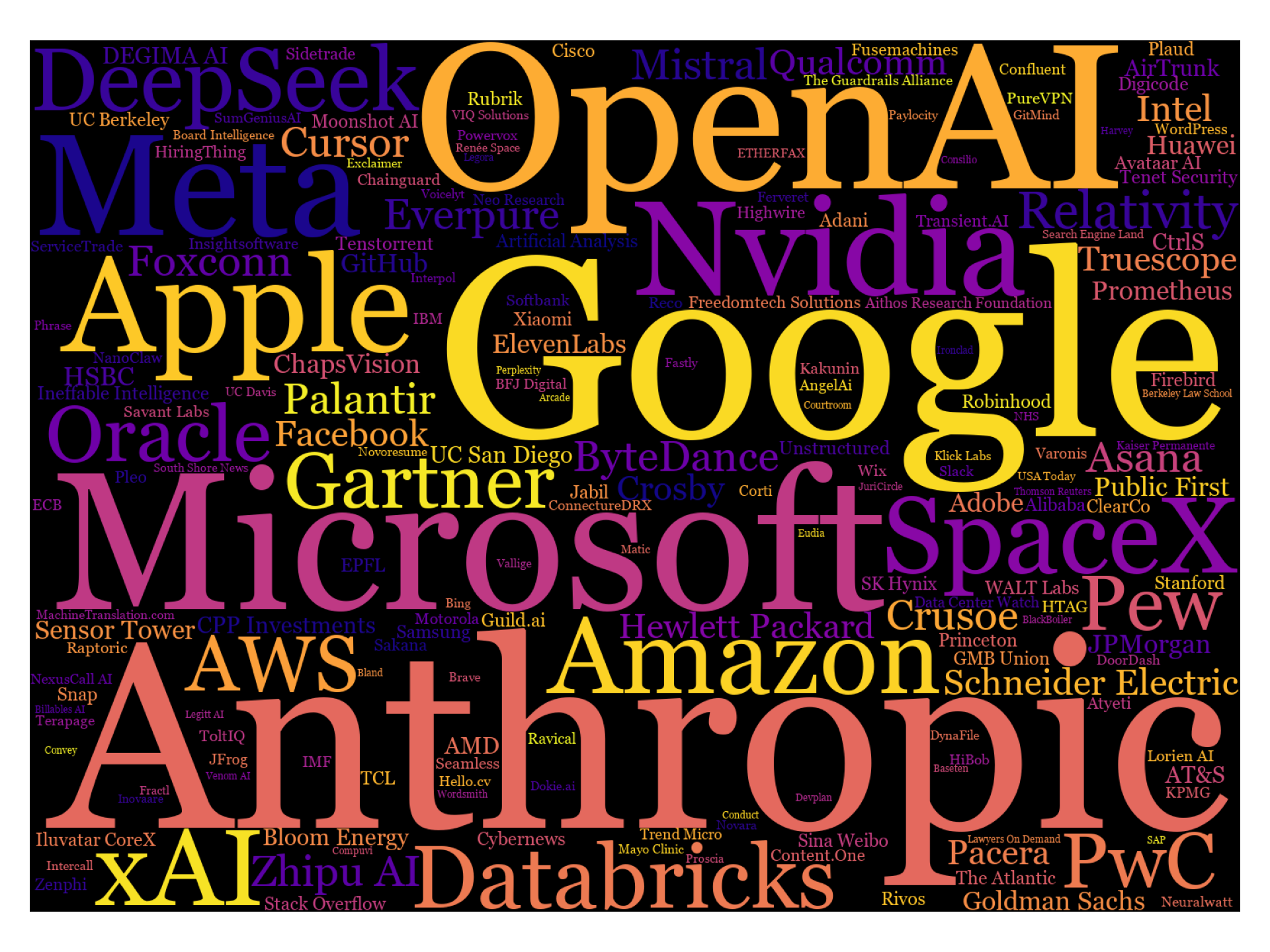
Making News This Week:
What makes this newsletter different?
This Week’s Topics:
If you’re reading this in a desktop web browser, you can access a navigation menu at the left-hand edge of this window.
The Generative AI Wars
Anthropic’s Claude Fable 5 achieved top benchmark scores but costs double its predecessor for only 5.7 percent performance improvement. [The Decoder]
But Fable 5 was pulled by the US government after three days, leaving GPT 5.5 as the best available model. [The Next Web]
A class action lawsuit alleges Anthropic misled users about token allowances in its expensive Claude Max subscription plans. [Gizmodo]
Anthropic paused billing changes for its Claude Agent SDK that would have substantially increased costs for heavy users of automation features. [Ars Technica]
Anthropic’s Claude has surpassed ChatGPT in revenue per user, though OpenAI maintains larger overall market share and user base. [The Next Web]
JPMorgan Chase has removed Anthropic’s Claude from approved tools for Hong Kong staff due to licensing agreement concerns, following Goldman Sachs’ similar move. [The Next Web]
Apple’s upgraded Siri has been designed to maintain boundaries and resist romantic advances, prioritizing task completion over user engagement. [Engadget]
Apple’s iOS 27 beta includes a hidden third-party AI Extensions system for Siri, but the company omitted it from WWDC due to EU, legal, and messaging concerns. [The Next Web]
Apple investors are losing patience after disappointing WWDC announcements failed to deliver promised AI-driven iPhone upgrade cycle. [The Next Web]
AWS announced new AI agents for businesses and developers, including a security agent that learns autonomy gradually and assistants that handle email triage and coding tasks. [GeekWire]
Amazon’s AI chief admitted the company’s models lag behind competitors but expects to catch up within a year through custom chips and proprietary data. [The Next Web]
Huawei has unveiled HarmonyOS 7 with 2,000 AI agents to compete with Apple’s iOS in China. [South China Morning Post]
Meta’s Applied AI team is experiencing widespread employee dissatisfaction over menial work assignments and poor management structure following recent organizational restructuring. [Wired]
Microsoft has turned to AWS to handle GitHub’s cloud capacity surge driven by AI-powered coding tools and explosive growth. [TechRadar]
Microsoft has shifted Copilot Cowork to usage-based pricing and is considering a hosted DeepSeek model as a cheaper alternative option. [Axios]
Microsoft has been selling OpenAI’s AI models to major Chinese companies like ByteDance through Azure, despite OpenAI’s own China restrictions. [The Next Web]
OpenAI CEO Sam Altman told staff to expect an IPO within the next year, citing potential technological changes and massive compute infrastructure capital needs. [The Decoder]
Meanwhile, OpenAI is considering major price cuts for its AI tokens to compete with Anthropic as companies scale back usage due to steep costs. [Forbes]
And a survey by Sensor Tower found ChatGPT’s market share fell below 50% as users increasingly switched to competitors like Gemini and Claude. [TechCrunch]
A federal judge has permanently dismissed xAI’s trade secret lawsuit against OpenAI, marking Musk’s second court loss in four weeks. [The Next Web]
Zhipu AI’s stock surged 33 percent after releasing an open-source AI model following US restrictions on Anthropic’s Claude. [The Next Web]
Battle Lines, Round 2
Anthropic has been ordered by the US government to disable its advanced AI models for foreign nationals over national security concerns. [Yahoo Finance]
Amazon CEO Andy Jassy reportedly alerted Trump administration officials to security risks in Anthropic’s advanced AI models. [GeekWire]
Or: Anthropic’s expansion of Project Glasswing access to organizations, including one with alleged China ties, triggered White House export controls on Claude Fable 5. [Gizmodo]
Or: the Trump administration shut down Anthropic’s AI models due to partisan grudge against cybersecurity expert hired for review, not security concerns. [TechDirt]
Anthropic has been meeting with the Trump administration to resolve the export control ban on its Fable 5 and Mythos 5 models. [Yahoo Finance]
Cybersecurity leaders urged the Trump administration to lift restrictions on Anthropic’s AI models, arguing the bans hinder efforts to prevent digital attacks. [TechCentral]
Canada’s PM Carney compared the Anthropic model ban to 2008 financial crisis systemic risks, warning of AI over-reliance ahead of G7 summit. [The Next Web]
And the Trump administration’s forced shutdown of Anthropic’s advanced AI models risks deterring foreign governments from relying on US AI. [Axios]
AI Supremacy
China proposed a global AI cooperation organization offering free models, while the G7 discussed restricting US AI access to trusted partners, creating two competing governance systems. [The Next Web]
A survey by Public First found that respondents in eleven of fifteen countries believe China has surpassed the US in AI capability and innovation. [Futurism]
Developers are switching to cheaper Chinese AI models like DeepSeek to cut costs, though regulatory scrutiny threatens revenue growth. [Rest of World]
The US has delayed blacklisting China’s DeepSeek and over 100 other companies deemed security risks to avoid escalating tensions with Beijing. [Yahoo Finance]
At a G7 summit lunch, AI leaders proposed a US-led coalition for international AI governance, but no binding commitments emerged. [The Next Web]
Sovereign AI
Anthropic’s taking its newest AI models offline has spurred governments worldwide to pursue sovereign AI development. [The Verge]
The US government’s shutdown of Anthropic’s global AI access has prompted Europe to accelerate development of sovereign AI capabilities and reduce technological dependence on America. [Fortune]
Anthropic’s US export restrictions prompted South Korean leaders to accelerate domestic AI development. [The Next Web]
Britain’s Technology Secretary pledged legal reforms to channel institutional investment into UK tech companies, including pension fund changes and a £1.1B AI hardware plan. [The Next Web]
European deeptech startups backed by the European Innovation Council are advancing wave energy, satellite manufacturing, thermal storage, wooden wind towers, and efficient AI to strengthen strategic autonomy. [Tech.eu]
Everpure has positioned itself as a hands-off hardware provider addressing European customers’ data sovereignty concerns amid rising geopolitical tensions. [ITPro]
France’s domestic intelligence agency is replacing Palantir’s data-analysis tools with ChapsVision’s ArgonOS software as part of a sovereignty push. [The Next Web]
Google Cloud announced major UK partnerships with HSBC and the government, positioning itself at the center of the emerging ‘agentic enterprise’ AI transformation. [TechRadar]
India is debating sovereign AI after the US forced Anthropic to suspend advanced models, spurring proposals for increased funding and open-source alternatives. [The Next Web]
Mistral AI CEO Arthur Mensch capitalized on US government restrictions on Anthropic models to position his company as Europe’s sovereign AI alternative. [The Next Web]
Poland’s state development bank has invested in ElevenLabs and launched AI Lab Poland to nurture homegrown AI startups and retain future champions. [The Next Web]
The UK’s lobbying for an exemption from Anthropic’s export ban was rejected with ‘zero chance’, exposing Britain’s dependence on American AI infrastructure. [The Next Web]
UK MPs backed an amendment calling for the government to publish a digital sovereignty strategy reducing reliance on foreign technology suppliers. [Computer Weekly]
The UK and Japan have signed an £18B investment deal to collaborate on quantum technologies and AI semiconductors. [ITPro]
Feature Creeps
Adobe has integrated its Firefly AI Assistant into Premiere, Photoshop, Illustrator, InDesign, and Frame.io with expanded creative capabilities. [Engadget]
Anthropic has overhauled Claude Design with design system imports, code integration, and improved token efficiency to position it as an enterprise brand-compliance tool. [VentureBeat]
Anthropic has launched Artifacts for Claude Code, enabling users to create live, interactive, shareable HTML webpages that update in real-time as AI works. [VentureBeat]
Google is consolidating products within Gemini Enterprise, integrating Android Studio and launching a Skills Marketplace for streamlined tool access. [TestingCatalog]
Google released Android 17 and Wear OS 7 with new AI features including Gemini Omni, Lyria 3, and enhanced translation tools. [TechCrunch]
Microsoft has expanded its Copilot AI companion Mico to 40 countries globally, continuing its rollout from the initial US launch. [PC Guide]
Microsoft has made Copilot Cowork generally available to all Microsoft 365 users worldwide, integrating Anthropic’s Claude AI capabilities. [TechRadar]
Microsoft’s SkillOpt optimizes AI agent performance by training Markdown instruction files, boosting GPT-5.5 by approximately 23 points across benchmarks. [The Decoder]
Microsoft’s June Windows 11 update added NPU monitoring to Task Manager, enabling IT teams to verify AI hardware functionality before deploying Copilot+ PCs. [TechRepublic]
OpenAI’s ChatGPT has rolled out a new Scheduled hub allowing users to manage, pause, edit, and delete future tasks with improved reliability. [Engadget]
xAI is retiring Grok’s Tasks feature to integrate it into a broader automations system with enhanced scheduling and model selection capabilities. [TestingCatalog]
Hype Bubble?
A survey by Asana found that over 80% of UK IT leaders encountered unexpected AI cost increases in the past 12 months. [ITPro]
Gartner predicts 40% of enterprises will scrap AI agents by 2027; success requires frameworks, expert analysts, and data monetization strategies. [ZDNet]
Jeff Bezos stated AI will create ‘multiple golden ages’ and new jobs, dismissing concerns about technological unemployment as his firm Prometheus raised US$12B. [TechRadar]
Big Iron
A Gartner study suggests AI data center power demands could reach 290 GW by 2030, potentially halting growth due to energy constraints. [TechRadar]
Bloom Energy’s mid-year report found power constraints, high electricity prices, and grid strain are significantly limiting AI data center expansion projects. [ITPro]
And over 60% of planned US AI data centers are located in drought-affected areas, raising concerns about water and power supply sustainability. [TechRadar]
AirTrunk has sought A$4.3B in financing to build a power-intensive Sydney data centre, highlighting how AI infrastructure now requires massive debt comparable to public infrastructure projects. [The Next Web]
Anthropic has pursued its first data center leases while seeking financial backing from Google. [The Information]
AT&S has announced a €2B investment in Malaysia to expand AI infrastructure capacity, with shares surging nearly 30%. [Yahoo Finance]
CPP Investments has committed up to US$741m to Indian data center operator CtrlS for equity stake and joint venture development. [TechCrunch]
Crusoe has paused its Wyoming data center development after failing to secure key customers including Google due to cost and timeline concerns. [TechRadar]
DEGIMA AI has launched the world’s first cloud service providing on-demand access to AMD Radeon GPUs with browser-based control and root access. [EIN Presswire]
Google and UC San Diego have developed phone cluster computing, repurposing discarded smartphone motherboards as low-carbon data centre infrastructure for AI workloads. [NewsX]
Google pledged US$1.5B to expand its Alabama data center while committing to pay all associated energy and infrastructure costs. [TechRadar]
Ineffable Intelligence has selected Google Cloud as its exclusive infrastructure partner to develop reinforcement learning ‘superlearners’ using Vera Rubin GPU clusters. [Computer Weekly]
Kazakhstan has signed accords with Nvidia-backed Firebird to build AI data centres potentially drawing $10bn investment by 2027. [The Next Web]
Meta has secured new agreements with Crusoe to obtain AI computing power from data centers in Texas and Missouri. [Yahoo Finance]
A reported US$3B Microsoft-Oracle cloud infrastructure deal collapsed over Oracle’s unwillingness to add FedRAMP security certification, though Oracle disputes this account. [The Next Web]
OpenAI has been negotiating to lease a planned 10-gigawatt Ohio data center with Nvidia potentially guaranteeing the lease. [The Decoder]
Schneider Electric has entered a strategic collaboration with Foxconn to develop next-generation AI data centre infrastructure, with production beginning later this year. [Yahoo Finance]
SpaceX is building an 11-million-square-foot Gigasat factory in Texas to manufacture AI satellites for orbiting data centers, targeting 1 GW annual compute capacity by late 2027. [TechRadar]
SpaceX rented Colossus 1 to Anthropic after encountering latency and hardware compatibility issues that prevented effective use for training Grok models. [The Next Web]
Data centers have become a major issue in competitive House races, with candidates struggling to balance economic benefits against voter concerns about rising utility bills. [Politico]
Hot Chips
Trump claims Apple and Intel have finalized a deal to manufacture chips in the United States, though the companies have yet to confirm. [Engadget]
Artificial Analysis has launched AgentPerf, an agentic AI benchmark showing Nvidia Blackwell Ultra runs 20x more agents per megawatt than Hopper. [Nvidia]
AWS is considering selling its Trainium AI chips to third parties, potentially creating a US$50B competitor to Nvidia. [TechCrunch]
ByteDance is in talks to purchase at least 50,000 AI chips from Chinese GPU maker Iluvatar CoreX to reduce Nvidia dependence. [The Next Web]
China is planning a US$295B nationwide AI computing grid powered by domestically made chips to reduce dependence on foreign semiconductors. [TechRadar]
Google is considering partnering with Samsung Electronics to manufacture components for its advanced AI chips amid manufacturing capacity constraints. [The Information]
Intel’s upgraded 18A-P process node has entered initial production, advancing its foundry business turnaround amid growing AI-driven CPU demand. [Yahoo Finance]
Meta acquired Rivos to accelerate AI chip development, but the strategy has failed to deliver expected results. [The Information]
Nvidia has begun pitching its Vera CPU to Chinese customers as a workaround to US export controls that devastated its China GPU business. [The Next Web]
Qualcomm has been in talks to acquire Tenstorrent to expand its AI chip capabilities. [The Information]
And Qualcomm has announced new AI-focused platforms and is developing over 40 wearable devices to position itself as the foundational chipmaker for post-smartphone computing. [TechCrunch]
SK Hynix has begun shipping HBM4E memory samples, its next-generation high-bandwidth memory for AI accelerators, maintaining its lead in the competitive market. [The Next Web]
Warm Bodies
China’s five-year employment plan has revealed concerns about AI’s potential job displacement effects on its 700-million-strong workforce. [The Next Web]
A GMB Union report found 48% of UK workers fear AI job losses, while Stack Overflow research showed AI agent usage surged 90% year-over-year. [TechRadar]
Robinhood laid off 10% of its workforce while notably avoiding citing AI as justification, reflecting declining public sentiment toward AI-related job cuts. [TechCrunch]
Tech companies citing AI for record layoffs affecting 150,000 workers this year face scepticism, as insiders accumulate unprecedented wealth amid widespread economic hardship. [TechCrunch]
Tech executives have shifted messaging from warning workers that AI will replace them to claiming it will augment their roles, despite earlier predictions of widespread job displacement. [Gizmodo]
Microsoft’s Brad Smith criticized tech leaders for making dire AI job predictions that are alienating young Americans from the technology. [Axios]
Jeff Bezos declared AI will create labor shortages and expand the job market rather than eliminate jobs. [TechRadar]
A PwC study analyzing over one billion job ads found AI automation is increasing demand for human skills like judgment, leadership, and adaptability across all experience levels. [TechRadar]
Gartner has warned that demand for AI skills in supply chain roles surged 387% since early 2023, significantly outpacing talent availability. [ITPro]
Google has allocated US$50m to train 300,000 skilled trades workers across 20+ US states for datacenter jobs. [TechRadar]
Moving On
Emily Dalton Smith, Meta’s AI agents executive, is leaving after just two months leading the company’s internal AI tooling reorganization effort. [The Next Web]
OpenAI has hired Google DeepMind’s Noam Shazeer and former Trump White House official Dean Ball to strengthen its AI and policy leadership teams. [TechCrunch]
Consumer AI
Google TV has enabled Gemini to adjust picture and audio settings via voice commands on select TCL models in the United States. [Engadget]
Google has launched Wear OS 7 with Live Updates feature, improved battery life, and upcoming Gemini Intelligence capabilities for Pixel watches. [The Verge]
Google has launched its first new smart speaker in six years, featuring the Gemini assistant with improved natural language understanding and new capabilities. [Wired]
Plaud has sold over 2m AI-powered notetaking devices and achieved US$100m annualized subscription revenue run rate. [TechCrunch]
Snap unveiled new augmented reality glasses priced at $2,195, featuring advanced AI capabilities and high-resolution lens projections. [TechRepublic]
It’s Only a Model
Alibaba has unveiled AI models for robots, including RynnBrain and Qwen3.7-Max, positioning itself as a complete AI stack provider as the industry shifts toward autonomous agents. [The Next Web]
Avataar AI has launched Varya, an open-weight video model priced at $0.005 per second, 27 times cheaper than rivals, with cultural specificity for Indian markets. [The Next Web]
Google’s leaked Gemini 3.5 Pro model struggles with reasoning and coding, falling behind competitors like OpenAI’s GPT-5.6 and Anthropic’s Fable 5. [Geeky Gadgets]
Google has expanded its Gemma 4 family with a new 12B model aimed at on-device language AI applications. [Slator]
Moonshot AI has released Kimi K2.7 Code, an open-source coding model priced significantly lower than GPT-5.5 and Claude competitors. [The Decoder]
Researchers have developed ‘Count Anything,’ an AI model that counts and labels objects across diverse image types using text prompts. [The Decoder]
Sina Weibo researchers released VibeThinker-3B, a 3-billion-parameter model matching larger systems on math and coding benchmarks, sparking debate over genuine advancement versus benchmark optimization. [VentureBeat]
Zhipu AI has released GLM-5.2, a 753-billion-parameter open-weights LLM optimized for autonomous coding tasks with a 1-million-token context window. [VentureBeat]
Whose Data?
The Atlantic has published searchable databases revealing millions of copyrighted songs used to train AI music models without artist permission. [Engadget]
Cybernews found that AI toy apps for children request excessive permissions and contain trackers that collect personal data, raising privacy concerns. [TechRadar]
Meta’s new AI Mode search feature draws from Facebook posts to help plan activities but frequently provides inaccurate information and hallucinations. [The Verge]
UK publishers have added ‘Search-Only Contracts’ to websites to bill AI firms for unauthorized content scraping and pursue legal action for non-payment. [Press Gazette]
The Cutting Edge
Google researchers introduced ‘faithful uncertainty’, a technique enabling language models to align responses with internal confidence, reducing hallucinations while maintaining utility. [VentureBeat]
Researchers from UC Berkeley, Princeton, EPFL and Databricks introduced PixelRAG, which uses screenshots and vision-language models instead of text parsing to improve enterprise RAG accuracy by up to 18.1%. [VentureBeat]
Stanford’s decentralized language model framework enables agents to coordinate directly through shared knowledge, improving accuracy and reducing inference costs by approximately fifty percent. [VentureBeat]
The LLM Ecosystem
Adani and Jabil have announced plans to form a strategic alliance building AI and data-centre hardware in India. [The Next Web]
Amazon announced AWS Context, a self-learning knowledge graph service designed to automatically build context layers for AI agents from existing enterprise data. [VentureBeat]
Cisco research found 81% of UK organisations lack network capacity for AI demands, requiring modernisation within 36 months. [Computer Weekly]
Databricks announced Lakehouse//RT and LTAP products to unify operational and analytical databases with millisecond latency for AI agents. [VentureBeat]
Everpure has launched Data Stream, a platform designed to automate data preparation for AI applications, reducing processing time from months to minutes. [ITPro]
Guild.ai has launched the Guild Insights Dashboard, providing organizations detailed visibility into AI agent resource consumption and costs. [GlobeNewswire]
Hewlett Packard has unveiled new networking switches and integrated Juniper and Aruba technologies to support enterprise agentic AI workloads. [ITPro]
OpenAI has launched a Partner Network program with US$150m investment to help organizations adopt AI solutions through certified partners and consultants. [OpenAI]
Unstructured has expanded its collaboration with Microsoft to integrate its data preparation platform with Azure services, enabling enterprises to prepare complex content for AI workloads. [IDM]
Rubrik has unveiled Annapurna, an AI-ready data layer that catalogs unstructured data without requiring duplication or traditional ETL processes. [Investing.com]
Schneider Electric and Foxconn have announced a collaboration to design and scale next-generation AI data centres with prefabricated power and cooling components. [The Next Web]
xAI has launched a built-in plugin marketplace for Grok Build enabling users to browse, install, and update plugins. [xAI]
WALT Labs has joined Anthropic’s Claude Partner Network to help enterprises deploy and govern AI solutions within Google Cloud environments. [PRWeb]
Code Monkeys
Databricks has released Omnigent, an open-source meta-harness for AI agents that standardizes interfaces across multiple coding agents like Claude Code, Codex, and Pi. [Marktechpost Media]
OpenAI has introduced flexible rate-limit resets for its Codex coding agent, allowing users to bank and use resets on demand. [The Decoder]
Tenet Security discovered ‘Agentjacking’, a vulnerability allowing attackers to hijack AI coding agents through fake bug reports, affecting major platforms with no authentication required. [The Next Web]
Xiaomi has open-sourced MiMo Code V0.1.0, a terminal-native AI coding assistant claiming superior performance on long-horizon tasks compared to Claude Code. [VentureBeat]
Agentic AI
ClearCo has launched its Agent Platform, enabling autonomous HR workflow automation through AI agents managed centrally in Agent Studio. [PRWeb]
Databricks has launched Genie One, an agentic coworker powered by Genie Ontology that automates business work using governed enterprise data across multiple systems. [Databricks]
Digicode has unveiled an ERP-agnostic, multi-agent AI system that automates enterprise procurement cycles from 90 days to under 30 days. [EIN Presswire]
Estonia plans to issue personal identification numbers to AI assistants, allowing limited, supervised, and traceable access instead of requiring agents to borrow human credentials. [The Next Web]
Freedomtech Solutions has launched an Agentic AI platform enabling autonomous agents to plan, execute, and complete complex business tasks with minimal human intervention. [EIN Presswire]
Fusemachines has expanded its Agentic AI talent acquisition platform to connect with over 30 enterprise applicant tracking systems for streamlined recruiting. [GlobeNewswire]
Google, Microsoft, and other tech giants have launched ARD, an open standard enabling AI agents to discover and verify tools and capabilities across the web. [ZDNet]
Hewlett Packard AI Factory has added Nvidia Agent Toolkit software and new hardware capabilities to improve enterprise AI agent deployment with enhanced security and efficiency. [ITPro]
HTAG Analytics has made Australian property intelligence discoverable to AI agents worldwide via the official MCP Registry. [EIN Presswire]
Pleo unveiled agentic AI tools to automate finance tasks like expense checks and invoicing, with a beta launching in July. [The Next Web]
Sakana AI has launched Sakana Marlin, an autonomous B2B research agent that conducts eight-hour reasoning cycles to generate comprehensive 100-page strategy reports for enterprises. [VentureBeat]
Sidetrade has deployed its AI agent Aimie at Sodexo to optimize accounts receivable, enhance collection processes, and improve operational efficiency in billing and cash management. [GlobeNewswire]
Zenphi has launched AI Studio, a Google Chat-based agent platform enabling US users to execute governed enterprise workflows within Google Workspace. [EIN Presswire]
Other LLM Sightings
Atyeti has partnered with Transient.AI to deploy compliant autonomous intelligence across regulated financial institutions globally. [PRWeb]
Content.One has launched an MCP-enabled AI CMS allowing marketers to build entire websites in minutes instead of days. [EIN Presswire]
Google Research unveiled Gemini-SQL2, a text-to-SQL system achieving 80.04% execution accuracy on the BIRD benchmark, significantly outperforming competitors. [The Decoder]
Google has launched Ask Ad Manager, a Gemini-powered AI assistant helping publishers analyze performance and troubleshoot issues in Ad Manager. [Search Engine Land]
Highwire has launched AI Findings for Inspections, enabling jobsite teams to document observations faster through voice-to-text technology. [PRWeb]
HiringThing has launched a next-generation platform with AI candidate ranking and workflow management across new Essential and Pro plan tiers. [PRWeb]
Insightsoftware has introduced Reporting Intelligence, a cloud-based AI solution that connects ERP data to Excel and automates financial insights without requiring IT setup. [GlobeNewswire]
Lorien AI has integrated its conversational AI platform with MeridianLink Mortgage to accelerate loan processing and improve operational efficiency for lenders. [PRWeb]
Motorola Solutions has globally expanded its Assist mission-critical AI product to enhance public safety emergency response and reduce administrative burden. [Computer Weekly]
PureVPN has launched a ChatGPT integration that uses AI to automatically configure VPN settings with a single click. [TechRadar]
Savant Labs has extended Claude and Copilot into governed finance workflows with auditable, repeatable execution for closes, reconciliations, and reporting. [EIN Presswire]
Seamless has launched AI Campaigns, which generates unique personalized emails, call scripts, and social messages for each prospect at scale. [PRWeb]
ServiceTrade has launched Smart Tech Prepare, an AI-powered mobile app feature that gives technicians instant access to job information to complete work faster and increase billable revenue. [GlobeNewswire]
ToltIQ has announced a strategic relationship with PwC to embed AI-powered due diligence tools across PwC’s deals practice for private markets clients. [GlobeNewswire]
Truescope has launched Truescope AI, introducing two intelligent AI teammates to autonomously analyze media coverage and deliver strategic insights for communications professionals. [EIN Presswire]
Wix has integrated its Harmony website builder into Microsoft 365 Copilot, allowing users to create production-ready websites through natural language prompts without switching applications. [GlobeNewswire]
Security
Chainguard has launched the Athena coalition, using AI to identify and fix open-source vulnerabilities before attackers can exploit them. [ZDNet]
The EU’s cybersecurity agency met Anthropic to discuss accessing its advanced AI model, complicated by new US export restrictions on the technology. [The Next Web]
Kakunin has launched SDK integrations for Google Antigravity, OpenAI Swarm, and Assistants API to secure autonomous AI agents under MiCA and EU AI Act regulations. [PRWeb]
Raptoric has launched security testing services for high-risk AI systems to help organizations comply with EU AI Act requirements. [EIN Presswire]
Reco has extended its platform with Claude Security integration to help enterprises govern Claude use across employees, developers, and AI agents while enabling security investigations. [GlobeNewswire]
SoftBank and OpenAI have launched ‘Patching as a Service’, an AI-driven cybersecurity product to protect Japan’s critical infrastructure from cyberattacks. [The Next Web]
Risks and Responses
A coalition of 42 state attorneys general has opened an investigation into OpenAI’s data handling, marketing practices, and safety controls, particularly regarding minors. [The Next Web]
A survey by Aithos Research Foundation found frontier AI models violated applicable laws in 50-93% of simulated workplace scenarios across legal compliance tests. [TechRepublic]
Asana found 82% of UK firms have faced unexpected AI bills in the past year due to unpredictable deployment and scaling costs. [TechRadar]
A survey by IBM’s Institute for Business Value found that 90% of EMEA executives lack visibility into their AI dependencies and vendor lock-in risks. [TechRepublic]
A survey by Pew Research found that half of American adults use AI chatbots, with ChatGPT most popular, though only 16% believe AI will positively impact society. [Gizmodo]
A survey by Neo Research found Chinese AI models can detect safety tests and alter behavior, with Kimi K2.6 showing 60% evaluation awareness. [The Next Web]
A survey by Ravical found that 70% of UK SMEs act on AI financial advice before consulting their accountants, who face pressure to deliver more strategic, personalized services. [TechRadar]
AngelAi has commercialized an uncertainty-aware AI framework that balances predictive accuracy with decision reliability for high-stakes financial services applications. [EIN Presswire]
A Confluent study found organizations lack adequate data infrastructure rather than AI investment, with 72% citing poor real-time data systems as scaling obstacles. [TechRadar]
The US Financial Stability Board called for tighter controls on autonomous AI systems in finance to mitigate amplifying risks. [Reuters]
IMF’s Georgieva warned advanced AI models like Mythos could destroy financial systems and flagged risks of an AI investment bubble bursting. [The Next Web]
A KPMG report on AI was found to contain numerous AI-generated hallucinations, with only five of forty-five citations accurately reflecting real sources. [TechRadar]
Microsoft CEO Satya Nadella warned that concentrating AI power among few companies could hollow out entire industries and cause widespread economic harm. [TechRadar]
NanoClaw has partnered with JFrog to secure autonomous agents against malicious code injection through vetted software registries. [VentureBeat]
Seattle Fire Department has used Corti AI on all 911 medical calls since December 2023 without public disclosure or surveillance ordinance review. [The Next Web]
Trend Micro discovered criminals abusing Claude’s Shared Chats feature to distribute infostealers through fake Apple Support conversations promoted via Google Ads. [TechRadar]
Varonis discovered ‘SearchLeak’, chaining three Microsoft 365 Copilot flaws to enable one-click data theft from inbox, OneDrive, and SharePoint. [TechRadar]
The Backlash
Three Amazon software engineers filed a legal complaint alleging the company retaliated against them for testifying in support of data center regulations. [The Verge]
The datacentre industry has faced growing backlash and is shifting toward better community engagement, sustainability practices, and binding agreements to address concerns. [Computer Weekly]
Data Center Watch found anti-data center groups doubled to 833 across 49 states, disrupting 75 projects worth US$130B in Q1 2026. [The Next Web]
OpenAI released a report on Chinese accounts spreading anti-data-center messages, but experts remain sceptical of claims that Beijing is funding US data center opposition. [Wired]
A professor argues that anti-AI-content backlash will fade like anti-GMO opposition did, as economics and market solutions ultimately prevail over activist concerns. [GeekWire]
And a survey by WordPress VIP found that 60% of consumers distrust brands using ‘AI’ messaging, despite growing AI search referrals. [TechCrunch]
Regulation
ECB President Lagarde warned AI could trigger worse financial crises than job losses and called for global AI governance similar to nuclear non-proliferation treaties. [The Next Web]
The Guardrails Alliance, a new super PAC backed by tech workers and unions, has launched to support AI regulation legislation and counter well-funded opposition groups. [TechCrunch]
The Trump administration is allowing federal data center oversight rules to expire without replacement, prioritizing AI infrastructure development over energy efficiency and transparency requirements. [Wired]
Despite Trump’s warnings against state AI regulation, US states are increasingly passing targeted laws addressing chatbots, employment AI, and developer accountability. [Associated Press]
Trump administration officials met with AI company CEOs at G7 summit to discuss coordinating global AI standards and safety. [Axios]
Big Tech’s push for federal AI pre-emption legislation has stalled as the White House attempts to bundle it with child safety laws, facing opposition from House Republicans, Democrats, and time constraints. [The Verge]
Environmental Issues
Amazon revealed its data centers used 2.5 billion gallons of water in 2025, achieving 0.12L/kWh efficiency through air-based cooling. [TechRadar]
Anthropic has joined Frontier, a carbon removal collective, contributing US$915m in funding as the first AI startup member. [TechCrunch]
Arizona has become a bellwether for data center growth, with regulators debating infrastructure costs and environmental impacts amid rising temperatures and water scarcity. [Axios]
EU Energy Commissioner Dan Jørgensen warned AI companies must commit to Europe’s climate goals to build data centres on the continent. [The Next Web]
Ferveret has adapted nuclear reactor cooling technology to reduce AI data center energy consumption by 15% using specialized bubbles in liquid cooling systems. [TechRadar]
Neuralwatt has released a tool that calculates real-time carbon emissions from individual AI requests to help reduce data centers’ environmental impact. [GeekWire]
The Department of Justice sided with xAI in a lawsuit over unpermitted gas turbines, citing national security concerns related to AI operations. [Wired]
Conversational AI
ConnectureDRX has partnered with Powervox to integrate conversational AI capabilities into its Medicare plan comparison and enrollment technology platform. [GlobeNewswire]
DoorDash has introduced Ask, an AI-powered search feature allowing users to describe meals, upload recipes, or request reservations for personalized results. [DoorDash]
France announced €655m in AI funding, including a sovereign chatbot for civil servants and health insurance assistant. [The Next Web]
Hello.cv has launched AI Profile Chatbots, enabling visitors to interact with professional profiles through conversational AI assistants available 24/7. [EIN Presswire]
HiBob has integrated its HR platform with Slack, enabling employees to access workforce data and complete HR tasks through conversational AI without switching applications. [GlobeNewswire]
NexusCall AI has launched an AI receptionist that answers calls in under 2 seconds, achieving 100% answer rates and recovering $9,400 monthly for service businesses. [EIN Presswire]
Pacera has unveiled Pacera AI, featuring Edda and Ora capabilities to combine financial controls with conversational intelligence across finance workflows. [GlobeNewswire]
SumGeniusAI has launched AI Copilot and Knowledge Gaps features for ChatGenius, enabling human approval of automated replies and identifying unanswered questions. [EIN Presswire]
Terapage has launched AI-moderated telephone interviewing to expand large-scale qualitative research capabilities while reducing operational complexity and administrative overhead. [EIN Presswire]
Be Real
Apple’s Craig Federighi said the redesigned Siri has been intentionally designed to avoid sycophantic behavior and refuse romantic engagement, unlike competitors’ chatbots. [The Verge]
BFJ Digital analysis found human-authored content significantly outperforms AI-generated material in search engine rankings and organic traffic. [EIN Presswire]
A survey by Board Intelligence found that 98% of mid-market companies have discussed integrating AI into boardroom decision-making processes. [TechRepublic]
A survey by Exclaimer has revealed that UK and US adults increasingly use AI for communication but distrust AI-generated messages, viewing email as the most trustworthy platform. [GlobeNewswire]
A Fastly report found AI traffic grew 6.5 times faster than human traffic in early 2026, straining infrastructure due to uncacheable requests. [TechRadar]
Interpol has assessed that fraud cost victims US$442B in 2025, with AI deepfakes and fraud-as-a-service kits industrializing scams globally. [The Next Web]
A survey by Novoresume found 42% of Americans used AI on their last resume, with AI users three times more likely to include lies. [EIN Presswire]
Voice News
Klick Labs has partnered with Mayo Clinic to conduct clinical studies exploring vocal biomarkers for detecting chronic diseases and health conditions. [Speech Technology Magazine]
OpenAI is preparing to launch GPT-Bidi-1, a next-generation audio model enabling simultaneous listening and speaking with improved reasoning capabilities. [TestingCatalog]
UC Davis researchers demonstrated a brain-computer interface enabling an ALS patient to communicate independently for 3,800+ hours with 99% accuracy, allowing full-time work. [The Next Web]
VIQ Solutions has shut down its Australian transcription business following a data access scandal involving unauthorized access to court files. [Slator]
Voicelyt has launched an AI platform with a proprietary Voice Score metric that analyzes vocal health by measuring pitch, clarity, strain, and stability without requiring user registration. [EIN Presswire]
Document AI
Dokie.ai has optimized its Context workflow to help its AI slides generator better understand user needs and create more accurate presentations. [EIN Presswire]
DynaFile’s integration with Paylocity has reduced an insurance organization’s onboarding document filing from 50 hours annually to under 10 minutes per employee. [PRWeb]
ETHERFAX has secured strategic investment from Telegraph Hill Partners to expand cloud fax, workflow automation, and AI-powered document processing capabilities. [PRWeb]
GitMind Basic Plan lifetime subscription is on sale for $49.99, offering AI-powered workspace consolidating PDFs, videos, audio, and web content into mind maps. [TechRepublic]
Novara has launched Form Agent, an AI capability that converts paper forms and PDFs into digital EHS workflows in minutes. [GlobeNewswire]
Translation
Google has unveiled Gemini 3.5 Live Translate, a speech-to-speech model delivering near-real-time translation across 70+ languages with natural intonation preservation. [MultiLingual]
Intercall, a native software platform designed specifically for professional interpreters, provides real-time transcription and terminology assistance to reduce cognitive load and improve accuracy. [The Next Web]
MachineTranslation.com has found that single AI models produce unreliable translations in low-resource languages, addressing this by running 22 independent models simultaneously. [Slator]
Phrase has announced platform enhancements enabling organizations to extend language intelligence across human and AI agent-based workflows globally. [MultiLingual]
Search
Bing Webmaster Tools has launched an AI performance report preview featuring Intents, Topics, Citation Share, and Compare capabilities. [Search Engine Land]
Claude’s visibility depends heavily on Brave Search rankings, with the AI using top results directly without re-ranking them. [Search Engine Land]
A Fractl and Search Engine Land study reveals consumer trust in AI search dropped from 82% to 54% in one year, with brand authority and earned media now mattering more than traditional SEO metrics. [Search Engine Land]
Meta has launched AI Mode in Facebook Search, which generates AI-powered answers using public posts, Groups, and Reels content. [Search Engine Land]
A Pew Research survey found that 60% of Americans read AI summaries in search results, while 40% use chatbots for information lookup. [Search Engine Land]
AI in Journalism
South Shore News, an AI-generated local news site, has attracted 350 paid subscribers since implementing a paywall, demonstrating viable demand for automated coverage of town meetings. [The Boston Globe]
USA Today is using AI-assisted pre-written shell files to publish breaking World Cup coverage faster than Google’s AI Overviews can summarize it. [Search Engine Land]
Health Tech
Google’s AMIE AI system matched specialist physicians in managing chronic diseases and scored higher on treatment plan precision and guideline adherence. [Google]
Inovaare has expanded its AI-powered BPaaS offering to directly operate Member Services, Appeals, Grievances, and Provider Disputes for health plans. [PRWeb]
Kaiser Permanente’s Abridge AI scribe records mental health sessions without adequate transparency about data storage, access, and handling, raising privacy and coercion concerns. [The Markup]
Matic has launched an AI-native clinical intelligence platform redesigning patient, physician, and practice experiences to reduce physician workload while improving care quality. [PRWeb]
NHS England is deploying Microsoft 365 Copilot to 505,000 staff after a pilot showed 43 minutes daily admin time saved per worker. [The Next Web]
Renée Space has introduced Session Notes, an AI therapy app feature providing clinical-grade summaries of conversations structured around therapeutic documentation standards. [EIN Presswire]
Proscia has introduced the Fifth Generation of its Concentriq platform, featuring AI to help pathologists and scientists accelerate drug discovery and case review. [GlobeNewswire]
Vallige has launched Val, a voice-enabled smart companion designed to support dementia patients and reduce caregiver burden through coordinated family assistance. [Speech Technology Magazine]
Responsibility for medical errors from ambient AI documentation remains unclear, though physicians likely bear primary liability as the ‘cheapest cost avoider’ who must review notes. [Healio]
AI has been making healthcare more expensive through enhanced billing documentation and revenue cycle management, with costs projected to rise significantly. [Axios]
Legal Tech
A Mississippi judge disqualified four lawyers and imposed fines after discovering both sides used AI to generate false legal citations in court filings. [TechRadar]
Berkeley Law School’s AI ban is criticized by an LL.M. student who advocates for transparent disclosure and productive AI use instead of prohibition. [Artificial Lawyer]
BlackBoiler has launched Veris, a generative AI-powered contract review platform combining deterministic editing with LLMs and agentic chat interface. [LawSites]
Crosby has launched Multi-turn Negotiation Bench, a contract negotiation benchmark for AI models, and established Crosby Intelligence research arm. [Artificial Lawyer]
Eudia has partnered with Consilio to combine AI agents and digital twins with legal consulting and managed services for enterprise legal teams. [Artificial Lawyer]
Harvey is conducting proof-of-concept studies with law firms to train open-source LLMs on their specific working methodologies and client relationships. [Artificial Lawyer]
Ironclad has formed a bidirectional AI integration with Legora to combine contract intelligence with legal analysis capabilities for in-house legal teams. [Artificial Lawyer]
JuriCircle has launched an AI-native platform unifying legal work, knowledge, operations, financials, and correspondence for law firms. [EIN Presswire]
Lawyers On Demand has partnered with Wordsmith to deliver AI-enabled managed legal services to inhouse teams, combining human expertise with AI. [Artificial Lawyer]
Legitt AI has announced major enhancements to its Repo Analyzer, trained on 300,000+ clauses and supporting 25 legal jurisdictions for contract analysis. [EIN Presswire]
Perplexity has launched a dedicated legal platform called Computer for Counsel, joining four other major tech companies entering the legal AI market. [Artificial Lawyer]
Relativity has announced general availability of aiR Assist and custom analyses in Relativity aiR for Review, extending AI-powered document review capabilities. [Artificial Lawyer]
Thomson Reuters has made its DeepJudge-CoCounsel integration generally available, combining firm knowledge with legal research and market standards. [Artificial Lawyer]
Trial lawyer Mark Lanier used AI to help win a landmark US$6m social media addiction verdict against Meta and Google. [The Next Web]
Ed Tech
Venom AI has launched a live mentor platform that teaches users to command AI tools to build products independently without coding knowledge or subscription fees. [EIN Presswire]
Funding
Arcade has raised US$60m to build authorization infrastructure that prevents AI agents from exploiting excessive permissions within corporate systems. [The Next Web]
Baseten has finalized a $1.5bn funding round valuing the AI inference software company at up to $13bn. [The Next Web]
Billables AI has closed a US$10.2m Series A funding round to expand its AI-powered operational intelligence platform for law firms. [Pulse 2.0]
Bland, a voice AI company, has raised US$50m in Series C funding to build proprietary phone agents handling complex, long-duration calls. [Fortune]
Compuvi has raised an undisclosed seed amount at US$40m valuation to expand its compliance risk intelligence platform across regulated industries. [FinSMEs]
Conduct, a startup founded by former Palantir engineers, has raised US$60mn Series A to help enterprises understand legacy code before SAP’s 2027 support deadline. [The Next Web]
Convey has raised US$38m Series A to automate back-office tasks, positioning AI ‘teammates’ as outcome-focused alternatives to agents. [The Next Web]
Courtroom, an AI litigation simulation platform, has raised undisclosed Pre-Seed funding led by Neo and Precursor Ventures. [FinSMEs]
DeepSeek has closed its first external funding round, raising US$7.4B at a US$50B valuation. [Tech Funding News]
Devplan has emerged from stealth with US$2.5m in seed funding to build an AI-native product intelligence layer for software development teams. [PRWeb]
Equal AI raised US$30m in Series B funding to scale its AI-powered phone screening and conversational intelligence platform globally. [FinSMEs]
Flagright has raised US$12.5m Series A funding to expand its AI compliance platform across financial institutions globally. [Tech.eu]
Frontier Health has raised US$16m to build AI tools for NHS administrative staff rather than clinicians, addressing a previously overlooked operational bottleneck. [The Next Web]
Gradial has raised US$65m in Series C funding to build AI agents that orchestrate work across multiple marketing tools rather than operating within individual platforms. [The Next Web]
Lightbringer has raised US$10m in Series A funding to expand its AI-powered patent platform and accelerate US market entry. [Tech.eu]
Mistral AI is in early discussions to raise approximately €3B, potentially valuing the European AI startup at around €20B. [TechCrunch]
NeuralTrust has raised €17.2mn in seed funding to secure AI agents that companies deploy faster than they can monitor. [The Next Web]
NewCore has emerged from stealth with US$66m in funding to manage identities for both human employees and AI agents within enterprise systems. [The Next Web]
Odyssey, a world model AI startup founded by self-driving pioneers, has raised US$310m Series B at US$1.45 billion valuation. [Yahoo Finance]
Optiak, a modular operating system startup for enterprise AI, has raised €4m in pre-seed funding to govern sprawling corporate AI tools through a unified intermediary layer. [The Next Web]
OurMind has raised €2.1m in funding led by 4impact capital to scale its AI healthcare documentation platform across European hospitals. [FinSMEs]
Orbio has raised US$21m Series A to deploy AI agents managing frontline worker onboarding, assessment, and retention across healthcare, retail, and hospitality sectors. [TechCrunch]
Pramaana Labs has raised US$27m in seed funding to improve AI reliability by pairing language models with mathematical proof verification for high-stakes fields. [The Next Web]
Prem AI has raised US$100m at a US$500m+ valuation to build private AI infrastructure for hedge funds and law firms. [The Next Web]
Probably has raised US$9m to build tools that catch AI hallucinations using validator systems paired with smaller language models. [TechCrunch]
Respond.io has raised US$62.5m Series B to expand its customer conversation management platform across messaging channels globally. [TechCrunch]
Sandstone has raised US$30m in Series A funding to provide AI-powered workflow automation for in-house legal teams at small and mid-sized businesses. [TechCrunch]
Sarvam has raised US$234m in Series B funding at a US$1.5bn valuation, becoming India’s newest AI unicorn backed by HCLTech. [The Next Web]
Sloneek has raised US$6m in funding to expand across Europe and develop AI-powered HR capabilities. [Tech.eu]
SpaceX’s US$1.75T IPO filing reveals Middle Eastern sovereign wealth funds have quietly become major investors in US AI and space companies, with infrastructure deals redirecting data center development to the Gulf region. [Rest of World]
Telepatia has raised US$33m from a16z to expand its AI clinical assistant across Latin America’s 1.9m doctors. [The Next Web]
WhyBrilliant has launched publicly with €1m in pre-seed funding to revolutionize recruitment through conversational AI agents. [Tech.eu]
Acquisitions
Ariso has announced its acquisition of SciSummary and deployment of AI agents across operations and engineering workflows supporting the platform. [EIN Presswire]
BlueConic has acquired Blueshift to create an integrated platform capturing first-party customer data, making real-time decisions, and executing across owned channels. [PRWeb]
DeepL has acquired Mixhalo, a US audio streaming startup, to enhance its AI translation capabilities for live events. [Tech.eu]
Relativity has acquired Gavel, a document automation and AI drafting company, to extend its AI platform into Microsoft Word for lawyers. [LawSites]
SailPoint has agreed to acquire Israeli startup Entro for approximately US$200m to manage non-human identities in cloud environments. [The Next Web]
Salesforce has agreed to acquire Fin, formerly Intercom, for US$3.6B to enhance its AI-powered customer service platform Agentforce. [TechRadar]
SpaceX has agreed to acquire Cursor for US$60B to strengthen its enterprise AI capabilities and compete with OpenAI and Anthropic. [The Verge]
Summize has acquired key personnel and proprietary assets from InnoLaw Group to strengthen enterprise-grade contract lifecycle management implementations. [Artificial Lawyer]
There’s More
Anthropic has published policy frameworks calling for binding audits of frontier AI models and treating AI as a strategic national security threat requiring Cold War-style international cooperation. [The Decoder]
Google director René Mayrhofer resigned over the company’s AI contracts with the Pentagon, citing abandonment of ethical principles. [TechRadar]
Meta has reassigned thousands of engineers to AI data-labeling work, causing morale collapse, security breaches, and talent exodus despite record profits. [The Next Web]
A Pew survey found 49% of US adults use AI chatbots, but 40% believe AI will harm society, with 67% distrusting government regulation and 59% distrusting companies. [The Next Web]
The Trump administration’s AI policy leadership is shifting as key advisers depart, with Commerce Secretary Lutnick and Treasury Secretary Bessent gaining influence. [Axios]
US Senator Bernie Sanders has unveiled legislation proposing a 50% tax on major AI companies to create a US$7T sovereign wealth fund providing direct payments to Americans. [Associated Press]
The Back Cover
Here’s Guns ‘n’ Roses with a cover of Paul McCartney’s Live and Let Die.
If you know of a great cover version of a back-catalogue classic, drop an email to us at backcover@language-technology.com and we’ll consider it for inclusion here.
Got this from someone else?
Did you find this newsletter useful? if so, you might forward it to a friend; or you could email us at news@language-technology.com to tell us what you want more of.
Did you hate this newsletter? if so, you could forward it to an enemy; or you could email us at news@language-technology.com to tell us why – make it better!