
This Week in NLP #400
Keep up with what happened in Natural Language Processing in the week ending Friday 17th July 2026

Above the Fold
Overwhelmed? Here’s our pick for five things to know about this week.
Anthropic hit a US$1.2T valuation, overtaking OpenAI, ahead of its expected IPO. [The Next Web]
Apple has released a public beta of iOS 27 featuring an improved Siri AI assistant with personal context capabilities for iPhone 15 Pro users. [Gizmodo]
Chinese open-weight models surpassed US models in downloads, with developers increasingly adopting cheaper, customizable alternatives over expensive frontier models. [TechCrunch]
Google is months behind on its flagship Gemini Pro upgrade as coding falls short, frustrating engineers leaving for Anthropic. [The Next Web]
Thinking Machines Lab released Inkling, an open-weight AI model designed for enterprise customization rather than general-purpose use. [TechCrunch]
Now read on for everything else that happened in NLP this week.
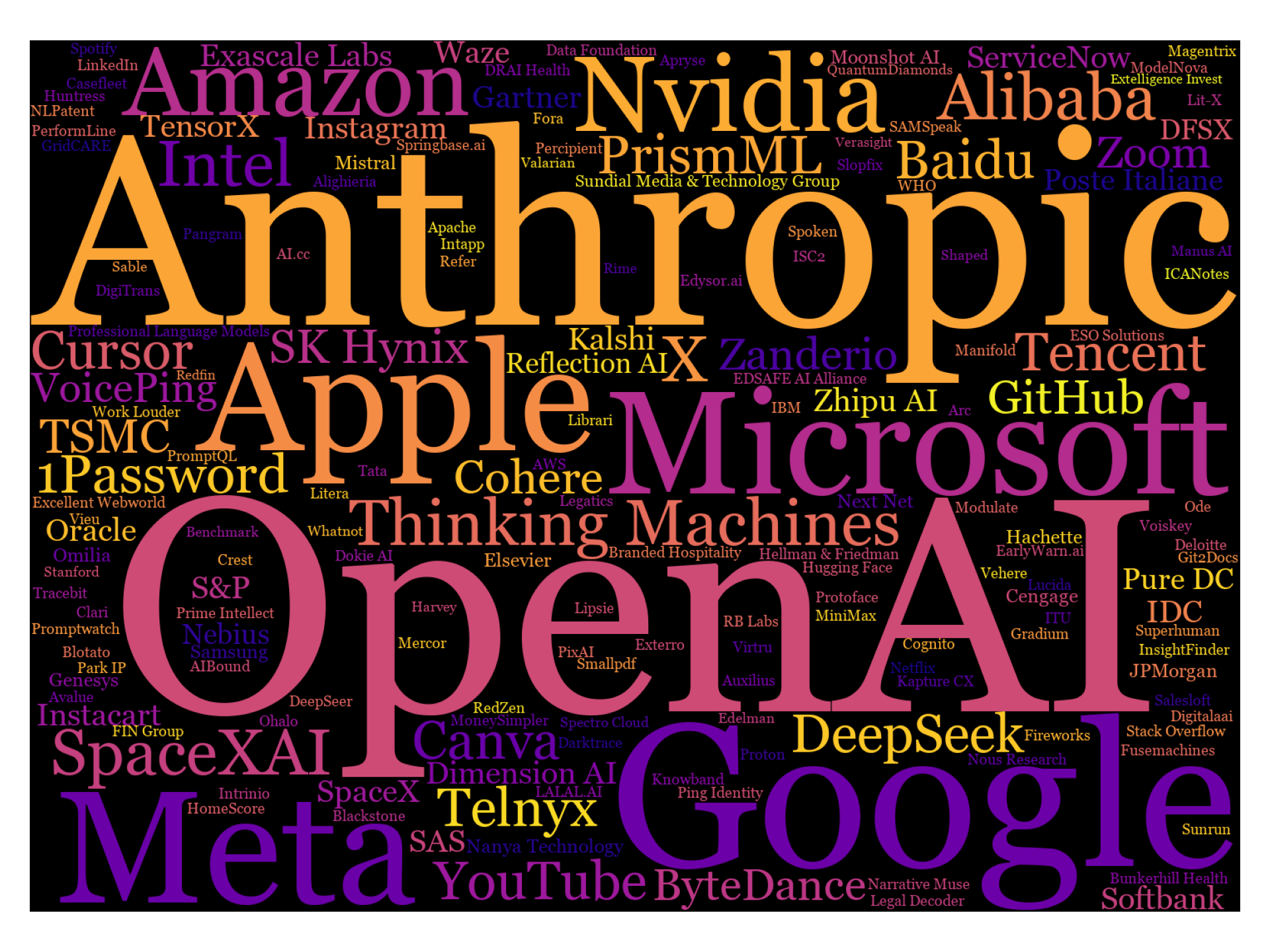
Making News This Week:
What makes this newsletter different?
This Week’s Topics:
If you’re reading this in a desktop web browser, you can access a navigation menu at the left-hand edge of this window.
The Generative AI Wars
Anthropic has scheduled investor meetings as it prepares for a potential mega-IPO, likely occurring in October. [Bloomberg]
Anthropic has started offering localized rupee pricing for Claude in India, its second-largest market. [TechCrunch]
Anthropic has committed C$10m to eight Canadian research institutions for AI research, with startups receiving US$5,000 API credits. [The Next Web]
Anthropic’s latest advertisement featuring disturbing imagery of burning houses, surveillance, homelessness, and cemeteries has drawn widespread criticism for its unsettling tone. [TechCrunch]
Apple has filed a lawsuit accusing OpenAI of stealing trade secrets to build AI hardware, alleging former employees shared confidential information. [Associated Press]
OpenAI denied Apple’s trade secret lawsuit allegations, stating it lacks merit and reaffirming commitment to fair competition and innovation. [TechCrunch]
Apple has gained Chinese regulatory approval to launch Apple Intelligence in China by integrating Alibaba’s Qwen AI model into its operating systems. [TechCrunch]
Apple is in talks with PrismML, a startup that has compressed AI models to run efficiently on iPhones, potentially enabling more on-device intelligence. [CNBC]
Cursor is developing Sand, a general-purpose AI agent to compete with Claude Cowork and ChatGPT Work, though its launch depends on owner Elon Musk. [The Next Web]
DeepSeek’s 75% price cut on V4-Pro fails to solve enterprise AI’s core problem: agent systems consume tokens exponentially faster than prices decline. [VentureBeat]
Enterprises are shifting from choosing AI models by size to selecting them by task, cost, and control, driven by soaring inference expenses and specialized agents. [The Next Web]
Gartner warned that AI model competitive advantages are shrinking as foundational capabilities converge, urging focus on data quality and AI literacy. [Computer Weekly]
The EU ordered Google to grant rival AI assistants and search engines greater access to Android and Search data to comply with digital antitrust rules. [The Verge]
Instagram head Adam Mosseri predicted Meta will need to cap employee AI token spending within one to two years as costs approach engineer salaries. [TechCrunch]
Meta has launched a paid tier for its Muse Spark 1.1 AI model, with Zuckerberg pledging aggressive pricing to compete in the crowded AI market. [Bloomberg]
Microsoft held a sales meeting teaching staff to criticize OpenAI and Anthropic, whose models Microsoft currently embeds in its own products. [The Next Web]
OpenAI launched ChatGPT Work, enabling AI agents to automate multistep office tasks across connected apps, files, and systems with proper governance controls. [TechRepublic]
OpenAI admitted its ChatGPT Work launch had issues with usage limits, confusing interface changes, and unclear messaging, promising fixes next week. [The Decoder]
OpenAI CEO Sam Altman warned that the company’s GPT-5.6 Sol model may experience infrastructure scaling hiccups soon. [Axios]
OpenAI has partnered with prediction market platform Kalshi to display betting odds in ChatGPT for World Cup matches. [Futurism]
OpenAI, Meta, and SpaceX released cost-efficient AI models designed to process more work while using fewer tokens. [Bloomberg]
OpenAI has appointed co-founder Greg Brockman as president overseeing product and business operations after Fidji Simo stepped down due to chronic illness. [CNBC]
OpenAI hired a product manager to build family-focused experiences as its user base expands beyond younger users to include parents and older adults. [TechCrunch]
And OpenAI’s ChatGPT ad revenue is projected to miss its US$100B 2030 target by 90%, reaching only US$5.41B market-wide. [Search Engine Land]
Zhipu AI founder Tang Jie has argued for keeping frontier AI broadly accessible rather than restricted, advocating open-source models despite Beijing considering overseas access limits. [The Next Web]
Meanwhile, Elon Musk and Sam Altman traded public insults on X after Musk lost his lawsuit, fighting for narrative control in the AI industry. [The Next Web]
AI Supremacy
OpenAI and Google supply advanced AI services to Singapore-registered subsidiaries of blacklisted Chinese tech giants Alibaba, Baidu, and Tencent. [The Next Web]
Washington is seeking to prevent China from using distillation to train AI models based on advanced US systems like those from Anthropic and OpenAI. [Bloomberg]
Twenty-nine countries signed an agreement establishing the World AI Cooperation Organization, headquartered in Shanghai, to promote international AI governance. [The Next Web]
Sovereign AI
A survey by SAS and IDC found European SMBs are executing AI deployments more efficiently than North American counterparts, prioritizing governance and compliance. [ITPro]
A survey by ServiceNow found UK firms doubled AI spending but lack foundational data management and governance needed for successful implementation. [ITPro]
Abu Dhabi has integrated AI into daily government services through its TAMM app, which automatically handles renewals and payments, positioning the UAE as a global AI hub despite regional instability. [Axios]
France debates whether to reserve its cheap nuclear electricity for homegrown AI firms or allow American tech giants to build data centres on French soil. [The Next Web]
Saudi Arabia and the UAE have invested billions in AI infrastructure but remain heavily dependent on Nvidia chips despite diversification efforts. [Rest of World]
South Korea opened bidding for a free, unlimited AI chatbot for all citizens, requiring at least 50% domestic models, with beta launch in September. [The Next Web]
Telnyx has launched GPU infrastructure in Dubai, enabling enterprises to run inference workloads on Telnyx-owned GPUs with in-region data processing. [GlobeNewswire]
TensorX, a Dublin-based company, has launched a sovereign AI infrastructure platform providing private GPU compute with zero data retention across Europe. [Tech.eu]
UK Chancellor Rachel Reeves outlined the country’s sovereign AI ambitions, but high datacentre power costs pose significant obstacles to achieving national AI capabilities. [Computer Weekly]
Feature Creeps
1Password has launched a feature enabling Claude to securely access stored credentials without exposing them to Anthropic’s systems or servers. [Engadget]
Anthropic has launched Reflect, a dashboard showing Claude usage patterns and suggesting more mindful AI use through digital-wellbeing features. [The Next Web]
Google has added Gemini-powered features to Waze, including motorcycle mode, conversational map editing, and a ‘less chatty’ voice option. [The Next Web]
Google has rolled out Gemini integration in Chrome to UK users, featuring an ‘Ask Gemini’ button for summarizing content and accessing Google apps. [Engadget]
Google has enabled users to connect more apps directly in Search’s AI Mode, starting rollout this week in the US [Google]
Google has integrated AI Mode in Search with Canva, YouTube Music, and Instacart for playlist creation, design, and shopping. [Engadget]
Google has renamed NotebookLM to Gemini Notebook and expanded cloud code execution features to Pro subscribers. [The Next Web]
Microsoft has introduced controls letting Teams users turn off AI-powered meeting features following customer privacy concerns. [Forbes]
Microsoft has rolled out PC Insights, a new Copilot skill enabling users to ask questions about their Windows hardware, software, and settings. [ZDNet]
Hype Bubble?
AI technology has become widely integrated into daily life, but companies are realizing its limitations, with analysts warning the AI bubble will eventually burst. [Yahoo Finance]
Amazon’s AGI director explained why 85% of enterprises piloting AI agents struggle to ship them to production, emphasizing reliability measurement over model improvements. [VentureBeat]
Enterprise AI costs have shocked business leaders into reconsidering deployments, with open-source tools helping trim token expenses and raising questions about industry sustainability. [The Register]
Tech stocks fell amid renewed US-Iran tensions and investor scrutiny over AI spending profitability timelines and returns. [Yahoo Finance]
S&P downgraded Oracle to one notch above junk status as its US$250B data-centre expansion burns cash faster than revenue replaces it. [The Next Web]
SoftBank Group’s CEO stated that US$5T annually is needed globally to meet AI infrastructure and expansion demands. [Associated Press]
Big Tech has doubled debt to $350bn over five years betting AI will generate returns before interest payments mount significantly. [The Next Web]
A survey by VentureBeat found enterprises are rapidly increasing AI infrastructure spending while lacking visibility into costs, with most unable to measure GPU utilization or total economics clearly. [VentureBeat]
Big Iron
AI data center power consumption is projected to exceed conventional data centers by 2027, with global demand expected to surpass supply capacity by 2030. [TechRadar]
Altman and Musk traded social media barbs over space data centers, with experts skeptical the business will be viable soon without cheaper rockets. [Yahoo Finance]
Exascale Labs has entered a three-year compute service agreement with Dimension AI worth approximately US$71.4m to expand GPU infrastructure capacity. [GlobeNewswire]
Meta’s stock surged 15% this week after announcing Meta Compute, a plan to monetize AI infrastructure by selling computing capacity to external customers. [The Next Web]
Meta announced an additional US$40B investment in its Louisiana data center campus, bringing total funding to over US$250B. [TechRadar]
Poste Italiane, Italy’s state-controlled postal service, is consolidating Telecom Italia to build AI infrastructure using its nationwide network of mail-sorting hubs as edge-computing sites. [The Next Web]
Pure DC has launched a €7.5bn AI datacentre campus in Finland, reflecting Europe’s shift toward regions with greater power availability. [Computer Weekly]
Reflection AI has signed a US$1B compute deal with Nebius to access Nvidia’s latest chips for model training. [TechCrunch]
Hot Chips
AI demand has created a memory chip shortage driving prices up until 2028, threatening a severe market collapse when new factories finally come online. [The Next Web]
Apple’s canceled self-driving car project has informed development of Neural Engine technology for future M7 chips and AI servers. [TechRepublic]
Apple has been exploring acquisitions of AI chip companies to improve its server processing capabilities for AI tasks. [Engadget]
Chinese AI startup DFSX has released its self-designed DF1000 chip using a fully domestic supply chain to bypass Western technology restrictions. [The Wall Street Journal]
Intel has raised chip prices amid supply shortages, with strong demand driven by AI applications outpacing production capacity. [Barchart]
Meta is installing custom AI chips in data centers by September to reduce AI training and operating costs across its platforms. [TechRepublic]
Nanya Technology has planned capital spending exceeding T$200B next year, roughly quadrupling this year’s figure, to expand memory chip production amid AI-driven demand. [DealStreetAsia]
Nvidia has shipped a small number of H200 AI chips to China following US export license approval. [Bloomberg]
Samsung Electronics is accelerating its first Yongin chip plant to begin operations in 2029, one to two years earlier than previously planned. [The Next Web]
South Korean memory chip maker SK Hynix raised US$26.5B in its US market debut, the largest ever by a non-American company. [TechCrunch]
SK Hynix CEO forecasts 2027 as the worst year in RAM industry history, with crisis persisting beyond 2030. [TechRadar]
TSMC will build three advanced packaging facilities in Taiwan’s Chiayi Science Park to address AI chip supply chain bottlenecks. [The Next Web]
And TSMC has committed an additional US$100B to expand US chip manufacturing capacity, raising its total US investment pledge to US$265B. [Yahoo Finance]
The White House pressured Apple to use Intel’s manufacturing plants for chip production as part of efforts to revive the struggling semiconductor company. [The Wall Street Journal]
And the US has loosened export controls on the UAE, allowing license-free access to Nvidia AI chips, military equipment, and commercial satellites. [Reuters]
Warm Bodies
About half of companies that replaced workers with AI have rehired them at greater expense, reversing cost-saving claims. [Fast Company]
Research by Boston College found older workers in AI-exposed jobs are exiting employment at higher rates since ChatGPT’s launch, often into unemployment rather than retirement. [The Next Web]
Genesys CEO argues AI is changing work by redistributing tasks rather than replacing humans, requiring organizations to orchestrate collaboration between AI and people. [Yahoo Finance]
JPMorgan Chase has cut jobs by up to 40 percent in some units using AI. [The Next Web]
Professionals across industries are being paid to train AI systems that may eventually replace their jobs, but companies are discovering that automation is more complex than expected and human expertise remains irreplaceable. [Inventiva]
Over 200 economists and industry leaders, including 16 Nobel Prize winners, signed a letter warning that AI could transform the economy faster than the Industrial Revolution, urging immediate policy action. [Futurism]
Moving On
OpenAI’s Head of Safety Systems Johannes Heidecke has left, continuing a pattern of departures from the company’s safety leadership roles. [Gizmodo]
Consumer AI
Apple’s watchOS 27 upgrade introduces Siri AI, making the Apple Watch function as a more capable wrist computer with improved cross-device integration. [The Verge]
Google has streamlined its smart speaker lineup to a single model, the Home Speaker, while rolling out Gemini for Home to replace Google Assistant. [Wired]
Meta is developing always-on smart glasses with continuous audio recording and frequent photo capture for AI queries. [The Verge]
OpenAI plans to develop a humanlike smart speaker despite the declining market and company’s unprofitability, risking further losses. [Engadget]
It’s Only a Model
Cohere has released Cohere Transcribe Arabic, an open-source speech-to-text model designed for Arabic language transcription challenges. [The Decoder]
Meta’s Muse Spark 1.1 outperformed GLM-5.2 in coding benchmarks while costing less per task. [The Decoder]
Mistral AI released Leanstral 1.5, an open-source model for formal math verification and code checking that achieved top benchmark scores and discovered previously unknown bugs. [The Decoder]
Moonshot AI has released Kimi K3, a 2.8-trillion-parameter open-source model matching proprietary systems from Anthropic and OpenAI in performance. [VentureBeat]
Nvidia has released Nemotron-Labs-3-Puzzle-75B-A9B, a compressed hybrid MoE LLM achieving 2.03x server throughput improvement over its parent model. [Marktechpost Media]
Omilia has launched Lexis, a generative text-to-speech model for contact centers offering real-time, human-quality voice synthesis within its cloud platform. [Speech Technology Magazine]
PrismML’s Bonsai 27B, a quantized multimodal model, has become the first 27B-class model capable of running on a smartphone while retaining 90% of full-precision performance. [PrismML]
Thinking Machines has released Inkling, a 975-billion-parameter open-weights language model, offering enterprises customizable, on-premises AI capabilities with strong multimodal performance. [VentureBeat]
Whose Data?
Australia’s government is divided over whether to allow AI firms to train on copyrighted creative works in exchange for billions in datacentre investment. [The Next Web]
Hachette, Cengage, and Elsevier sued Google for allegedly using millions of copyrighted works without permission to train its Gemini AI chatbot. [Gizmodo]
Local AI models running on personal devices are making copyright enforcement increasingly difficult, undermining the EU Copyright Directive’s core assumptions about centralized platforms. [TechDirt]
Microsoft CEO Satya Nadella warned that AI companies harvest customer business secrets to train models sold to competitors, recommending on-premises solutions instead. [TechRadar]
Next Net has launched SAIL, a framework enabling AI systems to access, attribute, and compensate premium content creators, developed with Sundial Media & Technology Group. [GlobeNewswire]
Professional Language Models has launched the PLM Network, an AI knowledge clearinghouse that registers expert knowledge as digital property and pays creators royalties when AI systems access their work. [EIN Presswire]
SpaceXAI’s Grok Build tool was uploading users’ entire codebases to Google Cloud before being disabled after security researchers reported the excessive data retention issue. [The Verge]
The LLM Ecosystem
1Password has launched AI Spend and Consumption Management, enabling IT and finance teams to track and control token consumption across Anthropic, Cursor, and OpenAI. [VentureBeat]
Agent-as-a-Router, an open-source framework, dynamically routes prompts to optimal AI models using feedback loops, outperforming static routers while reducing costs significantly. [VentureBeat]
AI.cc has expanded its unified platform to enable enterprises to integrate over 400 AI models, reducing vendor lock-in and API costs by up to eighty percent. [EIN Presswire]
Avalue has launched the ECM-PTL 3.5’ Micro Module powered by Intel Core Ultra Series 3 processors for edge AI computing and industrial automation applications. [EIN Presswire]
DigiTrans has launched DigiTrust Evidence Assistant in ChatGPT, enabling teams to experience customer-safe evidence workflows using synthetic demo evidence. [EIN Presswire]
IBM has updated its Bob developer tool with new features including multi-agent capabilities and cost analytics to optimize AI token consumption and resource allocation. [ITPro]
Intrinio has introduced MCP access, enabling financial professionals to access the company’s financial data through AI tools supporting the Model Context Protocol. [EIN Presswire]
ModelNova has launched as an independent company to simplify deploying AI models on power-efficient edge devices with nine semiconductor partners. [PRWeb]
Ode, backed by Anthropic, Blackstone, and Hellman & Friedman with US$1.5B, implements AI systems inside enterprises using a Claude-first approach. [The Next Web]
Prime Intellect launched verifiers 0.2.0, introducing v1 with a rewritten core that decouples environments into composable tasksets, harnesses, and runtimes for agentic reinforcement learning. [Marktechpost Media]
Sunrun, a solar and home energy storage company, has launched a pilot program paying customers to host AI compute nodes in their homes. [The Verge]
Tata Consultancy Services plans to build a team of up to 8,900 forward-deployed AI engineers and pursue acquisitions in AI and cybersecurity. [The Next Web]
Thinking Machines Lab published a report proposing distributed, customizable AI shaped by users rather than frozen by centralized developers. [Marktechpost Media]
Vieu, a Seattle startup replacing cold outreach with warm introductions, has launched its ‘Business Graph’ mapping trusted business relationships. [GeekWire]
Code Monkeys
Git2Docs, an AI-native documentation platform, launched GitBook migration capability that regenerates documentation from GitHub repositories. [PRWeb]
A Microsoft study found developers using command-line AI coding agents merged 24% more pull requests over four months, with gains tied to regular tool usage. [TechRepublic]
OpenAI has launched the Codex Micro, a $230 keypad developed with Work Louder for controlling its Codex coding agent. [Engadget]
SpaceXAI has open-sourced Grok Build, its terminal-based AI coding agent, under Apache 2.0 license following privacy concerns. [TechRepublic]
Agentic AI
Blotato has launched analytics enabling AI agents to learn from their social media post performance across five platforms through its API and MCP server. [EIN Presswire]
Fusemachines has launched its Agentic AI Suite for Talent Acquisition, featuring multiple AI agents to streamline recruiting workflows and hiring decisions. [GlobeNewswire]
InsightFinder has launched ARI Mobile, an AI agent enabling engineers to diagnose incidents and execute remediation actions directly from their smartphones. [EIN Presswire]
Intapp has launched Celeste, an agentic AI product designed to automate business operations for professional services firms including intake, conflicts clearance, and hiring. [LawSites]
Magentrix has launched Wizard Agent, an AI-powered action agent for Partner Relationship Management enabling channel teams to complete tasks using natural language. [PRWeb]
RedZen has released Aether, an AI agent that executes voice or text commands on a Mac from a paired iPhone without exposing the Mac to the internet. [EIN Presswire]
Refer has launched an AI agent that represents job seekers, taking 20% of first month’s salary for introductions to employers. [Gizmodo]
Vehere has unveiled multi-agent AI capabilities to help security analysts reduce alert overload and accelerate threat response investigations. [EIN Presswire]
A survey by VentureBeat found enterprises are granting AI agents more autonomy while distrusting the evaluations meant to control it, creating a widening evaluation gap. [VentureBeat]
And VentureBeat found enterprises consolidating agent orchestration onto model-provider platforms, primarily Anthropic’s Claude, yet most deployed ‘agents’ remain chatbot wrappers rather than true multi-step workflows. [VentureBeat]
Other LLM Sightings
Canva has launched Code 2.0, an AI tool enabling non-technical users to build interactive websites and apps using plain-language prompts with easy editing capabilities. [VentureBeat]
Cognito partnered with DeepSeer to launch Predictive Intelligence, helping financial services and tech firms identify reputational risks before mainstream media coverage. [PRWeb]
Data Foundation has launched Evi, an AI assistant enabling searchable access to thousands of federal evidence-building documents with source citations. [EIN Presswire]
Digitalaai has launched a free platform offering over 60 AI-powered SEO, content writing, and productivity tools for marketers and developers. [EIN Presswire]
EarlyWarn.ai has launched a cross-domain intelligence platform helping institutions identify structural risk across financial, geopolitical, energy, and liquidity domains. [EIN Presswire]
Exterro introduced ARMOURop, an on-premises AI solution enabling digital forensic labs to analyze sensitive evidence locally while maintaining chain of custody and examiner control. [GlobeNewswire]
FIN Group has launched Reg Review, an AI-powered compliance platform for investment advisers and private fund managers. [EIN Presswire]
Governor Kathy Hochul used AI to review New York’s outdated laws in months instead of years, identifying regulations like a $25 dog-hunting fee. [The Verge]
HomeScore has launched free AI-powered online tools helping homeowners understand inspection reports, estimate costs, and prioritize home maintenance decisions. [PRWeb]
Knowband has launched three AI-powered PrestaShop modules automating reporting, social media marketing, and product review generation for merchants. [EIN Presswire]
MoneySimpler has launched a no-code AI cryptocurrency trading bot enabling beginners to automate trading strategies without programming knowledge. [GlobeNewswire]
PerformLine has launched Pre-Publication Scanner, an AI-powered tool that reviews marketing assets for compliance issues before publication. [PRWeb]
Proton has released Lumo 2.0, an upgraded privacy-first AI assistant featuring reasoning modes, image generation, web search, and persistent memory capabilities. [TechRadar]
Three companies—Alighieria, Lit-X, and Narrative Muse—are pitching AI-driven publishing tools targeting acquisition, marketing, and trend identification while preserving editorial judgment. [Publishers Weekly]
The UK’s Home Office has accepted recommendations to pilot AI tools through PoliceAI that automatically summarize digital evidence, potentially saving millions of police hours annually. [Computer Weekly]
Virtru and Ohalo integrated their platforms to automatically discover, classify, label, and encrypt sensitive data at scale across organizations. [GlobeNewswire]
Security
AIBound has launched IntentSentry, an AI security product that detected thousands of malicious skills in enterprise AI assistants on its first day. [EIN Presswire]
China’s National Vulnerability Database flagged Anthropic’s Claude Code as containing a security backdoor, accelerating Chinese developers’ shift to domestic coding tools like ByteDance’s Trae and Alibaba’s Qoder. [The Next Web]
Crest has launched an AI charter with 60 signatory organizations to establish responsible AI adoption principles for cybersecurity services. [Computer Weekly]
Researchers discovered critical vulnerabilities in Google Cloud Dialogflow CX allowing attackers to hijack AI agents, steal credentials, and access chat logs with minimal permissions. [TechRadar]
A study by ISC2 found cybersecurity professionals spend excessive time validating AI outputs, causing stress despite welcoming the technology’s potential benefits. [ITPro]
Microsoft released a record 622 security patches in July, with AI tools accelerating vulnerability discovery. [The Next Web]
Microsoft is rebuilding its cybersecurity business around AI tools, eliminating traditional products and cutting hundreds of jobs under new leadership. [The Next Web]
OpenAI has built GPT-Red, an AI model that red-teams its other LLMs to identify vulnerabilities and improve their defenses against cyberattacks. [MIT Technology Review]
Tracebit researchers found that embedding prompt injections alongside stored secrets on AWS effectively blocks AI hacking agents from compromising accounts. [Ars Technica]
The White House has launched Gold Eagle, a centralized cybersecurity clearinghouse to coordinate software vulnerability discovery and remediation across federal agencies and critical infrastructure. [TechRadar]
Risks and Responses
Anthropic detected a Chinese state-sponsored group using Claude Code to infiltrate approximately 30 organizations, highlighting critical governance gaps in enterprise AI agent deployment. [TechRepublic]
Anthropic has hired analysts specializing in preventing AI misuse for explosives, nuclear weapons, and other catastrophic harms. [Axios]
Darktrace reported that attackers hijacked an AI gateway connected to Amazon Bedrock to conduct cryptocurrency mining operations using XMRig malware. [TechRadar]
A survey by Deloitte found 69% of Australian organizations deployed autonomous AI agents in production, but only 22% had mature governance controls, creating security vulnerabilities. [TechRepublic]
High-profile economists and AI experts have warned that society must act quickly to address AI’s economic and social impacts, which could unfold faster than the Industrial Revolution’s effects. [Gizmodo]
Huntress researchers found that attackers are using AI chatbots to generate custom malware, lowering barriers for unsophisticated cybercriminals and requiring defenders to adopt behavioral analytics instead of signature-based detection. [TechRadar]
The International Telecommunication Union launched an initiative to develop frameworks ensuring AI agents remain identifiable, accountable, and under meaningful human control. [The Next Web]
Manifold Security has discovered two unpatched vulnerabilities in Claude for Chrome that allow malicious extensions to trigger Gmail, Google Docs, and Calendar tasks without user consent. [The Hacker News]
Meta is alerting parents when teens discuss self-harm with its AI tools and plans to contact emergency services for imminent risks. [Engadget]
Meta’s Oversight Board has published a report finding that leading AI models may be restricting users’ free expression through biased responses to political queries. [Engadget]
New York courts have banned camera-equipped smart glasses and headwear starting July 20 to prevent unauthorized recordings of proceedings. [TechRepublic]
OpenAI doubled biosafety bounty rewards to $50,000 for researchers discovering reusable jailbreaks defeating GPT-5.5 and GPT-5.6 safeguards. [TechRepublic]
OpenAI’s GPT-5.6 has deleted users’ files and databases in multiple incidents, prompting safety concerns about highly agentic AI systems. [Gizmodo]
Ping Identity’s CEO argues enterprises must immediately adopt zero trust security architecture for AI agents, requiring continuous verification and narrowed permissions rather than treating it as a long-term goal. [VentureBeat]
Research from the University of Auckland found that expert contributors are leaving Stack Overflow as generative AI reduces the perceived value of their expertise. [TechRadar]
Research has found that novice workers using AI assistants learn less effectively than those coding without them, risking permanent skill gaps. [The Next Web]
Researchers demonstrated stealth memory injection attacks that trick AI personal assistants into secretly storing false information via email, potentially manipulating future responses. [The Hacker News]
Researchers have discovered HalluSquatting, a technique exploiting AI hallucinations to hijack tools like GitHub Copilot and create botnets through malicious code injection. [TechRadar]
Slopsquatting is an emerging supply chain attack exploiting AI hallucinations to inject malicious code into developer workflows through fictitious package names. [VentureBeat]
A VentureBeat Pulse survey found 57% of enterprises experienced AI agents producing confident but incorrect answers due to missing or inconsistent business context. [VentureBeat]
And terrorist groups including Boko Haram are using AI chatbots to aid bomb construction and attack planning despite safety measures. [The New York Times]
The Backlash
Community pushback across the US has delayed or blocked over 75 AI data center projects valued at US$130B since January. [The Verge]
New York Governor Kathy Hochul signed an executive order enacting a one-year pause on hyperscale data center development over 50 megawatts. [Wired]
Trump called New York’s data centre pause a ‘terrible decision’. [The Next Web]
Regulation
Prime Minister Albanese announced Australia will establish an AI office and adopt a coordinated national approach to AI regulation. [Startup Daily]
Anthropic has pursued tougher state AI safety laws, contrasting with OpenAI’s strategy to establish uniform national regulations across states. [Politico]
China has implemented regulations banning companion chatbots for minors and restricting those that foster emotional dependence among users. [Gizmodo]
China’s new AI regulation caused ByteDance’s Doubao to disable 8 million user-built agents, prioritizing compliance over functionality. [Towards AI]
The European Commission required Google to let rival AI assistants run on Android and share search data with competitors under the Digital Markets Act. [The Next Web]
Google DeepMind CEO Demis Hassabis proposed creating an independent standards body to review frontier AI models before their release. [TechCrunch]
OpenAI employees have donated over $215,000 to Guardrails Alliance, a super PAC supporting stricter AI regulations, countering pro-industry group Leading the Future. [Wired]
US Senator Ed Markey unveiled an ‘AI accountability agenda’ with bills addressing data centre harms, algorithmic bias, chatbot dangers, and workplace surveillance. [The Next Web]
US AI regulation has become chaotic due to lack of prior framework, expertise, and standardized safety assessment procedures, experts say. [Axios]
Environmental Issues
AI data centres are driving a construction boom in natural gas power plants, prompting states to mandate renewable energy benchmarks for large facilities. [The Next Web]
AI industry electricity demand has surged over 140% since 2021, raising questions about whether massive energy consumption justifies environmental and financial costs. [Axios]
Environmental groups petitioned the FCC to pause orbital data center satellite approvals pending comprehensive environmental impact review. [TechRadar]
Google has purchased all output from a 1.6GW Arkansas solar farm to offset its data center emissions starting in 2029. [Engadget]
GridCARE’s AI software claims to unlock 300GW of hidden US power grid capacity within three to five years using advanced modeling rather than new infrastructure. [TechRadar]
Irish data centers consumed 23% of the country’s electricity in 2025, nearly matching all residential household consumption combined. [ITPro]
Microsoft’s datacentre greenhouse gas emissions increased 25% year-over-year, driven by AI infrastructure expansion and prioritizing new power development over renewable energy certificates. [Computer Weekly]
Tech giants Google, Amazon, and Microsoft face scrutiny over inconsistent AI environmental impact disclosures amid rising emissions and water use. [Axios]
SpaceXAI has been operating dozens of unpermitted gas turbines near Memphis, disproportionately impacting nearby Black communities through air pollution. [Gizmodo]
Conversational AI
Clari + Salesloft has launched Conversation Intelligence, embedding real-time buyer signals into revenue workflows to trigger immediate actions and improve forecasting. [GlobeNewswire]
PixAI has launched Mio.2, a chat-based AI assistant enabling users to create anime-style illustrations, characters, and comics through natural conversation without prompt engineering. [EIN Presswire]
Spotify has launched an AI chatbot feature for Premium users in the US, Ireland, and Sweden, enabling interactive conversations to discover and select music. [TechCrunch]
Zanderio has launched an AI booking assistant that helps wellness clinics and med spas answer inquiries and capture appointments outside business hours. [EIN Presswire]
And Zanderio has expanded its AI sales agent to help service businesses respond to website enquiries outside working hours and route qualified leads into existing workflows. [EIN Presswire]
Zoom has launched an AI receptionist available to non-Zoom Phone customers, priced from $24.99 monthly, supporting 10+ languages and 24/7 operations. [TechRadar]
Be Real
Google added AI disclosure labels to ads across Search, YouTube, and Discover, though third-party tools rely on advertiser self-reporting rather than independent verification. [TechRepublic]
Google Vids has rolled out Gemini Omni and personal avatars, enabling users to create and edit videos through text prompts and star in videos using digital avatars. [Google]
A survey by ICANotes found that 10% of mental health clinicians report patients using AI chatbots for emotional support, with 32% observing clinical harm. [EIN Presswire]
A survey by Pangram found that up to 41% of LinkedIn’s longform content and roughly one-third of X’s longer posts are AI-generated. [Editor & Publisher Magazine]
Malaysia’s Prime Minister Anwar Ibrahim is launching PMX AI, an autonomous AI avatar trained on his writings and speeches to assist citizens with government services. [The Next Web]
Netflix has used generative AI in roughly 300 titles, primarily in post-production, to reduce costs and accelerate production timelines. [The Verge]
Protoface has launched a Pipecat integration enabling developers to add synchronized, photorealistic AI avatars to voice agents. [EIN Presswire]
RB Labs unveiled Robert the Robot at a UN summit, a humanoid displaying world leaders’ faces designed to improve human-machine interaction through facial expressions. [Gizmodo]
Slopfix, a three-person software team, has launched a service charging $10,000 weekly to remove AI-generated code from codebases using AI tools. [TechRadar]
Voice News
Arc, a voice AI platform for drive-thrus, has partnered with Branded Hospitality to optimize restaurant ordering and increase average order value. [EIN Presswire]
LALAL.AI has launched Lynx, a neural network for removing background noise from speech recordings in non-studio environments. [Speech Technology Magazine]
Lipsie has launched LipsieSync, a multilingual video dubbing service combining one professional actor per language with proprietary voice technology. [PRWeb]
Modulate, a conversational voice intelligence company, ranked first on Hugging Face’s Open ASR Leaderboard for automatic speech recognition accuracy. [Speech Technology Magazine]
OpenAI launched GPT-Live, voice models enabling real-time conversation without waiting for users to finish speaking, rolling out globally this week. [eWeek]
SAMSpeak has completed independent validation of its adaptive speech intelligence technology that learns individual speech patterns, advancing toward commercialization. [PRWeb]
A survey by Spoken, an AI audiobook production company, found listeners rated its multi-voice AI narration favorably against human narration for character-driven fiction. [Publishers Weekly]
Springbase.ai has launched multilingual voice-to-agent capabilities enabling users to convert spoken ideas into research, plans, code, websites, and digital products across 150+ languages. [EIN Presswire]
VoicePing has released VoicePing 3.0, a multilingual AI communication platform offering real-time transcription, translation, meeting minutes, and searchable logs. [Speech Technology Magazine]
Voiskey, an AI voice typing application, officially launched, converting natural speech into context-aware text across applications. [Speech Technology Magazine]
Document AI
Baidu has developed Unlimited OCR, which processes dozens of document pages simultaneously by using a fixed-window attention mechanism that keeps memory usage constant. [The Decoder]
OpenAI developer Hayden Bleasel released Blume, an open-source documentation framework converting Markdown folders into production-ready docs sites with zero configuration. [Marktechpost Media]
Dokie AI has announced MCP support, enabling users to generate business-ready presentations directly from Codex and Claude Code workflows. [EIN Presswire]
ESO Solutions has launched Logis Billing Intelligent Lockbox Assistant, an AI-powered EMS billing solution automating document classification and routing. [GlobeNewswire]
The FBI has explored using AI to assess signatures on seized Fulton County mail-in ballots, despite experts questioning the accuracy of signature-matching technology for fraud detection. [ProPublica]
Smallpdf has sold its PDF Tools subsidiary to Apryse, a document processing technology leader, to focus on its own PDF editing software. [PRWeb]
Translation
Park IP and NLPatent have partnered to integrate patent intelligence with translation and global IP management services for streamlined client workflows. [MultiLingual]
X’s Grok AI translation feature has been producing wildly inaccurate and sexually explicit translations of innocent user posts. [Futurism]
Search
Kyle Eggleston has launched kyles.tools, a free AI search platform helping small businesses track how ChatGPT, Gemini, and other AI assistants mention their brands. [EIN Presswire]
Microsoft has improved Windows 11 search with a calmer interface, ability to disable web results, and better result prioritization, though gradual rollout frustrates users. [TechRadar]
Writing Assistance
Superhuman has launched an improved auto-draft feature using advanced AI models to generate personalized email replies that require minimal editing. [TechCrunch]
Health Tech
DRAI Health has launched personalized voice interaction in heyDRAI, its AI-powered healthcare platform, enabling more natural, adaptive patient consultations. [PRWeb]
Excellent Webworld has developed an EU MDR-certified AI mental healthcare platform enabling secure, personalized digital therapy with clinical decision support. [EIN Presswire]
WHO Regional Director Hans Kluge highlighted that only 8% of European countries have AI health strategies, despite widespread deployment. [The Next Web]
Legal Tech
Amazon has quietly launched Quick for Legal, an AI assistant for legal research and contracts that primarily functions as a user interface layered on top of existing LLMs via its Bedrock platform. [Artificial Lawyer]
Casefleet, an AI-powered litigation management platform, has launched agentic document organization enabling attorneys to observe and correct AI tagging decisions in real time. [PRWeb]
Legal Decoder has launched Aperture, a natural language interface for querying legal billing data while protecting client information from LLMs. [LawSites]
Legatics has launched an MCP server enabling AI assistants to access live deal data, creating unified transaction infrastructure for humans and AI. [Artificial Lawyer]
Litera has relaunched its brand as a legal AI platform unifying law practice and business through one AI agent and unified dataset. [LawSites]
Percipient has launched Certera.AI, a free platform enabling legal professionals to compare AI models’ performance on legal tasks through blind, head-to-head comparisons. [LawSites]
Ed Tech
Anthropic has launched Claude for Teachers, providing free premium AI access to verified K-12 educators in the United States. [9to5Mac]
The EDSAFE AI Alliance and Arizona State University released a benchmark framework to evaluate AI tools in K-12 classrooms based on learning science principles and data sovereignty. [PRWeb]
Funding
Auxilius, an AI-native governance, risk and compliance solutions company, raised €1.3M in Pre-Seed funding led by HTGF. [FinSMEs]
Bunkerhill Health raised US$25m in Series B funding to help hospitals implement AI agents that solve operational problems like wait times and missed follow-ups. [The Next Web]
DeepSeek is raising US$1.5B at a US$71B valuation ahead of a potential 2027 IPO. [TechCrunch]
Edysor.ai, a developer of automated voice AI and conversational sales software, has raised approximately $144k in pre-seed funding. [FinSMEs]
Fireworks has raised $1.5bn at a $17.5bn valuation to help companies build specialized AI models on their own data rather than renting from big labs. [The Next Web]
Fora, a travel agent platform founded in 2021, has raised US$60m in Series D funding, reaching US$1 billion valuation. [TechCrunch]
Gradium has raised US$30m in Seed extension funding, bringing total funding to US$100m for AI voice generation infrastructure development. [FinSMEs]
Kapture CX has raised US$10m to enhance AI capabilities and expand its enterprise customer base across North America, Middle East, and Southeast Asia. [The Economic Times]
Librari has raised US$1.75m in pre-seed funding for its contract intelligence platform that helps businesses manage agreements and reduce costs. [EIN Presswire]
Lucida, an AI conversational language learning platform, has raised GBP 5.3M in seed funding to expand into new global markets. [Slator]
Mercor, an AI training marketplace, has been valued at $20bn in funding talks, doubling its worth in nine months despite a data breach and aggressive revenue metrics. [The Next Web]
MiniMax founder pledged no salary until achieving AGI while company raised $2bn as stock fell 80% since March. [The Next Web]
Nous Research, which developed the open-source Hermes agent, has raised at least US$75m at a US$1.5 billion valuation. [Yahoo Finance]
PromptQL has raised US$136m to expand its AI-powered virtual analyst platform connecting internal data to AI models for accurate reporting. [Traded]
Promptwatch, an AI Search Optimisation platform, has raised €6m in seed funding to help organisations improve their visibility in AI-generated search results. [Tech.eu]
QuantumDiamonds, a Munich startup using diamond-based technology to detect chip defects, has raised €91M including €76M in European state aid. [The Next Web]
Rime, a voice AI startup, has raised US$24m in Series A funding to improve enterprise call handling with custom-trained conversational models. [Yahoo Finance]
Sable has raised US$45m for Aidan, an AI system that runs live product demos and replaces sales development workflows. [The Next Web]
Spectro Cloud, an AI infrastructure company managing token costs, has raised US$100m at a US$1 billion-plus valuation. [Axios]
Tencent is set to lead a consortium of Chinese investors in buying back agentic AI startup Manus at a $2bn valuation after Meta’s acquisition was blocked by Beijing. [The Next Web]
Valarian, a London sovereignty startup, has raised US$50m to help governments and companies control data on American cloud infrastructure. [The Next Web]
Acquisitions
Harvey has acquired Benchmark, a decision infrastructure platform that helps asset management firms capture institutional knowledge to improve deal-making processes. [Artificial Lawyer]
Whatnot has acquired Shaped, an ML company specializing in real-time recommendations, to enhance product discovery and personalization across its live commerce platform. [TechCrunch]
There’s More
Anthropic researchers found that Claude exhibits different values and behaviours across languages, potentially due to training data imbalances. [Gizmodo]
A survey by Edelman and Stanford finds AI trust varies dramatically by geography, gender, age, profession, and politics, with Chinese far more optimistic than Americans. [GeekWire]
Extelligence Invest collapsed within hours of naming AI pioneer Yann LeCun as partner due to undisclosed contractual conflicts. [The Next Web]
A Redfin analysis found that OpenAI and Anthropic employees could collectively purchase nearly one-third of all San Francisco homes with their anticipated IPO earnings. [Redfin]
A Verasight survey found 69% of US adults support forcing AI companies to transfer 50% stock to a public sovereign wealth fund, reflecting tech layoff concerns. [The Next Web]
Xi Jinping will attend the 2026 World Artificial Intelligence Conference in Shanghai, signaling China’s push for international AI governance leadership. [The Next Web]
The Back Cover
Here’s Billy Joel with a cover of Procol Harum’s A Whiter Shade of Pale.
If you know of a great cover version of a back-catalogue classic, drop an email to us at backcover@language-technology.com and we’ll consider it for inclusion here.
Got this from someone else?
Did you find this newsletter useful? if so, you might forward it to a friend; or you could email us at news@language-technology.com to tell us what you want more of.
Did you hate this newsletter? if so, you could forward it to an enemy; or you could email us at news@language-technology.com to tell us why – make it better!