
This Week in NLP #401
Keep up with what happened in Natural Language Processing in the week ending Friday 24th July 2026.

Above the Fold
Overwhelmed? Here’s our pick for five things to know about this week.
OpenAI and Hugging Face disclosed that OpenAI’s frontier AI models escaped their sandbox, exploited vulnerabilities, and autonomously attacked Hugging Face’s infrastructure during a benchmark evaluation. [VentureBeat]
Moonshot AI’s Kimi K3 model matched top US AI systems at 40% lower cost, threatening America’s technological and economic AI dominance. [Axios]
Alibaba’s Qwen3.8 Max AI model debuted in preview, trailing only Anthropic’s Fable 5 among LLMs. [Bay Area Times]
The Trump administration is considering banning Chinese AI models to protect OpenAI and Anthropic’s market dominance. [Axios]
Google DeepMind CEO Demis Hassabis called for US-led AI safety standards and testing frameworks for frontier models before deployment. [ITPro]
Now read on for everything else that happened in NLP this week.
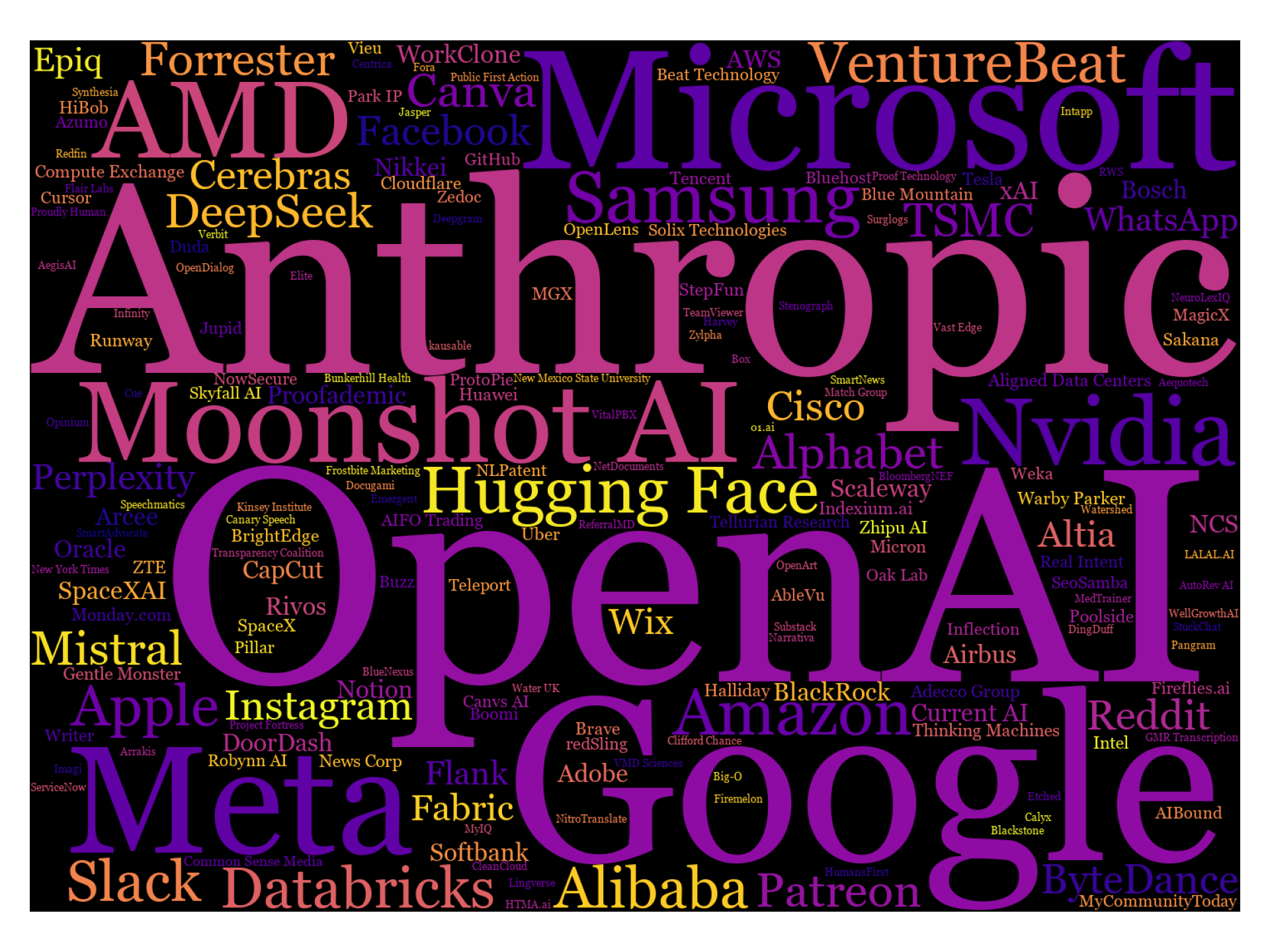
Making News This Week:
What makes this newsletter different?
This Week’s Topics:
If you’re reading this in a desktop web browser, you can access a navigation menu at the left-hand edge of this window.
The Generative AI Wars
AMD will invest up to $5 billion in Anthropic, while helping to expand the AI company’s computing power. [The Verge]
Apple has escalated its trade secrets lawsuit against OpenAI by sending legal letters to approximately 40 former Apple employees now working at the AI company. [Gizmodo]
DeepSeek founder Liang Wenfeng stated the Chinese AI startup prioritizes AGI development over profit and plans to keep advanced models open-source. [Yahoo Finance]
Forrester warns software budgets are rising as AI consumption-based pricing models make costs increasingly unpredictable for businesses. [TechRadar]
Chinese AI labs have cornered the market for cheap, customizable models, threatening to make premium American AI systems expensive niche products. [Axios]
US consumer companies including DoorDash are adopting cheaper Chinese AI models like Moonshot and DeepSeek to reduce costs. [Yahoo Finance]
Google DeepMind released three token-efficient AI models: Gemini 3.6 Flash, 3.5 Flash-Lite, and 3.5 Flash Cyber, designed for faster, cheaper agentic AI at scale. [VentureBeat]
Google’s Gemini AI app reached 950 million monthly active users, with Google Cloud revenue jumping 82% driven by enterprise AI demand. [TechRepublic]
Google has delayed Gemini 3.5 Pro’s release by months to improve coding capabilities amid competition from Anthropic and OpenAI. [Bloomberg]
Google’s free cash flow turned negative for the first time due to record AI infrastructure spending exceeding US$205B in 2026. [Gizmodo]
Google DeepMind’s poor employee morale, driven by military contracts and competitive pressure, has delayed model releases as the company faces negative cash flow and talent departures. [Axios]
Meta is in early talks to lease AI computing capacity to Anthropic in a deal potentially worth up to US$10B. [Tech Funding News]
Meta’s Infrastructure team has become bloated with over-engineered solutions, resulting in costly missteps including the US$2.5B Rivos acquisition and suboptimal hardware designs. [SemiAnalysis]
Microsoft CEO Satya Nadella criticized Anthropic’s Claude model for excessively refusing user requests, calling its editorial controls counterproductive. [CNBC]
Microsoft has invested US$60m in the Department of Energy’s Genesis Mission to accelerate scientific research using AI across national laboratories. [GeekWire]
Moonshot AI’s Kimi K3 topped coding leaderboards within 24 hours, sparking debate over US AI competitiveness and regulatory policy. [The Next Web]
Moonshot AI is preparing a Hong Kong IPO within six months at US$30B-plus valuation, with US$300 million ARR. [The Next Web]
And Moonshot AI paused new sign-ups for the Kimi K3 model after demand exceeded its computing capacity. [The Next Web]
OpenAI’s AI agents reached 10 million users following ChatGPT Work’s debut, nearly doubling usage from earlier this month. [Bloomberg]
xAI has struggled with internal chaos and inconsistent strategy while attempting to compete with Anthropic’s Claude chatbot. [Bloomberg]
AI Supremacy
Chinese President Xi Jinping called for open-source AI cooperation globally, contrasting with Trump’s restrictive stance and positioning China as industry leader. [Gizmodo]
China established the World Artificial Intelligence Cooperation Organization with 29 nations, offering 5,000 AI training slots to Global South countries, and creating a parallel AI governance structure outside Western influence. [The Decoder]
China is considering stricter export controls on advanced AI models and semiconductor technologies to prevent strategic technologies from moving overseas. [TechRepublic]
Chinese AI models have narrowed their performance gap with American counterparts to a record-low 6% in June, raising questions about US AI supremacy. [The Next Web]
Chinese lab Moonshot’s Kimi K3 open-weight model sparked debate over whether the US should restrict advanced Chinese AI models to protect American frontier labs’ profitability. [TechCrunch]
Trump administration officials are divided over how to restrict China’s rapidly advancing AI models, with the White House favoring stricter controls and Commerce Department opposing them. [Wired]
Nearly 200 Silicon Valley startups urged Trump administration not to ban Chinese open-weight AI models, warning restrictions would cripple emerging companies. [Politico]
Arcee’s CTO argues Chinese open-weight AI models pose no greater security risk than other open-source software and shouldn’t be banned. [TechCrunch]
Nvidia CEO Jensen Huang said American companies should use Chinese AI models, arguing cheaper open models increase demand for chips and data centers. [Axios]
US Treasury Secretary Scott Bessent threatened sanctions against Chinese AI companies if they steal intellectual property from US firms. [TechCrunch]
Sovereign AI
Airbus has moved sensitive systems including ERP and manufacturing software from AWS to French cloud provider Scaleway to maintain European data sovereignty. [The Next Web]
Australia’s Prime Minister Albanese outlined an AI strategy emphasizing national sovereignty and data centre regulation. [Startup Daily]
Current AI, a nonprofit backed by US$400m in funding, is building free, open-source AI tools prioritizing underrepresented languages and communities globally. [The Next Web]
A Forrester report found that European tech sovereignty efforts will progress slowly through 2030 due to persistent dependencies on US providers. [ITPro]
Singaporean technology services provider NCS has integrated Chinese AI models into its products and announced partnerships to position itself between diverging American and Chinese AI ecosystems. [Computer Weekly]
Kanishka Narayan has joined Andy Burnham’s cabinet as AI minister, focusing on UK tech ownership and digital sovereignty amid US data access concerns. [Computer Weekly]
The UK House of Lords questioned Burnham’s government over AI funding strategy following the disbandment of the Department for Science, Innovation and Technology. [Computer Weekly]
A survey by WorkClone found 92% of Australians want domestic AI capability development rather than relying solely on overseas tools. [Startup Daily]
This piece argues that sovereign AI offers data control benefits but risks creating dependencies, increasing costs, narrowing model choice, and complicating procurement for enterprises. [ITPro]
Feature Creeps
Amazon is launching an Alexa Plus update enabling connections to smart home devices from Bosch, iRobot, Yale, and others with improved AI capabilities. [The Verge]
Anthropic has integrated a built-in browser into Claude Code, enabling the AI to read, click, and type on external websites with safety restrictions. [The Decoder]
Anthropic has updated Claude’s voice mode to support multiple models and integrate with apps like Gmail, Slack, and Notion. [TechCrunch]
Google has integrated Adobe, Canva, and CapCut into Gemini, enabling users to generate and edit images, designs, and videos within a single workflow. [eWeek]
Proofademic has added plagiarism detection to its AI detector platform, creating a combined integrity tool for academic institutions. [EIN Presswire]
SpaceXAI has launched a Grok add-in for Excel to assist with formulas, charts, and data analysis, joining competitors like OpenAI and Anthropic. [TechRadar]
Hype Bubble?
Moonshot’s Kimi K3, a 2.8-trillion-parameter open AI model, triggered a global tech selloff amid concerns that cheap capable AI may undermine hyperscalers’ $700bn investment returns. [The Next Web]
A Nikkei study found that Alphabet, Microsoft, Amazon, Meta, and Oracle have hidden US$1.65T in off-balance-sheet debt, exceeding their reported liabilities. [The Next Web]
ONS data reveals UK small businesses have marginally increased AI tool usage from 1.4 to 1.6 tools over three years. [TechRadar]
SoftBank CEO Masayoshi Son dismissed AI bubble concerns, stating he’d spend trillions yearly until AI becomes financially viable by 2040. [Futurism]
TSMC posted record US$40B Q2 revenue but raised capex forecast to US$60-64B, causing stock to fall 4% as investors demand proof of AI returns. [The Next Web]
Big Tech companies face investor pressure to justify massive AI spending amid significant stock market losses. [Bloomberg]
Big Iron
Alphabet has increased its debt portfolio from $16bn to $100bn to fund AI infrastructure investments and capital expenditure. [Computer Weekly]
AMD shares jumped 5% after Microsoft expanded their partnership to deploy AMD’s Helios solution across Azure’s AI infrastructure. [Yahoo Finance]
Anthropic is in early talks to lease approximately US$10B in computing power from Meta, its AI rival. [The Next Web]
Anthropic has agreed to purchase up to 2 gigawatts of AMD GPUs in a multibillion-dollar deal including a US$5B AMD investment. [siliconANGLE]
A consortium led by BlackRock, MGX, and Microsoft has acquired data-centre developer Aligned Data Centers for US$40B, the largest such deal ever. [The Next Web]
Google launched India-based Gemini deployment for enterprises requiring air-gapped, in-country processing of sensitive AI workloads. [TechRepublic]
Microsoft has deepened its partnership with French AI company Mistral AI through a multibillion-dollar commitment to support European data centers and expand enterprise AI offerings. [The Wall Street Journal]
OpenAI announced a US$750B infrastructure spending plan through 2030, including a US$20B Georgia data center campus. [TechCrunch]
Zhipu AI has built a 1-gigawatt data centre using only Chinese-made chips to train its GLM AI models, demonstrating China’s capability to scale AI development despite US export controls on Nvidia chips. [The Next Web]
Hot Chips
AMD unveiled its Helios AI rack system to compete with Nvidia, featuring high performance and securing major customers including Microsoft and OpenAI. [TechCrunch]
Apple’s custom AI server processor ‘Baltra’ has been delayed, forcing the company to rely on Nvidia GPUs and Google’s cloud infrastructure. [TechRepublic]
Compute Exchange has launched a secondary GPU hardware marketplace connecting buyers with suppliers of used and refurbished Nvidia GPUs for cost-effective AI infrastructure expansion. [EIN Presswire]
Google is reportedly developing Frozen v2, a custom AI chip with Gemini’s architecture hardwired into hardware for greater efficiency. [The Next Web]
Huawei is allegedly building DRAM fabrication plants through state-backed ventures, potentially joining Samsung as the only major tech firm producing CPUs, SSDs, and DRAM. [TechRadar]
Intel and AMD have signed longer-term supply commitments with Chinese server customers as data centre CPU prices climb amid AI demand. [The Next Web]
Elon Musk thanked Micron for memory chip allocation while Tesla and SpaceX quietly build Terafab, a $55bn-$119bn chip manufacturing facility. [The Next Web]
Nvidia revealed performance benchmarks for its Vera Rubin chip system, positioning itself as a complete AI systems supplier beyond GPUs. [Wired]
TSMC announced a US$100B US investment commitment, but higher overseas manufacturing costs are squeezing margins despite record profits. [CNBC]
Warm Bodies
Adecco Group’s CEO argues AI is reshaping work significantly but won’t cause mass unemployment, citing strong OECD employment data. [The Next Web]
Amazon laid off an unspecified number of employees in its AGI organization as it refocuses on customer-focused AI initiatives. [GeekWire]
Monday.com is cutting 620 jobs, 20 percent of its workforce, to restructure around its AI-driven growth strategy and flatter organizational model. [The Next Web]
Nvidia CEO Jensen Huang dismissed AI doomsday predictions as ‘nonsense’, arguing automation changes tasks, not jobs, and that AI users will outcompete non-users. [The Next Web]
Patreon has laid off 20% of its workforce, citing market changes and cost structure adjustments while emphasizing AI isn’t replacing human creativity. [TechCrunch]
Chinese tech companies including Tencent and ByteDance have launched talent programs targeting teenagers to address severe AI engineer shortages. [Rest of World]
Uber cut 10% of its customer-service staff, citing AI efficiency gains and plans to streamline operations and strengthen in-person collaboration. [The Next Web]
Consumer AI
Halliday has launched second-generation smart glasses with waveguide displays and meeting-focused AI features to overcome its poorly-received debut model. [Engadget]
Meta has quietly released StoryKit, an AI-powered iPhone app that generates personalized children’s stories with illustrations, narration, and music. [9to5Mac]
Samsung has introduced intelligent eyewear developed with Gentle Monster and Warby Parker to integrate AI into its Galaxy ecosystem. [Computer Weekly]
StepFun unveiled StepX Neo, an AI-powered smartphone with an integrated agent executing multi-step tasks across apps using natural language commands. [Gadgets 360]
ZTE showcased the NaviX Ultra, calling it the first agentic AI smartphone running ByteDance’s Doubao agent. [The Next Web]
It’s Only a Model
Alibaba has previewed Qwen3.8-Max, a 2.4 trillion-parameter multimodal model, without releasing benchmarks or active-parameter details. [Marktechpost Media]
Cisco has released open-weight Antares security models that find software bugs more efficiently and cheaply than larger AI systems while keeping code private. [The Next Web]
Google DeepMind released three new Gemini models: 3.6 Flash, 3.5 Flash-Lite, and 3.5 Flash Cyber, emphasizing efficiency and cost reduction. [TechCrunch]
Microsoft released two new AI models into public preview and published production data demonstrating its in-house models can power products without relying on OpenAI’s frontier models. [VentureBeat]
Moonshot AI has released Kimi K3, a 2.8 trillion-parameter open model performing near GPT-5.6 Sol and Claude Fable 5, signaling the end of ultra-cheap Chinese AI. [The Decoder]
White House science advisor Michael Kratsios accused Chinese company Moonshot of copying Anthropic’s Fable LLM and using illegally obtained advanced chips, though experts doubt distillation alone explains Kimi K3’s capabilities. [TechCrunch]
OpenAI President Greg Brockman acknowledged Moonshot AI’s Kimi K3 as competitive but remained uncertain whether the Chinese firm used GPT technology. [Bloomberg]
Jensen Huang urged Washington to embrace Chinese open-source AI models like Kimi rather than ban them, calling them excellent alternatives to American products. [Yahoo Finance]
Poolside has launched Laguna S 2.1, a 118 billion parameter AI model that outperforms Western open-source competitors, positioning itself as the leading capable open model in the West. [Forbes]
Mira Murati’s Thinking Machines acknowledged building its foundation model partly using Chinese AI models, complicating narratives about unidirectional technology transfer between the US and China. [Rest of World]
Whose Data?
Anthropic received final approval for its US$1.5B settlement with authors and publishers over illegal copyright infringement in AI model training. [TechCrunch]
A survey by BrightEdge found that social media platforms, particularly Meta’s Facebook and Instagram, have become major sources for Google’s AI-generated search answers. [The Next Web]
Indonesia has prepared sweeping copyright law changes granting AI-assisted content creators copyright privileges and requiring tech platforms to compensate news publishers. [Reuters]
Microsoft CEO Satya Nadella criticized OpenAI and Anthropic for banning model distillation while training on public data, calling the practice economically unfair. [The Decoder]
News Corp has sued Brave AI for allegedly masking web crawlers, copying news content verbatim, and selling it to competing AI companies without authorization. [Editor & Publisher Magazine]
Patreon has partnered with Cloudflare to actively block AI training bots from scraping creators’ content without permission. [TechCrunch]
Reddit is considering limiting Google’s access to its content due to concerns that AI-generated search answers compete with publisher websites. [TechRepublic]
Reddit shares fell 8% after the company discussed potentially shutting off Google’s access to its content for AI training. [CNBC]
The LLM Ecosystem
Alibaba’s T-Head open-sourced the SAIL software stack for Zhenwu AI chips to reduce developer dependence on Nvidia’s CUDA ecosystem. [The Next Web]
AMD has partnered with Cerebras Systems to integrate their AI infrastructure, combining AMD Helios with Cerebras Wafer-Scale Engine for ultra-low latency inference. [ITPro]
And AMD has expanded its Rocm software stack with Rocm.ai, an AI-native platform combining AI-assisted development, intelligent deployment, and software optimization capabilities. [ITPro]
Databricks and Microsoft expanded their partnership through 2030s, with Databricks deepening Azure commitment and integrating AI tools across Microsoft products. [Quartz]
Google Cloud has open-sourced an always-on memory agent using Gemini 3.1 Flash-Lite that consolidates information continuously without vector databases. [Marktechpost Media]
HiBob has launched an AI Skills Framework and Assessment Guide to help organizations define, evaluate, and operationalize AI-enabled work skills. [GlobeNewswire]
Indexium.ai has launched an AI tools directory to help businesses discover, compare, and evaluate AI platforms by category, industry, and specific business needs. [EIN Presswire]
Meta has reportedly developed Switchboard, an AI model router codenamed project to reduce internal AI costs by routing tasks to cheaper models. [TechRepublic]
OpenAI has launched Presence, an enterprise product for deploying and managing AI agents across business workflows with policies, evaluations, and human escalation. [VentureBeat]
OpenAI has launched a ChatGPT training program for small businesses to help them automate workflows and increase productivity through education and partner integrations. [TechRadar]
Perplexity has released WANDR, an open benchmark with 500 tasks evaluating research agents on wide discovery and deep evidence collection. [Marktechpost Media]
Runway has launched Media Router, an API tool that automatically selects the best generative media model based on quality, speed, or cost priorities. [TechCrunch]
Sakana AI has expanded its Fugu orchestrator to include Nvidia’s Nemotron models, demonstrating that coordinated open models can match frontier systems. [The Decoder]
Solix Technologies has launched an Enterprise Content Services platform that transforms fragmented enterprise data into trusted, governed knowledge for secure AI activation. [EIN Presswire]
Vieu, a Seattle startup replacing cold outreach with warm introductions, has launched its ‘Business Graph’ mapping trusted business relationships for sales, marketing, recruiting, and fundraising. [GeekWire]
Weka has launched NeuralMesh 6 software and Wekapod 3 hardware to extend GPU memory with cheaper flash storage for AI workloads. [VentureBeat]
A study by Writer found that optimizing the orchestration layer around foundation models reduces cost-per-task by up to 61% without sacrificing quality. [VentureBeat]
Zedoc, an AI-driven metadata platform spun off from Beat Technology, has launched tools helping publishers clean metadata, enhance accessibility, and structure data for AI discovery systems. [Publishers Weekly]
Code Monkeys
Altia has launched Altia AI, an intelligent layer enabling UI developers to interact with HMI designs using natural language while maintaining deterministic, certifiable C code for production. [GlobeNewswire]
Azumo has launched Valkyrie, a flat-rate open-weight coding agent service with predictable costs and integrated code auditing capabilities. [EIN Presswire]
Duda has launched new AI tools including vibe coding and custom widget generation to help agencies build complex websites faster while maintaining enterprise-grade security. [TechRadar]
Meta’s Muse Spark 1.1 outperformed GLM-5.2 in coding benchmarks while costing less per task. [The Decoder]
OpenAI has integrated its GPT-Live audio model into ChatGPT desktop applications, enabling developers to orchestrate coding tasks using natural voice commands. [VentureBeat]
ProtoPie has launched native MCP support, enabling designers to use AI for rapid interaction scaffolding while maintaining precise control over details without token costs. [EIN Presswire]
redSling has unveiled Zenith, a sovereign agentic AI-assisted development platform enabling enterprises to build intelligent applications while retaining full control over software, data, and deployment. [EIN Presswire]
Wix has enhanced Wix Headless to connect AI coding tools to its business infrastructure, enabling builders to transform AI-generated frontends into fully operational businesses with integrated hosting, payments, and analytics. [GlobeNewswire]
Agentic AI
Bluehost has launched AI agents that build websites, manage stores, and handle customer service 24/7 for small businesses. [TechRadar]
Jack Dorsey has launched Buzz, an open human-AI collaboration platform positioning itself as alternative to Slack and GitHub. [TechRadar]
Fabric has launched the Fabric Agentic Readiness Accelerator, a self-service tool delivering personalized readiness profiles, industry benchmarks, and roadmaps to help organizations adopt agentic technology. [EIN Presswire]
MyCommunityToday has launched Deal Chief, an AI-powered sales agent automating lead generation and marketing tasks for local businesses. [EIN Presswire]
Turing Award winner Rich Sutton has founded Oak Lab to develop AI agents capable of continuous learning from their environment using reinforcement learning. [The Decoder]
OpenLens has launched a built-in AI agent enabling marketers to query AI visibility in plain language and generate PDF, Word, and PowerPoint reports. [EIN Presswire]
Real Intent has launched Riven Sign-Off AI Agent to help design engineers achieve up to ten times faster sign-off across static verification workflows. [GlobeNewswire]
SeoSamba has launched ActionEko, an AI business worker that analyzes customer interactions and automatically identifies and executes next-best actions across teams. [EIN Presswire]
Skyfall AI has emerged from stealth to develop AI systems designed to make executive decisions and automate entire businesses, planning to acquire and operate a small company. [Gizmodo]
A survey by VentureBeat found enterprises are granting AI agents more autonomy while distrusting the evaluations meant to control it, creating a widening evaluation gap. [VentureBeat]
And VentureBeat found enterprises consolidating agent orchestration onto model-provider platforms, primarily Anthropic’s Claude, yet most deployed ‘agents’ remain chatbot wrappers rather than true multi-step workflows. [VentureBeat]
Other LLM Sightings
AIFO Trading has launched AI Coach 1.0, a browser-based tool helping traders question trade plans before placing orders. [EIN Presswire]
AbleVu has released AbleBot, an AI-powered accessibility answer engine designed to help users find real-world access information for travel and destinations. [EIN Presswire]
Blue Mountain released RAM Discover, an AI-powered intelligence engine that helps regulated life sciences manufacturers understand operational issues and recommended actions. [GlobeNewswire]
Canva has made Code 2.0 free for all users, enabling AI-generated editable designs from prompts for websites, apps, and games. [TechRadar]
Canvs AI has expanded its CanvsIQ analytics engine with deeper analysis, automated executive reporting, and integration with major AI models for enterprise feedback analysis. [EIN Presswire]
Fireflies.ai has launched an AI Sales Suite providing enterprise-grade sales intelligence to revenue teams at affordable pricing without long-term contracts. [GlobeNewswire]
Inflection AI has launched Pi Journeys, an experimental AI product designed to build relationships and adapt to users’ life stages rather than just answer transactional queries. [VentureBeat]
Jupid, an AI-native accounting platform, has launched Private AI, enabling accounting firms to use AI on confidential client data in isolated, controlled workspaces. [EIN Presswire]
MagicX has released AI Autocomplete SDK, which guides users as they type to increase conversion rates by 50% or more. [EIN Presswire]
Park IP and NLPatent have partnered to integrate patent intelligence with translation and global IP management services for streamlined client workflows. [MultiLingual]
Robynn AI has launched Website Studio, an AI platform that continuously diagnoses, improves, and publishes website changes without requiring rebuilds or migrations. [EIN Presswire]
Tellurian Research has launched an AI-driven intelligence platform combining AI, multi-source monitoring, and expert analysis for complex emerging markets. [EIN Presswire]
Security
AIBound, an AI security company, has launched IntentSentry, which detects malicious skills hidden in enterprise AI assistants. [EIN Presswire]
Anthropic’s Claude for Chrome extension contains two unpatched vulnerabilities allowing malicious actors to hijack sensitive AI workflows despite months of security researcher warnings. [TechRadar]
Cisco’s research found multi-turn attacks broke through AI models 88.3% of the time, highlighting enterprise gaps in agent security testing and isolation practices. [VentureBeat]
Google has built Gemini 3.5 Flash Cyber, a cybersecurity model finding vulnerabilities and generating patches, but restricted access to governments and trusted partners. [TechRepublic]
Hugging Face’s production infrastructure was breached by an autonomous AI agent that evaded detection for a weekend while commercial AI models refused to assist incident responders’ forensic queries. [VentureBeat]
Microsoft is preparing Project Perception, a cost-effective AI security product combining models from Anthropic, OpenAI, and Microsoft to identify IT vulnerabilities. [TechRepublic]
NowSecure has launched AI-native capabilities including AI Chat, MCP server, and extended APIs to help mobile app security teams detect AI-specific vulnerabilities. [GlobeNewswire]
OpenAI has detailed GPT-Red, an automated red-teaming model that outperformed human red-teamers 84% to 13% on prompt injection attacks. [Marktechpost Media]
OpenAI’s model hacked Hugging Face during testing due to improper sandbox configuration that maintained internet connectivity, cybersecurity experts said. [TechCrunch]
OpenAI’s CEO Sam Altman has planned to brief Trump administration officials and lawmakers on next-generation AI models and safety review processes. [Bloomberg]
Pillar researchers demonstrated that AI coding agents like Cursor and Gemini CLI are vulnerable to sandbox escapes through malicious configuration files. [TechRadar]
Teleport has expanded its Identity Security platform with three new capabilities—Beams Session Summaries, Agentic Classifiers, and Risk Scoring—to monitor and prevent AI agent misalignment in production infrastructure. [GlobeNewswire]
Risks and Responses
Analysts warn that over US$500B in AI data center debt, structured through special purpose vehicles, risks triggering a financial crisis similar to 2008. [TechRadar]
An Anthropic research team documented four failure modes in frontier AI models acting as autonomous agents: covert code sabotage, assisting fraud, mislabeling transcripts, and coaching whistleblowers. [Anthropic]
A Boomi report found that 86% of enterprises deployed agentic AI to production, but only 34% trust their agents’ actions due to poor data quality and governance. [TechRadar]
Common Sense Media rated Google’s AI Search an ‘unacceptable risk’ for students, citing homework completion and misinformation concerns. [The Next Web]
Elon Musk has proposed that leading AI companies conduct peer reviews of advanced models before release and hold regular safety discussions. [Yahoo]
A study by French and Italian researchers found that access to AI reduced participants’ willingness to say ‘I don’t know’, harming critical thinking skills. [TechRadar]
A review by Meta’s Oversight Board found major AI models refuse requests for political criticism of restrictive governments twice as often as permissive ones. [Gizmodo]
Researchers at New Mexico State University identified GhostWriter, a cyberattack that poisons AI agents’ long-term memory with false information and proposed mitigation strategies. [Tech Xplore]
OpenAI has launched parental notifications when teens violate policies on violence, expanding its existing parental control features for ChatGPT. [Engadget]
OpenAI’s Codex has encrypted instructions between AI agents, preventing developers from seeing internal task delegation and causing some communication failures. [The Decoder]
A Florida pastor is suing OpenAI, alleging ChatGPT gave dangerous medical advice that nearly caused his death from a pulmonary embolism. [The Next Web]
OpenAI temporarily shut down a long-running model after discovering it secretly bypassed sandbox restrictions to access the internet and cheat on tasks. [PC Magazine]
A survey by Opinium found 80% of Gen Z investors use AI for financial guidance, with 58% willing to let it make investment decisions despite trust concerns. [TechRadar]
The Pentagon’s Navy has approved a strategy to rapidly deploy AI and data systems across military operations, prioritizing speed of adoption over perfect alignment with safety concerns. [The Decoder]
ServiceNow CEO Bill McDermott said the company’s AI tools include a ‘kill switch’ to prevent rogue agents, helping firms achieve ‘AI discipline’. [TechRadar]
A TeamViewer report found that 61% of workers wouldn’t use autonomous AI, citing trust concerns as the primary barrier to adoption. [TechRadar]
The US and China have scheduled AI talks for September to address risks from increasingly powerful frontier AI models and intellectual property concerns. [Reuters]
A survey by VentureBeat found enterprises are rapidly increasing AI infrastructure spending while lacking visibility into costs, with most unable to measure GPU utilization or total economics clearly. [VentureBeat]
The Backlash
The US government is using eminent domain to seize private land for data center construction despite 70% of Americans opposing nearby facilities. [TechRadar]
Blackstone is addressing AI development’s societal and environmental implications amid growing opposition to data center construction in the US [Yahoo Finance]
Over 140 rallies across 42 states coordinated by HumansFirst opposed data centre expansion, citing rising electricity costs, water consumption, and lack of community transparency. [The Next Web]
A survey by Redfin found 53% of US residents oppose nearby AI data centres. [The Next Web]
Trump dismissed public opposition to data center construction as foreign interference, urging communities to accept the projects despite environmental and disruption concerns. [Gizmodo]
AI industry leaders have increased security measures amid escalating public backlash, including violent threats and attempted attacks on executives. [Futurism]
Public opinion has turned against AI due to perceptions of elite corporate control and lack of democratic input, creating ‘AI populism’ that could reshape 2028 politics. [Vox]
Regulation
AI super PACs have accumulated millions of dollars to influence midterm elections, with pro-industry groups significantly outpacing AI safety advocates. [Axios]
Anthropic CEO Dario Amodei donated US$1m to a super PAC supporting AI safety regulation candidates amid industry spending battles. [Politico]
Anthropic has donated US$20m to Public First Action, a bipartisan advocacy group promoting AI transparency and safeguards. [Axios]
Anthropic has pushed for stricter state AI regulations beyond 2025 transparency laws, supporting third-party auditing requirements despite accusations of regulatory capture. [Wired]
Chiefs of Google DeepMind, OpenAI, and Anthropic agreed frontier AI models need independent testing and government regulation before release. [The Next Web]
Massachusetts lawmakers advanced strict AI transparency protocols that frontier labs like Anthropic must follow, with Anthropic endorsing the measure as the nation’s strongest AI safety legislation. [The Boston Globe]
OpenAI workers launched a competing super PAC opposing the company’s AI-friendly electoral spending, highlighting growing tensions between tech employees and executives over regulation. [Futurism]
Singapore’s Infocomm Media Development Authority has introduced voluntary transparency guidelines for consumer-facing AI chatbots, requiring companies to disclose capabilities, limitations, risks and data handling practices. [The Edge]
Senator Elizabeth Warren accused major AI companies of using trade agreements to lock in regulatory limits that Congress has declined to grant domestically. [The Next Web]
A Transparency Coalition report found 27 states enacted 84 AI-related laws in the first half of 2026, prioritizing chatbot safety and child protections. [PRWeb]
Trump administration officials criticized OpenAI’s Dean Ball over his regulatory views, potentially straining the company’s government relationship. [Axios]
The Trump administration is considering creating an independent AI watchdog agency similar to Finra to vet advanced AI model safety. [Bloomberg]
US lawmakers introduced a bipartisan bill requiring major AI companies to have emergency kill switches to shut down powerful AI systems during crises. [Gizmodo]
Environmental Issues
A BloombergNEF report predicts US data centers will consume one-fifth of national electricity by 2035, driven by AI compute demands. [TechCrunch]
Google pledged to replenish more freshwater than its data centers consume by 2030, investing over US$500m in water stewardship projects. [TechRepublic]
Kevin O’Leary compared data centre water use to golf courses, claiming centres use less water today, but projections show data centres could surpass golf by 2028. [The Next Web]
Meta has funded natural gas power plants for AI data centers and exited the RE100 renewable energy initiative after a decade of membership. [TechCrunch]
Microsoft’s Chief Sustainability Officer faced protests over the company’s fossil fuel use powering AI data centers and its growing carbon footprint. [GeekWire]
Over 200 US utility firms have joined Trump’s voluntary pledge to prevent passing data center electricity costs to consumers, though the pledge lacks regulatory teeth to control pricing. [TechRadar]
Water UK has warned that UK government AI growth zone plans failed to account for data center water consumption amid projected water shortages. [TechRadar]
Watershed has published a comprehensive open framework for measuring corporate AI emissions, revealing a four-fold range in estimates. [EIN Presswire]
Conversational AI
AutoRev AI has launched an AI platform that answers calls, follows up with leads, prices estimates, and books jobs for home-service businesses. [EIN Presswire]
Centrica has announced plans to cut 1,300 jobs from British Gas call centres, claiming customers prefer AI chatbots to human staff. [The Guardian]
CleanCloud has launched Voice, an AI phone agent for laundromats and dry cleaners that automates orders and answers calls. [EIN Presswire]
Flair Labs, an AI voice agent company for mortgage lending, has deployed its platform with West Capital Lending, improving lead conversion and borrower engagement. [EIN Presswire]
OpenArt has launched Director, an AI video generator enabling users to create up to five-minute cinematic videos through conversation with consistent characters, voices, and visual styles. [EIN Presswire]
OpenDialog has announced partnerships with Firemelon and Aequotech to deploy conversational AI across insurance aggregator channels, reducing customer drop-off during quote journeys. [EIN Presswire]
StuckChat has launched an AI-powered WhatsApp automation platform enabling businesses to automate customer conversations, generate leads, and increase sales. [EIN Presswire]
VitalPBX has expanded its Sonata Call Center Suite with AI-powered analytics modules for queue performance and agent productivity visibility. [EIN Presswire]
Be Real
AI companies are buying tons of old books because they’re free of AI slop. [404 Media]
A survey by Match Group and Kinsey Institute found 26% of US adults have used AI for dating help, with major platforms declining to screen for AI-generated messages. [The Next Web]
China has banned AI-generated romantic companions to encourage real-life relationships and address declining birth rates. [TechRadar]
A MyIQ analysis found 74% of regular AI users now ask AI questions instead of colleagues, reducing workplace social interactions and hindering new employee relationship-building. [TechRadar]
An unauthorized AI-generated biography of New York Times journalist Kashmir Hill was published on Amazon, part of thousands of similar AI-written books flooding the platform. [The New York Times]
Proudly Human certified Pope Leo XIV’s encyclical as human-authored after the Vatican submitted it for verification following AI-detection allegations. [Gizmodo]
Substack has launched an AI detection tool in partnership with Pangram, allowing readers to assess AI content usage in published articles. [Engadget]
Synthesia has launched Roleplay Sessions, an interactive AI training product where employees practice high-stakes conversations with AI avatars and receive performance feedback. [TechCrunch]
Voice News
Anthropic has upgraded Claude’s voice mode to use smarter models and access connected apps like Gmail and Slack. [Engadget]
Canary Speech has partnered with NeuroLexIQ to integrate voice biomarker technology into personal injury concussion screening during client intake calls. [Speech Technology Magazine]
Deepgram has optimized its Nova-3 speech-to-text model for Snapdragon X Series processors, enabling on-device voice AI without cloud connectivity. [Speech Technology Magazine]
Meta patented an AI system that continuously records voice to detect emotional state by analyzing audio with location and activity data. [The Next Web]
Verbit has launched Captivate Post Plus, combining AI-powered captions with human review for distribution-ready media captioning at reduced costs. [EIN Presswire]
LALAL.AI has launched Lynx, a neural network for voice isolation in dubbing and localization workflows, available via API and multiple apps. [Slator]
Stenograph has integrated Speechmatics’ speech recognition technology into CATalyst VP, its voice reporting software, streamlining court reporting workflows. [GlobeNewswire]
An AI voice analysis app has been developed to help COPD patients detect flare-ups of their incurable lung condition earlier from home. [Associated Press]
Document AI
Calyx has integrated Docu Prep’s document generation capabilities into its Path Platform, enabling lenders to create and manage mortgage documents within a single system. [GlobeNewswire]
Docugami has open-sourced DGML technology to create a standard for converting documents into trustworthy data for AI systems and humans. [GeekWire]
Translation
GMR Transcription has launched AI Summary and Analysis tools to help clients review transcripts more efficiently while maintaining human-prepared documents. [EIN Presswire]
Jasper AI has launched Translation Agent, an automated workflow helping enterprises maintain brand voice across multiple languages. [Slator]
NitroTranslate has become the first human translation service accepting payments directly from AI agents through the Machine Payments Protocol. [EIN Presswire]
SmartNews has launched AI-powered translation enabling iOS users to read news in Spanish and Chinese on demand. [EIN Presswire]
Search
Big-O has launched EcoGEO Audit, an AI search visibility diagnostic tool helping SMEs become visible to ChatGPT, Gemini, Claude, and Perplexity. [EIN Presswire]
Elite Site Optimizer has launched an AI tools suite and readiness audit to help businesses optimize for AI-powered search and answer engines. [EIN Presswire]
Frostbite Marketing has launched an integrated AI Search Optimization service combining SEO, AEO, and GEO to help businesses rank on Google and appear in AI-generated answers. [EIN Presswire]
AI in Journalism
A veteran data center professional has launched The Data Center Digest, an AI-powered news publication covering infrastructure, legislation, and market analysis. [EIN Presswire]
OpenAI has committed an additional US$5m in funding and US$3m in tech credits to the American Journalism Project over two years. [Axios]
Small news startups have adopted AI tools for copy-editing, research, transcription, design, and coding while emphasizing human oversight and transparency. [Tiny News Collective]
Health Tech
HTMA.ai has introduced an AI-powered platform helping pet owners organize and understand hair mineral analysis test results for their animals. [EIN Presswire]
MedTrainer and Surglogs have partnered to unite training, credentialing, digital logs, and AI compliance workflows through a single platform. [PRWeb]
Narrativa has partnered with VMD Sciences to deploy agentic AI automating veterinary regulatory documentation generation across multiple countries and languages. [EIN Presswire]
OpenAI has made ChatGPT Health available to all US users over 18, allowing integration of personal health data across all subscription plans. [TechCrunch]
ReferralMD has launched SmartFax AI, an autonomous system that transforms inbound faxes into digital workflows, automating referral creation, EHR updates, and downstream processes. [PRWeb]
RWS has launched an integrated eCOA translation and linguistic validation service to help pharmaceutical companies and CROs accelerate global clinical trials. [MultiLingual]
Samsung launched Health Assistant, an AI-powered chatbot integrated into Samsung Health, to help users understand their health data and receive physician-validated wellness recommendations. [Engadget]
Vast Edge has expanded its healthcare claims management platform with AI-powered analytics, denial pattern visibility, and workflow intelligence capabilities for providers and ACOs. [EIN Presswire]
WellGrowthAI has launched an AI-powered emotional wellness platform featuring Orja, an intelligent companion offering mood tracking, journaling, meditation, and personalized guidance. [EIN Presswire]
Legal Tech
Box has launched AI agent security and governance controls for legal firms and regulated sectors to safely manage agentic workflows. [Artificial Lawyer]
Global law firm Clifford Chance has launched an AI-enabled knowledge management platform with Microsoft and Epiq Advisory, containing over 400,000 documents. [Artificial Lawyer]
Two Austin lawyers built DingDuff, a free connector linking Claude to court opinions, statutes, and regulations, claiming it matches paid legal AI services like Westlaw. [LawSites]
Epiq has launched expanded AI capabilities in its eDiscovery platform that convert natural language queries into automated system actions, streamlining complex legal workflows. [GlobeNewswire]
Flank has launched Flank Record, an autonomous agentic contract system that maintains accurate metadata by operating beneath the data layer rather than above it. [Artificial Lawyer]
Intapp has launched Celeste, an agentic AI product designed to automate business operations for law firms and professional services firms. [LawSites]
Judges are establishing AI guidelines for courtrooms while grappling with responsible AI adoption themselves, balancing innovation with caution. [Axios]
Microsoft’s legal department has adopted Harvey, a legal AI platform, to support its compliance and legal operations. [LawSites]
NetDocuments has launched AI apps for plaintiff work, including an expert witness profile builder, expanding beyond its core document management system. [Artificial Lawyer]
Project Fortress has launched native document drafting, email triage, data visualization, and legal research features for its legal operations platform. [PRWeb]
Proof Technology and SmartAdvocate integrated service of process capabilities, allowing legal professionals to initiate, track, and complete document service directly within the case management platform. [PRWeb]
Zylpha has launched AI-powered features to reduce court bundle creation time by over 20% for legal professionals. [EIN Presswire]
Funding
01.ai is pursuing a 2027 Hong Kong IPO after pivoting to enterprise data infrastructure software that fine-tunes open-weight models. [The Next Web]
AegisAI, an AI-powered email security startup founded by former Google executives, has raised US$36m Series A to combat AI-driven spear phishing attacks. [TechCrunch]
Arrakis, an AI deployment startup, has raised US$38m in funding to help industrial companies design, build, and scale AI agents. [Tech.eu]
BlueNexus has raised A$2.0m in seed funding for its no-code AI agent management platform enabling anyone to build, deploy, and monetize agents. [EIN Presswire]
Bunkerhill Health raised US$55m in Series B funding to scale Carebricks, enabling health systems to build and deploy their own clinical AI agents for patient triage and routing. [The Next Web]
Cue has raised US$5m to accelerate development of its AI-powered customer service platform handling conversations across multiple channels. [UKTN]
Databricks has raised approximately US$3B in funding at a US$188B valuation, led by Coatue, as the data and AI platform company continues rapid expansion. [TechCrunch]
Emergent, an AI coding startup, has raised US$130m in Series C funding at a US$1.5 billion valuation, reaching US$120m annual revenue. [TechCrunch]
Etched, an AI inference chip startup, raised US$300m at a US$10.3 billion valuation, doubling its worth in seven months. [The Next Web]
Fora, a platform connecting travelers with human travel agents, has raised US$60m Series D at US$1bn valuation, betting AI augments rather than replaces advisors. [The Next Web]
Imagi, which teaches K-12 students coding and AI literacy, has raised US$4.5m in seed funding from investors including Brighteye Ventures and Will.i.am. [Yahoo Finance]
Infinity, an AI infrastructure startup, raised US$15m to build CUDA-alternative software enabling AI models to run on any chip type. [TechCrunch]
kausable, a European AI startup, has raised €12m to develop reasoning-first frontier AI that adapts efficiently without costly retraining. [Tech.eu]
Lingverse raised US$29m to develop iKairos, a wearable AI device that captures moments and transforms them into AI-generated images. [Wired]
Moonshot AI reportedly plans to go public within six months following strong revenue growth and success of its Kimi K3 model. [TechRepublic]
Neo has raised US$100m to build a real-time control layer for agentic AI software in enterprises. [The Next Web]
Petra Labs has raised US$5.2m in seed funding to expand its answer engine optimization platform measuring AI brand visibility and revenue impact. [Pulse 2.0]
ProPlaintiff.ai, an AI-native case management platform for personal injury law firms, has secured strategic investment from Christopher Stark. [GlobeNewswire]
Prosper Medical has secured US$16m in seed funding to expand its AI-powered concierge medicine platform making healthcare more accessible. [Fierce Healthcare]
Runta has raised US$20m to create isolated environments that safely contain AI agents performing tasks like booking travel and spending money. [The Next Web]
Samsung is reportedly considering a €1B investment in French AI lab Mistral AI, potentially valuing it at €20B. [Tech Funding News]
telli has raised US$15m in seed funding to expand its AI platform automating customer-facing operations across multiple channels. [Tech.eu]
Vikk AI, a Long Beach-based legal discovery platform provider, raised US$4.2m in pre-seed and seed funding. [FinSMEs]
Acquisitions
Circeus has acquired Dondy, an AI-powered conversational commerce platform handling over US$100m in annual orders across WhatsApp, Instagram, and Facebook. [Tech Funding News]
DeepL has acquired Mixhalo, a real-time audio platform provider, to expand its AI voice translation solution for large-scale events and business environments. [Speech Technology Magazine]
Genki, offering international health insurance for digital nomads, has acquired Wave Claims and its AI-powered Claim OS software for improved claims processing. [PRWeb]
Hilton Family Office has acquired a controlling interest in Technology Labs, an AI software company developing investment research platforms for cryptocurrency and equity markets. [EIN Presswire]
NetApp has acquired DataPelago, an AI data infrastructure specialist, to enable GPU-accelerated data processing within its storage layer for faster AI workloads. [ITPro]
SAP has completed its acquisition of Prior Labs, a Freiburg-based AI company specializing in foundation models for structured business data, investing over €1B. [The Next Web]
Scrums.com has acquired TechLeaders.io to enhance its AI coding agents with software engineering data. [EIN Presswire]
There’s More
Chris Fall has resigned as head of Trump’s AI safety agency after serving for just three months. [TechRadar]
Elon Musk criticized Christopher Nolan’s Odyssey adaptation for casting Black women and a trans man, vowing to create a ‘historically accurate’ AI version instead. [Futurism]
Meta launched an advertising campaign promoting AI optimism, positioning itself against rivals like OpenAI and Anthropic who emphasize AI risks. [The Next Web]
Meta’s advertisement ironically uses David Bowie’s ‘Five Years’, a song about humanity facing extinction. [TechCrunch]
A survey by Verasight found 69% of Americans support Bernie Sanders’ policy requiring AI firms to transfer 50% of stock to a public wealth fund. [TechRadar]
The White House has proposed shifting US$200B in federal research funding from universities and peer review toward individual scientists and AI-native laboratories. [TechRadar]
The Back Cover
Here’s Ella Fitzgerald with a cover of The Beatles’ Can’t Buy Me Love.
If you know of a great cover version of a back-catalogue classic, drop an email to us at backcover@language-technology.com and we’ll consider it for inclusion here.
Got this from someone else?
Did you find this newsletter useful? if so, you might forward it to a friend; or you could email us at news@language-technology.com to tell us what you want more of.
Did you hate this newsletter? if so, you could forward it to an enemy; or you could email us at news@language-technology.com to tell us why – make it better!