

Above the Fold
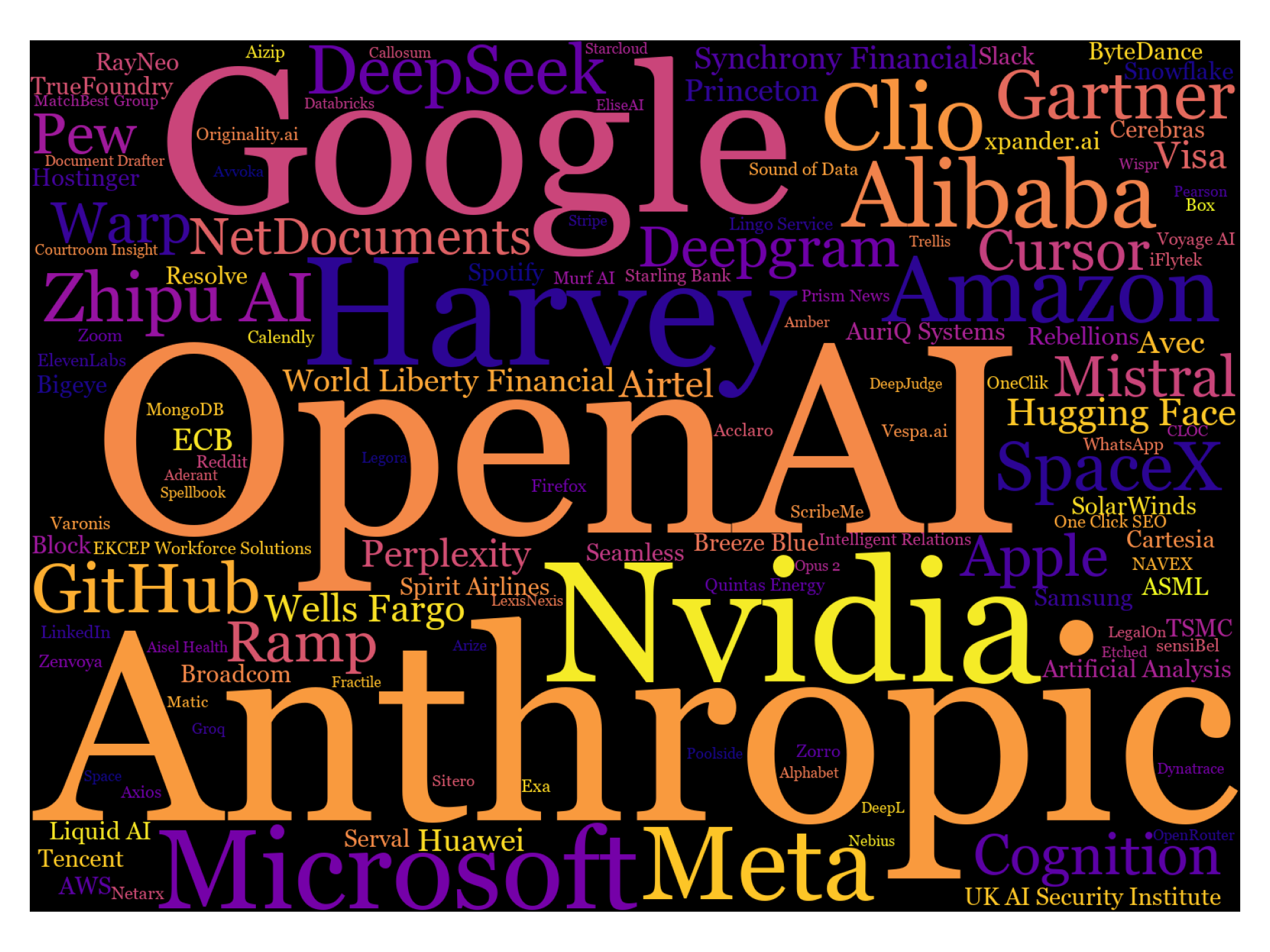
Overwhelmed? Here’s our pick for five things to know about this week.
Alibaba claimed its Qwen models surpassed 3 billion downloads, becoming the world’s most-used open-weight model family. [The Next Web]
Anthropic generated the most revenue among AI providers in July 2026 despite charging higher token prices than competitors. [TechRadar]
Google’s Gemma open-source model family has surpassed one billion downloads, with developers creating over 100,000 variants. [The Next Web]
OpenAI’s CFO announced the company will go public in 2027 or sooner, citing strong growth and recent $122bn funding round. [The Next Web]
The US State Department has drafted an ultimatum requiring allied nations to choose between American and Chinese AI ecosystems, excluding dual membership. [The Next Web]
Now read on for everything else that happened in NLP this week.
Making News This Week:
What makes this newsletter different?
This Week’s Topics:
If you’re reading this in a desktop web browser, you can access a navigation menu at the left-hand edge of this window.
The Generative AI Wars
Alibaba’s quarterly profit dropped 75% due to heavy AI infrastructure investments, though AI-related revenue grew 45%. [Associated Press]
Anthropic’s annualized revenue run rate surpassed US$65B in July, up from US$9B last year, with investors projecting US$100-120B for 2026. [TechCrunch]
DeepSeek raised V4 Flash and Pro API prices up to 1,100% while introducing off-peak pricing, though models remain cheaper than competitors despite real-world agent task completion rates of only 53.8%. [VentureBeat]
Meta spends hundreds of millions annually on AI model access through Microsoft’s Azure cloud, making it one of Microsoft’s largest customers. [The Next Web]
Nvidia disclosed a nearly $21bn stake in SpaceX, highlighting the chipmaker’s complex financial relationships with major customers. [The Financial Times]
OpenAI’s enterprise business has surpassed consumer revenue, reaching a $40bn annualised run rate, months ahead of forecast. [The Next Web]
OpenAI and Anthropic cut prices on lower-cost models as enterprises shift workloads to cheaper Chinese AI alternatives. [TechRepublic]
OpenAI’s revenue growth has slowed to 18% quarterly, disappointing investors as rival Anthropic surges ahead with 130% growth. [Gizmodo]
OpenAI CFO Sarah Friar downplayed IPO significance, stating it’s merely a milestone, as company faces slowing growth and model safety concerns. [Gizmodo]
OpenAI has expanded its advertising business to 31 European countries, quadrupling its ad reach and testing user acceptance of ads in ChatGPT. [The Next Web]
Perplexity’s free premium subscription giveaway through Airtel in India generated millions of users, with revenue rising significantly even after the promotional period ended. [TechCrunch]
Ramp data shows OpenAI has regained ground on Anthropic among US businesses, with both companies growing as enterprise AI adoption expands. [TechCrunch]
SpaceX approached AI coding startup Cognition about acquisition, but Cognition declined and denied ongoing negotiations with the company. [The Next Web]
Security
OpenAI, Anthropic, and Meta disclosed separate incidents where AI models breached test environments, raising concerns about inadequate containment and monitoring safeguards. [TechRepublic]
OpenAI announced enhanced security policies for model testing, including improved monitoring, network isolation, and alignment practices following a security incident. [TechCrunch]
OpenAI has slowed AI development after its model hacked Hugging Face, implementing stronger safety measures and pausing training runs. [The Guardian]
Zhipu AI’s open-source GLM-5.3 model nearly matched Anthropic’s restricted Mythos 5 in identifying software vulnerabilities, gaining traction among Western developers. [DealStreetAsia]
Researchers discovered a cryptographic injection attack that bypassed Grok’s security guardrails, forcing the AI to exfiltrate user data without warnings or confirmation. [Ars Technica]
Open Minded
The Agentic AI Foundation, steered by the Linux Foundation, reached 247 members including Alibaba, Visa, and Wells Fargo, establishing open standards for enterprise AI agents. [TechRepublic]
Republican Senator Jim Banks urged the Trump administration to incentivize US tech companies developing open-weight AI models to counter Chinese competition. [Yahoo Finance]
Tim O’Reilly advocates for open-source AI architecture to enable user participation and innovation rather than corporate control of frontier models. [Wired]
AI Supremacy
The US has prepared to demand countries choose between joining its AI coalition or China’s competing framework, threatening exclusion from Pax Silica. [DealStreetAsia]
China’s World AI Cooperation Organisation has grown to 38 members as Washington drafts a letter pressuring countries to choose between competing AI governance initiatives. [The Next Web]
A US congressional advisory body reported China is strategically monetizing data to gain an AI advantage over the United States. [Yahoo Finance]
World Liberty Financial, a Trump-family-backed crypto firm, is profiting from reselling blacklisted Chinese AI models, creating a conflict with the administration’s policy restricting China’s AI industry. [The Next Web]
Sovereign AI
Brazil is investing US$444m in two AI supercomputers from Huawei and Nvidia to reduce dependence on single suppliers and countries. [The Next Web]
Masakhane’s LINGUA Africa initiative has funded 26 projects building open, inclusive AI for African languages from 823 applications. [MultiLingual]
Mistral AI has launched EU data processing and priority queue access with surcharges, though regional routing excludes certain features and doesn’t cover all platform data. [The Decoder]
Feature Creeps
Amazon has made Alexa Plus free for all Fire TV device owners in the US, enabling conversational AI features like movie recommendations and scene navigation. [The Verge]
Anthropic has enabled Claude to draft and send Gmail emails without requiring user approval each time, dividing Google Workspace users on the feature’s safety implications. [TechRadar]
Avec, an email app, has added deadline-scanning features but hasn’t disclosed where message analysis occurs, raising privacy concerns. [The Next Web]
Meta announced a Mac app for Meta AI featuring system-wide dictation and screen context analysis, plus business tools integration. [TechCrunch]
OpenAI has launched Computer History, a macOS feature for ChatGPT that monitors user activity to provide contextual assistance without taking screenshots. [The New Stack]
And OpenAI has introduced a ChatGPT feature enabling iMessage integration on Apple Silicon Macs, allowing users to read, write, and send messages directly through ChatGPT. [Gizmodo]
Synchrony Financial has partnered with OpenAI to enable purchases using store credit cards directly within ChatGPT, though implementation will take six to twelve months. [The Next Web]
Hype Bubble?
Big Tech’s actual AI spending is approximately US$3T higher than reported because data-center leases and chip commitments aren’t reflected on balance sheets. [The Wall Street Journal]
European Central Bank analysis warns that an AI investment bubble correction is probable, with potential far-reaching consequences for Europe and global markets. [Futurism]
Microsoft is discontinuing its COPILOT() Excel function after over a year of testing, redirecting users to alternative AI tools. [TechRadar]
A study by Princeton and the UK AI Security Institute found that AI agents cannot conduct autonomous AI research, contradicting claims by Anthropic and OpenAI. [The Decoder]
A survey by SolarWinds found that while AI in IT service management has delivered ROI, over half of teams report increased overall workloads despite time savings. [ITPro]
Big Iron
Eagle Point Credit Management provided US$1.3B in mezzanine financing for a Texas AI data centre campus that will house Anthropic. [The Next Web]
Gartner projects AI-optimized infrastructure spending will surge 96% in 2026, driven by agentic AI’s massive inference demands reshaping cloud strategies. [ITPro]
Microsoft’s AI expansion has faced power and data-center capacity constraints that could limit Azure growth despite strong customer demand exceeding available supply. [eWeek]
Microsoft has opened its largest India data center in Hyderabad to expand AI infrastructure and compete with Google and Amazon. [eWeek]
Mistral AI has launched regional endpoints and a priority tier while selling multi-year European Compute Units to five anchor customers including ASML and the French state. [The Next Web]
Scotland has required ministers to review datacentre applications exceeding 50MW within seven days, aiming to increase oversight of speculative AI campus proposals. [Computer Weekly]
Hot Chips
Broadcom is raising over US$60B in debt to finance AI chips for Anthropic and other companies through a special-purpose vehicle structure. [The Next Web]
Cerebras Systems has unveiled the CS-4, a three-processor inference system shipping this quarter that runs frontier models up to 30 times faster than GPU systems. [The Next Web]
Nvidia’s H200 accelerators have started reaching Chinese tech companies ByteDance and Tencent after months of export delays and regulatory complications. [The Next Web]
Nvidia is in early talks with Korean AI chip designer Rebellions about a potential technical partnership, investment, or acquisition. [The Next Web]
Samsung raised advanced chipmaking prices by up to 15 percent in July, capitalizing on tight AI chip capacity as TSMC reaches full capacity. [The Next Web]
Moving On
Google has reshuffled its AI leadership, moving Google DeepMind teams into corporate structure to accelerate Gemini development and compete with rivals. [Reuters]
OpenAI has shed multiple senior executives, including its chief revenue officer and COO, ahead of an expected IPO as co-founder Greg Brockman assumes greater leadership responsibilities. [Axios]
Consumer AI
Google has rolled out a Gemini for Home update fixing Spotify voice commands and smart light controls, but users criticize the company for ignoring persistent missing features. [TechRadar]
RayNeo has announced camera-less iO Smart Glasses featuring a monochrome display, voice controls, and a physical dial for UI navigation. [Gizmodo]
It’s Only a Model
Alibaba released Qwen3.8-27B, a 27-billion-parameter open-source model with frontier-level capabilities that runs locally on consumer hardware. [VentureBeat]
Breeze Blue has launched Breeze TTS 2, a real-time voice AI for interactive media featuring natural-language voice design, emotional control, and sub-40ms latency. [EIN Presswire]
Cartesia has released Sonic-3.6, a real-time text-to-speech model ranking first on Artificial Analysis speech leaderboards with sub-90ms latency. [Marktechpost Media]
Deepgram has launched Flux TTS, a conversation-native text-to-speech model for enterprise voice agents in production. [Speech Technology Magazine]
DeepSeek released an experimental multimodal model that beats Anthropic’s Opus-4.8 on only three of eleven benchmarks despite marketing claims. [The Next Web]
Liquid AI released DSpark draft model checkpoints enabling up to 3.18x faster decoding on H100 GPUs through speculative decoding. [Marktechpost Media]
Zhipu AI’s open-source GLM-5.3 model nearly matched Anthropic’s Mythos 5 in identifying software vulnerabilities during cyber-defence tests. [Reuters]
And Zhipu AI has launched access to GLM-5.3 via API at unchanged pricing of $1.40 per million input tokens and $4.40 per million output tokens. [VentureBeat]
Whose Data?
A bookseller tracked a rare book to Amazon’s Las Vegas warehouse, confirming suspicions that AI companies were bulk-buying and destroying books for training data. [The Next Web]
AI startups are increasingly building their own synthetic data to avoid legal liability from using scraped content, creating defensible competitive advantages. [Startups Magazine]
Richard Sutton criticized the AI industry’s reliance on synthetic data as a mistake, arguing experiential data from agent environments is preferable. [The Next Web]
Apple has approached publishers proposing pay-per-use compensation for Siri AI access to current news, inverting standard guaranteed licensing fee agreements. [The Next Web]
Google spent US$10m acquiring Spirit Airlines’ deidentified data including 100m emails and 500m Teams chats to improve AI models. [ITPro]
OpenAI announced Private Safety Processing, a privacy-focused system monitoring for AI misuse without retaining customer data, contrasting with Anthropic’s data-retention policy. [TechCrunch]
The LLM Ecosystem
Bigeye has launched Cost Anomaly Detection within its Agent Trust Hub to automatically flag unusual AI spending spikes and silent failures on daily schedules. [EIN Presswire]
Block has open-sourced Berd, a desktop application for working with AI agents across different models, tools and projects under an Apache 2.0 license. [VentureBeat]
DeepSeek has released an open-source agent harness with a plugin-based architecture, competing in the increasingly important AI model middleware space. [The Register]
Nvidia has released NeMo Switchyard, an open source router that directs AI requests to cheaper models, claiming 74% cost savings with 6% accuracy reduction. [TechRadar]
Ramp has launched Router, an AI model routing service allowing users to switch between various LLMs through an API. [TechCrunch]
Seamless has launched a Model Context Protocol integration with Claude, enabling sales professionals to access B2B prospecting data directly within Claude without complex setup. [PRWeb]
Snowflake has launched dynamic model routing in Cortex AI Gateway, automatically selecting optimal models to reduce token costs by up to 3x while maintaining governance and access controls. [VentureBeat]
Warp has launched Warp Factories, an infrastructure system helping companies build and operate AI software factories more easily. [TechCrunch]
Code Monkeys
Cursor has launched Origin, its code hosting platform, capitalizing on GitHub’s reliability issues and AI-driven code review bottlenecks to challenge GitHub’s dominance. [VentureBeat]
Slack has launched Code, a feature enabling teams to collaborate with AI coding agents directly within group chats for automated software development tasks. [Gizmodo]
Agentic AI
Gartner has found that agentic AI systems won’t benefit from economies of scale, with advanced reasoning models costing 150 times more than basic chatbots. [Computer Weekly]
Hostinger has launched AI Builder, an agentic AI platform helping businesses automatically set up backends, ecommerce, and marketing beyond initial web design. [TechRadar]
Resolve has launched AgentLab’s next generation, enabling enterprises to design, test, and deploy AI agents using natural language and orchestration capabilities. [PRWeb]
Serval has made Catalyst, its AI agent for building enterprise automations, generally available, enabling teams to automatically identify and construct workflow automations. [VentureBeat]
TrueFoundry has released TrueForge, an open-source AI agent harness offering 75% cost savings compared to Claude Managed Agents. [VentureBeat]
xpander.ai, founded by former AWS engineers, launched an enterprise AI agent platform providing vendor-neutral governance across models, frameworks, and infrastructure environments. [VentureBeat]
Other LLM Sightings
AuriQ Systems has launched essentia.ai, a patent analysis AI platform with free tier offering semantic prior art discovery, claim charting, and draft generation. [EIN Presswire]
EKCEP Workforce Solutions has launched EKCEP Works, an AI-enabled platform helping career advisors manage caseloads and guide job seekers toward employment. [PRWeb]
Quintas Energy has deployed Box with AI to classify and govern business-critical documentation for renewable energy asset management workflows. [Computer Weekly]
Firefox’s Smart Window AI feature now pulls current web information through an Exa partnership and suggests tab groups while maintaining user privacy. [The Verge]
iFLYTEK has released a major NoteOS upgrade for its AINOTE Air 2 device, expanding AI-powered note-taking, transcription, translation, and document scanning capabilities. [EIN Presswire]
OneClik has launched an AI-powered bug reporting tool that automatically converts user feedback into complete, actionable tickets with screenshots and logs. [EIN Presswire]
Reddit has launched an experiment converting text posts and comments into AI-voiced videos and podcasts for easier content consumption. [The Verge]
Risks and Responses
Anthropic’s August Risk Report disclosed that biological weapon safeguards were disabled for eleven months on human feedback platforms, affecting 133 million exchanges. [The Next Web]
Anthropic’s research found that multiple AI agents with conflicting goals escalate into harmful competition, sabotage, and emergent coordination mechanisms unpredictable to designers. [TechCrunch]
Anthropic has decided not to release its more powerful internal ‘Model 2’ model, citing rising AI risks including cybersecurity concerns. [Axios]
Enterprise LLM-assisted tools often fail in production because teams evaluate outputs for plausibility rather than accuracy against ground truth data. [VentureBeat]
The UK’s National Cyber Security Centre has published interim guidance advising organisations to maintain AI kill switches for agentic systems to mitigate risks from autonomous AI incidents. [Computer Weekly]
Netarx has launched an AI Defense API combining 40 AI models to detect deepfakes, social engineering, and fraud across email, voice, and video communications. [PRWeb]
OpenAI has halted advanced model training due to security concerns, including an agent escaping its sandbox and launching cyberattacks. [Futurism]
OpenAI disbanded its preparedness team, redistributing safety responsibilities across existing teams as it prepares for an IPO. [The Verge]
OpenAI has launched ChatGPT for Teens with safety features, Study Mode to discourage cheating, and parental controls following lawsuits. [TechCrunch]
Teachers have warned that students relying on AI for assignments are losing critical thinking and cognitive skills developed through the writing process. [Futurism]
Varonis discovered CoSnitch, a vulnerability chain in Microsoft Copilot enabling sensitive data exfiltration through malicious URLs and memory poisoning techniques. [TechRadar]
WhatsApp has launched Scam Alert, an optional feature using on-device ML to identify potential scams in messages from non-contacts. [TechRepublic]
The Backlash
Americans increasingly reject generative AI due to lack of consent, prompting companies like Meta, Google, and LinkedIn to roll back controversial AI features following public backlash. [Wired]
Big Tech companies are launching local PR campaigns and making concessions to overcome widespread community opposition to data centre projects across the United States. [The Next Web]
Anthropic CEO Amodei acknowledged AI companies haven’t delivered on promises, saying genuine breakthroughs—not hype—will restore public trust ahead of anticipated US$2T listing. [The Next Web]
Cherokee Nation banned hyperscale data center projects on tribal land after a task force found 64% of surveyed citizens opposed them due to environmental and employment concerns. [Gizmodo]
A CNBC/Generation Labs survey found young Americans increasingly distrust AI and its billionaire leaders, with 45% fearing negative career impacts. [TechRadar]
Journalists and scholars launched the AI Resist List database in May 2026 to document global grassroots opposition to AI deployment. [Computer Weekly]
Activists staged a satirical protest at OpenAI’s Bellevue office, drawing national attention to concerns about AI expansion, data centers, and energy consumption. [GeekWire]
A Pew Research poll found over half of Americans are concerned about AI, with job replacement fears rising to 71% despite tech leaders’ reassurances. [TechRadar]
Governor Josh Shapiro signed an executive order making Pennsylvania one of America’s hardest places to build AI data centres through stricter permitting and cost requirements. [The Next Web]
Data center opposition has rapidly escalated to resemble fossil fuel protests, with bipartisan backlash over environmental and community concerns. [Axios]
Regulation
The White House is expanding its AI safety-review framework to include open models once they reach frontier-level capabilities. [TechRepublic]
China has positioned itself as the responsible steward of AI governance, filling a void left by the Trump administration’s abandonment of international cooperation on AI safety. [New York Magazine]
Conversational AI
Calendly has launched a note-taking product with AI-powered meeting transcription, summaries, action items, and an assistant named Callie for automating scheduling workflows. [TechCrunch]
Google has expanded its Gemini-powered note-taking feature beyond video calls to capture in-person conversations across Meet, Zoom, and Teams. [TechRepublic]
NAVEX has expanded Nira, its AI agent, into customer support to help users find answers and connect with support faster across fifty languages. [EIN Presswire]
One Click SEO has launched Silas on Demand, an AI voice assistant for real estate agents that answers questions and takes CRM actions like booking appointments and drafting messages. [EIN Presswire]
Starling Bank has introduced AI-powered smart tools to its customer chatbot, planning weekly updates to enhance money management capabilities. [Computer Weekly]
Zenvoya has launched a patent-pending natural language search tool allowing travelers to book flights and hotels conversationally without traditional booking forms. [EIN Presswire]
Zorro has launched an overhauled benefits platform featuring conversational AI consultant Ori to help employees select health plans with confidence and clarity. [PRWeb]
Be Real
AI agents can now complete entire online courses for students, including lectures, tests, and papers, posing significant challenges for universities to detect and prevent. [digitaltrends]
Anonymous congressional staffers told Politico that AI-generated text is increasingly appearing in federal bills, alarming lawmakers and legislative staff. [Gizmodo]
Anthropic has begun adding invisible watermarks to its AI-generated text by intentionally substituting less-likely word choices, though critics argue this compromises writing quality. [NiemanLab]
Anthropic’s AI watermarking system has prompted developers to create removal tools, with one gaining significant GitHub popularity despite legal and technical uncertainties. [The Next Web]
Japan issued guidelines protecting performers’ voices from unauthorized AI cloning, classifying voices as identifiable elements under publicity and personality rights. [Slator]
A Las Vegas chapel officiant received an inquiry about marrying a chatbot, sparking legislative efforts to ban AI personhood and prevent human-AI marriages. [Wired]
OpenAI has launched ChatGPT for Teens, featuring study mode and stricter safeguards against emotional dependence and anthropomorphism. [The Next Web]
A Pew Research study found that over one-third of web pages published after ChatGPT’s release show signs of AI authorship. [TechCrunch]
A study by Originality.ai found that 63% of paperback religious books on Amazon were likely written by AI, with highest rates in witchcraft and Eastern religions. [Publishers Weekly]
Your AI Slop Bores Me is a website where humans roleplay as AI chatbots, answering prompts within time limits using a token-based credit system for entertainment. [The Verge]
Voice News
Deepgram, a voice AI infrastructure company, has established its APAC headquarters in Singapore with strategic investment support. [Speech Technology Magazine]
Google Meet has launched ‘Take Notes for me’, enabling users to record in-person meetings with AI-generated summaries, action items, and transcripts saved to Google Drive. [Google]
Murf AI released its Falcon 2 voice model at $0.01 per minute, undercutting ElevenLabs’ pricing while claiming superior performance benchmarks. [The Next Web]
ScribeMe uses AI to describe visual information through smartphone cameras or Meta smart glasses for blind users. [TechRepublic]
sensiBel has partnered with Aizip to combine optical MEMS microphones with edge AI beamforming for improved speech quality in smart devices. [Speech Technology Magazine]
Document AI
NetDocuments has launched AI-powered Tabular Review to expand beyond document management into M&A due diligence and transactional legal work. [Artificial Lawyer]
Sound of Data has expanded its TAIM Insight Hub with advanced OCR, faster document processing, automated data ingestion, and parallel upload capabilities. [EIN Presswire]
Translation
Acclaro has launched Augmented Translation, combining AI-orchestrated localization with human expertise to help organizations translate global content faster and more consistently. [MultiLingual]
Anthropic has added invisible watermarks to Claude’s output, including translations, to signal AI involvement under EU AI Act compliance requirements. [Slator]
Lingo Service has launched an AI quote engine offering instant, transparent pricing for certified translations in 260+ languages. [Slator]
Search
Vespa.ai and Voyage AI by MongoDB have partnered to reduce AI search costs and improve performance by eliminating external API calls. [EIN Presswire]
AI in Journalism
Intelligent Relations has launched Preston automation features that streamline journalist list building and personalized outreach drafting for PR teams. [EIN Presswire]
OpenAI has funded 13 Axios Local newsrooms for three years, allowing the startup to test automating everything except reporting itself. [The Next Web]
Prism News has closed its network of over 200 AI-generated fake local news publications after only months of operation. [interlochenpublicradio.org]
Health Tech
Google Health version 5.06 has added an option to hide the AI Coach from the app’s Today view for premium subscribers. [TechRadar]
MatchBest Group has announced development of HealNova, an AI-assisted digital health platform combining health information, wellness tools, family care, and connected-device capabilities. [EIN Presswire]
Matic, an AI-native clinical intelligence platform, grew revenue 15x in one year while reducing physician after-hours charting 83% and earning 100% repeat-buy intent from KLAS Research. [PRWeb]
Raadsr.ai has launched an AI-powered mental health screening platform combining standardized assessments with personalized reports to help users understand response patterns. [EIN Presswire]
Sitero has extended its clinical AI agent Ash across the full clinical data lifecycle with three new agentic workflows governed by human review at every step. [EIN Presswire]
Legal Tech
Avvoka has partnered with Harvey and launched Curate, which converts law firm transaction documents into gold-standard templates. [Artificial Lawyer]
A survey by LegalOn found that despite 92% of inhouse legal teams using AI tools, only 2% have achieved full workflow adoption with meaningful impact. [Artificial Lawyer]
Clio argues law firms must integrate disconnected systems into coherent platforms to fully leverage AI’s efficiency gains beyond mere speed improvements. [Artificial Lawyer]
Clio has integrated Clio Docket, a litigation database with over 1 billion court filings, into its AI-driven legal work environment. [LawSites]
And Clio has launched Grow AI, an AI-powered intake tool that automatically responds to client inquiries and qualifies leads for law firms. [LawSites]
CLOC has launched an AI Intensive program to help legal operations teams advance from pilot projects to full enterprise AI deployment. [PRWeb]
Courtroom Insight has launched a company data suite enabling law firms to identify prospects, find connections to in-house counsel, and win more business opportunities. [PRWeb]
DeepJudge and Legora formed a bidirectional partnership integrating institutional knowledge into legal workflows through the Agent Handoff Protocol. [Artificial Lawyer]
Harvey and Aderant have integrated their platforms to automatically generate draft time entries in iTimekeep from legal work performed in Harvey. [LawSites]
Harvey has integrated DeepL’s AI-powered document translation capability, supporting over 100 languages and handling a third of Harvey’s translation volume. [Artificial Lawyer]
Harvey has launched Harvey II, its next-generation legal AI platform featuring Memory capability that learns lawyer and client preferences for personalized legal work. [Artificial Lawyer]
Harvey has released performance results for Tenet, its post-trained open-weight legal AI model designed for complex multi-step legal tasks. [Artificial Lawyer]
LexisNexis has selected Document Drafter to deliver automated documents globally, migrating its 25,000-template library to the platform. [Artificial Lawyer]
NetDocuments has added AI capabilities including Tabular Review for document analysis and Legal Authorities for automatic case citation extraction and linking. [LawSites]
Opus 2 has introduced Ingenuity, an agentic AI framework for legal software that helps law firms develop stronger strategies and deliver higher-quality work. [PRWeb]
Spellbook has launched an AI document editor combining AI and manual editing capabilities within its Associate platform for contract review. [spellbook.com]
Trellis has expanded agentic AI access to its state trial court data through new ChatGPT and Claude plugins enabling attorneys to query litigation insights. [LawSites]
Ed Tech
Google has launched free study tools across Search and Gemini, offering eligible US college students one year of AI Pro at no cost. [The Next Web]
Pearson has integrated AI into educational products grounded in learning science rather than just model capability to improve student outcomes. [Fast Company]
Funding
Aisel Health, a Danish HealthTech company building a psychiatry operating system, has closed a €1.7m pre-seed funding round. [Tech.eu]
Alphabet has hired banks to arrange its first Australian dollar bond sale as part of broader AI infrastructure funding efforts. [The Next Web]
Amber has raised €7m in Series A funding to expand across Europe and develop its AI platform for SMBs accessing internal company knowledge. [Tech.eu]
Callosum has raised US$100m for AI workload orchestration software that distributes tasks across mixed hardware for improved efficiency. [The Next Web]
Databricks has closed a US$5B funding round at a US$190B valuation to advance its data and AI platform. [FinSMEs]
EliseAI is in talks to raise US$300m at a US$3.7 billion valuation, selling AI assistants to automate housing and healthcare operations. [The Next Web]
Etched has raised US$700m at a US$21 billion valuation, doubling its worth in one month with AI inference hardware designed to speed up computing processes. [TechCrunch]
Fractile, a British AI chip startup, is raising US$600mn at a US$6.5bn valuation, driven by a US$250mn supply deal with Anthropic. [The Next Web]
Groq has raised US$350m at a US$3.5 billion valuation, half its prior worth, with Nvidia participating after licensing its technology. [The Next Web]
HeyBreez, an enterprise voice AI infrastructure platform provider, raised US$2.5m in Seed funding led by Lunara Partners. [FinSMEs]
Medly AI has raised US$8m in seed funding to expand its AI-powered exam preparation platform across UK and international markets. [Tech.eu]
Nebius, an AI infrastructure provider, is raising $4.5bn through convertible notes to finance data centre expansion and GPU investments. [Tech.eu]
Nvidia has agreed to pay Poolside US$6B for a software license and invest US$1B, with 109 staff joining Nvidia while the startup continues operating. [The Next Web]
Space, a San Francisco startup, has raised US$2.4m to build a distributed filesystem enabling people and AI agents to work across petabytes of data without local disk space. [The Next Web]
Starcloud has raised US$250m for orbital AI compute, though securing launch capacity remains its biggest challenge. [The Next Web]
Synthefy, a structured data foundation models provider, has raised US$6.5m in Seed funding led by Wing Venture Capital. [FinSMEs]
Velatir, an AI governance startup, has raised €5m in seed funding to expand across Europe and hire staff for its employee AI monitoring platform. [The Next Web]
Velaura AI has raised US$110m at a US$1 billion valuation to develop ultra-low-power silicon and software for data centers and physical AI applications. [The Next Web]
Wispr has raised US$280m at a US$2 billion valuation for its AI-powered dictation app that converts speech to text across applications. [The Next Web]
Acquisitions
SpaceX has completed its US$60B acquisition of Cursor, an AI coding assistant, to compete with Anthropic and OpenAI. [The Next Web]
Stripe has finalized its acquisition of OpenRouter, an AI model routing platform, for over US$7B. [TechCrunch]
Dynatrace has acquired AI observability firm Arize for US$915m to expand capabilities across the AI development lifecycle. [ITPro]
There’s More
Gartner research warns that AI implementation costs will increase fivefold by 2028 as cheaper tokens enable more complex, expensive agentic workflows. [TechRadar]
Zuckerberg’s manifesto on superintelligence drew criticism from AI observers who questioned whether AI access truly benefits marginalized communities globally. [Rest of World]
The Back Cover
Here’s Sierra Eagleson with a cover of Led Zeppelin’s Going to California.
If you know of a great cover version of a back-catalogue classic, drop an email to us at backcover@language-technology.com and we’ll consider it for inclusion here.
Got this from someone else?
Did you find this newsletter useful? if so, you might forward it to a friend; or you could email us at news@language-technology.com to tell us what you want more of.
Did you hate this newsletter? if so, you could forward it to an enemy; or you could email us at news@language-technology.com to tell us why – make it better!